
Contents
Captains, crew, explorer yachts and the practical details that separate ordinary yachts from serious vessels.
What Does a Superyacht Captain Actually Do?
To somebody outside the industry, the captain may simply appear to be the person who drives the yacht. In reality, on a large superyacht, the role is far closer to running a complex private organisation at sea.
What Does a Superyacht Captain Actually Do?
To somebody outside the industry, the captain may simply appear to be the person who drives the yacht. In reality, on a large superyacht, the role is far closer to running a complex private organisation at sea.
Command At Sea
One thing I have always thought is that the title “captain” can actually undersell the role.
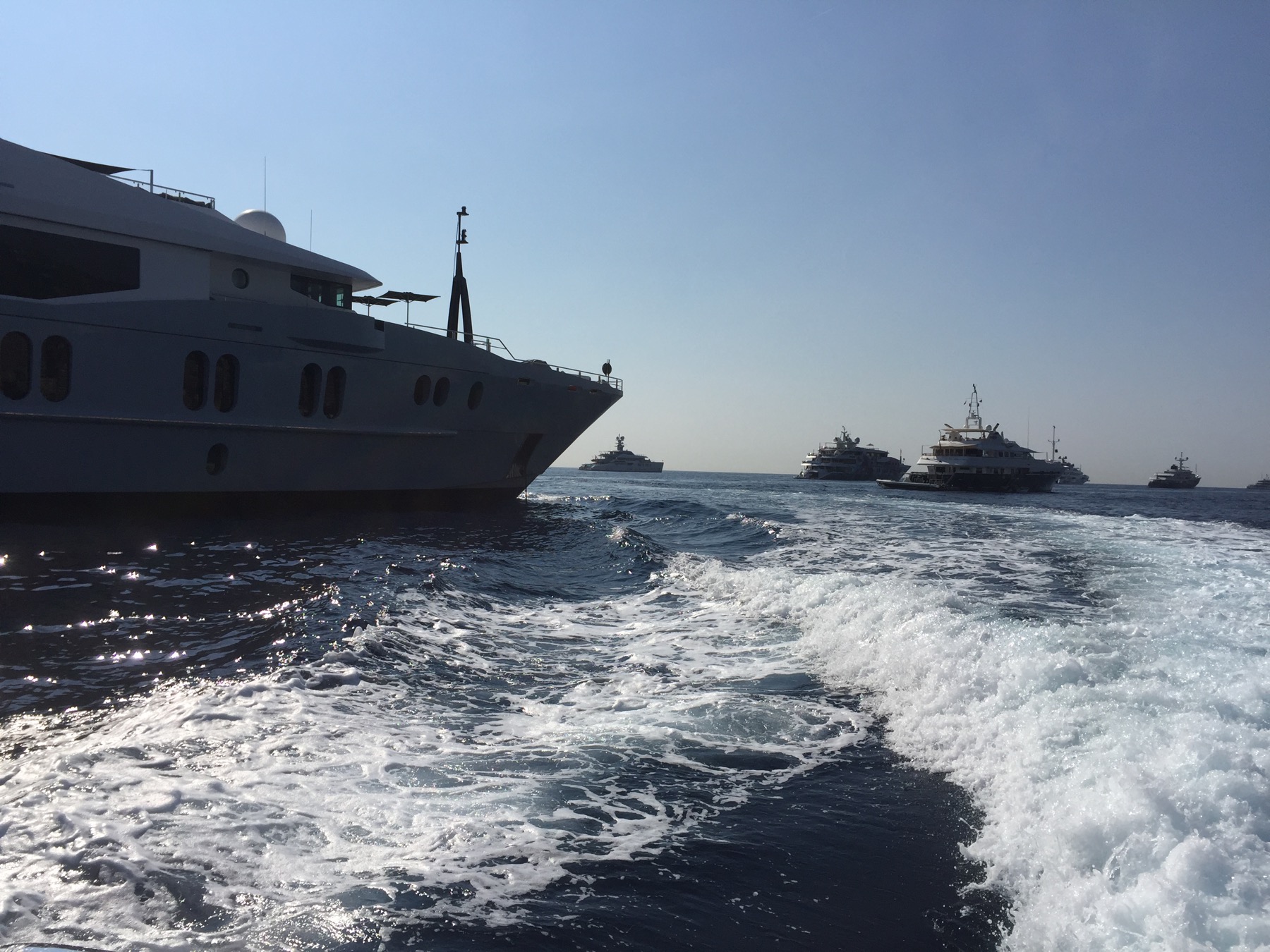
People naturally imagine somebody on the bridge, looking at charts, manoeuvring the yacht into harbour and taking command when the vessel is underway.
Of course, all of that is part of the job.
But on a substantial superyacht, it is only part of the job.
The captain may also be responsible for:
The larger and more sophisticated the yacht becomes, the more the captain's job begins to resemble that of a chief executive, operations director and master mariner combined.
And unlike most chief executives, the captain may also be responsible for navigating several thousand tonnes of yacht into a marina in a crosswind while somebody is watching from the aft deck.
The first thing to understand is that command is not simply a title.
The captain carries real responsibility.
When the yacht is operating, somebody has to make the final decision.
Can we leave?
Is the weather suitable?
Can we enter that harbour?
Is the anchorage safe?
Can we launch the tender?
Can guests use a particular water toy?
Can the yacht continue operating with a technical problem?
Should we alter course?
Should we cancel the next destination?
Those decisions may occasionally disappoint an owner or guest.
But safety comes first.
A good captain needs enough authority and confidence to say:
“No, we cannot do that safely.”
That is not poor service.
What Does a Superyacht Captain Actually Do?
Command At Sea
That is exactly what the captain is being employed to do.
It is easy to move too quickly into all the management responsibilities and forget the obvious.
The captain is still a professional mariner.
They need to understand:
On a large yacht, manoeuvring alone can be extraordinarily demanding.
I have stood around marinas and yacht shows watching large yachts move in and out of spaces that, from the shore, look impossibly tight.
To the casual observer it can look effortless.
That is generally because a highly trained bridge team has spent years developing the skills to make it look effortless.
On larger yachts, the captain is not operating alone.
There may be:
Communication has to be precise.
When manoeuvring a yacht worth tens or hundreds of millions, with another very expensive yacht several metres away, there is very little room for casual decision-making.
Crew And Guest Management
This is one of the most important parts of the role.
A captain may work for the same owner for many years.
During that time they can become one of the principal's most trusted professional advisers.
The relationship has to balance several things.
The captain is employed by the owner.
They need to understand what the owner wants.
They should make the ownership experience as easy and enjoyable as possible.
But they also have legal and professional responsibilities that cannot simply be overridden because somebody has made a request.
That balance requires judgement.
Over time, a good captain understands the owner's preferences.
They may know:
That knowledge allows the operation to become increasingly personalised.
The owner should not have to explain the same things every time they arrive.
Safety And Compliance
On many yachts, the captain acts as the main operational interface between the owner and the crew.
The owner should not have to manage twenty or thirty individual people.
That is the captain's responsibility, usually supported by senior officers and department heads.
This gives the owner a clear line of communication.
It also protects the crew from receiving contradictory instructions from multiple directions.
Crew management is one of the largest parts of the job.
Depending upon the yacht, the captain may be responsible for a team including:
What Does a Superyacht Captain Actually Do?
Crew And Guest Management
That is a substantial workforce.
People have to be:
The captain cannot simply be good with boats.
They need to be good with people.
I think this is one of the most important things about any yacht operation.
The tone comes from senior leadership.
If the captain is:
that tends to flow through the yacht.
If leadership is chaotic, aggressive or inconsistent, that spreads just as quickly.
Guests may never know exactly what is happening behind the scenes, but they will often feel the difference.
A happy, professional crew usually delivers a better guest experience.
On a yacht, crew are living and working together in relatively confined conditions.
That means recruitment is not simply about finding somebody with the correct certificate.
Safety And Compliance
Personality matters.
Experience matters.
Attitude matters.
Compatibility matters.
The captain and senior crew need to think about how somebody will fit into the existing team.
A technically excellent person who damages the atmosphere can create more problems than they solve.
Good crew retention is valuable.
Every time an experienced crew member leaves, the yacht loses knowledge.
That person may know:
High turnover creates:
A good captain understands that retaining the right people is part of protecting the operation.
On larger yachts, many senior positions operate on rotation.
For example, two captains may share the role over alternating periods.
The same can apply to:
This can improve:
But it also requires excellent handovers.
Two rotational captains need to be running the same yacht, not two different versions of it.
This is one of the most important working relationships aboard.
The captain may have overall command.
Owner Representation
The chief engineer has responsibility for the machinery and technical systems.
Together, they need to understand the yacht's operational condition.
If the chief engineer says:
“I am not comfortable sailing until this is repaired,”
a sensible captain takes that seriously.
The yacht may look perfect on deck while something significant is happening several levels below.
Guests naturally notice:
They rarely notice:
Until one stops working.
One of the captain's jobs is to make sure those invisible systems are receiving the attention they need.
What Does a Superyacht Captain Actually Do?
Safety And Compliance
A superyacht can have a substantial annual operating budget.
The captain may have significant responsibility for controlling it.
This can include:
The captain may work closely with:
Good financial management is not about choosing the cheapest option.
It is about understanding what is being spent, why it is being spent and whether it represents sensible value.
There needs to be a sensible financial structure.
Routine expenditure should be handled within agreed authority limits.
Larger items may need:
The exact system depends upon the owner and yacht.
But the owner should not be receiving messages every afternoon asking whether the crew can buy another pump.
That is not efficient yacht management.
Large yacht budgets should not become uncontrolled simply because the owner can afford them.
Owner Representation
The captain should be able to explain major expenditure.
There should be:
A strong captain treats the yacht's finances with the same care as the yacht itself.
The owner might say:
“We would like to spend the summer in the Mediterranean.”
That sounds simple.
The captain and team then turn it into an actual operational programme.
They may need to consider:
The finished itinerary may look effortless.
The planning behind it is not.
Owners understandably want flexibility.
That is one of the reasons for owning a yacht.
But sometimes a requested itinerary is simply impractical.
Perhaps the distances are too large.
Perhaps the yacht would have to run continuously overnight.
Perhaps weather makes the route uncomfortable.
Perhaps berths are unavailable.
Perhaps immigration or cruising rules create problems.
The captain needs to explain that clearly and offer alternatives.
The Captain's Wider Role
Captains work extensively with local yacht agents.
Agents can help arrange:
A strong network of trusted agents can make an enormous difference, particularly when travelling through unfamiliar regions.
Finding somewhere to berth a large yacht is not always as straightforward as calling a marina.
The captain may need to consider:
During major events, availability becomes even more difficult.
This is where advance planning matters.
Anchoring a superyacht is not simply dropping a piece of metal into the sea.
The bridge team needs to consider:
What Does a Superyacht Captain Actually Do?
Owner Representation
The yacht may remain there overnight with everyone asleep.
Getting it right matters.
The captain spends a lot of time thinking about weather.
Not simply:
“Will it rain?”
But:
Weather affects:
A good captain is always thinking several steps ahead.
A route can be technically safe and still be unpleasant.
If an alternative route or departure time can avoid several hours of uncomfortable motion, that matters.
The best captains do not simply get the yacht from A to B.
They think about how the people aboard will experience the journey.
Safety sits at the centre of the captain's role.
Depending upon the yacht and its operating status, there may be extensive formal safety-management requirements.
But paperwork alone does not make a safe yacht.
The Captain's Wider Role
There must be a genuine safety culture.
That includes:
A fire aboard a yacht can become extremely serious very quickly.
That is why crew train for it.
They need to know:
Guests may never see those drills.
They are part of what allows the yacht to operate safely.
The captain also needs to prepare for medical incidents.
Crew will have varying levels of medical training depending upon their position and the yacht's operation.
The yacht may carry extensive medical equipment.
On more remote programmes, medical planning can become particularly important.
The captain may need to coordinate:
Again, preparation matters long before the emergency occurs.
On some yachts, security requirements can be substantial.
These may involve:
The captain needs to understand the owner's risk profile without allowing the yacht to feel like a fortress.
For some owners, privacy is one of the main reasons for owning a yacht.
Command At Sea
That means crew discretion is critical.
Crew may become aware of:
The captain needs to set clear standards about confidentiality.
What happens aboard should remain aboard.
This is something that did not exist in the same way for earlier generations of yacht crew.
A casual photograph can reveal:
Captains increasingly need clear social-media policies.
Discretion now includes digital behaviour.
Modern yachts are highly connected.
There may be separate systems for:
The captain does not need to personally become a cybersecurity engineer.
What Does a Superyacht Captain Actually Do?
The Captain's Wider Role
But they do need to ensure appropriate specialists are managing these risks properly.
If the yacht is commercially chartered, the captain's responsibilities expand again.
Now there may be:
The captain may need to transition from one group of guests to another in a very short period.
A good charter captain is more than an operational necessity.
They can become a huge part of the guest experience.
They may suggest:
Some of the best advice comes from somebody who has spent years cruising the region.
During charter, the captain commonly has responsibility for administering variable charter expenditure through the agreed advance provisioning arrangements.
That means keeping track of items such as:
This requires financial discipline as well as operational knowledge.
Command At Sea
This is another interesting relationship.
The chef may appear to exist entirely in the galley, but food is a major part of the owner and guest experience.
The captain needs to ensure the wider operation supports what the chef is trying to achieve.
Provisioning may involve:
Nobody wants to explain to the owner that dinner is unavailable because somebody forgot to organise provisions.
This is where the captain's role can become especially demanding.
During a shipyard period, the yacht may suddenly be surrounded by:
There may be dozens of jobs happening at once.
The captain must keep an overview of the project while the yacht's normal operation is already disrupted.
A major refit can become a project-management exercise in its own right.
The captain may be involved in:
Some owners use specialist owner's representatives and project managers.
Even then, the captain remains central because they know how the yacht actually operates.
Crew And Guest Management
This phrase comes up repeatedly because it is fundamental.
The captain should be asking:
Is this necessary?
Is this good value?
Is this technically correct?
Will this cause another problem?
Is this contractor suitable?
Will this work operationally?
They are often the owner's eyes and ears when the owner is thousands of miles away.
Some captains become involved before the yacht even exists.
A captain joining a new-build project may contribute to decisions about:
This can be extremely valuable.
What Does a Superyacht Captain Actually Do?
Command At Sea
Designers naturally think about design.
Shipyards think about construction.
The captain thinks about living with the finished yacht every day.
Something may look excellent on a drawing and still be awkward in operation.
Can the tender actually be launched easily?
Can provisions get from the loading area to the galley?
Can crew service guest areas discreetly?
Can engineering equipment be removed for major servicing?
Is there enough storage?
Can rubbish be handled without crossing guest areas?
These details rarely appear in glamorous photographs.
They matter enormously once the yacht is in service.
When a new yacht approaches completion, the captain and technical team become heavily involved in commissioning and trials.
Crew And Guest Management
Systems need testing.
Problems need identifying.
Documentation needs reviewing.
Crew need training.
Equipment needs loading.
Procedures need establishing.
Then, suddenly, the yacht becomes operational.
Delivery is not the end of the project.
In many ways it is the beginning.
New yachts can have warranty issues.
A yacht contains an enormous number of individual systems and components.
Some will require adjustment.
Some may fail.
Some installations may need modification after real-world use.
The captain and engineering team need to document these issues and work with the shipyard and suppliers to resolve them.
The captain can also be extremely valuable during acquisition of an existing yacht.
If the buyer already has a trusted captain, I would want that captain involved.
The buyer may be looking at:
The captain may be looking at:
Both views matter.
During a purchase, the surveyor remains independent and performs their own professional role.
Safety And Compliance
But the buyer's captain can help interpret how findings may affect day-to-day operation.
A technically minor defect may create constant operational inconvenience.
Another apparently serious issue may be straightforward to resolve.
Different specialists bring different perspectives.
This distinction matters.
A captain can provide valuable operational insight.
They should not replace an independent survey.
The same principle applies to other specialists.
The captain is not:
Good captains know when another specialist is required.
What Does a Superyacht Captain Actually Do?
Crew And Guest Management
There is far more paperwork involved in running a large yacht than people outside the industry imagine.
Depending upon the vessel, there may be documentation relating to:
Some of this may be delegated to officers, pursers or management companies.
The captain retains oversight.
The captain needs to ensure crew are appropriately qualified for their positions.
That includes monitoring:
A missing or expired document can become a significant operational problem at exactly the wrong moment.
Modern yacht operations increasingly need to consider environmental impact.
This may include:
A professional captain needs to understand the requirements of the areas through which the yacht operates.
This deserves particular attention.
Safety And Compliance
In some destinations, sensitive seagrass and marine habitats can be badly damaged by anchors.
Regulations are becoming more stringent in a number of cruising areas.
Captains need to know where they can legally and responsibly anchor.
Sometimes environmental responsibility and compliance are exactly the same thing.
A captain may hold advanced professional qualifications, but that does not mean learning is finished.
Technology changes.
Regulations change.
Navigation equipment changes.
Environmental rules evolve.
Cybersecurity grows in importance.
New propulsion systems appear.
Large-yacht operations continue becoming more sophisticated.
The captain has to keep learning.
This is probably where experience shows most clearly.
Things do not always go according to plan.
An engine alarm sounds.
A guest becomes ill.
Weather deteriorates.
A crew member is injured.
A tender breaks down.
A berth becomes unavailable.
A contractor fails to finish work.
Owner Representation
An owner changes the itinerary.
Several things happen at once.
The captain cannot join the panic.
They need to slow the situation down, establish priorities and make decisions.
That calmness is one of the most valuable qualities a captain can possess.
This is a theme I keep coming back to.
When a yacht is exceptionally well run, the owner may see very little of the complexity.
The yacht leaves on time.
The crew are ready.
The berth is booked.
The equipment works.
The tender arrives.
The restaurant is expecting them.
The weather has been considered.
What Does a Superyacht Captain Actually Do?
Safety And Compliance
The next destination is prepared.
That can make it look as though not much is happening.
In reality, it usually means a great deal is happening properly.
There can certainly be genuine friendships between owners and captains.
But the professional relationship needs to remain clear.
The captain's job is to:
An owner does not need somebody who automatically agrees with everything.
They need somebody whose judgement they trust.
Occasionally people around luxury assets become overly impressed by the lifestyle.
A professional captain should not.
Their focus remains the yacht and the owner.
Discretion.
Professional distance.
Good judgement.
Those qualities matter.
If I had to reduce it to a few qualities, I would look for:
Owner Representation
Professional competence
The fundamentals have to be there.
Calm judgement
Particularly when things go wrong.
Leadership
The ability to build and retain a strong crew.
Communication
With owner, crew, managers, guests, shipyards and advisers.
Financial discipline
Understanding that large budgets still require accountability.
Technical awareness
Enough to understand what the engineering team is telling them.
Discretion
Absolutely fundamental in private yachting.
Organisation
There are simply too many moving parts for chaos.
Adaptability
Plans change constantly.
Integrity
Perhaps the most important quality of all.
People often ask what a typical day aboard looks like.
The problem is that there may not be one.
A day could involve:
The next day might look completely different.
That variety is probably one of the attractions of the profession.
It is also one of the demands.
The Captain's Wider Role
For me, it comes down to confidence.
The owner wants to know:
The yacht is safe.
The yacht is being looked after.
The money is being managed properly.
The crew are professional.
Problems are being dealt with.
And when I arrive, I can enjoy my yacht.
That is the outcome.
Everything else supports it.
There is a tendency to look at senior crew salaries simply as another operating cost.
I think that misses the point.
An excellent captain can influence:
On a major asset, those effects can be substantial.
What Does a Superyacht Captain Actually Do?
Owner Representation
The more I have learned about yacht brokerage and yacht operations, and the more time I have spent around the industry, the more I have come to see the captain as one of the central figures in the entire ownership experience.
The broker may introduce the owner to the yacht.
The shipyard may build it.
The designer may create it.
The surveyor may inspect it.
The manager may support it.
But once the yacht is operating, the captain is the person who brings all of those elements together.
The owner may see:
The captain may simultaneously be thinking about:
That contrast probably explains the job better than anything else.
A good captain carries the complexity so the owner doesn't have to.
The Captain's Wider Role
It is not simply how smoothly they manoeuvre the yacht.
It is not the uniform.
It is not how many metres they have commanded.
For me, the real measure is what happens over several years.
Is the yacht:
Does good crew want to stay?
Does the owner trust the captain's advice?
Does the yacht improve under their stewardship?
Those are much more meaningful measures.
A superyacht captain is simultaneously:
That is why the role is so much more complex than simply driving a yacht.
And perhaps the ultimate sign of a really good captain is that the owner rarely needs to think about any of it.
They arrive.
The yacht is ready.
The crew are ready.
Everything works.
The lines are released.
And they go to sea.
The simplicity the owner experiences is created by the complexity the captain manages.
That, for me, is the job.
Paul Thompson holds a Diploma in Yacht Brokerage and has a long-standing background in sales, marketing, digital publishing and the international yachting sector. He is a yachting journalist and publisher of Superyacht Magazine.
Command At Sea
This article is intended as general editorial information. A captain's legal duties, certification requirements, manning responsibilities, safety-management obligations and regulatory responsibilities vary according to yacht size, tonnage, flag, operating status, cruising area and applicable international and domestic regulations.
How to Get Your First Job on a Superyacht
Working on a superyacht can look glamorous from the outside. The reality is that getting your first job usually takes persistence, preparation and a willingness to start at the bottom.
How to Get Your First Job on a Superyacht
Working on a superyacht can look glamorous from the outside. The reality is that getting your first job usually takes persistence, preparation and a willingness to start at the bottom.
Getting Started
I have always thought that superyacht careers are one of those areas where the public image and the reality can be very different.
People see:
What they do not always see is:
That does not mean it is a bad career.
Far from it.
For the right person, it can be an extraordinary one.
But if you are thinking about entering the superyacht industry, I think the first thing to understand is that the industry does not owe you a job simply because you have flown to Antibes and printed a CV.
You still have to prove that you are employable.
Before applying for anything, I would spend some time learning how the industry actually works.
That means understanding the difference between:
Also understand the departments aboard.
Typical departments may include:
This can include:
This can include:
This can include:
This can include:
The larger the yacht, the more specialised these roles can become.
On smaller yachts, one person may cover several responsibilities.
This may sound obvious, but I think a lot of new entrants simply say:
“I want to work on a yacht.”
That is too broad.
Think about what you are actually good at.
If you are:
deck may suit you.
If you have:
interior roles may be a more natural fit.
If you are technically minded, engineering may be the route.
If you are a trained chef, the galley is an obvious option.
How to Get Your First Job on a Superyacht
Getting Started
The point is to build on something you already bring to the yacht.
This is important.
A lot of people entering the industry have never worked on a superyacht before.
That does not mean they bring nothing.
Hospitality can transfer extremely well.
So can:
The question is:
How do your existing skills translate into yacht life?
I have spent many years around hospitality and events, and one thing I recognise immediately is how much crossover there is with the service side of yachting.
Good hospitality teaches:
All of that transfers.
The setting may change.
The principles do not.
For entry-level yacht work, there are certain basic qualifications you will usually need to investigate before looking seriously for employment.
Training And Certificates
Requirements depend on:
That is why I would never rely on a social-media post saying:
“You only need these two certificates.”
Check the current requirements for the type of yacht and role you are targeting.
Common entry-level maritime training can include basic safety training and a recognised seafarer medical certificate, but exact requirements can vary.
Make sure the certificates you obtain are:
This is another area where newcomers can spend money quickly.
There are countless courses available.
Some may be valuable.
Others may make very little difference to your chances of employment.
Before paying for extra training, ask:
Will this actually help me get the type of job I want?
For example, relevant training in:
may be useful for particular positions.
But collecting certificates without any real experience does not automatically make you employable.
A yachting CV is generally more concise and direct than many conventional employment CVs.
Finding The First Role
The person reading it may be looking at dozens in a day.
Make it easy.
I would want to see immediately:
Do not bury the useful information on page three.
Yachting remains an industry where CV photographs are commonly used.
That photograph should look professional.
You do not need a fashion shoot.
You need to look:
Avoid:
The objective is not to look wealthy.
It is to look like someone a captain would be comfortable putting in front of an owner or guest.
This sounds obvious.
Unfortunately, it happens.
Do not claim:
The industry is smaller than it appears.
How to Get Your First Job on a Superyacht
Training And Certificates
People check references.
Captains know each other.
Crew move between yachts.
A dishonest CV can follow you for a long time.
A generic CV is better than no CV.
A targeted CV is better.
If applying for deck work, bring forward:
For interior roles, emphasise:
For engineering, show technical capability clearly.
Make it obvious why your background is useful aboard.
A strong reference from a credible previous employer can be extremely valuable.
This is particularly true if you do not yet have yacht references.
A good reference may confirm:
At entry level, character matters enormously.
Certain yachting centres naturally have more opportunities than others.
Depending on the season, established crew hubs may include locations around:
Finding The First Role
But do not simply fly somewhere because someone online said that is where everybody goes.
Timing matters.
The local season matters.
Your legal ability to work matters.
Accommodation costs matter.
And you need a plan.
Yacht recruitment can be seasonal.
There are periods when yachts are:
Being in the right place at the right time can improve your chances.
But there is no guaranteed week when everybody suddenly gets hired.
Recruitment happens all year.
The market simply becomes more active at certain times.
Dockwalking is probably one of the most famous parts of breaking into yachting.
In simple terms, you physically visit yacht marinas and introduce yourself professionally where permitted.
You may hand over your CV.
You may ask whether the yacht needs:
It can work.
But there is a right way and a wrong way to do it.
The yacht is somebody's workplace.
Potentially, it is also somebody's private home.
Do not:
Approach professionally.
Be brief.
Life On Board
Be polite.
Accept no gracefully.
Then move on.
You do not need to look like you already own the yacht.
You do need to look presentable.
Clean clothing.
Clean shoes.
Neat appearance.
Professional manner.
You may be applying for a job involving:
People notice presentation.
One of the best ways for a newcomer to obtain real experience is daywork.
This may involve:
It may not sound glamorous.
That is exactly why it is useful.
It gives the yacht a chance to see how you work.
This is important.
Do not think:
“It is only one day.”
That day may turn into:
Turn up early.
How to Get Your First Job on a Superyacht
Finding The First Role
Listen.
Work hard.
Ask sensible questions.
Do not spend the day on your phone.
And do not complain about being given basic jobs.
You are being assessed.
Entry-level deck work may involve a lot of:
Entry-level interior work may involve:
It is not beneath you.
It is the job.
Everyone aboard depends on basic standards being maintained properly.
This is one of the qualities that separates average crew from good crew.
On a yacht, small details matter.
A fingerprint on glass.
A poorly folded towel.
A water mark on stainless steel.
A cushion facing the wrong way.
A guest's preference forgotten.
A line not properly stowed.
A cupboard left untidy.
Individually, these things seem trivial.
Collectively, they define standards.
Life On Board
This is one of the best skills you can develop.
Do not always wait to be told.
If you see:
learn to recognise it.
There is a big difference between taking initiative and interfering.
Good crew learn that difference.
Professional crew agencies can be useful.
Register with reputable agencies that recruit for the type of roles you are seeking.
Make sure your profile is:
If your circumstances change, update them.
If you obtain a new qualification, add it.
If you become unavailable, say so.
Recruiters need accurate information.
Registering with an agency is part of your job search.
It is not the entire job search.
You should also be:
Nobody will ever care about your career as much as you do.
The yachting industry is very relationship-driven.
A lot of opportunities come through people knowing:
That means your first network may be other crew.
The deckhand you meet today may become a bosun.
The bosun may become an officer.
Building A Career
The officer may eventually become a captain.
Careers progress.
Relationships progress with them.
Networking does not mean walking around saying:
“Can you get me a job?”
Talk to people.
Ask sensible questions.
Learn about the industry.
Stay in touch.
Be useful.
Be professional.
If somebody hears about a vacancy six months later, you want them to think:
“I met someone who might be good for that.”
That is networking.
Social media can help.
LinkedIn can be particularly useful professionally.
There are also industry-specific communities and groups.
How to Get Your First Job on a Superyacht
Life On Board
But be careful about what your own profile says about you.
If you are asking someone to trust you aboard a private yacht, and your public profile consists entirely of drunken photographs and complaints about previous employers, you may have answered the recruitment question for them.
The industry is international.
It is also surprisingly small.
Before hiring somebody, people may search them online.
That is normal.
Ask yourself what they will find.
You do not need to become artificial.
Just remember that public behaviour is public.
In major crew centres, many newcomers stay in crew accommodation.
This can be useful because you immediately meet other people looking for work.
Information travels quickly.
Building A Career
Someone may hear that a yacht needs a deckhand.
Another may know a boat looking for dayworkers.
The social side can therefore be useful.
But there is a danger.
Do not spend all your time socialising with unemployed crew.
You went there to find work.
Job hunting becomes demoralising very quickly if every day becomes random.
I would set a routine.
For example:
Treat finding a job like a job.
This applies just as much in recruitment as it does in yacht brokerage.
People are busy.
An unanswered email does not always mean rejection.
Follow up professionally.
Not every two hours.
Not aggressively.
But do not assume one CV submission has completed the process.
If a vacancy says:
“Two years' experience required.”
and you have never worked on a yacht, repeatedly applying is unlikely to help.
Focus on realistic opportunities.
That may include:
Build the first piece of experience.
Then your options increase.
You will often hear newcomers referred to as green crew.
Getting Started
It simply means somebody with little or no yacht experience.
That does not necessarily mean inexperienced in life or work.
You might have ten years of hospitality or engineering experience and still be green to yachting.
Do not be embarrassed by it.
Everyone had a first yacht.
You may have imagined joining:
Your first opportunity might be nothing like that.
That is fine.
The objective of the first job is to gain:
You can build from there.
Obviously pay matters.
But at the beginning of a career, I would also ask:
How to Get Your First Job on a Superyacht
Building A Career
A slightly higher salary is not automatically a better job.
Before an interview, learn what you reasonably can.
You may be able to find:
Do not behave like a detective.
You do not need to investigate the owner.
You simply want enough understanding to demonstrate that you have taken the opportunity seriously.
A yacht interview can be surprisingly informal.
Do not mistake informal for unimportant.
The captain or department head may be asking themselves several questions at once.
Can this person do the job?
Will they learn?
Will they fit with the crew?
Can I trust them around guests?
Can I live with them aboard?
Will they create drama?
That last point matters more than many newcomers realise.
If you have never done something, say so.
Getting Started
Then add:
“But I am happy to learn.”
That answer is far better than pretending.
On a yacht, pretending to understand something can become unsafe.
Good senior crew would rather teach an honest beginner than deal with somebody who hides their limitations.
If I were choosing between two junior candidates and one had slightly more experience but a poor attitude, while the other had less experience but was:
I know which one I would be more interested in.
Skills can be taught.
Attitude is much harder.
This is something people underestimate.
You are not going home at the end of the shift.
Your colleagues may also be:
That requires emotional maturity.
You need to be able to:
Crew cabins can be compact.
You may share.
Storage can be limited.
Privacy can be limited.
You cannot bring your entire home with you.
For somebody accustomed to a lot of personal space, this can take adjustment.
Yachts have a clear chain of command.
That matters.
Training And Certificates
You may have:
Or equivalent structures in other departments.
You need to understand who you report to.
Constantly bypassing your department head because you think you have a better idea is not likely to make you popular.
You will be corrected.
Probably more than once.
That is part of learning.
If someone shows you how the yacht expects a job done, remember it.
Do not make them explain the same basic thing ten times because you were not listening.
Good crew absorb feedback quickly.
During guest trips and busy periods, the days can be long.
Very long.
How to Get Your First Job on a Superyacht
Getting Started
The crew may be working while guests are:
Different departments work different schedules, but yachting can be demanding.
If your idea of the job is finishing at 17:00 every day and heading to the beach, reconsider.
Charter yachts can be particularly intense during guest changeovers.
One group leaves.
Another may arrive shortly afterwards.
During that period, the yacht can need:
The amount of work happening behind the scenes can be extraordinary.
This is another reality people do not always consider.
Yes, the yacht may visit extraordinary places.
You may also spend the entire visit:
You can be in one of the world's most beautiful destinations and barely leave the yacht.
Travel is a benefit.
It is not a permanent holiday.
Training And Certificates
There is another side.
Yacht crew can experience:
You may cross oceans.
You may spend seasons in completely different parts of the world.
For someone who likes variety and travel, that can be extraordinary.
This is fundamental.
You may work for:
You may see things and hear things that are none of your business.
Your job is not to discuss them.
Not with friends.
Not in crew bars.
Not on social media.
Not after you leave.
Discretion is part of professional yachting.
Do not assume it is acceptable to photograph:
Even posting the yacht's location can be sensitive.
Follow the yacht's rules.
The industry can have a social side.
Crew bars exist.
Parties happen.
But remember that you are a professional seafarer.
A reputation for:
can destroy a career quickly.
Safety-critical workplaces and uncontrolled substance use are not compatible.
Yacht work can be physical.
Deck roles in particular may involve:
Interior crew may also spend long periods on their feet.
Finding The First Role
Looking after your health matters.
Yes, crew can get seasick.
Some people adapt.
Some struggle.
It is worth discovering how you cope with boats before attempting to build a career at sea.
A yacht cannot stop every time a crew member feels unwell.
Standards vary significantly between yachts.
Some are very relaxed.
Others are highly traditional.
Visible tattoos, piercings, facial hair and grooming policies may differ.
The sensible approach is to understand the yacht's standards rather than assume the entire industry follows one rule.
How to Get Your First Job on a Superyacht
Training And Certificates
English is widely used across the international yacht industry.
Additional languages can be a genuine advantage.
Depending upon cruising area and owners, languages such as:
may be useful.
But fluent English remains extremely important for many international roles, particularly because safety communication must be clear.
Two newcomers may have similar basic certificates.
One also happens to be:
That additional skill may make them much more useful to a particular yacht.
If you already have something valuable, make sure employers know about it.
There is no point obtaining ten unrelated qualifications simply because somebody told you they look good on a yacht CV.
Build a coherent profile.
Finding The First Role
If you want deck work, develop relevant maritime and practical skills.
If you want interior, develop hospitality and service capability.
If you want engineering, build technical qualifications and sea time.
Have a direction.
A superyacht career can develop considerably.
A deckhand may progress towards:
Interior crew may progress through:
Engineers progress through technical certification and experience.
Chefs can develop strong reputations across the fleet.
The first job is simply the entry point.
For many deck, engineering and officer pathways, documented sea service becomes important for future qualifications and progression.
Keep proper records.
Do not wait several years and then discover that you cannot prove where you worked or what sea service you completed.
Understand the requirements for the career path you intend to follow.
If you want a genuine career rather than one season, ask:
Where could this role take me in five years?
Life On Board
That changes your decisions.
You may choose a yacht because it provides:
rather than simply because it currently offers the highest salary.
Not everyone remains at sea forever.
Yachting experience can lead into shore-based roles involving:
One of the interesting things about the industry is how many careers connect with each other.
This is one route I find particularly interesting.
Crew who move into brokerage may bring strong practical yacht knowledge.
They understand:
But brokerage also requires another set of skills:
How to Get Your First Job on a Superyacht
Finding The First Role
Being excellent crew does not automatically make someone an excellent broker.
But the experience can be a strong foundation.
In my view, it is often not a lack of opportunity alone.
Common problems include:
They arrive without understanding the industry.
The relevant information is difficult to find.
They do not look professional.
They only want the glamorous jobs.
They give up after a week.
They think basic work is beneath them.
They send applications and disappear.
They waste time on jobs requiring experience they do not have.
They become known for the wrong reasons.
This may be one of the most important things to understand.
You may hear:
No.
A lot.
No vacancy.
No green crew.
No experience.
Position filled.
Not suitable.
Life On Board
No response at all.
That is frustrating.
It is not necessarily personal.
Yachts may receive enormous numbers of applications for junior positions.
You need resilience.
After weeks of job hunting, it is easy to become frustrated.
Do not allow that to turn into:
People notice behaviour under pressure.
Stay professional.
Like any international industry, yacht recruitment can attract scams.
Be cautious about:
Use reputable agencies and verify opportunities where necessary.
If something looks completely unrealistic, investigate it.
Before accepting a position, understand what you are agreeing to.
This may include:
For international seafarers, employment arrangements can be more complex than conventional shore-based jobs.
Make sure you understand the contract.
Do not overlook immigration requirements.
Being physically present in a country does not necessarily mean you are legally entitled to work there.
Requirements vary significantly depending upon:
Building A Career
Check properly.
Do not rely entirely on what another crew member tells you in a bar.
Once you get the job, the real learning begins.
For the first month, I would focus on:
Do not arrive trying to redesign the yacht.
Learn it first.
This is a very simple habit.
Write things down.
Procedures.
Names.
Locations of equipment.
Service standards.
Maintenance routines.
Guest preferences where appropriate.
Tasks.
You will receive a huge amount of information quickly.
Do not assume you will remember everything.
Know:
The yacht should gradually stop feeling like a maze.
How to Get Your First Job on a Superyacht
Life On Board
Once you understand how something is done, begin to understand why.
Why is that line rigged this way?
Why do we clean that material with this product?
Why does service follow that sequence?
Why is this maintenance interval important?
Why does the captain avoid that anchorage in certain weather?
Understanding creates competence.
Simply copying creates dependence.
There is nothing wrong with deciding it is not for you.
The work can involve:
Some people thrive in that environment.
Others hate it.
The only failure would be staying in a career you dislike because the photographs looked glamorous.
For the right person, the advantages can be substantial.
You can:
You may also discover career routes you had never considered when you first stepped onto a dock with a CV.
Building A Career
If I were trying to enter the superyacht industry today, I would approach it in this order.
Decide which department genuinely suits your skills.
Research the current entry requirements properly.
Complete the necessary recognised training and medical requirements.
Create a professional, concise CV.
Get strong references from previous employment.
Go where genuine recruitment activity exists at the appropriate time.
Register with reputable crew agencies.
Network professionally.
Use dockwalking where appropriate and permitted.
Take daywork seriously.
Accept that your first job may be basic.
Follow up without becoming a nuisance.
Protect your reputation from day one.
Learn continuously.
And do not give up after the first few rejections.
A lot of people want their first yacht job because they have seen the destination.
Getting Started
They have seen the photographs from:
I think the people most likely to succeed are the ones who become interested in the work itself.
The yacht has to be:
Guests have to be looked after.
Crew have to work together.
Standards have to remain high even when everybody is tired.
If that side of the industry appeals to you as much as the destinations, then you may be looking at the right career.
Because the photograph from the beach might last five minutes.
The professionalism that got you there has to last every day.
How to Get Your First Job on a Superyacht
Building A Career
Paul Thompson holds a Diploma in Yacht Brokerage and has a long-standing background in sales, marketing, hospitality, events, digital publishing and the international yachting sector. He is a yachting journalist and publisher of Superyacht Magazine.
Getting Started
This article is intended as general editorial information. Training, medical certification, visa, work-permit, seafarer employment, manning and qualification requirements vary according to role, vessel, flag state, operating area, nationality and current regulations. Prospective crew should verify current requirements through recognised maritime authorities, approved training providers and reputable professional recruitment organisations before accepting employment.
Training And Certificates
What Is an Explorer Yacht — and What Makes One a Real Explorer?
Explorer yachts have become one of the most fashionable sectors of the superyacht market. A genuine explorer yacht is defined by what it can do when the marina, shipyard and support network have disappeared over the horizon.
What Is an Explorer Yacht — and What Makes One a Real Explorer?
Explorer yachts have become one of the most fashionable sectors of the superyacht market. But paint a yacht grey, put a crane on the aft deck and call it an explorer, and I am not necessarily convinced. A genuine explorer yacht is defined by what it can do when the marina, shipyard and support network have disappeared over the horizon.
Beyond The Marina
Walk around any of the major yacht shows today and it does not take long before you come across the word “explorer.”
It has become one of the great descriptions of modern yachting.
Explorer yacht.
Expedition yacht.
Adventure yacht.
They conjure up images of Antarctica, helicopters landing on remote decks, tenders weaving between icebergs and owners waking up somewhere very few other people will ever visit.
I completely understand the attraction.
In fact, of all the developments in modern superyachting, I think the move towards genuine exploration is one of the most interesting.
But I also think we have reached the point where we need to ask a fairly basic question.
What actually makes an explorer yacht an explorer yacht?
Because it certainly isn't the colour.
There was a time when the stereotypical superyacht was relatively easy to recognise.
White hull.
Sweeping lines.
Large expanses of glass.
Teak decks.
Perhaps a swimming pool.
The yacht was designed to look completely at home anchored off Saint-Tropez or stern-to in Monaco.
Then something changed.
Owners began wanting to go further.
Designers started drawing yachts with more purposeful profiles. Commercial-vessel influences became fashionable. Bows became stronger. Tender storage became more ambitious. Large cranes appeared. Helicopter decks became increasingly common.
And grey became very fashionable indeed.
What Is an Explorer Yacht — and What Makes One a Real Explorer?
Beyond The Marina
I have seen enough yachts and yacht concepts over the years to know that appearance can be deceptive.
Some vessels that look like expedition ships are extremely capable.
Others are essentially conventional luxury yachts wearing hiking boots.
There is nothing wrong with that. If an owner loves the styling, that is reason enough to buy one.
But genuine exploration is about capability rather than appearance.
Imagine two yachts anchored somewhere off Sardinia.
A piece of equipment fails.
There is an engineer available nearby.
A replacement component can potentially be flown into Olbia.
A yacht agent can arrange transport.
A contractor can come aboard.
There are marinas, shipyards and technical suppliers within reach.
Range And Capability
Now put the same yacht somewhere considerably more remote.
The nearest appropriate replacement part may be thousands of miles away.
There may be no engineer coming tomorrow morning.
There may not even be a marina capable of accepting the yacht.
Suddenly the questions change.
Do we carry the spare?
Can the crew repair it?
Is there another system that can take over?
Can we manufacture or adapt something aboard?
How much fuel do we have?
How much fresh water can we produce?
How much food can we store?
What happens if somebody becomes seriously ill?
What happens if communications fail?
That, to me, is where the real definition of an explorer yacht begins.
An explorer yacht should be able to look after itself.
The specification everyone tends to notice is range.
And clearly it matters.
A yacht intended to cross oceans and operate far from conventional cruising grounds needs substantial fuel capacity and efficient long-range performance.
Support And Safety
But quoting an impressive range figure on a specification sheet does not automatically create an explorer.
There is little point being capable of travelling thousands of nautical miles if everything else aboard has been designed around remaining within easy reach of Mediterranean infrastructure.
True autonomy involves much more than fuel.
It means thinking about:
fresh water;
food;
waste;
spare parts;
lubricants;
medical supplies;
workshop facilities;
communications;
refrigeration;
crew endurance;
and redundancy.
What Is an Explorer Yacht — and What Makes One a Real Explorer?
Range And Capability
A genuine explorer is not merely capable of travelling a long way.
It is capable of remaining there.
That distinction matters.
This is perhaps one of the least photogenic subjects in yachting.
Nobody arrives at a yacht show excitedly asking to photograph the redundant pumps.
Yet redundancy is one of the things I would be most interested in if somebody told me a yacht had been designed for serious remote exploration.
If one critical system fails, what happens next?
A yacht operating close to established infrastructure has options.
A yacht operating several days from meaningful assistance needs more.
That can mean duplication and separation of essential systems, thoughtful engineering, substantial spare-parts inventories and a crew with the technical ability to solve problems rather than simply telephone somebody ashore.
Support And Safety
I find this side of explorer design far more interesting than whether the yacht has an axe mounted decoratively beside the tender garage.
If I were trying to decide whether a yacht was a genuine explorer, I would want to spend less time looking at the profile and considerably more time looking behind the scenes.
Show me the engine room.
Show me the workshop.
Show me the stores.
Show me the refrigeration.
Show me the spare parts.
Show me how equipment can be removed and repaired.
Show me what happens when a major component fails.
And show me the crew spaces.
Because exploration places demands on the people aboard as well as the yacht.
A crew spending extended periods away from shore needs somewhere sensible to live and work.
A beautiful owner's suite is important.
So is an engineering department capable of keeping the yacht operational when the nearest shipyard is a very long way away.
Expedition Design
This is where the word “explorer” can become more serious very quickly.
Taking a yacht into polar regions is not simply conventional cruising with a colder weather forecast.
Ice introduces completely different risks.
Low temperatures affect machinery and equipment.
Navigation becomes more demanding.
Search-and-rescue resources may be distant.
Communications can become more challenging.
Survival equipment needs to reflect the environment.
What Is an Explorer Yacht — and What Makes One a Real Explorer?
Support And Safety
And ice itself can impose significant loads on the hull, propulsion systems and appendages.
The International Maritime Organization's Polar Code addresses exactly these issues for vessels within its scope, covering areas including ship structure, machinery, stability, navigation, communications, lifesaving equipment, voyage planning, crew training and environmental protection.
As of 1 January 2026, additional Polar Code safety-of-navigation and voyage-planning requirements have also been extended to certain previously non-SOLAS vessels, including pleasure yachts of 300 GT and above not engaged in trade.
In other words, taking a serious yacht into polar waters is not simply a case of turning north and buying everybody warmer jackets.
Expedition Design
This is another area where terminology can easily become misunderstood.
A vessel's classification and polar capability need to be understood in terms of exactly what conditions it has been designed and certified to encounter.
The Polar Code itself recognises different categories of ships according to their intended operation in polar waters and ice conditions.
That does not mean a yacht has permission to charge through whatever ice happens to be in front of it.
A capable polar yacht still needs:
experienced navigation;
weather and ice information;
appropriate voyage planning;
trained crew;
and an understanding of its operational limits.
Perhaps the most important piece of equipment on any explorer yacht remains good judgement.
This is where modern explorer yachts become particularly interesting.
Early expedition-style vessels could sometimes feel as though luxury and capability were competing with one another.
What Makes It Real
Today, they do not necessarily have to.
A modern explorer can contain everything expected of a sophisticated superyacht:
beautiful interiors;
spa facilities;
cinema;
gym;
large owner's accommodation;
pools;
beach clubs;
extensive guest spaces;
and exceptional service.
The difference is what exists underneath all of that.
The best explorer yachts combine the private-world quality of a superyacht with the capability of a serious seagoing vessel.
That is much harder to achieve than simply making something look rugged.
What Is an Explorer Yacht — and What Makes One a Real Explorer?
Expedition Design
The traditional superyacht tender garage has evolved enormously.
On an explorer, the equipment might include much more than a couple of jet skis and a tender for going ashore.
Owners may want:
large expedition tenders;
RIBs;
dive boats;
submersibles;
ROVs;
kayaks;
sailing boats;
surf equipment;
motorcycles;
off-road vehicles;
snow equipment;
scientific equipment;
or specialist diving systems.
Then somebody has to launch all of it.
Recover it.
Fuel it.
Charge it.
Maintain it.
Store it.
And repair it.
This is why the large open working deck has become such a recognisable feature of many explorer yachts.
It is not just styling.
Done properly, it is an operational space.
I sometimes smile at how prominent cranes have become in explorer-yacht design.
What Makes It Real
They certainly contribute to the purposeful aesthetic.
But on a genuine expedition vessel, lifting capability is extremely useful.
A substantial tender is heavy.
So is a submersible.
So are vehicles and expedition equipment.
The crane therefore becomes part of the yacht's operating capability rather than simply something added to make it look industrial.
And, as with everything aboard a serious explorer, it has to work reliably in environments that may be considerably less forgiving than Port Hercule.
Add a helicopter and another layer of capability appears.
For remote cruising, a helicopter can provide much more than a glamorous way for the owner to arrive.
It can potentially support:
reconnaissance;
shore access;
guest transfers;
logistics;
medical evacuation;
and exploration.
But genuine helicopter operations require considerably more thought than simply drawing an “H” on the deck.
The yacht may need to consider aviation fuel, firefighting, crew, maintenance, storage and the operational requirements associated with supporting aircraft at sea.
Beyond The Marina
For an owner genuinely intending to explore remote regions, aviation can transform what is possible.
It also transforms the complexity of the yacht.
At some point, owners began running into a simple problem.
They wanted too much equipment.
The helicopter takes space.
The tenders take space.
The submersible takes space.
The dive centre takes space.
The vehicles take space.
The extra fuel takes space.
The additional crew take space.
What Is an Explorer Yacht — and What Makes One a Real Explorer?
What Makes It Real
Eventually, the toys begin consuming the yacht.
The answer for some owners has been wonderfully straightforward:
use another yacht.
The support or shadow vessel can carry the operational hardware while the principal yacht remains focused on the owner, family and guests.
I think this is one of the most logical developments in the explorer sector.
Instead of compromising the main yacht trying to make it perform every possible function, split the roles.
One becomes the private residence.
The other becomes the logistics platform, hangar, workshop, dive centre and toy box.
It is easy to become obsessed with equipment.
But a yacht is only as capable as the people operating it.
A remote expedition programme can require very different experience from a conventional Mediterranean season.
Beyond The Marina
The crew may need expertise involving:
polar navigation;
diving;
helicopter operations;
medical response;
expedition planning;
tender operations;
engineering;
weather;
and local conditions.
There may also be expedition leaders, guides, scientists, naturalists, photographers or security personnel aboard depending upon the voyage.
The yacht provides the platform.
The people make the expedition possible.
This is something I think deserves far more attention when we talk about exploration.
If somebody becomes seriously ill while a yacht is sitting off the South of France, sophisticated medical facilities are relatively accessible.
Move several days away from conventional infrastructure and the calculation changes completely.
A genuine explorer programme should consider:
medical equipment;
crew training;
remote medical support;
medication;
evacuation;
communications;
and how quickly professional medical care can realistically be reached.
Range And Capability
Some large expedition yachts now have remarkably sophisticated medical facilities.
That makes sense.
If you deliberately travel somewhere remote, you cannot simultaneously assume that an ambulance is ten minutes away.
The same applies to provisioning.
A Mediterranean yacht can replenish regularly.
An explorer may need to provision for much longer periods.
That affects:
cold storage;
freezers;
dry stores;
waste management;
menu planning;
and the sheer quantity of supplies carried aboard.
What Is an Explorer Yacht — and What Makes One a Real Explorer?
Beyond The Marina
Even something as simple as fresh produce becomes an operational consideration when you are far away from conventional supply chains.
The guest may still sit down to an extraordinary dinner.
The difference is that the ingredients may have travelled thousands of miles to get there.
Nobody commissions a superyacht because they are excited about sewage treatment.
But autonomy depends on systems like these.
A yacht remaining away from port for extended periods needs to think carefully about:
fresh-water production;
waste-water treatment;
garbage;
storage;
environmental restrictions;
and responsible operation.
This becomes even more important in environmentally sensitive regions.
Range And Capability
Exploration should not mean arriving somewhere pristine and leaving a problem behind.
One development I particularly like is the growing relationship between some expedition yachts and scientific research.
A privately operated yacht travelling to remote regions may have access to places that are expensive and difficult for researchers to reach independently.
Some owners have made berths, equipment or vessel time available to scientists and conservation projects.
Others have incorporated laboratories, research facilities or scientific equipment into their yachts.
I think this represents one of the more interesting possibilities within modern yacht ownership.
If you already have an extraordinary platform capable of reaching remote parts of the planet, allowing useful research to happen along the way makes a great deal of sense.
For decades, much of the superyacht calendar followed a fairly familiar rhythm.
Support And Safety
Mediterranean summer.
Caribbean winter.
Monaco.
St Barths.
Antigua.
Sardinia.
The Balearics.
All extraordinary places, and they remain central to yachting.
But explorer ownership has expanded the map.
Antarctica.
Greenland.
Alaska.
Norway.
Iceland.
Patagonia.
The South Pacific.
Remote archipelagos.
Places where the yacht is no longer simply an alternative to a luxury hotel.
There may be no hotel.
There may be very little infrastructure at all.
The yacht becomes the only practical way to experience the destination at that level.
What Is an Explorer Yacht — and What Makes One a Real Explorer?
Range And Capability
The more I look at explorer yachts, the more I think their appeal is actually less about the yacht than conventional superyachting.
That sounds contradictory, but bear with me.
A traditional yacht can itself be the destination.
You enjoy:
the pool;
the beach club;
the food;
the service;
the decks;
the parties;
the marina.
An explorer yacht increasingly becomes a means of reaching something else.
A glacier.
A remote island.
A dive site.
Wildlife.
A mountain.
A community.
A part of the ocean few people visit.
The yacht remains extraordinary, but its purpose changes.
It becomes the key that unlocks the destination.
No.
And I would not call every rugged-looking yacht one either.
Support And Safety
For me, the test is fairly simple.
Take away the marina.
Take away the yacht agent.
Take away the nearby airport.
Take away the overnight delivery of spare parts.
Take away the local engineer.
Take away the convenient fuel dock.
Now ask:
How long can this yacht continue operating safely, comfortably and responsibly?
That tells me far more than the brochure.
The exterior still matters.
Of course it does.
These are superyachts, and owners understandably want something they find beautiful.
But with an explorer yacht I would be equally interested in what the photographs do not show.
The fuel capacity.
The workshop.
The cold stores.
The spare parts.
The redundancy.
The communications.
The medical capability.
The crew accommodation.
The tender-handling systems.
The engineering access.
The environmental systems.
The range.
The hull.
The classification.
The operational limits.
Because when everything is going well, almost any yacht can look adventurous.
Expedition Design
It is when you are thousands of miles from conventional support that the engineering philosophy starts to matter.
After researching this subject, I have come to think that the best definition may not be a technical one at all.
There is no single length at which a yacht suddenly becomes an explorer.
There is no compulsory grey hull.
There is no required number of tenders.
A helicopter does not qualify it.
Neither does a submersible.
It is a design philosophy.
What Is an Explorer Yacht — and What Makes One a Real Explorer?
Support And Safety
An explorer yacht has been conceived around the idea that its owner wants to go beyond the established yachting infrastructure and remain there with a meaningful degree of independence.
Everything else follows from that.
Range.
Storage.
Engineering.
Redundancy.
Crew.
Medical capability.
Tenders.
Communications.
And, where required, polar capability.
Superyachting has always been associated with luxury.
But perhaps the explorer yacht represents a slightly different definition of it.
Not another marble bathroom.
Not another metre of length.
Not another television hidden behind a panel.
Independence.
The ability to look at a map and consider places that would otherwise be extremely difficult to reach.
Expedition Design
To remain there comfortably.
To take your family.
To carry the equipment you need.
To explore above the water and beneath it.
And to do so from your own private base.
That, to me, is what makes the explorer-yacht sector so compelling.
The best explorer yachts are not pretending to be commercial ships.
Nor are they conventional superyachts with a tougher-looking exterior.
They are something in between.
Part private residence.
Part ship.
Part expedition base.
Part engineering platform.
And, perhaps most importantly, a means of getting somewhere that most yachts simply cannot.
So the next time I see a grey yacht with a crane and an enormous tender sitting on the aft deck, I will certainly take a second look.
But before I call it an explorer, I still want to know one thing.
Where can it actually take me?
Paul Thompson holds a Diploma in Yacht Brokerage and has a long-standing background in sales, marketing, digital publishing and the international yachting sector. He is a yachting journalist and publisher of Superyacht Magazine.
What Makes It Real
This feature is intended as general editorial information. Explorer and polar-yacht capabilities vary substantially between vessels. Classification, Polar Code, flag-state, safety, crewing and operational requirements depend upon the yacht, its status, certification and intended cruising programme. Specialist technical and regulatory advice should always be obtained before planning operations in remote or polar waters.
Why Two Superyachts of the Same Length Can Be Completely Different
We have become obsessed with measuring yachts in metres. Yet length alone tells us remarkably little about the yacht we are actually buying, chartering or stepping aboard.
Why Two Superyachts of the Same Length Can Be Completely Different
We have become obsessed with measuring yachts in metres. Yet length alone tells us remarkably little about the yacht we are actually buying, chartering or stepping aboard.
Length Is Not Volume
I remember when I first started studying yacht brokerage, one of the things that became increasingly obvious was just how misleading the basic numbers could be. We naturally want an easy way of comparing one yacht with another, and length gives us one. A 60-metre yacht is bigger than a 50-metre yacht. That seems simple enough.
Except it really isn't.
Spend any time looking closely at yachts and you soon discover that two vessels carrying exactly the same length on their specifications can feel as though they belong to completely different classes.
One 60-metre yacht might feel relatively intimate, with elegant lines, modest interior volume and beautifully proportioned exterior decks. Step aboard another 60-metre yacht and you can find enormous salons, a substantial owner's apartment, a beach club, gym, cinema, extensive crew accommodation and enough storage for a small fleet of tenders and toys.
They are both 60 metres long.
So what has happened?
The answer is that we have been measuring the easiest dimension rather than necessarily the most useful one.
Length overall — usually shown as LOA — tells us the distance from one end of the yacht to the other. It is important. It affects berthing, regulations, design and numerous practical considerations. But it doesn't tell us how much yacht exists between those two points.
That is where things become much more interesting.
Why Two Superyachts of the Same Length Can Be Completely Different
Length Is Not Volume
I sometimes think cars provide a useful comparison. Two cars can have roughly the same length, yet one is a low two-seat sports car and the other a tall SUV carrying seven people and their luggage. Nobody would seriously suggest that they provide the same amount of usable space simply because their bumpers are a similar distance apart.
Yachts are no different.
Beam — the yacht's width — begins to change the picture immediately. Add more beam and the designer suddenly has considerably more floor area to work with. Add height and additional decks, and the available volume grows again. Change the shape of the hull and superstructure and it changes further.
This is why I increasingly look at gross tonnage when trying to understand what a large yacht actually represents.
Layout And Use
Despite the name, gross tonnage is not simply the yacht's weight. In this context it is fundamentally a measure derived from the enclosed internal volume of the vessel. For somebody trying to understand why one yacht feels so much larger than another of similar length, that can be a far more revealing number.
You can see the difference the moment you step aboard.
On one yacht, the main saloon may be beautifully designed but relatively conventional. On another of similar length, the same area can feel more like the lobby of a private residence. Corridors are wider. Staircases become architectural features. Ceiling heights increase. Guest cabins grow. The owner's suite expands from a bedroom into a genuine private apartment.
Then somebody opens another door and there is a cinema.
That extra volume has to come from somewhere.
It is one reason I would never advise somebody to judge a yacht simply by saying, “I want something around 60 metres.”
Interior And Deck Space
My next question would be: what sort of 60 metres?
Do you want something sleek and elegant that slips relatively easily into established Mediterranean harbours? Do you want enormous interior volume? Do you want large exterior decks? Do you need substantial tender storage? Are you carrying twelve guests or is much of the yacht primarily for one family? Do you want a full-beam owner's deck? A large spa? A helicopter? A serious gym? An enormous beach club?
Why Two Superyachts of the Same Length Can Be Completely Different
Layout And Use
The answers begin defining the yacht far more effectively than its length.
There has also been a noticeable change in what owners expect from the stern of a yacht. Years ago, the aft end was largely an attractive place to sit and perhaps access a swimming platform. Today it can be one of the most complicated areas of the entire vessel.
The modern beach club has completely changed yacht design.
What used to be machinery, tender storage or technical space can now become an extraordinary waterside environment. Side terraces fold down. Stern doors open. Pools appear. Gyms overlook the sea. Treatment rooms, bars, saunas and lounges sit almost at water level.
Interior And Deck Space
It looks spectacular, but there is no free space aboard a yacht. If we create a huge beach club, something else has to move or the yacht has to gain volume.
That is the part of yacht design I find fascinating. Every impressive feature creates another problem for the designer and naval architect to solve.
Put the tenders somewhere else.
Move the machinery.
Find more crew circulation.
Create storage.
Maintain structural integrity.
Keep the yacht balanced.
Preserve the exterior profile.
And somehow make the guest believe none of this was difficult.
The owner may simply see a beautiful room opening onto the sea. Behind the walls is an enormous exercise in compromise.
The same applies at the other end of the yacht.
A near-vertical bow can create a very different internal arrangement from a long, sweeping traditional bow. Different hull forms use the available length differently. An explorer-style yacht may carry its volume much further forward and higher than a low-profile yacht designed primarily around elegance and speed.
Design Differences
Neither approach is automatically better.
They are simply trying to achieve different things.
I think this is where yacht design becomes much more personal than people initially realise. There is no mathematically perfect yacht because owners do not all want the same life aboard.
Why Two Superyachts of the Same Length Can Be Completely Different
Interior And Deck Space
One owner might happily sacrifice internal volume for beautiful exterior proportions and performance. Another may want the maximum possible living space within a particular length because berth availability matters. Another wants huge open decks because the yacht will spend most of its life in warm climates. Another wants protected interior observation spaces because the yacht is going north.
The yacht begins to reflect the programme.
Crew requirements make another enormous difference, although guests rarely notice them.
Every guest space aboard a large yacht is supported by another world behind it.
There are crew corridors, staircases, pantries, galleys, laundries, stores, mess areas, cabins, technical spaces and service routes. On a well-designed yacht, guests may barely see any of this.
Design Differences
That is deliberate.
Imagine dinner for twelve guests on the upper deck. Food needs to travel from the galley to the table at the correct temperature. Plates have to return. Drinks need replenishing. Crew need to move in and out without repeatedly crossing guest areas.
Now imagine doing that several times a day for weeks.
A yacht with generous crew circulation may therefore operate completely differently from another yacht of identical length where those spaces have been compressed to create another metre of guest accommodation.
You might never spot the difference during a ten-minute viewing.
You could certainly notice it after living aboard for a month.
Storage is similar.
Storage is not particularly exciting at a yacht show. Nobody proudly photographs a cupboard full of spare filters.
But start using a yacht properly and storage becomes enormously important.
How To Compare Properly
Where does the luggage go?
Where are the provisions?
Where are the spare parts?
Where is the wine?
Where are the water toys?
Where are the diving cylinders?
Where are the deck cushions when the weather changes?
Where are the crew uniforms, cleaning products, linen, engineering supplies and everything else required to make this floating private residence function?
A yacht designed for long-distance cruising may devote a surprising amount of its volume to things the owner never sees.
That is not wasted space.
Why Two Superyachts of the Same Length Can Be Completely Different
Design Differences
It is what allows the visible spaces to work.
Then we have machinery.
This is another reason yachts of apparently similar dimensions can be so different.
A high-performance yacht designed to travel quickly has very different engineering requirements from a displacement yacht intended to cruise efficiently over long distances. Engines, fuel capacity, exhaust systems, ventilation, generators and supporting machinery all consume space.
Speed is never free.
It costs fuel, engineering space and, frequently, volume that might otherwise have become accommodation.
This is why I think asking for the maximum speed of a yacht without understanding how the owner intends to use it can be slightly meaningless. If somebody spends almost all their time cruising slowly between Mediterranean anchorages, designing the entire vessel around a top speed they will rarely use may involve compromises elsewhere.
How To Compare Properly
The best yacht is not necessarily the yacht that can do the most.
It is the yacht that does what its owner actually needs exceptionally well.
And this is where the numbers on brokerage listings need interpretation rather than simply comparison.
Length.
Beam.
Draft.
Gross tonnage.
Range.
Speed.
Guest numbers.
Crew numbers.
They are clues.
Taken individually, they tell us very little. Put them together and a picture begins to emerge.
A wide, high-volume yacht with substantial gross tonnage relative to its length is telling us something. A narrow, sleek yacht with powerful machinery and higher speed is telling us something completely different. An explorer with enormous fuel capacity, large stores and substantial technical spaces tells another story again.
Length Is Not Volume
The specifications are effectively describing the personality of the yacht before we have even walked aboard.
Age complicates matters further.
A modern 60-metre yacht may have been designed around expectations that barely existed when an older yacht of the same length was launched.
Owners now routinely expect levels of connectivity, entertainment, wellness and watersports capability that would once have seemed extraordinary.
Why Two Superyachts of the Same Length Can Be Completely Different
How To Compare Properly
The modern yacht may need space for large server installations, sophisticated AV systems, battery banks, treatment rooms, gyms, bigger tenders and far more toys.
Yet older yachts can have advantages of their own.
Some were built with extraordinarily generous machinery spaces. Others have layouts and proportions that would be difficult to reproduce today. A major refit can combine much of that original character with modern technology.
This is one of the reasons I would never dismiss a yacht simply because of its age.
I would rather understand how it was built, how it has been maintained and what has happened to it since.
Refits can also fundamentally alter the way a yacht works.
Length Is Not Volume
A yacht may leave the shipyard one way and, fifteen years later, bear surprisingly little resemblance to its original configuration. Interiors change. Decks are extended. Beach clubs are created. Tenders move. Technology is replaced. Machinery is upgraded.
Sometimes even the length changes.
So when looking at a yacht's basic specification, I want to know the story behind the numbers.
That story becomes especially important when buying.
I can understand why somebody beginning a yacht search might say, “Show me yachts between 50 and 55 metres.”
It creates a manageable starting point.
But I would not want the search to remain there.
If a 57-metre yacht provides exactly the accommodation, capability and operational profile the buyer needs, rejecting it because somebody originally typed “55 metres maximum” into a search box makes little sense unless there is a genuine operational reason for that limit.
Layout And Use
Equally, a 52-metre yacht may provide substantially more usable space than another yacht several metres longer.
This is where an experienced broker should move beyond simply forwarding listings.
The job is not merely to find yachts matching a number.
It is to understand what the client is trying to achieve and recognise which yachts deliver it.
Sometimes the yacht that looks wrong on paper becomes the obvious choice when you step aboard.
And sometimes the opposite happens.
Why Two Superyachts of the Same Length Can Be Completely Different
Length Is Not Volume
A yacht can have spectacular photographs, the correct length, the right builder and an impressive specification, yet the moment you walk through it something simply does not work for that particular buyer.
Perhaps the owner's suite is wrong.
Perhaps the exterior spaces are too small.
Perhaps the crew circulation is compromised.
Perhaps the tender arrangement does not suit them.
Perhaps it simply feels smaller than expected.
That last word — feels — matters more than we sometimes acknowledge.
Yachts are emotional purchases.
People do not experience gross tonnage.
They experience space.
They notice whether a room feels open or enclosed. Whether they can see the sea. Whether the ceiling feels high. Whether there is privacy. Whether twelve people can sit together comfortably without feeling as though they are in a conference room.
Layout And Use
Designers manipulate that perception brilliantly.
Glass can make a room feel larger.
Long sightlines can connect spaces.
Open staircases can create volume.
Sliding doors can merge interior and exterior areas.
Furniture placement can completely alter the apparent scale of a room.
Two yachts with similar physical volume can therefore still feel very different.
And then there is exterior space.
I think this is sometimes overlooked because gross tonnage naturally focuses attention on enclosed volume.
For many owners, however, the reason for owning a yacht is to be outside.
They want breakfast on deck, afternoons around the pool, dinner beneath the stars and easy access to the sea.
A yacht that sacrifices some interior volume for exceptional exterior decks may therefore be far better for them than a much larger-volume yacht of exactly the same length.
Interior And Deck Space
There is no winning specification.
There is only suitability.
That is probably the biggest lesson I took from studying yacht brokerage and subsequently looking at yachts with a more analytical eye. The specification sheet is the beginning of understanding a yacht, not the conclusion.
It tells me enough to know what questions I want to ask.
Why is the gross tonnage unusually high?
Where has that volume gone?
Why is the beam relatively narrow?
What has been prioritised?
How much space has been given to crew?
Where are the tenders?
Why Two Superyachts of the Same Length Can Be Completely Different
Layout And Use
How much storage is there?
What is beneath the guest areas?
How is the yacht actually intended to be used?
Once you start asking those questions, yachts become much more interesting.
You stop seeing them simply as a row of lengths in a brokerage database and start seeing the decisions that created them.
Every yacht is a collection of compromises.
More speed may mean more machinery and fuel.
More interior volume may change the exterior proportions.
A larger beach club consumes space somewhere.
Bigger tenders need storage.
More guests require more crew.
Longer range requires fuel and provisions.
Helicopters need infrastructure.
Submersibles need handling equipment.
Interior And Deck Space
Nothing happens in isolation.
Perhaps that is why I am increasingly reluctant to describe yachts primarily by their length.
Of course I still do it. Everyone in the industry does. It is convenient, and it immediately gives some sense of scale.
But it is only the first line of the story.
If somebody tells me they have seen two 60-metre yachts and cannot understand why one feels vastly larger than the other, there is nothing unusual about it.
They may have been looking at two completely different ideas that happen to occupy the same distance from bow to stern.
One might have been designed to be fast, elegant and relatively intimate.
The other might have been designed as a high-volume floating residence.
A third could be a long-range explorer carrying enormous quantities of fuel, equipment and stores.
A fourth might be optimised around charter.
All 60 metres.
All superyachts.
All completely different.
Design Differences
And that is why, if I were buying one, I would never begin by asking:
“How many metres can I get?”
I would begin with a much more useful question.
“How do I want to live aboard?”
Once you know the answer to that, the numbers finally start to mean something.
About the Author
Paul Thompson holds a Diploma in Yacht Brokerage and has a long-standing background in sales, marketing, digital publishing and the international yachting sector. He is a yachting journalist and publisher of Superyacht Magazine.
Why Two Superyachts of the Same Length Can Be Completely Different
Interior And Deck Space
This article is intended as general editorial information. Yacht dimensions, tonnage measurements, regulatory thresholds, design characteristics and operating requirements vary between vessels and jurisdictions. Buyers should rely on the vessel's official documentation and appropriate professional, technical and regulatory advice when evaluating a yacht.
Design Differences
How To Compare Properly