
 Subscribe
for free
Contents
Approved articles for this Superyacht Magazine issue.
Contents continued
Approved articles for this Superyacht Magazine issue.
Contents continued
Approved articles for this Superyacht Magazine issue.
Contents continued
Approved articles for this Superyacht Magazine issue.
Contents continued
Approved articles for this Superyacht Magazine issue.
Contents continued
Approved articles for this Superyacht Magazine issue.
Contents continued
Approved articles for this Superyacht Magazine issue.
Contents continued
Approved articles for this Superyacht Magazine issue.
Contents continued
Approved articles for this Superyacht Magazine issue.
Contents continued
Approved articles for this Superyacht Magazine issue.
Contents continued
Approved articles for this Superyacht Magazine issue.
Editor's Note
Editor's comments for this issue will be added shortly.
A Note from the Editor
Why We Built 24Synergy — and Why the Magazines Matter
A Note from the Editor
When we started developing 24Synergy, the objective was never simply to build another business directory, advertising website or collection of industry portals. There are already plenty of those, and creating another one would have achieved very little.
The question I kept coming back to was much simpler: **what should 24Synergy actually do for the businesses that use it?**
For me, the answer has always been about creating opportunity through collaboration.
We are constantly told that competition is healthy, and of course it is. Competition drives standards, innovation and better service. But I became interested in a slightly different question. What happens if competitors can also work together?
I don't mean sharing commercially sensitive information or pretending that companies aren't competing for the same customers. I mean recognising that every business already has its own clients, contacts, audience, knowledge and reach. If those individual networks can be connected intelligently, everybody potentially reaches considerably further than they could alone.
That principle became the foundation of 24Synergy.
The network is designed to grow through the businesses using it. Companies introduce their clients and contacts, other businesses do the same, and gradually those separate audiences become part of something much larger. Everybody contributes something to the network and everybody has the opportunity to benefit from the network that results.
There is also a perfectly sensible commercial reason for getting involved early. Your customers are already doing business with other companies and receiving marketing from other suppliers. It therefore makes sense to introduce them to a useful industry network yourself rather than waiting for somebody else to do it first.
That is why I think the early-adopter stage is particularly interesting. I am not going to pretend that a network during its launch period can offer the same volume of activity it should offer when thousands of companies and industry professionals are using it. Networks need people. They need participation and they need time to develop.
But eventually there is a tipping point. More companies join, more buyers arrive, more enquiries circulate, more RFQs are submitted, more people read the newsletters and magazines and more conversations take place through 24live. At that point, the companies that supported the network early aren't arriving and trying to establish themselves in an already busy marketplace. They are already there, with their accounts, listings, content, contacts and presence established.
Some of the mechanisms we have built become much more significant at that stage. Priority access to an RFQ, for example, might seem relatively unimportant when there are only a handful moving through the system. When substantial numbers of genuine opportunities are being generated, seeing something 48 hours before other users can make a considerable difference. The value of the network should therefore increase as the network itself grows.
That same thinking is ultimately what led us to create the magazines.
As 24Synergy developed, I increasingly felt that something was missing. We had created ways for businesses to list themselves, communicate, publish information, distribute newsletters, generate enquiries, respond to opportunities and reach audiences across different specialist sectors, but if we were genuinely trying to build a comprehensive marketing network, those businesses also needed somewhere to advertise.
So we built it.
A Note from the Editor
The 24 Magazines aren't intended to sit separately from 24Synergy. They are another part of the same ecosystem, giving companies another route to market while giving readers useful specialist information in an accessible format. They are global publications, but with regional editions and regional editorial because the businesses and people using 24Synergy are global too.
A company shouldn't be disadvantaged because it happens to be based in Britain, France, the United States, Dubai, Singapore, Spain or somewhere else entirely. Nor should a reader have to wade through endless irrelevant information before finding something applicable to where they live, work, sail, charter, fly or conduct business.
That brings me to something else that is probably worth addressing openly.
Some readers will look through these magazines and ask: **“Have they used AI to produce some of this?”**
The answer is yes.
We have.
There are thousands of pieces of editorial involved across these publications and their regional editions, and it would be rather ridiculous for me to pretend that artificial intelligence hasn't helped us create them. AI exists, it is an extraordinarily useful tool when used properly, and I don't see any reason to hide the fact that we have used it.
What matters to me is **how** we have used it.
We haven't simply asked a machine to fill hundreds of pages with words so that the magazines look busy. We have chosen the subjects we believe are worth covering, identified the questions we think readers actually want answered and, in many cases, started the articles ourselves before using AI to help develop the research, structure and additional information around them.
The objective has always been usefulness.
If you're reading one of our sailing magazines, I want you to discover something that helps you sail, plan a passage, choose equipment, understand a destination or avoid a problem. If you're involved with private aviation, I want the information to answer questions relevant to flying, ownership, charter or operations. If you're in commercial shipping, brokerage, boat building, property, charter or another sector, the same principle applies.
I don't want pages of disposable editorial written simply because a magazine needs another article.
We have tried to identify subjects where somebody would otherwise have to spend time searching around the internet, opening numerous websites and piecing the information together themselves. We can do some of that background work instead, ask the questions and bring the useful information together in one place.
There is an environmental argument for that approach too. Endless searching, loading websites, serving adverts and repeatedly retrieving information all require digital infrastructure and energy. A magazine can be downloaded once, kept and read offline.
I wouldn't pretend that this somehow makes digital publishing impact-free, because it doesn't, but if we can save readers unnecessary searching while creating something useful enough to keep and refer back to, I think that is a better use of the technology available to us.
So yes, some of what you are reading has involved AI, and some of it has involved people. Increasingly it will involve more people as well.
A Note from the Editor
As early adopters, journalists, specialists and other contributors become involved, their voices will naturally become part of these pages. We are also inviting other magazines and media organisations to contribute, which should introduce completely different editorial voices and areas of expertise. They may use AI themselves, of course, and I have no intention of telling another publisher or journalist which tools they are permitted to use.
The test is much simpler than that: **does the article give the reader something worthwhile?**
If it doesn't, it shouldn't be here.
That philosophy also explains something rather unusual we are now introducing. We are going to allow other independent magazines to promote themselves through our magazines.
At first that might sound counter-intuitive. Why would one magazine deliberately introduce its readers to another magazine?
My answer is: why wouldn't we?
If another specialist publication produces good material that our readers would appreciate, discovering it doesn't make our own magazine less useful. Quite the opposite. If we can become somewhere readers come to discover worthwhile information, including information and publications produced by other people, then I think we become more useful.
A participating publication will be able to contribute a genuine editorial article, tell readers where they can find more of its work and promote its magazine within our pages. We can potentially take that relationship considerably further as well. There may be opportunities to work with other publishers commercially, including arrangements where advertising from their own clients can reach our publications and both parties share in the resulting revenue.
Again, it comes back to the original idea behind 24Synergy. Competition doesn't have to prevent collaboration.
The scale of the network comes from the same philosophy. Historically, the industries we have worked with have never existed neatly inside individual boxes. A superyacht depends upon builders, suppliers, engineering companies, crew, brokers, charter businesses, marinas and countless specialist services. Those same owners and clients may use private aviation and own international property. Boat builders need suppliers. Charter companies need customers. Brokers need buyers and sellers. Employers need crew.
Exhibitors need boat shows, and boat shows need exhibitors and visitors.
Commercial ships and cruise ships sit alongside superyachts, motor yachts and sailing yachts. There are crew and employment services, boat and ship builders, ports, yacht services and suppliers, aviation, empty legs, property and specialist luxury markets. Each sector has its own identity, but there are countless points where they intersect.
That is why 24Synergy has become such a large collection of connected websites. It is deliberately not centred on one country or one type of business. A company with branches in several countries can bring those offices together through the same network, while a small specialist supplier can concentrate on the particular market that matters to it. Everything can still be managed centrally through the same account and dashboard.
24live takes that idea in another direction again. I sometimes describe it as sitting somewhere between the professional nature of LinkedIn and the immediacy of a social network such as Facebook, although I don't really want it to become either of those things. The purpose is business.
A Note from the Editor
Members can publish their own material, interact with other users, promote their businesses and place appropriate content across relevant parts of the 24 Network. If somebody wants to be proactive, there is considerable freedom to put themselves in front of the industries they want to reach rather than simply creating a listing and waiting for somebody to find them.
That is an important distinction for me. **24Synergy isn't designed to do your marketing while you sit and watch. It is designed to give you the tools to do considerably more with your marketing yourself.**
There is another, deliberately different part of the ecosystem too.
Within the superyacht sector, 1UK.com is being developed around recognition rather than conventional paid placement. Companies cannot simply buy their way into recognition. They can request consideration, but that request can be declined. As the concept develops, I want appropriate industry leaders themselves to help determine the standards that businesses should achieve to be recognised at different levels.
That connects directly with where I would like 24Synergy itself eventually to go.
The intention is for 24Synergy to develop into a cooperative structure with industry leaders and board members helping to determine its future direction. The industry changes constantly, and the technology serving it needs to change with it. Electric propulsion is an obvious example today, but tomorrow there will be something else. The people actually working within these sectors will often identify what is needed long before a software developer sitting outside the industry ever could.
We have built the infrastructure, but I don't believe that means we should dictate indefinitely what it becomes. I would much rather create a structure where the people using the network have a meaningful voice in deciding which features should be developed next and where the network should go as their industries evolve.
There is a personal reason behind all of this as well.
I've always enjoyed helping businesses develop. I enjoy looking at a new company, understanding what it is trying to achieve and asking what could be done differently. Sometimes it is marketing, sometimes positioning, sometimes making an introduction or simply giving somebody the confidence and advice they need when they're trying to get something started.
I suppose 24Synergy is my attempt to do that on a much larger scale.
Rather than helping one company find another route to market, we have tried to build the infrastructure through which thousands of businesses can create those routes for themselves and for each other. It gives a small specialist company access to many of the same marketing mechanisms available to a much larger international organisation, while allowing a multinational business to connect offices, people and sectors through one global hub.
And that is probably the simplest answer to the question I started with: **what is 24Synergy actually for?**
It is there to create connections and opportunities that would otherwise be harder to create individually. The websites, magazines, newsletters, RFQs, publishing tools, 24live and everything else we develop are simply different ways of achieving that.
We've done the difficult part of bringing that infrastructure together. Now I want businesses to use it, challenge it and help us improve it. I want people to tell us what works, what doesn't and what their particular part of the industry needs next. As more businesses participate, the network should become more useful to everybody already inside it.
We have built 24Synergy, but I don't want it to feel as though it belongs to a small team sitting somewhere deciding what everybody else needs.
**We've built it for you. Now make use of it, make it work for your business, and help us decide what it becomes next.**
**Paul Thompson** *Editor*
Contributor: Paul Thompson / 24Synergy
Ask Paul Thompson a question
Be the first reader to react to this article.

Large-Yacht Ownership: buying used: the checks that matter before money changes hands
There is nothing particularly complicated about large-yacht ownership: buying used: the checks that matter before money changes hands, but there are several ways to make it unnecessarily expensive.
Large-Yacht Ownership: buying used: the checks that matter before money changes hands
There is nothing particularly complicated about large-yacht ownership: buying used: the checks that matter before money changes hands, but there are several ways to make it unnecessarily expensive.
Cost also needs to be separated into purchase cost and ownership cost. The second figure is usually less visible. Consumables, routine servicing, insurance, finance, berthing or storage, professional fees, software subscriptions, inspections and eventual replacement items can materially change the economics. A useful quotation is therefore one that makes exclusions obvious.
If a supplier cannot explain what normally falls outside the quoted figure, ask for that clarification before treating two prices as comparable.
After-sales support can be more important than the original specification. A component that is excellent on paper is less attractive if parts take months to arrive or there is no competent service agent where the equipment will be used. The same applies to software-led products: ownership now includes updates, access rights, data and sometimes recurring subscriptions. Find out who supports the system, for how long, and what happens if the original supplier changes hands.
Timing matters. Buying or commissioning under deadline pressure weakens the buyer's position because there is less time to inspect, compare and walk away. Where possible, build the timetable backwards from the date the asset or service is genuinely required. Include survey or inspection time, corrections, training, delivery and a contingency. A realistic programme often reveals that the cheapest-looking option is not the one with the lowest overall cost.
The starting point is use. In large-yacht ownership, design, operation and the superyacht market, two apparently similar products or services can be right for completely different owners because their operating pattern is different. Frequency of use, geography, crew or staffing, storage, servicing access and the length of time you expect to keep the asset all change the answer. Before comparing brands or quotations, write down those constraints.
It sounds basic, but it prevents a specification being chosen for a lifestyle that exists only in the sales material.
Technical claims deserve context. Range, output, capacity, speed, efficiency and performance figures are normally produced under stated conditions. Real use adds weather, load, temperature, fouling, route, operator behaviour and reserve margins. Rather than arguing over a headline number, ask what assumptions sit behind it and what happens when those assumptions change. That produces a much more useful comparison.

Sustainability claims are increasingly part of the decision as well. The useful question is not whether a product is described as green, but what has actually changed: energy use, fuel consumption, material choice, repairability, service life, emissions, waste or end-of-life handling. Improvements in one area can create compromises in another. Evidence and measured performance are more valuable than broad environmental language.
Finally, insist on a proper handover. Familiarisation, emergency procedures, maintenance intervals, passwords, spare parts, warranty contacts and operating limitations should all be understood before the supplier disappears over the horizon. A surprising number of early problems are not failures at all but gaps in handover. Thirty minutes spent recording the right information can save days later.
My own shorthand for large-yacht ownership: buying used: the checks that matter before money changes hands is simple: verify the condition, verify the paperwork, understand the support network and calculate the cost on a realistic pattern of use. If any one of those four is unclear, there is still work to do before committing.

Large-Yacht Ownership: buying used: the checks that matter before money changes hands
When money is about to change hands, the sequence matters. Establish identity and authority to sell, agree exactly what is included, record known defects and make any deposit terms clear. Where a survey, valuation or finance approval is part of the transaction, the contract should reflect that process rather than relying on a verbal understanding. Buyers should also know when risk and title transfer, particularly if the asset is moving between jurisdictions.
Market value is evidence, not aspiration. Advertised prices show what sellers hope to achieve; completed transactions, condition, specification, location and time on market give a better picture. A well-presented example can deserve a premium, but a premium still needs a reason. The strongest negotiating position comes from knowing which defects are merely cosmetic, which affect usability and which could lead to immediate capital expenditure.
The practical test for large-yacht ownership, design, operation and the superyacht market is whether the decision still makes sense when circumstances are less than ideal. Weather changes, schedules move, components fail and people use equipment differently from the designer's neat assumptions. Building a little resilience into the choice usually costs less than trying to recover it afterwards.
That is the point worth carrying into the next conversation with a broker, builder, supplier or adviser: ask what the choice will be like to own and operate, not merely what it is like to buy.
Contributor: Paul Thompson / Editorial / 24SuperYachts

Ask Paul Thompson / Editorial a question
Be the first reader to react to this article.
Why running costs deserve more attention than the headline price in large-yacht ownership
For anyone looking at why running costs deserve more attention than the headline price in large-yacht ownership, the first job is not to decide what looks best.
Why running costs deserve more attention than the headline price in large-yacht ownership
For anyone looking at why running costs deserve more attention than the headline price in large-yacht ownership, the first job is not to decide what looks best. It is to establish what problem actually needs solving.
Documentation is another practical test. Service records, manuals, certificates, invoices, warranties, software licences and evidence of previous work are not administrative clutter; they are part of the asset. Good records make troubleshooting easier and can support resale. Missing records do not automatically mean there is a problem, but they increase uncertainty, and uncertainty should be reflected in the questions asked, the inspection undertaken and sometimes the price.
Risk is best dealt with before commitment. That means independent inspection where appropriate, clear written scope, confirmation of insurance implications and an agreed process for defects or incomplete work. In higher-value transactions, legal, tax and regulatory advice should come from qualified advisers in the relevant jurisdiction. The purpose is not to make every transaction defensive; it is to stop assumptions becoming expensive surprises.
Resale should be considered even by people who intend to keep something for years. Highly personal specifications can be perfectly sensible, but buyers should understand the trade-off. Widely supported equipment, sensible layouts, complete records and recognised maintenance tend to be easier for the next owner to understand. The objective is not to design everything for an unknown future buyer; it is simply to avoid destroying flexibility without a good reason.
Cost also needs to be separated into purchase cost and ownership cost. The second figure is usually less visible. Consumables, routine servicing, insurance, finance, berthing or storage, professional fees, software subscriptions, inspections and eventual replacement items can materially change the economics. A useful quotation is therefore one that makes exclusions obvious.
If a supplier cannot explain what normally falls outside the quoted figure, ask for that clarification before treating two prices as comparable.
After-sales support can be more important than the original specification. A component that is excellent on paper is less attractive if parts take months to arrive or there is no competent service agent where the equipment will be used. The same applies to software-led products: ownership now includes updates, access rights, data and sometimes recurring subscriptions. Find out who supports the system, for how long, and what happens if the original supplier changes hands.
Timing matters. Buying or commissioning under deadline pressure weakens the buyer's position because there is less time to inspect, compare and walk away. Where possible, build the timetable backwards from the date the asset or service is genuinely required. Include survey or inspection time, corrections, training, delivery and a contingency. A realistic programme often reveals that the cheapest-looking option is not the one with the lowest overall cost.
The starting point is use. In large-yacht ownership, design, operation and the superyacht market, two apparently similar products or services can be right for completely different owners because their operating pattern is different. Frequency of use, geography, crew or staffing, storage, servicing access and the length of time you expect to keep the asset all change the answer. Before comparing brands or quotations, write down those constraints.
It sounds basic, but it prevents a specification being chosen for a lifestyle that exists only in the sales material.
When money is about to change hands, the sequence matters. Establish identity and authority to sell, agree exactly what is included, record known defects and make any deposit terms clear. Where a survey, valuation or finance approval is part of the transaction, the contract should reflect that process rather than relying on a verbal understanding. Buyers should also know when risk and title transfer, particularly if the asset is moving between jurisdictions.
Market value is evidence, not aspiration. Advertised prices show what sellers hope to achieve; completed transactions, condition, specification, location and time on market give a better picture. A well-presented example can deserve a premium, but a premium still needs a reason. The strongest negotiating position comes from knowing which defects are merely cosmetic, which affect usability and which could lead to immediate capital expenditure.
The practical test for large-yacht ownership, design, operation and the superyacht market is whether the decision still makes sense when circumstances are less than ideal. Weather changes, schedules move, components fail and people use equipment differently from the designer's neat assumptions. Building a little resilience into the choice usually costs less than trying to recover it afterwards.
A measured decision now generally costs less than correcting an enthusiastic one later.
Contributor: Paul Thompson / Editorial / 24SuperYachts

Ask Paul Thompson / Editorial a question
Be the first reader to react to this article.
Choosing large-yacht ownership suppliers: why response time can matter as much as price
A good decision in large-yacht ownership, design, operation and the superyacht market rarely comes from one impressive specification.
Choosing large-yacht ownership suppliers: why response time can matter as much as price
A good decision in large-yacht ownership, design, operation and the superyacht market rarely comes from one impressive specification. It comes from understanding how the whole package will be used.
Finally, insist on a proper handover. Familiarisation, emergency procedures, maintenance intervals, passwords, spare parts, warranty contacts and operating limitations should all be understood before the supplier disappears over the horizon. A surprising number of early problems are not failures at all but gaps in handover. Thirty minutes spent recording the right information can save days later.
Documentation is another practical test. Service records, manuals, certificates, invoices, warranties, software licences and evidence of previous work are not administrative clutter; they are part of the asset. Good records make troubleshooting easier and can support resale. Missing records do not automatically mean there is a problem, but they increase uncertainty, and uncertainty should be reflected in the questions asked, the inspection undertaken and sometimes the price.
Risk is best dealt with before commitment. That means independent inspection where appropriate, clear written scope, confirmation of insurance implications and an agreed process for defects or incomplete work. In higher-value transactions, legal, tax and regulatory advice should come from qualified advisers in the relevant jurisdiction. The purpose is not to make every transaction defensive; it is to stop assumptions becoming expensive surprises.
Resale should be considered even by people who intend to keep something for years. Highly personal specifications can be perfectly sensible, but buyers should understand the trade-off. Widely supported equipment, sensible layouts, complete records and recognised maintenance tend to be easier for the next owner to understand. The objective is not to design everything for an unknown future buyer; it is simply to avoid destroying flexibility without a good reason.
Cost also needs to be separated into purchase cost and ownership cost. The second figure is usually less visible. Consumables, routine servicing, insurance, finance, berthing or storage, professional fees, software subscriptions, inspections and eventual replacement items can materially change the economics. A useful quotation is therefore one that makes exclusions obvious.
If a supplier cannot explain what normally falls outside the quoted figure, ask for that clarification before treating two prices as comparable.
After-sales support can be more important than the original specification. A component that is excellent on paper is less attractive if parts take months to arrive or there is no competent service agent where the equipment will be used. The same applies to software-led products: ownership now includes updates, access rights, data and sometimes recurring subscriptions. Find out who supports the system, for how long, and what happens if the original supplier changes hands.
Timing matters. Buying or commissioning under deadline pressure weakens the buyer's position because there is less time to inspect, compare and walk away. Where possible, build the timetable backwards from the date the asset or service is genuinely required. Include survey or inspection time, corrections, training, delivery and a contingency. A realistic programme often reveals that the cheapest-looking option is not the one with the lowest overall cost.
My own shorthand for choosing large-yacht ownership suppliers: why response time can matter as much as price is simple: verify the condition, verify the paperwork, understand the support network and calculate the cost on a realistic pattern of use. If any one of those four is unclear, there is still work to do before committing.
Choosing large-yacht ownership suppliers: why response time can matter as much as price
When money is about to change hands, the sequence matters. Establish identity and authority to sell, agree exactly what is included, record known defects and make any deposit terms clear. Where a survey, valuation or finance approval is part of the transaction, the contract should reflect that process rather than relying on a verbal understanding. Buyers should also know when risk and title transfer, particularly if the asset is moving between jurisdictions.
Market value is evidence, not aspiration. Advertised prices show what sellers hope to achieve; completed transactions, condition, specification, location and time on market give a better picture. A well-presented example can deserve a premium, but a premium still needs a reason. The strongest negotiating position comes from knowing which defects are merely cosmetic, which affect usability and which could lead to immediate capital expenditure.
The practical test for large-yacht ownership, design, operation and the superyacht market is whether the decision still makes sense when circumstances are less than ideal. Weather changes, schedules move, components fail and people use equipment differently from the designer's neat assumptions. Building a little resilience into the choice usually costs less than trying to recover it afterwards.
That is the point worth carrying into the next conversation with a broker, builder, supplier or adviser: ask what the choice will be like to own and operate, not merely what it is like to buy.
Contributor: Paul Thompson / Editorial / 24SuperYachts
Ask Paul Thompson / Editorial a question
Be the first reader to react to this article.
How to compare competing specifications without being distracted by headline numbers
There is nothing particularly complicated about how to compare competing specifications without being distracted by headline numbers, but there are several ways to make it unnecessarily expensive.
How to compare competing specifications without being distracted by headline numbers
There is nothing particularly complicated about how to compare competing specifications without being distracted by headline numbers, but there are several ways to make it unnecessarily expensive.
Technical claims deserve context. Range, output, capacity, speed, efficiency and performance figures are normally produced under stated conditions. Real use adds weather, load, temperature, fouling, route, operator behaviour and reserve margins. Rather than arguing over a headline number, ask what assumptions sit behind it and what happens when those assumptions change. That produces a much more useful comparison.
Sustainability claims are increasingly part of the decision as well. The useful question is not whether a product is described as green, but what has actually changed: energy use, fuel consumption, material choice, repairability, service life, emissions, waste or end-of-life handling. Improvements in one area can create compromises in another. Evidence and measured performance are more valuable than broad environmental language.
Finally, insist on a proper handover. Familiarisation, emergency procedures, maintenance intervals, passwords, spare parts, warranty contacts and operating limitations should all be understood before the supplier disappears over the horizon. A surprising number of early problems are not failures at all but gaps in handover. Thirty minutes spent recording the right information can save days later.
Documentation is another practical test. Service records, manuals, certificates, invoices, warranties, software licences and evidence of previous work are not administrative clutter; they are part of the asset. Good records make troubleshooting easier and can support resale. Missing records do not automatically mean there is a problem, but they increase uncertainty, and uncertainty should be reflected in the questions asked, the inspection undertaken and sometimes the price.
Risk is best dealt with before commitment. That means independent inspection where appropriate, clear written scope, confirmation of insurance implications and an agreed process for defects or incomplete work. In higher-value transactions, legal, tax and regulatory advice should come from qualified advisers in the relevant jurisdiction. The purpose is not to make every transaction defensive; it is to stop assumptions becoming expensive surprises.
Resale should be considered even by people who intend to keep something for years. Highly personal specifications can be perfectly sensible, but buyers should understand the trade-off. Widely supported equipment, sensible layouts, complete records and recognised maintenance tend to be easier for the next owner to understand. The objective is not to design everything for an unknown future buyer; it is simply to avoid destroying flexibility without a good reason.
Cost also needs to be separated into purchase cost and ownership cost. The second figure is usually less visible. Consumables, routine servicing, insurance, finance, berthing or storage, professional fees, software subscriptions, inspections and eventual replacement items can materially change the economics. A useful quotation is therefore one that makes exclusions obvious.
If a supplier cannot explain what normally falls outside the quoted figure, ask for that clarification before treating two prices as comparable.
Comparison becomes easier if every contender is put through the same questions. Ask for the same operating assumptions, the same delivery point, the same warranty period and the same list of included equipment or services. That turns a collection of sales conversations into something closer to a procurement exercise and exposes the areas where one quotation has quietly omitted an expensive item.
References are useful when they are relevant. A supplier's biggest or most prestigious project may tell you very little about how it handles an ordinary job in your region. Ask instead for examples with a similar scale, operating pattern and timetable. The most useful reference is often the customer who has lived with the product for two or three years and has already needed after-sales support.
The practical test for large-yacht ownership, design, operation and the superyacht market is whether the decision still makes sense when circumstances are less than ideal. Weather changes, schedules move, components fail and people use equipment differently from the designer's neat assumptions. Building a little resilience into the choice usually costs less than trying to recover it afterwards.
For most readers, that is enough to narrow the field considerably before serious money or time is committed.
Contributor: Paul Thompson / Editorial / 24SuperYachts

Ask Paul Thompson / Editorial a question
Be the first reader to react to this article.
Large-Yacht Ownership: what a proper pre-purchase inspection should actually cover
I have always found that the useful part of large-yacht ownership, design, operation and the superyacht market starts once the brochure language has been stripped away.
Large-Yacht Ownership: what a proper pre-purchase inspection should actually cover
I have always found that the useful part of large-yacht ownership, design, operation and the superyacht market starts once the brochure language has been stripped away.
After-sales support can be more important than the original specification. A component that is excellent on paper is less attractive if parts take months to arrive or there is no competent service agent where the equipment will be used. The same applies to software-led products: ownership now includes updates, access rights, data and sometimes recurring subscriptions. Find out who supports the system, for how long, and what happens if the original supplier changes hands.
Timing matters. Buying or commissioning under deadline pressure weakens the buyer's position because there is less time to inspect, compare and walk away. Where possible, build the timetable backwards from the date the asset or service is genuinely required. Include survey or inspection time, corrections, training, delivery and a contingency. A realistic programme often reveals that the cheapest-looking option is not the one with the lowest overall cost.
The starting point is use. In large-yacht ownership, design, operation and the superyacht market, two apparently similar products or services can be right for completely different owners because their operating pattern is different. Frequency of use, geography, crew or staffing, storage, servicing access and the length of time you expect to keep the asset all change the answer. Before comparing brands or quotations, write down those constraints.
It sounds basic, but it prevents a specification being chosen for a lifestyle that exists only in the sales material.
Technical claims deserve context. Range, output, capacity, speed, efficiency and performance figures are normally produced under stated conditions. Real use adds weather, load, temperature, fouling, route, operator behaviour and reserve margins. Rather than arguing over a headline number, ask what assumptions sit behind it and what happens when those assumptions change. That produces a much more useful comparison.
Sustainability claims are increasingly part of the decision as well. The useful question is not whether a product is described as green, but what has actually changed: energy use, fuel consumption, material choice, repairability, service life, emissions, waste or end-of-life handling. Improvements in one area can create compromises in another. Evidence and measured performance are more valuable than broad environmental language.
Finally, insist on a proper handover. Familiarisation, emergency procedures, maintenance intervals, passwords, spare parts, warranty contacts and operating limitations should all be understood before the supplier disappears over the horizon. A surprising number of early problems are not failures at all but gaps in handover. Thirty minutes spent recording the right information can save days later.
Documentation is another practical test. Service records, manuals, certificates, invoices, warranties, software licences and evidence of previous work are not administrative clutter; they are part of the asset. Good records make troubleshooting easier and can support resale. Missing records do not automatically mean there is a problem, but they increase uncertainty, and uncertainty should be reflected in the questions asked, the inspection undertaken and sometimes the price.
When money is about to change hands, the sequence matters. Establish identity and authority to sell, agree exactly what is included, record known defects and make any deposit terms clear. Where a survey, valuation or finance approval is part of the transaction, the contract should reflect that process rather than relying on a verbal understanding. Buyers should also know when risk and title transfer, particularly if the asset is moving between jurisdictions.
Market value is evidence, not aspiration. Advertised prices show what sellers hope to achieve; completed transactions, condition, specification, location and time on market give a better picture. A well-presented example can deserve a premium, but a premium still needs a reason. The strongest negotiating position comes from knowing which defects are merely cosmetic, which affect usability and which could lead to immediate capital expenditure.
The practical test for large-yacht ownership, design, operation and the superyacht market is whether the decision still makes sense when circumstances are less than ideal. Weather changes, schedules move, components fail and people use equipment differently from the designer's neat assumptions. Building a little resilience into the choice usually costs less than trying to recover it afterwards.
A measured decision now generally costs less than correcting an enthusiastic one later.
Contributor: Paul Thompson / Editorial / 24SuperYachts
Ask Paul Thompson / Editorial a question
Be the first reader to react to this article.
Insurance questions worth answering before you commit
For anyone looking at insurance questions worth answering before you commit, the first job is not to decide what looks best.
Insurance questions worth answering before you commit
For anyone looking at insurance questions worth answering before you commit, the first job is not to decide what looks best. It is to establish what problem actually needs solving.
Risk is best dealt with before commitment. That means independent inspection where appropriate, clear written scope, confirmation of insurance implications and an agreed process for defects or incomplete work. In higher-value transactions, legal, tax and regulatory advice should come from qualified advisers in the relevant jurisdiction. The purpose is not to make every transaction defensive; it is to stop assumptions becoming expensive surprises.
Resale should be considered even by people who intend to keep something for years. Highly personal specifications can be perfectly sensible, but buyers should understand the trade-off. Widely supported equipment, sensible layouts, complete records and recognised maintenance tend to be easier for the next owner to understand. The objective is not to design everything for an unknown future buyer; it is simply to avoid destroying flexibility without a good reason.
Cost also needs to be separated into purchase cost and ownership cost. The second figure is usually less visible. Consumables, routine servicing, insurance, finance, berthing or storage, professional fees, software subscriptions, inspections and eventual replacement items can materially change the economics. A useful quotation is therefore one that makes exclusions obvious.
If a supplier cannot explain what normally falls outside the quoted figure, ask for that clarification before treating two prices as comparable.
After-sales support can be more important than the original specification. A component that is excellent on paper is less attractive if parts take months to arrive or there is no competent service agent where the equipment will be used. The same applies to software-led products: ownership now includes updates, access rights, data and sometimes recurring subscriptions. Find out who supports the system, for how long, and what happens if the original supplier changes hands.
Timing matters. Buying or commissioning under deadline pressure weakens the buyer's position because there is less time to inspect, compare and walk away. Where possible, build the timetable backwards from the date the asset or service is genuinely required. Include survey or inspection time, corrections, training, delivery and a contingency. A realistic programme often reveals that the cheapest-looking option is not the one with the lowest overall cost.
The starting point is use. In large-yacht ownership, design, operation and the superyacht market, two apparently similar products or services can be right for completely different owners because their operating pattern is different. Frequency of use, geography, crew or staffing, storage, servicing access and the length of time you expect to keep the asset all change the answer. Before comparing brands or quotations, write down those constraints.
It sounds basic, but it prevents a specification being chosen for a lifestyle that exists only in the sales material.
Technical claims deserve context. Range, output, capacity, speed, efficiency and performance figures are normally produced under stated conditions. Real use adds weather, load, temperature, fouling, route, operator behaviour and reserve margins. Rather than arguing over a headline number, ask what assumptions sit behind it and what happens when those assumptions change. That produces a much more useful comparison.
My own shorthand for insurance questions worth answering before you commit is simple: verify the condition, verify the paperwork, understand the support network and calculate the cost on a realistic pattern of use. If any one of those four is unclear, there is still work to do before committing.
Insurance questions worth answering before you commit
Comparison becomes easier if every contender is put through the same questions. Ask for the same operating assumptions, the same delivery point, the same warranty period and the same list of included equipment or services. That turns a collection of sales conversations into something closer to a procurement exercise and exposes the areas where one quotation has quietly omitted an expensive item.
References are useful when they are relevant. A supplier's biggest or most prestigious project may tell you very little about how it handles an ordinary job in your region. Ask instead for examples with a similar scale, operating pattern and timetable. The most useful reference is often the customer who has lived with the product for two or three years and has already needed after-sales support.
The practical test for large-yacht ownership, design, operation and the superyacht market is whether the decision still makes sense when circumstances are less than ideal. Weather changes, schedules move, components fail and people use equipment differently from the designer's neat assumptions. Building a little resilience into the choice usually costs less than trying to recover it afterwards.
For most readers, that is enough to narrow the field considerably before serious money or time is committed.
Contributor: Paul Thompson / Editorial / 24SuperYachts
Ask Paul Thompson / Editorial a question
Be the first reader to react to this article.
The maintenance jobs that are cheapest when planned early
The conversation around the maintenance jobs that are cheapest when planned early has moved quickly this year, yet the practical decision is still built on fairly ordinary questions.
The maintenance jobs that are cheapest when planned early
The conversation around the maintenance jobs that are cheapest when planned early has moved quickly this year, yet the practical decision is still built on fairly ordinary questions.
Sustainability claims are increasingly part of the decision as well. The useful question is not whether a product is described as green, but what has actually changed: energy use, fuel consumption, material choice, repairability, service life, emissions, waste or end-of-life handling. Improvements in one area can create compromises in another. Evidence and measured performance are more valuable than broad environmental language.
Finally, insist on a proper handover. Familiarisation, emergency procedures, maintenance intervals, passwords, spare parts, warranty contacts and operating limitations should all be understood before the supplier disappears over the horizon. A surprising number of early problems are not failures at all but gaps in handover. Thirty minutes spent recording the right information can save days later.
Documentation is another practical test. Service records, manuals, certificates, invoices, warranties, software licences and evidence of previous work are not administrative clutter; they are part of the asset. Good records make troubleshooting easier and can support resale. Missing records do not automatically mean there is a problem, but they increase uncertainty, and uncertainty should be reflected in the questions asked, the inspection undertaken and sometimes the price.
Risk is best dealt with before commitment. That means independent inspection where appropriate, clear written scope, confirmation of insurance implications and an agreed process for defects or incomplete work. In higher-value transactions, legal, tax and regulatory advice should come from qualified advisers in the relevant jurisdiction. The purpose is not to make every transaction defensive; it is to stop assumptions becoming expensive surprises.
Resale should be considered even by people who intend to keep something for years. Highly personal specifications can be perfectly sensible, but buyers should understand the trade-off. Widely supported equipment, sensible layouts, complete records and recognised maintenance tend to be easier for the next owner to understand. The objective is not to design everything for an unknown future buyer; it is simply to avoid destroying flexibility without a good reason.
Cost also needs to be separated into purchase cost and ownership cost. The second figure is usually less visible. Consumables, routine servicing, insurance, finance, berthing or storage, professional fees, software subscriptions, inspections and eventual replacement items can materially change the economics. A useful quotation is therefore one that makes exclusions obvious.
If a supplier cannot explain what normally falls outside the quoted figure, ask for that clarification before treating two prices as comparable.
After-sales support can be more important than the original specification. A component that is excellent on paper is less attractive if parts take months to arrive or there is no competent service agent where the equipment will be used. The same applies to software-led products: ownership now includes updates, access rights, data and sometimes recurring subscriptions. Find out who supports the system, for how long, and what happens if the original supplier changes hands.
Preventive work is most effective when it is recorded rather than remembered. A simple calendar of hours, dates, consumables, inspections and recurring tasks gives owners and managers an early warning before maintenance becomes urgent. It also allows jobs to be grouped sensibly, reducing repeated access costs and downtime. The discipline is not glamorous, but it is one of the clearest ways to protect reliability.
Scope control matters on any refit or repair. Once equipment is opened up, additional work is common, so the original quotation should distinguish fixed items, provisional sums and work that requires further authorisation. Photographing condition before and after the job and retaining replaced-part details can prevent disputes and gives the next technician a useful history.
The practical test for large-yacht ownership, design, operation and the superyacht market is whether the decision still makes sense when circumstances are less than ideal. Weather changes, schedules move, components fail and people use equipment differently from the designer's neat assumptions. Building a little resilience into the choice usually costs less than trying to recover it afterwards.
The sensible approach is therefore quite conventional: define the job, verify the evidence, price the whole commitment and keep enough margin for the things that never appear in the brochure.
Contributor: Paul Thompson / Editorial / 24SuperYachts
Ask Paul Thompson / Editorial a question
Be the first reader to react to this article.
Large-Yacht Ownership: how digital systems are changing the ownership experience
The market has become very good at presenting large-yacht ownership: how digital systems are changing the ownership experience as simple.
Large-Yacht Ownership: how digital systems are changing the ownership experience
The market has become very good at presenting large-yacht ownership: how digital systems are changing the ownership experience as simple. In practice, the details still determine whether it works.
Timing matters. Buying or commissioning under deadline pressure weakens the buyer's position because there is less time to inspect, compare and walk away. Where possible, build the timetable backwards from the date the asset or service is genuinely required. Include survey or inspection time, corrections, training, delivery and a contingency. A realistic programme often reveals that the cheapest-looking option is not the one with the lowest overall cost.
The starting point is use. In large-yacht ownership, design, operation and the superyacht market, two apparently similar products or services can be right for completely different owners because their operating pattern is different. Frequency of use, geography, crew or staffing, storage, servicing access and the length of time you expect to keep the asset all change the answer. Before comparing brands or quotations, write down those constraints.
It sounds basic, but it prevents a specification being chosen for a lifestyle that exists only in the sales material.
Technical claims deserve context. Range, output, capacity, speed, efficiency and performance figures are normally produced under stated conditions. Real use adds weather, load, temperature, fouling, route, operator behaviour and reserve margins. Rather than arguing over a headline number, ask what assumptions sit behind it and what happens when those assumptions change. That produces a much more useful comparison.
Sustainability claims are increasingly part of the decision as well. The useful question is not whether a product is described as green, but what has actually changed: energy use, fuel consumption, material choice, repairability, service life, emissions, waste or end-of-life handling. Improvements in one area can create compromises in another. Evidence and measured performance are more valuable than broad environmental language.
Finally, insist on a proper handover. Familiarisation, emergency procedures, maintenance intervals, passwords, spare parts, warranty contacts and operating limitations should all be understood before the supplier disappears over the horizon. A surprising number of early problems are not failures at all but gaps in handover. Thirty minutes spent recording the right information can save days later.
Documentation is another practical test. Service records, manuals, certificates, invoices, warranties, software licences and evidence of previous work are not administrative clutter; they are part of the asset. Good records make troubleshooting easier and can support resale. Missing records do not automatically mean there is a problem, but they increase uncertainty, and uncertainty should be reflected in the questions asked, the inspection undertaken and sometimes the price.
Risk is best dealt with before commitment. That means independent inspection where appropriate, clear written scope, confirmation of insurance implications and an agreed process for defects or incomplete work. In higher-value transactions, legal, tax and regulatory advice should come from qualified advisers in the relevant jurisdiction. The purpose is not to make every transaction defensive; it is to stop assumptions becoming expensive surprises.
Connected equipment creates a second maintenance schedule: passwords, access permissions, firmware, backups and subscriptions. Owners should know which systems can be updated remotely, which data leaves the asset and whether loss of an online service affects core operation. A paper or offline record of critical settings is still useful when the problem being diagnosed is the network itself.
Cybersecurity does not need to become a specialist exercise for every user. Basic separation of guest and operational networks, unique credentials, prompt updates and controlled administrator access remove a large proportion of avoidable risk. The more important question for a supplier is whether security has been designed into the product and whether updates will continue throughout its realistic service life.
The practical test for large-yacht ownership, design, operation and the superyacht market is whether the decision still makes sense when circumstances are less than ideal. Weather changes, schedules move, components fail and people use equipment differently from the designer's neat assumptions. Building a little resilience into the choice usually costs less than trying to recover it afterwards.
None of this makes the decision difficult. It simply moves attention from presentation to evidence, which is usually where the better value sits.
Contributor: Paul Thompson / Editorial / 24SuperYachts
Ask Paul Thompson / Editorial a question
Be the first reader to react to this article.
Where energy efficiency now makes a practical difference
One of the easiest mistakes in large-yacht ownership, design, operation and the superyacht market is to concentrate on the headline and leave the awkward questions until later.
Where energy efficiency now makes a practical difference
One of the easiest mistakes in large-yacht ownership, design, operation and the superyacht market is to concentrate on the headline and leave the awkward questions until later.
Resale should be considered even by people who intend to keep something for years. Highly personal specifications can be perfectly sensible, but buyers should understand the trade-off. Widely supported equipment, sensible layouts, complete records and recognised maintenance tend to be easier for the next owner to understand. The objective is not to design everything for an unknown future buyer; it is simply to avoid destroying flexibility without a good reason.
Cost also needs to be separated into purchase cost and ownership cost. The second figure is usually less visible. Consumables, routine servicing, insurance, finance, berthing or storage, professional fees, software subscriptions, inspections and eventual replacement items can materially change the economics. A useful quotation is therefore one that makes exclusions obvious.
If a supplier cannot explain what normally falls outside the quoted figure, ask for that clarification before treating two prices as comparable.
After-sales support can be more important than the original specification. A component that is excellent on paper is less attractive if parts take months to arrive or there is no competent service agent where the equipment will be used. The same applies to software-led products: ownership now includes updates, access rights, data and sometimes recurring subscriptions. Find out who supports the system, for how long, and what happens if the original supplier changes hands.
Timing matters. Buying or commissioning under deadline pressure weakens the buyer's position because there is less time to inspect, compare and walk away. Where possible, build the timetable backwards from the date the asset or service is genuinely required. Include survey or inspection time, corrections, training, delivery and a contingency. A realistic programme often reveals that the cheapest-looking option is not the one with the lowest overall cost.
The starting point is use. In large-yacht ownership, design, operation and the superyacht market, two apparently similar products or services can be right for completely different owners because their operating pattern is different. Frequency of use, geography, crew or staffing, storage, servicing access and the length of time you expect to keep the asset all change the answer. Before comparing brands or quotations, write down those constraints.
It sounds basic, but it prevents a specification being chosen for a lifestyle that exists only in the sales material.
Technical claims deserve context. Range, output, capacity, speed, efficiency and performance figures are normally produced under stated conditions. Real use adds weather, load, temperature, fouling, route, operator behaviour and reserve margins. Rather than arguing over a headline number, ask what assumptions sit behind it and what happens when those assumptions change. That produces a much more useful comparison.
Sustainability claims are increasingly part of the decision as well. The useful question is not whether a product is described as green, but what has actually changed: energy use, fuel consumption, material choice, repairability, service life, emissions, waste or end-of-life handling. Improvements in one area can create compromises in another. Evidence and measured performance are more valuable than broad environmental language.
Energy decisions need a duty-cycle calculation. Average use is less important than the difficult day: the longest passage, the coldest morning, the heaviest load, the remote berth or the turnaround with the least charging time. Design around that case with a sensible reserve and the everyday operation normally becomes straightforward. Design around the brochure average and the owner may spend years managing around the system.
Infrastructure should be checked before hardware is ordered. Available electrical supply, connector type, grid capacity, bunkering arrangements, ventilation, fire protection and local operating rules can all dictate what is practical. In many projects the limiting factor is not the motor, battery or fuel technology; it is the place where the asset has to recharge, refuel or be maintained.
The practical test for large-yacht ownership, design, operation and the superyacht market is whether the decision still makes sense when circumstances are less than ideal. Weather changes, schedules move, components fail and people use equipment differently from the designer's neat assumptions. Building a little resilience into the choice usually costs less than trying to recover it afterwards.
None of this makes the decision difficult. It simply moves attention from presentation to evidence, which is usually where the better value sits.
Contributor: Paul Thompson / Editorial / 24SuperYachts

Ask Paul Thompson / Editorial a question
Be the first reader to react to this article.
Large-Yacht Ownership: resale value: the features future buyers are likely to notice
This is one of those subjects where a little preparation is worth far more than a long list of features.
Large-Yacht Ownership: resale value: the features future buyers are likely to notice
This is one of those subjects where a little preparation is worth far more than a long list of features.
The starting point is use. In large-yacht ownership, design, operation and the superyacht market, two apparently similar products or services can be right for completely different owners because their operating pattern is different. Frequency of use, geography, crew or staffing, storage, servicing access and the length of time you expect to keep the asset all change the answer. Before comparing brands or quotations, write down those constraints.
It sounds basic, but it prevents a specification being chosen for a lifestyle that exists only in the sales material.
Technical claims deserve context. Range, output, capacity, speed, efficiency and performance figures are normally produced under stated conditions. Real use adds weather, load, temperature, fouling, route, operator behaviour and reserve margins. Rather than arguing over a headline number, ask what assumptions sit behind it and what happens when those assumptions change. That produces a much more useful comparison.
Sustainability claims are increasingly part of the decision as well. The useful question is not whether a product is described as green, but what has actually changed: energy use, fuel consumption, material choice, repairability, service life, emissions, waste or end-of-life handling. Improvements in one area can create compromises in another. Evidence and measured performance are more valuable than broad environmental language.
Finally, insist on a proper handover. Familiarisation, emergency procedures, maintenance intervals, passwords, spare parts, warranty contacts and operating limitations should all be understood before the supplier disappears over the horizon. A surprising number of early problems are not failures at all but gaps in handover. Thirty minutes spent recording the right information can save days later.
Documentation is another practical test. Service records, manuals, certificates, invoices, warranties, software licences and evidence of previous work are not administrative clutter; they are part of the asset. Good records make troubleshooting easier and can support resale. Missing records do not automatically mean there is a problem, but they increase uncertainty, and uncertainty should be reflected in the questions asked, the inspection undertaken and sometimes the price.
Risk is best dealt with before commitment. That means independent inspection where appropriate, clear written scope, confirmation of insurance implications and an agreed process for defects or incomplete work. In higher-value transactions, legal, tax and regulatory advice should come from qualified advisers in the relevant jurisdiction. The purpose is not to make every transaction defensive; it is to stop assumptions becoming expensive surprises.
Resale should be considered even by people who intend to keep something for years. Highly personal specifications can be perfectly sensible, but buyers should understand the trade-off. Widely supported equipment, sensible layouts, complete records and recognised maintenance tend to be easier for the next owner to understand. The objective is not to design everything for an unknown future buyer; it is simply to avoid destroying flexibility without a good reason.
When money is about to change hands, the sequence matters. Establish identity and authority to sell, agree exactly what is included, record known defects and make any deposit terms clear. Where a survey, valuation or finance approval is part of the transaction, the contract should reflect that process rather than relying on a verbal understanding. Buyers should also know when risk and title transfer, particularly if the asset is moving between jurisdictions.
Market value is evidence, not aspiration. Advertised prices show what sellers hope to achieve; completed transactions, condition, specification, location and time on market give a better picture. A well-presented example can deserve a premium, but a premium still needs a reason. The strongest negotiating position comes from knowing which defects are merely cosmetic, which affect usability and which could lead to immediate capital expenditure.
The practical test for large-yacht ownership, design, operation and the superyacht market is whether the decision still makes sense when circumstances are less than ideal. Weather changes, schedules move, components fail and people use equipment differently from the designer's neat assumptions. Building a little resilience into the choice usually costs less than trying to recover it afterwards.
The best outcome is not necessarily the newest or most sophisticated option. It is the one that remains practical after the first season, the first service bill and the first change of plan.
Contributor: Paul Thompson / Editorial / 24SuperYachts

Ask Paul Thompson / Editorial a question
Be the first reader to react to this article.
Planning for winter: the work that prevents expensive spring surprises
The market has become very good at presenting planning for winter: the work that prevents expensive spring surprises as simple.
Planning for winter: the work that prevents expensive spring surprises
The market has become very good at presenting planning for winter: the work that prevents expensive spring surprises as simple. In practice, the details still determine whether it works.
Cost also needs to be separated into purchase cost and ownership cost. The second figure is usually less visible. Consumables, routine servicing, insurance, finance, berthing or storage, professional fees, software subscriptions, inspections and eventual replacement items can materially change the economics. A useful quotation is therefore one that makes exclusions obvious.
If a supplier cannot explain what normally falls outside the quoted figure, ask for that clarification before treating two prices as comparable.
After-sales support can be more important than the original specification. A component that is excellent on paper is less attractive if parts take months to arrive or there is no competent service agent where the equipment will be used. The same applies to software-led products: ownership now includes updates, access rights, data and sometimes recurring subscriptions. Find out who supports the system, for how long, and what happens if the original supplier changes hands.
Timing matters. Buying or commissioning under deadline pressure weakens the buyer's position because there is less time to inspect, compare and walk away. Where possible, build the timetable backwards from the date the asset or service is genuinely required. Include survey or inspection time, corrections, training, delivery and a contingency. A realistic programme often reveals that the cheapest-looking option is not the one with the lowest overall cost.
The starting point is use. In large-yacht ownership, design, operation and the superyacht market, two apparently similar products or services can be right for completely different owners because their operating pattern is different. Frequency of use, geography, crew or staffing, storage, servicing access and the length of time you expect to keep the asset all change the answer. Before comparing brands or quotations, write down those constraints.
It sounds basic, but it prevents a specification being chosen for a lifestyle that exists only in the sales material.
Technical claims deserve context. Range, output, capacity, speed, efficiency and performance figures are normally produced under stated conditions. Real use adds weather, load, temperature, fouling, route, operator behaviour and reserve margins. Rather than arguing over a headline number, ask what assumptions sit behind it and what happens when those assumptions change. That produces a much more useful comparison.
Sustainability claims are increasingly part of the decision as well. The useful question is not whether a product is described as green, but what has actually changed: energy use, fuel consumption, material choice, repairability, service life, emissions, waste or end-of-life handling. Improvements in one area can create compromises in another. Evidence and measured performance are more valuable than broad environmental language.
Finally, insist on a proper handover. Familiarisation, emergency procedures, maintenance intervals, passwords, spare parts, warranty contacts and operating limitations should all be understood before the supplier disappears over the horizon. A surprising number of early problems are not failures at all but gaps in handover. Thirty minutes spent recording the right information can save days later.
Preventive work is most effective when it is recorded rather than remembered. A simple calendar of hours, dates, consumables, inspections and recurring tasks gives owners and managers an early warning before maintenance becomes urgent. It also allows jobs to be grouped sensibly, reducing repeated access costs and downtime. The discipline is not glamorous, but it is one of the clearest ways to protect reliability.
Scope control matters on any refit or repair. Once equipment is opened up, additional work is common, so the original quotation should distinguish fixed items, provisional sums and work that requires further authorisation. Photographing condition before and after the job and retaining replaced-part details can prevent disputes and gives the next technician a useful history.
The practical test for large-yacht ownership, design, operation and the superyacht market is whether the decision still makes sense when circumstances are less than ideal. Weather changes, schedules move, components fail and people use equipment differently from the designer's neat assumptions. Building a little resilience into the choice usually costs less than trying to recover it afterwards.
None of this makes the decision difficult. It simply moves attention from presentation to evidence, which is usually where the better value sits.
Contributor: Paul Thompson / Editorial / 24SuperYachts

Ask Paul Thompson / Editorial a question
Be the first reader to react to this article.
Documentation: the paperwork that protects value and avoids delays
This is one of those subjects where a little preparation is worth far more than a long list of features.
Documentation: the paperwork that protects value and avoids delays
This is one of those subjects where a little preparation is worth far more than a long list of features.
Documentation is another practical test. Service records, manuals, certificates, invoices, warranties, software licences and evidence of previous work are not administrative clutter; they are part of the asset. Good records make troubleshooting easier and can support resale. Missing records do not automatically mean there is a problem, but they increase uncertainty, and uncertainty should be reflected in the questions asked, the inspection undertaken and sometimes the price.
Risk is best dealt with before commitment. That means independent inspection where appropriate, clear written scope, confirmation of insurance implications and an agreed process for defects or incomplete work. In higher-value transactions, legal, tax and regulatory advice should come from qualified advisers in the relevant jurisdiction. The purpose is not to make every transaction defensive; it is to stop assumptions becoming expensive surprises.
Resale should be considered even by people who intend to keep something for years. Highly personal specifications can be perfectly sensible, but buyers should understand the trade-off. Widely supported equipment, sensible layouts, complete records and recognised maintenance tend to be easier for the next owner to understand. The objective is not to design everything for an unknown future buyer; it is simply to avoid destroying flexibility without a good reason.
Cost also needs to be separated into purchase cost and ownership cost. The second figure is usually less visible. Consumables, routine servicing, insurance, finance, berthing or storage, professional fees, software subscriptions, inspections and eventual replacement items can materially change the economics. A useful quotation is therefore one that makes exclusions obvious.
If a supplier cannot explain what normally falls outside the quoted figure, ask for that clarification before treating two prices as comparable.
After-sales support can be more important than the original specification. A component that is excellent on paper is less attractive if parts take months to arrive or there is no competent service agent where the equipment will be used. The same applies to software-led products: ownership now includes updates, access rights, data and sometimes recurring subscriptions. Find out who supports the system, for how long, and what happens if the original supplier changes hands.
Timing matters. Buying or commissioning under deadline pressure weakens the buyer's position because there is less time to inspect, compare and walk away. Where possible, build the timetable backwards from the date the asset or service is genuinely required. Include survey or inspection time, corrections, training, delivery and a contingency. A realistic programme often reveals that the cheapest-looking option is not the one with the lowest overall cost.
The starting point is use. In large-yacht ownership, design, operation and the superyacht market, two apparently similar products or services can be right for completely different owners because their operating pattern is different. Frequency of use, geography, crew or staffing, storage, servicing access and the length of time you expect to keep the asset all change the answer. Before comparing brands or quotations, write down those constraints.
It sounds basic, but it prevents a specification being chosen for a lifestyle that exists only in the sales material.
Comparison becomes easier if every contender is put through the same questions. Ask for the same operating assumptions, the same delivery point, the same warranty period and the same list of included equipment or services. That turns a collection of sales conversations into something closer to a procurement exercise and exposes the areas where one quotation has quietly omitted an expensive item.
References are useful when they are relevant. A supplier's biggest or most prestigious project may tell you very little about how it handles an ordinary job in your region. Ask instead for examples with a similar scale, operating pattern and timetable. The most useful reference is often the customer who has lived with the product for two or three years and has already needed after-sales support.
The practical test for large-yacht ownership, design, operation and the superyacht market is whether the decision still makes sense when circumstances are less than ideal. Weather changes, schedules move, components fail and people use equipment differently from the designer's neat assumptions. Building a little resilience into the choice usually costs less than trying to recover it afterwards.
That is the point worth carrying into the next conversation with a broker, builder, supplier or adviser: ask what the choice will be like to own and operate, not merely what it is like to buy.
Contributor: Paul Thompson / Editorial / 24SuperYachts

Ask Paul Thompson / Editorial a question
Be the first reader to react to this article.
Large-Yacht Ownership: refit or replace? A practical way to make the decision
The market has become very good at presenting large-yacht ownership: refit or replace?
Large-Yacht Ownership: refit or replace? A practical way to make the decision
The market has become very good at presenting large-yacht ownership: refit or replace? a practical way to make the decision as simple. In practice, the details still determine whether it works.
Technical claims deserve context. Range, output, capacity, speed, efficiency and performance figures are normally produced under stated conditions. Real use adds weather, load, temperature, fouling, route, operator behaviour and reserve margins. Rather than arguing over a headline number, ask what assumptions sit behind it and what happens when those assumptions change. That produces a much more useful comparison.
Sustainability claims are increasingly part of the decision as well. The useful question is not whether a product is described as green, but what has actually changed: energy use, fuel consumption, material choice, repairability, service life, emissions, waste or end-of-life handling. Improvements in one area can create compromises in another. Evidence and measured performance are more valuable than broad environmental language.
Finally, insist on a proper handover. Familiarisation, emergency procedures, maintenance intervals, passwords, spare parts, warranty contacts and operating limitations should all be understood before the supplier disappears over the horizon. A surprising number of early problems are not failures at all but gaps in handover. Thirty minutes spent recording the right information can save days later.
Documentation is another practical test. Service records, manuals, certificates, invoices, warranties, software licences and evidence of previous work are not administrative clutter; they are part of the asset. Good records make troubleshooting easier and can support resale. Missing records do not automatically mean there is a problem, but they increase uncertainty, and uncertainty should be reflected in the questions asked, the inspection undertaken and sometimes the price.
Risk is best dealt with before commitment. That means independent inspection where appropriate, clear written scope, confirmation of insurance implications and an agreed process for defects or incomplete work. In higher-value transactions, legal, tax and regulatory advice should come from qualified advisers in the relevant jurisdiction. The purpose is not to make every transaction defensive; it is to stop assumptions becoming expensive surprises.
Resale should be considered even by people who intend to keep something for years. Highly personal specifications can be perfectly sensible, but buyers should understand the trade-off. Widely supported equipment, sensible layouts, complete records and recognised maintenance tend to be easier for the next owner to understand. The objective is not to design everything for an unknown future buyer; it is simply to avoid destroying flexibility without a good reason.
Cost also needs to be separated into purchase cost and ownership cost. The second figure is usually less visible. Consumables, routine servicing, insurance, finance, berthing or storage, professional fees, software subscriptions, inspections and eventual replacement items can materially change the economics. A useful quotation is therefore one that makes exclusions obvious.
If a supplier cannot explain what normally falls outside the quoted figure, ask for that clarification before treating two prices as comparable.
My own shorthand for large-yacht ownership: refit or replace? a practical way to make the decision is simple: verify the condition, verify the paperwork, understand the support network and calculate the cost on a realistic pattern of use. If any one of those four is unclear, there is still work to do before committing.
Preventive work is most effective when it is recorded rather than remembered. A simple calendar of hours, dates, consumables, inspections and recurring tasks gives owners and managers an early warning before maintenance becomes urgent. It also allows jobs to be grouped sensibly, reducing repeated access costs and downtime. The discipline is not glamorous, but it is one of the clearest ways to protect reliability.
Scope control matters on any refit or repair. Once equipment is opened up, additional work is common, so the original quotation should distinguish fixed items, provisional sums and work that requires further authorisation. Photographing condition before and after the job and retaining replaced-part details can prevent disputes and gives the next technician a useful history.
The practical test for large-yacht ownership, design, operation and the superyacht market is whether the decision still makes sense when circumstances are less than ideal. Weather changes, schedules move, components fail and people use equipment differently from the designer's neat assumptions. Building a little resilience into the choice usually costs less than trying to recover it afterwards.
That is the point worth carrying into the next conversation with a broker, builder, supplier or adviser: ask what the choice will be like to own and operate, not merely what it is like to buy.
Contributor: Paul Thompson / Editorial / 24SuperYachts

Ask Paul Thompson / Editorial a question
Be the first reader to react to this article.
How to budget for the first year of large-yacht ownership
One of the easiest mistakes in large-yacht ownership, design, operation and the superyacht market is to concentrate on the headline and leave the awkward questions until later.
How to budget for the first year of large-yacht ownership
One of the easiest mistakes in large-yacht ownership, design, operation and the superyacht market is to concentrate on the headline and leave the awkward questions until later.
After-sales support can be more important than the original specification. A component that is excellent on paper is less attractive if parts take months to arrive or there is no competent service agent where the equipment will be used. The same applies to software-led products: ownership now includes updates, access rights, data and sometimes recurring subscriptions. Find out who supports the system, for how long, and what happens if the original supplier changes hands.
Timing matters. Buying or commissioning under deadline pressure weakens the buyer's position because there is less time to inspect, compare and walk away. Where possible, build the timetable backwards from the date the asset or service is genuinely required. Include survey or inspection time, corrections, training, delivery and a contingency. A realistic programme often reveals that the cheapest-looking option is not the one with the lowest overall cost.
The starting point is use. In large-yacht ownership, design, operation and the superyacht market, two apparently similar products or services can be right for completely different owners because their operating pattern is different. Frequency of use, geography, crew or staffing, storage, servicing access and the length of time you expect to keep the asset all change the answer. Before comparing brands or quotations, write down those constraints.
It sounds basic, but it prevents a specification being chosen for a lifestyle that exists only in the sales material.
Technical claims deserve context. Range, output, capacity, speed, efficiency and performance figures are normally produced under stated conditions. Real use adds weather, load, temperature, fouling, route, operator behaviour and reserve margins. Rather than arguing over a headline number, ask what assumptions sit behind it and what happens when those assumptions change. That produces a much more useful comparison.
Sustainability claims are increasingly part of the decision as well. The useful question is not whether a product is described as green, but what has actually changed: energy use, fuel consumption, material choice, repairability, service life, emissions, waste or end-of-life handling. Improvements in one area can create compromises in another. Evidence and measured performance are more valuable than broad environmental language.
Finally, insist on a proper handover. Familiarisation, emergency procedures, maintenance intervals, passwords, spare parts, warranty contacts and operating limitations should all be understood before the supplier disappears over the horizon. A surprising number of early problems are not failures at all but gaps in handover. Thirty minutes spent recording the right information can save days later.
Documentation is another practical test. Service records, manuals, certificates, invoices, warranties, software licences and evidence of previous work are not administrative clutter; they are part of the asset. Good records make troubleshooting easier and can support resale. Missing records do not automatically mean there is a problem, but they increase uncertainty, and uncertainty should be reflected in the questions asked, the inspection undertaken and sometimes the price.
Comparison becomes easier if every contender is put through the same questions. Ask for the same operating assumptions, the same delivery point, the same warranty period and the same list of included equipment or services. That turns a collection of sales conversations into something closer to a procurement exercise and exposes the areas where one quotation has quietly omitted an expensive item.
References are useful when they are relevant. A supplier's biggest or most prestigious project may tell you very little about how it handles an ordinary job in your region. Ask instead for examples with a similar scale, operating pattern and timetable. The most useful reference is often the customer who has lived with the product for two or three years and has already needed after-sales support.
The practical test for large-yacht ownership, design, operation and the superyacht market is whether the decision still makes sense when circumstances are less than ideal. Weather changes, schedules move, components fail and people use equipment differently from the designer's neat assumptions. Building a little resilience into the choice usually costs less than trying to recover it afterwards.
The sensible approach is therefore quite conventional: define the job, verify the evidence, price the whole commitment and keep enough margin for the things that never appear in the brochure.
Contributor: Paul Thompson / Editorial / 24SuperYachts
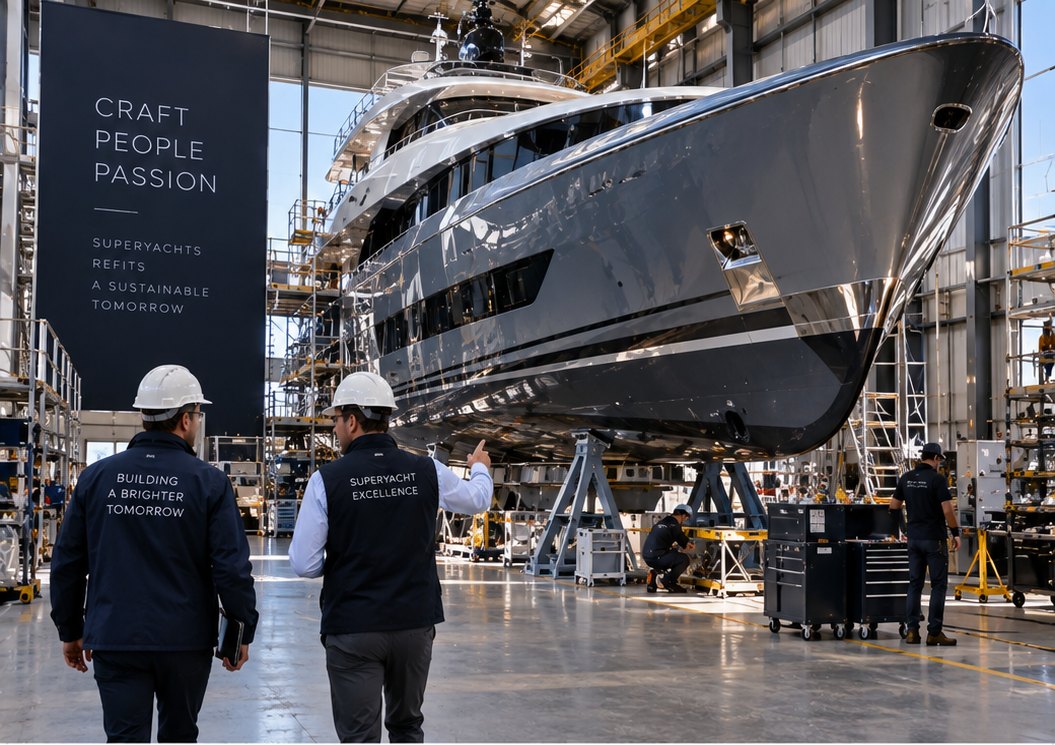
Ask Paul Thompson / Editorial a question
Be the first reader to react to this article.
Common specification upgrades that solve real problems
For anyone looking at common specification upgrades that solve real problems, the first job is not to decide what looks best.
Common specification upgrades that solve real problems
For anyone looking at common specification upgrades that solve real problems, the first job is not to decide what looks best. It is to establish what problem actually needs solving.
Risk is best dealt with before commitment. That means independent inspection where appropriate, clear written scope, confirmation of insurance implications and an agreed process for defects or incomplete work. In higher-value transactions, legal, tax and regulatory advice should come from qualified advisers in the relevant jurisdiction. The purpose is not to make every transaction defensive; it is to stop assumptions becoming expensive surprises.
Resale should be considered even by people who intend to keep something for years. Highly personal specifications can be perfectly sensible, but buyers should understand the trade-off. Widely supported equipment, sensible layouts, complete records and recognised maintenance tend to be easier for the next owner to understand. The objective is not to design everything for an unknown future buyer; it is simply to avoid destroying flexibility without a good reason.
Cost also needs to be separated into purchase cost and ownership cost. The second figure is usually less visible. Consumables, routine servicing, insurance, finance, berthing or storage, professional fees, software subscriptions, inspections and eventual replacement items can materially change the economics. A useful quotation is therefore one that makes exclusions obvious.
If a supplier cannot explain what normally falls outside the quoted figure, ask for that clarification before treating two prices as comparable.
After-sales support can be more important than the original specification. A component that is excellent on paper is less attractive if parts take months to arrive or there is no competent service agent where the equipment will be used. The same applies to software-led products: ownership now includes updates, access rights, data and sometimes recurring subscriptions. Find out who supports the system, for how long, and what happens if the original supplier changes hands.
Timing matters. Buying or commissioning under deadline pressure weakens the buyer's position because there is less time to inspect, compare and walk away. Where possible, build the timetable backwards from the date the asset or service is genuinely required. Include survey or inspection time, corrections, training, delivery and a contingency. A realistic programme often reveals that the cheapest-looking option is not the one with the lowest overall cost.
The starting point is use. In large-yacht ownership, design, operation and the superyacht market, two apparently similar products or services can be right for completely different owners because their operating pattern is different. Frequency of use, geography, crew or staffing, storage, servicing access and the length of time you expect to keep the asset all change the answer. Before comparing brands or quotations, write down those constraints.
It sounds basic, but it prevents a specification being chosen for a lifestyle that exists only in the sales material.
Technical claims deserve context. Range, output, capacity, speed, efficiency and performance figures are normally produced under stated conditions. Real use adds weather, load, temperature, fouling, route, operator behaviour and reserve margins. Rather than arguing over a headline number, ask what assumptions sit behind it and what happens when those assumptions change. That produces a much more useful comparison.
Comparison becomes easier if every contender is put through the same questions. Ask for the same operating assumptions, the same delivery point, the same warranty period and the same list of included equipment or services. That turns a collection of sales conversations into something closer to a procurement exercise and exposes the areas where one quotation has quietly omitted an expensive item.
References are useful when they are relevant. A supplier's biggest or most prestigious project may tell you very little about how it handles an ordinary job in your region. Ask instead for examples with a similar scale, operating pattern and timetable. The most useful reference is often the customer who has lived with the product for two or three years and has already needed after-sales support.
The practical test for large-yacht ownership, design, operation and the superyacht market is whether the decision still makes sense when circumstances are less than ideal. Weather changes, schedules move, components fail and people use equipment differently from the designer's neat assumptions. Building a little resilience into the choice usually costs less than trying to recover it afterwards.
The sensible approach is therefore quite conventional: define the job, verify the evidence, price the whole commitment and keep enough margin for the things that never appear in the brochure.
Contributor: Paul Thompson / Editorial / 24SuperYachts
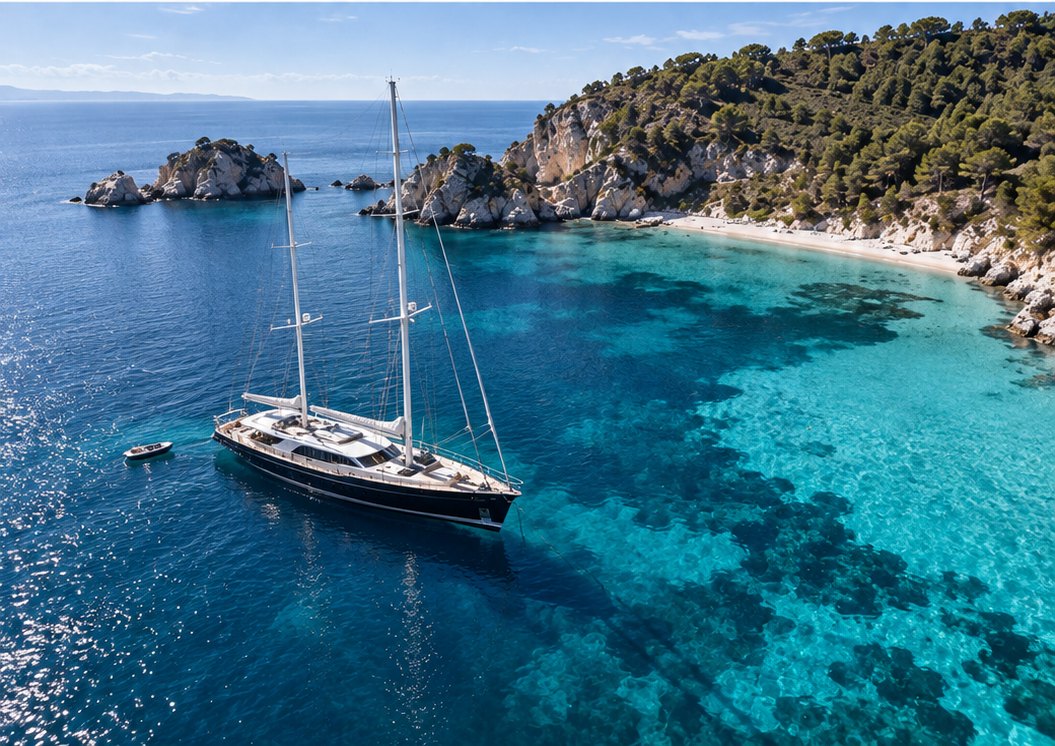
Ask Paul Thompson / Editorial a question
Be the first reader to react to this article.
Large-Yacht Ownership: what buyers should ask about warranties and after-sales support
I have always found that the useful part of large-yacht ownership, design, operation and the superyacht market starts once the brochure language has been stripped away.
Large-Yacht Ownership: what buyers should ask about warranties and after-sales support
I have always found that the useful part of large-yacht ownership, design, operation and the superyacht market starts once the brochure language has been stripped away.
Sustainability claims are increasingly part of the decision as well. The useful question is not whether a product is described as green, but what has actually changed: energy use, fuel consumption, material choice, repairability, service life, emissions, waste or end-of-life handling. Improvements in one area can create compromises in another. Evidence and measured performance are more valuable than broad environmental language.
Finally, insist on a proper handover. Familiarisation, emergency procedures, maintenance intervals, passwords, spare parts, warranty contacts and operating limitations should all be understood before the supplier disappears over the horizon. A surprising number of early problems are not failures at all but gaps in handover. Thirty minutes spent recording the right information can save days later.
Documentation is another practical test. Service records, manuals, certificates, invoices, warranties, software licences and evidence of previous work are not administrative clutter; they are part of the asset. Good records make troubleshooting easier and can support resale. Missing records do not automatically mean there is a problem, but they increase uncertainty, and uncertainty should be reflected in the questions asked, the inspection undertaken and sometimes the price.
Risk is best dealt with before commitment. That means independent inspection where appropriate, clear written scope, confirmation of insurance implications and an agreed process for defects or incomplete work. In higher-value transactions, legal, tax and regulatory advice should come from qualified advisers in the relevant jurisdiction. The purpose is not to make every transaction defensive; it is to stop assumptions becoming expensive surprises.
Resale should be considered even by people who intend to keep something for years. Highly personal specifications can be perfectly sensible, but buyers should understand the trade-off. Widely supported equipment, sensible layouts, complete records and recognised maintenance tend to be easier for the next owner to understand. The objective is not to design everything for an unknown future buyer; it is simply to avoid destroying flexibility without a good reason.
Cost also needs to be separated into purchase cost and ownership cost. The second figure is usually less visible. Consumables, routine servicing, insurance, finance, berthing or storage, professional fees, software subscriptions, inspections and eventual replacement items can materially change the economics. A useful quotation is therefore one that makes exclusions obvious.
If a supplier cannot explain what normally falls outside the quoted figure, ask for that clarification before treating two prices as comparable.
After-sales support can be more important than the original specification. A component that is excellent on paper is less attractive if parts take months to arrive or there is no competent service agent where the equipment will be used. The same applies to software-led products: ownership now includes updates, access rights, data and sometimes recurring subscriptions. Find out who supports the system, for how long, and what happens if the original supplier changes hands.
When money is about to change hands, the sequence matters. Establish identity and authority to sell, agree exactly what is included, record known defects and make any deposit terms clear. Where a survey, valuation or finance approval is part of the transaction, the contract should reflect that process rather than relying on a verbal understanding. Buyers should also know when risk and title transfer, particularly if the asset is moving between jurisdictions.
Market value is evidence, not aspiration. Advertised prices show what sellers hope to achieve; completed transactions, condition, specification, location and time on market give a better picture. A well-presented example can deserve a premium, but a premium still needs a reason. The strongest negotiating position comes from knowing which defects are merely cosmetic, which affect usability and which could lead to immediate capital expenditure.
The practical test for large-yacht ownership, design, operation and the superyacht market is whether the decision still makes sense when circumstances are less than ideal. Weather changes, schedules move, components fail and people use equipment differently from the designer's neat assumptions. Building a little resilience into the choice usually costs less than trying to recover it afterwards.
A measured decision now generally costs less than correcting an enthusiastic one later.
Contributor: Paul Thompson / Editorial / 24SuperYachts

Ask Paul Thompson / Editorial a question
Be the first reader to react to this article.
How to judge claims about sustainability without accepting the marketing
The market has become very good at presenting how to judge claims about sustainability without accepting the marketing as simple.
How to judge claims about sustainability without accepting the marketing
The market has become very good at presenting how to judge claims about sustainability without accepting the marketing as simple. In practice, the details still determine whether it works.
Timing matters. Buying or commissioning under deadline pressure weakens the buyer's position because there is less time to inspect, compare and walk away. Where possible, build the timetable backwards from the date the asset or service is genuinely required. Include survey or inspection time, corrections, training, delivery and a contingency. A realistic programme often reveals that the cheapest-looking option is not the one with the lowest overall cost.
The starting point is use. In large-yacht ownership, design, operation and the superyacht market, two apparently similar products or services can be right for completely different owners because their operating pattern is different. Frequency of use, geography, crew or staffing, storage, servicing access and the length of time you expect to keep the asset all change the answer. Before comparing brands or quotations, write down those constraints.
It sounds basic, but it prevents a specification being chosen for a lifestyle that exists only in the sales material.
Technical claims deserve context. Range, output, capacity, speed, efficiency and performance figures are normally produced under stated conditions. Real use adds weather, load, temperature, fouling, route, operator behaviour and reserve margins. Rather than arguing over a headline number, ask what assumptions sit behind it and what happens when those assumptions change. That produces a much more useful comparison.
Sustainability claims are increasingly part of the decision as well. The useful question is not whether a product is described as green, but what has actually changed: energy use, fuel consumption, material choice, repairability, service life, emissions, waste or end-of-life handling. Improvements in one area can create compromises in another. Evidence and measured performance are more valuable than broad environmental language.
Finally, insist on a proper handover. Familiarisation, emergency procedures, maintenance intervals, passwords, spare parts, warranty contacts and operating limitations should all be understood before the supplier disappears over the horizon. A surprising number of early problems are not failures at all but gaps in handover. Thirty minutes spent recording the right information can save days later.
Documentation is another practical test. Service records, manuals, certificates, invoices, warranties, software licences and evidence of previous work are not administrative clutter; they are part of the asset. Good records make troubleshooting easier and can support resale. Missing records do not automatically mean there is a problem, but they increase uncertainty, and uncertainty should be reflected in the questions asked, the inspection undertaken and sometimes the price.
Risk is best dealt with before commitment. That means independent inspection where appropriate, clear written scope, confirmation of insurance implications and an agreed process for defects or incomplete work. In higher-value transactions, legal, tax and regulatory advice should come from qualified advisers in the relevant jurisdiction. The purpose is not to make every transaction defensive; it is to stop assumptions becoming expensive surprises.
My own shorthand for how to judge claims about sustainability without accepting the marketing is simple: verify the condition, verify the paperwork, understand the support network and calculate the cost on a realistic pattern of use. If any one of those four is unclear, there is still work to do before committing.

How to judge claims about sustainability without accepting the marketing
Energy decisions need a duty-cycle calculation. Average use is less important than the difficult day: the longest passage, the coldest morning, the heaviest load, the remote berth or the turnaround with the least charging time. Design around that case with a sensible reserve and the everyday operation normally becomes straightforward. Design around the brochure average and the owner may spend years managing around the system.
Infrastructure should be checked before hardware is ordered. Available electrical supply, connector type, grid capacity, bunkering arrangements, ventilation, fire protection and local operating rules can all dictate what is practical. In many projects the limiting factor is not the motor, battery or fuel technology; it is the place where the asset has to recharge, refuel or be maintained.
The practical test for large-yacht ownership, design, operation and the superyacht market is whether the decision still makes sense when circumstances are less than ideal. Weather changes, schedules move, components fail and people use equipment differently from the designer's neat assumptions. Building a little resilience into the choice usually costs less than trying to recover it afterwards.
None of this makes the decision difficult. It simply moves attention from presentation to evidence, which is usually where the better value sits.
Contributor: Paul Thompson / Editorial / 24SuperYachts
Ask Paul Thompson / Editorial a question
Be the first reader to react to this article.
Cybersecurity and connected equipment: a growing operational issue
The market has become very good at presenting cybersecurity and connected equipment: a growing operational issue as simple.
Cybersecurity and connected equipment: a growing operational issue
The market has become very good at presenting cybersecurity and connected equipment: a growing operational issue as simple. In practice, the details still determine whether it works.
Resale should be considered even by people who intend to keep something for years. Highly personal specifications can be perfectly sensible, but buyers should understand the trade-off. Widely supported equipment, sensible layouts, complete records and recognised maintenance tend to be easier for the next owner to understand. The objective is not to design everything for an unknown future buyer; it is simply to avoid destroying flexibility without a good reason.
Cost also needs to be separated into purchase cost and ownership cost. The second figure is usually less visible. Consumables, routine servicing, insurance, finance, berthing or storage, professional fees, software subscriptions, inspections and eventual replacement items can materially change the economics. A useful quotation is therefore one that makes exclusions obvious.
If a supplier cannot explain what normally falls outside the quoted figure, ask for that clarification before treating two prices as comparable.
After-sales support can be more important than the original specification. A component that is excellent on paper is less attractive if parts take months to arrive or there is no competent service agent where the equipment will be used. The same applies to software-led products: ownership now includes updates, access rights, data and sometimes recurring subscriptions. Find out who supports the system, for how long, and what happens if the original supplier changes hands.
Timing matters. Buying or commissioning under deadline pressure weakens the buyer's position because there is less time to inspect, compare and walk away. Where possible, build the timetable backwards from the date the asset or service is genuinely required. Include survey or inspection time, corrections, training, delivery and a contingency. A realistic programme often reveals that the cheapest-looking option is not the one with the lowest overall cost.
The starting point is use. In large-yacht ownership, design, operation and the superyacht market, two apparently similar products or services can be right for completely different owners because their operating pattern is different. Frequency of use, geography, crew or staffing, storage, servicing access and the length of time you expect to keep the asset all change the answer. Before comparing brands or quotations, write down those constraints.
It sounds basic, but it prevents a specification being chosen for a lifestyle that exists only in the sales material.
Technical claims deserve context. Range, output, capacity, speed, efficiency and performance figures are normally produced under stated conditions. Real use adds weather, load, temperature, fouling, route, operator behaviour and reserve margins. Rather than arguing over a headline number, ask what assumptions sit behind it and what happens when those assumptions change. That produces a much more useful comparison.
Sustainability claims are increasingly part of the decision as well. The useful question is not whether a product is described as green, but what has actually changed: energy use, fuel consumption, material choice, repairability, service life, emissions, waste or end-of-life handling. Improvements in one area can create compromises in another. Evidence and measured performance are more valuable than broad environmental language.
Connected equipment creates a second maintenance schedule: passwords, access permissions, firmware, backups and subscriptions. Owners should know which systems can be updated remotely, which data leaves the asset and whether loss of an online service affects core operation. A paper or offline record of critical settings is still useful when the problem being diagnosed is the network itself.
Cybersecurity does not need to become a specialist exercise for every user. Basic separation of guest and operational networks, unique credentials, prompt updates and controlled administrator access remove a large proportion of avoidable risk. The more important question for a supplier is whether security has been designed into the product and whether updates will continue throughout its realistic service life.
The practical test for large-yacht ownership, design, operation and the superyacht market is whether the decision still makes sense when circumstances are less than ideal. Weather changes, schedules move, components fail and people use equipment differently from the designer's neat assumptions. Building a little resilience into the choice usually costs less than trying to recover it afterwards.
For most readers, that is enough to narrow the field considerably before serious money or time is committed.
Contributor: Paul Thompson / Editorial / 24SuperYachts
Ask Paul Thompson / Editorial a question
Be the first reader to react to this article.
Large-Yacht Ownership: training and familiarisation: the overlooked part of taking delivery
A good decision in large-yacht ownership, design, operation and the superyacht market rarely comes from one impressive specification.
Large-Yacht Ownership: training and familiarisation: the overlooked part of taking delivery
A good decision in large-yacht ownership, design, operation and the superyacht market rarely comes from one impressive specification. It comes from understanding how the whole package will be used.
Finally, insist on a proper handover. Familiarisation, emergency procedures, maintenance intervals, passwords, spare parts, warranty contacts and operating limitations should all be understood before the supplier disappears over the horizon. A surprising number of early problems are not failures at all but gaps in handover. Thirty minutes spent recording the right information can save days later.
Documentation is another practical test. Service records, manuals, certificates, invoices, warranties, software licences and evidence of previous work are not administrative clutter; they are part of the asset. Good records make troubleshooting easier and can support resale. Missing records do not automatically mean there is a problem, but they increase uncertainty, and uncertainty should be reflected in the questions asked, the inspection undertaken and sometimes the price.
Risk is best dealt with before commitment. That means independent inspection where appropriate, clear written scope, confirmation of insurance implications and an agreed process for defects or incomplete work. In higher-value transactions, legal, tax and regulatory advice should come from qualified advisers in the relevant jurisdiction. The purpose is not to make every transaction defensive; it is to stop assumptions becoming expensive surprises.
Resale should be considered even by people who intend to keep something for years. Highly personal specifications can be perfectly sensible, but buyers should understand the trade-off. Widely supported equipment, sensible layouts, complete records and recognised maintenance tend to be easier for the next owner to understand. The objective is not to design everything for an unknown future buyer; it is simply to avoid destroying flexibility without a good reason.
Cost also needs to be separated into purchase cost and ownership cost. The second figure is usually less visible. Consumables, routine servicing, insurance, finance, berthing or storage, professional fees, software subscriptions, inspections and eventual replacement items can materially change the economics. A useful quotation is therefore one that makes exclusions obvious.
If a supplier cannot explain what normally falls outside the quoted figure, ask for that clarification before treating two prices as comparable.
After-sales support can be more important than the original specification. A component that is excellent on paper is less attractive if parts take months to arrive or there is no competent service agent where the equipment will be used. The same applies to software-led products: ownership now includes updates, access rights, data and sometimes recurring subscriptions. Find out who supports the system, for how long, and what happens if the original supplier changes hands.
Timing matters. Buying or commissioning under deadline pressure weakens the buyer's position because there is less time to inspect, compare and walk away. Where possible, build the timetable backwards from the date the asset or service is genuinely required. Include survey or inspection time, corrections, training, delivery and a contingency. A realistic programme often reveals that the cheapest-looking option is not the one with the lowest overall cost.
Connected equipment creates a second maintenance schedule: passwords, access permissions, firmware, backups and subscriptions. Owners should know which systems can be updated remotely, which data leaves the asset and whether loss of an online service affects core operation. A paper or offline record of critical settings is still useful when the problem being diagnosed is the network itself.
Cybersecurity does not need to become a specialist exercise for every user. Basic separation of guest and operational networks, unique credentials, prompt updates and controlled administrator access remove a large proportion of avoidable risk. The more important question for a supplier is whether security has been designed into the product and whether updates will continue throughout its realistic service life.
The practical test for large-yacht ownership, design, operation and the superyacht market is whether the decision still makes sense when circumstances are less than ideal. Weather changes, schedules move, components fail and people use equipment differently from the designer's neat assumptions. Building a little resilience into the choice usually costs less than trying to recover it afterwards.
The sensible approach is therefore quite conventional: define the job, verify the evidence, price the whole commitment and keep enough margin for the things that never appear in the brochure.
Contributor: Paul Thompson / Editorial / 24SuperYachts
Ask Paul Thompson / Editorial a question
Be the first reader to react to this article.
Five-year thinking: decisions today that affect cost, usability and value later
For anyone looking at five-year thinking: decisions today that affect cost, usability and value later, the first job is not to decide what looks best.
Five-year thinking: decisions today that affect cost, usability and value later
For anyone looking at five-year thinking: decisions today that affect cost, usability and value later, the first job is not to decide what looks best. It is to establish what problem actually needs solving.
The starting point is use. In large-yacht ownership, design, operation and the superyacht market, two apparently similar products or services can be right for completely different owners because their operating pattern is different. Frequency of use, geography, crew or staffing, storage, servicing access and the length of time you expect to keep the asset all change the answer. Before comparing brands or quotations, write down those constraints.
It sounds basic, but it prevents a specification being chosen for a lifestyle that exists only in the sales material.
Technical claims deserve context. Range, output, capacity, speed, efficiency and performance figures are normally produced under stated conditions. Real use adds weather, load, temperature, fouling, route, operator behaviour and reserve margins. Rather than arguing over a headline number, ask what assumptions sit behind it and what happens when those assumptions change. That produces a much more useful comparison.
Sustainability claims are increasingly part of the decision as well. The useful question is not whether a product is described as green, but what has actually changed: energy use, fuel consumption, material choice, repairability, service life, emissions, waste or end-of-life handling. Improvements in one area can create compromises in another. Evidence and measured performance are more valuable than broad environmental language.
Finally, insist on a proper handover. Familiarisation, emergency procedures, maintenance intervals, passwords, spare parts, warranty contacts and operating limitations should all be understood before the supplier disappears over the horizon. A surprising number of early problems are not failures at all but gaps in handover. Thirty minutes spent recording the right information can save days later.
Documentation is another practical test. Service records, manuals, certificates, invoices, warranties, software licences and evidence of previous work are not administrative clutter; they are part of the asset. Good records make troubleshooting easier and can support resale. Missing records do not automatically mean there is a problem, but they increase uncertainty, and uncertainty should be reflected in the questions asked, the inspection undertaken and sometimes the price.
Risk is best dealt with before commitment. That means independent inspection where appropriate, clear written scope, confirmation of insurance implications and an agreed process for defects or incomplete work. In higher-value transactions, legal, tax and regulatory advice should come from qualified advisers in the relevant jurisdiction. The purpose is not to make every transaction defensive; it is to stop assumptions becoming expensive surprises.
Resale should be considered even by people who intend to keep something for years. Highly personal specifications can be perfectly sensible, but buyers should understand the trade-off. Widely supported equipment, sensible layouts, complete records and recognised maintenance tend to be easier for the next owner to understand. The objective is not to design everything for an unknown future buyer; it is simply to avoid destroying flexibility without a good reason.
Comparison becomes easier if every contender is put through the same questions. Ask for the same operating assumptions, the same delivery point, the same warranty period and the same list of included equipment or services. That turns a collection of sales conversations into something closer to a procurement exercise and exposes the areas where one quotation has quietly omitted an expensive item.
References are useful when they are relevant. A supplier's biggest or most prestigious project may tell you very little about how it handles an ordinary job in your region. Ask instead for examples with a similar scale, operating pattern and timetable. The most useful reference is often the customer who has lived with the product for two or three years and has already needed after-sales support.
The practical test for large-yacht ownership, design, operation and the superyacht market is whether the decision still makes sense when circumstances are less than ideal. Weather changes, schedules move, components fail and people use equipment differently from the designer's neat assumptions. Building a little resilience into the choice usually costs less than trying to recover it afterwards.
That is the point worth carrying into the next conversation with a broker, builder, supplier or adviser: ask what the choice will be like to own and operate, not merely what it is like to buy.
Contributor: Paul Thompson / Editorial / 24SuperYachts
Ask Paul Thompson / Editorial a question
Be the first reader to react to this article.
The decisions reshaping superyachts as 2027 approaches
Every quarter produces plenty of announcements in large superyachts, ownership, design, operations, refit and the professional superyacht sector, but the useful story is usually not the loudest one. I am more interested in the changes that alter what somebody buys, what it costs to operate, how quickly support arrives and whether the decision still makes sense several years later.
The decisions reshaping superyachts as 2027 approaches
Every quarter produces plenty of announcements in large superyachts, ownership, design, operations, refit and the professional superyacht sector, but the useful story is usually not the loudest one. I am more interested in the changes that alter what somebody buys, what it costs to operate, how quickly support arrives and whether the decision still makes sense several years later.
What is changing
Start by defining the job in plain language. What does the buyer, owner, operator or guest actually need to achieve, and under what conditions? That immediately makes comparison easier. A specification that is excellent for one use can be unnecessarily expensive or actively inconvenient for another. I would write down the non-negotiables, the desirable extras and the things that merely look attractive in a sales presentation.
Then verify the basics. Ask for documents, dimensions, service intervals, exclusions, lead times, warranties, references or operating data where they are relevant. If a claim materially affects the decision, it should be capable of being explained without resorting to vague phrases. This is particularly important where two offers appear similar but include different levels of preparation, support or responsibility.
Why it matters in practice
Price needs context. The cheapest quotation can become the expensive option once delivery, installation, travel, consumables, finance, insurance, maintenance, downtime or replacement are included. Equally, paying more is not evidence of quality. The useful comparison is total cost against the benefit that will actually be used.
Support deserves the same scrutiny as the initial product or service. Who answers the telephone when something goes wrong? Is technical knowledge held in-house or passed elsewhere? Are parts, people or replacements readily available? A realistic response time can be more valuable than an impressive feature that becomes unusable for weeks when a minor component fails.
There is also a human factor. Complicated systems and elaborate processes are often sold on capability, but somebody has to live with them. Training, handover, documentation and ease of use should therefore be part of the buying decision, not an afterthought.
What readers should watch next
Before committing, I would reduce the decision to a short written comparison. What problem does each option solve, what evidence supports the claims, what is excluded, what are the likely running costs, and what happens if circumstances change? That final question is important because resale, upgrade, relocation, regulation and changing patterns of use can alter the economics surprisingly quickly.
The strongest decisions in large superyachts, ownership, design, operations, refit and the professional superyacht sector are rarely the ones with the longest specification or the most fashionable name attached. They are the ones where the requirement was understood at the beginning, the evidence was checked, the inconvenient questions were asked and the owner or customer knew exactly what would happen after the deal was done.
That is also the standard I would apply to this category in the magazine. It should help a reader make a better decision, not simply give another supplier somewhere to repeat a brochure.
Contributor: Paul Thompson / Editorial / 24SuperYachts
Ask Paul Thompson / Editorial a question
Be the first reader to react to this article.
Inside the details buyers and operators often discover too late in superyachts
The expensive mistakes in large superyachts, ownership, design, operations, refit and the professional superyacht sector are rarely caused by one spectacular failure. More often they begin with a small assumption that nobody checked. That is why I would start with the detail that sits behind the brochure, quotation or listing rather than the headline promise.
Inside the details buyers and operators often discover too late in superyachts
The expensive mistakes in large superyachts, ownership, design, operations, refit and the professional superyacht sector are rarely caused by one spectacular failure. More often they begin with a small assumption that nobody checked. That is why I would start with the detail that sits behind the brochure, quotation or listing rather than the headline promise.
The overlooked detail
Start by defining the job in plain language. What does the buyer, owner, operator or guest actually need to achieve, and under what conditions? That immediately makes comparison easier. A specification that is excellent for one use can be unnecessarily expensive or actively inconvenient for another. I would write down the non-negotiables, the desirable extras and the things that merely look attractive in a sales presentation.
Then verify the basics. Ask for documents, dimensions, service intervals, exclusions, lead times, warranties, references or operating data where they are relevant. If a claim materially affects the decision, it should be capable of being explained without resorting to vague phrases. This is particularly important where two offers appear similar but include different levels of preparation, support or responsibility.
Where cost and risk appear
Price needs context. The cheapest quotation can become the expensive option once delivery, installation, travel, consumables, finance, insurance, maintenance, downtime or replacement are included. Equally, paying more is not evidence of quality. The useful comparison is total cost against the benefit that will actually be used.
Support deserves the same scrutiny as the initial product or service. Who answers the telephone when something goes wrong? Is technical knowledge held in-house or passed elsewhere? Are parts, people or replacements readily available? A realistic response time can be more valuable than an impressive feature that becomes unusable for weeks when a minor component fails.
There is also a human factor. Complicated systems and elaborate processes are often sold on capability, but somebody has to live with them. Training, handover, documentation and ease of use should therefore be part of the buying decision, not an afterthought.
Questions to ask before committing
Before committing, I would reduce the decision to a short written comparison. What problem does each option solve, what evidence supports the claims, what is excluded, what are the likely running costs, and what happens if circumstances change? That final question is important because resale, upgrade, relocation, regulation and changing patterns of use can alter the economics surprisingly quickly.
The strongest decisions in large superyachts, ownership, design, operations, refit and the professional superyacht sector are rarely the ones with the longest specification or the most fashionable name attached. They are the ones where the requirement was understood at the beginning, the evidence was checked, the inconvenient questions were asked and the owner or customer knew exactly what would happen after the deal was done.
That is also the standard I would apply to this category in the magazine. It should help a reader make a better decision, not simply give another supplier somewhere to repeat a brochure.
Contributor: Paul Thompson / Editorial / 24SuperYachts
Ask Paul Thompson / Editorial a question
Be the first reader to react to this article.
What is genuinely worth watching now in superyachts
New does not automatically mean better. In large superyachts, ownership, design, operations, refit and the professional superyacht sector, a launch is worth attention when it removes a genuine inconvenience, reduces operating burden, improves safety or gives the buyer more useful choice. Everything else can wait until the excitement has settled.
What is genuinely worth watching now in superyachts
New does not automatically mean better. In large superyachts, ownership, design, operations, refit and the professional superyacht sector, a launch is worth attention when it removes a genuine inconvenience, reduces operating burden, improves safety or gives the buyer more useful choice. Everything else can wait until the excitement has settled.
What is actually new
Start by defining the job in plain language. What does the buyer, owner, operator or guest actually need to achieve, and under what conditions? That immediately makes comparison easier. A specification that is excellent for one use can be unnecessarily expensive or actively inconvenient for another. I would write down the non-negotiables, the desirable extras and the things that merely look attractive in a sales presentation.
Then verify the basics. Ask for documents, dimensions, service intervals, exclusions, lead times, warranties, references or operating data where they are relevant. If a claim materially affects the decision, it should be capable of being explained without resorting to vague phrases. This is particularly important where two offers appear similar but include different levels of preparation, support or responsibility.
Separating substance from launch noise
Price needs context. The cheapest quotation can become the expensive option once delivery, installation, travel, consumables, finance, insurance, maintenance, downtime or replacement are included. Equally, paying more is not evidence of quality. The useful comparison is total cost against the benefit that will actually be used.
Support deserves the same scrutiny as the initial product or service. Who answers the telephone when something goes wrong? Is technical knowledge held in-house or passed elsewhere? Are parts, people or replacements readily available? A realistic response time can be more valuable than an impressive feature that becomes unusable for weeks when a minor component fails.
There is also a human factor. Complicated systems and elaborate processes are often sold on capability, but somebody has to live with them. Training, handover, documentation and ease of use should therefore be part of the buying decision, not an afterthought.
Where it could prove useful
Before committing, I would reduce the decision to a short written comparison. What problem does each option solve, what evidence supports the claims, what is excluded, what are the likely running costs, and what happens if circumstances change? That final question is important because resale, upgrade, relocation, regulation and changing patterns of use can alter the economics surprisingly quickly.
The strongest decisions in large superyachts, ownership, design, operations, refit and the professional superyacht sector are rarely the ones with the longest specification or the most fashionable name attached. They are the ones where the requirement was understood at the beginning, the evidence was checked, the inconvenient questions were asked and the owner or customer knew exactly what would happen after the deal was done.
That is also the standard I would apply to this category in the magazine. It should help a reader make a better decision, not simply give another supplier somewhere to repeat a brochure.
Contributor: Paul Thompson / Editorial / 24SuperYachts
Ask Paul Thompson / Editorial a question
Be the first reader to react to this article.
A professional's checklist for making better decisions in superyachts
A useful professional contribution should leave the reader with something they can apply. For large superyachts, ownership, design, operations, refit and the professional superyacht sector, that means concentrating on the requirement, the evidence and the consequences of the decision rather than turning the page into a sales pitch.
A professional's checklist for making better decisions in superyachts
A useful professional contribution should leave the reader with something they can apply. For large superyachts, ownership, design, operations, refit and the professional superyacht sector, that means concentrating on the requirement, the evidence and the consequences of the decision rather than turning the page into a sales pitch.
Start with the requirement
Start by defining the job in plain language. What does the buyer, owner, operator or guest actually need to achieve, and under what conditions? That immediately makes comparison easier. A specification that is excellent for one use can be unnecessarily expensive or actively inconvenient for another. I would write down the non-negotiables, the desirable extras and the things that merely look attractive in a sales presentation.
Then verify the basics. Ask for documents, dimensions, service intervals, exclusions, lead times, warranties, references or operating data where they are relevant. If a claim materially affects the decision, it should be capable of being explained without resorting to vague phrases. This is particularly important where two offers appear similar but include different levels of preparation, support or responsibility.
Check the evidence
Price needs context. The cheapest quotation can become the expensive option once delivery, installation, travel, consumables, finance, insurance, maintenance, downtime or replacement are included. Equally, paying more is not evidence of quality. The useful comparison is total cost against the benefit that will actually be used.
Support deserves the same scrutiny as the initial product or service. Who answers the telephone when something goes wrong? Is technical knowledge held in-house or passed elsewhere? Are parts, people or replacements readily available? A realistic response time can be more valuable than an impressive feature that becomes unusable for weeks when a minor component fails.
There is also a human factor. Complicated systems and elaborate processes are often sold on capability, but somebody has to live with them. Training, handover, documentation and ease of use should therefore be part of the buying decision, not an afterthought.
Keep the decision commercially grounded
Before committing, I would reduce the decision to a short written comparison. What problem does each option solve, what evidence supports the claims, what is excluded, what are the likely running costs, and what happens if circumstances change? That final question is important because resale, upgrade, relocation, regulation and changing patterns of use can alter the economics surprisingly quickly.
The strongest decisions in large superyachts, ownership, design, operations, refit and the professional superyacht sector are rarely the ones with the longest specification or the most fashionable name attached. They are the ones where the requirement was understood at the beginning, the evidence was checked, the inconvenient questions were asked and the owner or customer knew exactly what would happen after the deal was done.
That is also the standard I would apply to this category in the magazine. It should help a reader make a better decision, not simply give another supplier somewhere to repeat a brochure.
Contributor: Editorial Desk / Guest Contributor Brief / 24SuperYachts
Ask Editorial Desk / Guest Contributor Brief a question
Be the first reader to react to this article.
The questions I would ask anyone selling expertise in superyachts
If I had an hour with a specialist in large superyachts, ownership, design, operations, refit and the professional superyacht sector, I would spend surprisingly little of it asking what they sell. The more revealing questions concern what they refuse to recommend, what commonly goes wrong, how they deal with delays and what happens after the invoice has been paid.
The questions I would ask anyone selling expertise in superyachts
If I had an hour with a specialist in large superyachts, ownership, design, operations, refit and the professional superyacht sector, I would spend surprisingly little of it asking what they sell. The more revealing questions concern what they refuse to recommend, what commonly goes wrong, how they deal with delays and what happens after the invoice has been paid.
Questions about capability
Start by defining the job in plain language. What does the buyer, owner, operator or guest actually need to achieve, and under what conditions? That immediately makes comparison easier. A specification that is excellent for one use can be unnecessarily expensive or actively inconvenient for another. I would write down the non-negotiables, the desirable extras and the things that merely look attractive in a sales presentation.
Then verify the basics. Ask for documents, dimensions, service intervals, exclusions, lead times, warranties, references or operating data where they are relevant. If a claim materially affects the decision, it should be capable of being explained without resorting to vague phrases. This is particularly important where two offers appear similar but include different levels of preparation, support or responsibility.
Questions about delivery
Price needs context. The cheapest quotation can become the expensive option once delivery, installation, travel, consumables, finance, insurance, maintenance, downtime or replacement are included. Equally, paying more is not evidence of quality. The useful comparison is total cost against the benefit that will actually be used.
Support deserves the same scrutiny as the initial product or service. Who answers the telephone when something goes wrong? Is technical knowledge held in-house or passed elsewhere? Are parts, people or replacements readily available? A realistic response time can be more valuable than an impressive feature that becomes unusable for weeks when a minor component fails.
There is also a human factor. Complicated systems and elaborate processes are often sold on capability, but somebody has to live with them. Training, handover, documentation and ease of use should therefore be part of the buying decision, not an afterthought.
Questions about support after the sale
Before committing, I would reduce the decision to a short written comparison. What problem does each option solve, what evidence supports the claims, what is excluded, what are the likely running costs, and what happens if circumstances change? That final question is important because resale, upgrade, relocation, regulation and changing patterns of use can alter the economics surprisingly quickly.
The strongest decisions in large superyachts, ownership, design, operations, refit and the professional superyacht sector are rarely the ones with the longest specification or the most fashionable name attached. They are the ones where the requirement was understood at the beginning, the evidence was checked, the inconvenient questions were asked and the owner or customer knew exactly what would happen after the deal was done.
That is also the standard I would apply to this category in the magazine. It should help a reader make a better decision, not simply give another supplier somewhere to repeat a brochure.
Contributor: Paul Thompson / Editorial / 24SuperYachts
Ask Paul Thompson / Editorial a question
Be the first reader to react to this article.
Why practical evidence matters more than fashionable claims in superyachts
There is no shortage of confident language around large superyachts, ownership, design, operations, refit and the professional superyacht sector. The difficulty is that confidence is not evidence. Buyers and operators are better served by information that can be checked: specifications, service commitments, operating limits, references, documentation and a clear explanation of cost.
Why practical evidence matters more than fashionable claims in superyachts
There is no shortage of confident language around large superyachts, ownership, design, operations, refit and the professional superyacht sector. The difficulty is that confidence is not evidence. Buyers and operators are better served by information that can be checked: specifications, service commitments, operating limits, references, documentation and a clear explanation of cost.
The problem with easy claims
Start by defining the job in plain language. What does the buyer, owner, operator or guest actually need to achieve, and under what conditions? That immediately makes comparison easier. A specification that is excellent for one use can be unnecessarily expensive or actively inconvenient for another. I would write down the non-negotiables, the desirable extras and the things that merely look attractive in a sales presentation.
Then verify the basics. Ask for documents, dimensions, service intervals, exclusions, lead times, warranties, references or operating data where they are relevant. If a claim materially affects the decision, it should be capable of being explained without resorting to vague phrases. This is particularly important where two offers appear similar but include different levels of preparation, support or responsibility.
What better evidence looks like
Price needs context. The cheapest quotation can become the expensive option once delivery, installation, travel, consumables, finance, insurance, maintenance, downtime or replacement are included. Equally, paying more is not evidence of quality. The useful comparison is total cost against the benefit that will actually be used.
Support deserves the same scrutiny as the initial product or service. Who answers the telephone when something goes wrong? Is technical knowledge held in-house or passed elsewhere? Are parts, people or replacements readily available? A realistic response time can be more valuable than an impressive feature that becomes unusable for weeks when a minor component fails.
There is also a human factor. Complicated systems and elaborate processes are often sold on capability, but somebody has to live with them. Training, handover, documentation and ease of use should therefore be part of the buying decision, not an afterthought.
A more useful way to decide
Before committing, I would reduce the decision to a short written comparison. What problem does each option solve, what evidence supports the claims, what is excluded, what are the likely running costs, and what happens if circumstances change? That final question is important because resale, upgrade, relocation, regulation and changing patterns of use can alter the economics surprisingly quickly.
The strongest decisions in large superyachts, ownership, design, operations, refit and the professional superyacht sector are rarely the ones with the longest specification or the most fashionable name attached. They are the ones where the requirement was understood at the beginning, the evidence was checked, the inconvenient questions were asked and the owner or customer knew exactly what would happen after the deal was done.
That is also the standard I would apply to this category in the magazine. It should help a reader make a better decision, not simply give another supplier somewhere to repeat a brochure.
Contributor: Paul Thompson / Editorial / 24SuperYachts
Ask Paul Thompson / Editorial a question
Be the first reader to react to this article.
Standard specification or bespoke solution: where should superyachts draw the line?
One recurring argument in large superyachts, ownership, design, operations, refit and the professional superyacht sector is whether the safest route is a proven standard package or a solution tailored closely to the individual user. Both approaches can be right, and both can become expensive when chosen for the wrong reason.
Standard specification or bespoke solution: where should superyachts draw the line?
One recurring argument in large superyachts, ownership, design, operations, refit and the professional superyacht sector is whether the safest route is a proven standard package or a solution tailored closely to the individual user. Both approaches can be right, and both can become expensive when chosen for the wrong reason.
The case for standardisation
Start by defining the job in plain language. What does the buyer, owner, operator or guest actually need to achieve, and under what conditions? That immediately makes comparison easier. A specification that is excellent for one use can be unnecessarily expensive or actively inconvenient for another. I would write down the non-negotiables, the desirable extras and the things that merely look attractive in a sales presentation.
Then verify the basics. Ask for documents, dimensions, service intervals, exclusions, lead times, warranties, references or operating data where they are relevant. If a claim materially affects the decision, it should be capable of being explained without resorting to vague phrases. This is particularly important where two offers appear similar but include different levels of preparation, support or responsibility.
The case for customisation
Price needs context. The cheapest quotation can become the expensive option once delivery, installation, travel, consumables, finance, insurance, maintenance, downtime or replacement are included. Equally, paying more is not evidence of quality. The useful comparison is total cost against the benefit that will actually be used.
Support deserves the same scrutiny as the initial product or service. Who answers the telephone when something goes wrong? Is technical knowledge held in-house or passed elsewhere? Are parts, people or replacements readily available? A realistic response time can be more valuable than an impressive feature that becomes unusable for weeks when a minor component fails.
There is also a human factor. Complicated systems and elaborate processes are often sold on capability, but somebody has to live with them. Training, handover, documentation and ease of use should therefore be part of the buying decision, not an afterthought.
Where the sensible middle ground sits
Before committing, I would reduce the decision to a short written comparison. What problem does each option solve, what evidence supports the claims, what is excluded, what are the likely running costs, and what happens if circumstances change? That final question is important because resale, upgrade, relocation, regulation and changing patterns of use can alter the economics surprisingly quickly.
The strongest decisions in large superyachts, ownership, design, operations, refit and the professional superyacht sector are rarely the ones with the longest specification or the most fashionable name attached. They are the ones where the requirement was understood at the beginning, the evidence was checked, the inconvenient questions were asked and the owner or customer knew exactly what would happen after the deal was done.
That is also the standard I would apply to this category in the magazine. It should help a reader make a better decision, not simply give another supplier somewhere to repeat a brochure.
Contributor: Paul Thompson / Editorial / 24SuperYachts
Ask Paul Thompson / Editorial a question
Be the first reader to react to this article.
What experienced people check first in superyachts
People who work around large superyachts, ownership, design, operations, refit and the professional superyacht sector every day tend to notice different things from a first-time buyer. They look past presentation and start with the awkward details: access, records, response times, condition, exclusions, compatibility and who is actually responsible when something stops working.
What experienced people check first in superyachts
People who work around large superyachts, ownership, design, operations, refit and the professional superyacht sector every day tend to notice different things from a first-time buyer. They look past presentation and start with the awkward details: access, records, response times, condition, exclusions, compatibility and who is actually responsible when something stops working.
The first five minutes
Start by defining the job in plain language. What does the buyer, owner, operator or guest actually need to achieve, and under what conditions? That immediately makes comparison easier. A specification that is excellent for one use can be unnecessarily expensive or actively inconvenient for another. I would write down the non-negotiables, the desirable extras and the things that merely look attractive in a sales presentation.
Then verify the basics. Ask for documents, dimensions, service intervals, exclusions, lead times, warranties, references or operating data where they are relevant. If a claim materially affects the decision, it should be capable of being explained without resorting to vague phrases. This is particularly important where two offers appear similar but include different levels of preparation, support or responsibility.
The paperwork and detail
Price needs context. The cheapest quotation can become the expensive option once delivery, installation, travel, consumables, finance, insurance, maintenance, downtime or replacement are included. Equally, paying more is not evidence of quality. The useful comparison is total cost against the benefit that will actually be used.
Support deserves the same scrutiny as the initial product or service. Who answers the telephone when something goes wrong? Is technical knowledge held in-house or passed elsewhere? Are parts, people or replacements readily available? A realistic response time can be more valuable than an impressive feature that becomes unusable for weeks when a minor component fails.
There is also a human factor. Complicated systems and elaborate processes are often sold on capability, but somebody has to live with them. Training, handover, documentation and ease of use should therefore be part of the buying decision, not an afterthought.
The clues that justify a second look
Before committing, I would reduce the decision to a short written comparison. What problem does each option solve, what evidence supports the claims, what is excluded, what are the likely running costs, and what happens if circumstances change? That final question is important because resale, upgrade, relocation, regulation and changing patterns of use can alter the economics surprisingly quickly.
The strongest decisions in large superyachts, ownership, design, operations, refit and the professional superyacht sector are rarely the ones with the longest specification or the most fashionable name attached. They are the ones where the requirement was understood at the beginning, the evidence was checked, the inconvenient questions were asked and the owner or customer knew exactly what would happen after the deal was done.
That is also the standard I would apply to this category in the magazine. It should help a reader make a better decision, not simply give another supplier somewhere to repeat a brochure.
Contributor: Paul Thompson / Editorial / 24SuperYachts
Ask Paul Thompson / Editorial a question
Be the first reader to react to this article.
How to get more from the real-world experience of superyachts
The best way to understand large superyachts, ownership, design, operations, refit and the professional superyacht sector is to experience it under conditions that resemble real use. A polished demonstration can be useful, but it should not prevent straightforward questions about inconvenience, noise, waiting time, staffing, storage, maintenance or the parts of the experience that happen after the photograph.
How to get more from the real-world experience of superyachts
The best way to understand large superyachts, ownership, design, operations, refit and the professional superyacht sector is to experience it under conditions that resemble real use. A polished demonstration can be useful, but it should not prevent straightforward questions about inconvenience, noise, waiting time, staffing, storage, maintenance or the parts of the experience that happen after the photograph.
Before you arrive
Start by defining the job in plain language. What does the buyer, owner, operator or guest actually need to achieve, and under what conditions? That immediately makes comparison easier. A specification that is excellent for one use can be unnecessarily expensive or actively inconvenient for another. I would write down the non-negotiables, the desirable extras and the things that merely look attractive in a sales presentation.
Then verify the basics. Ask for documents, dimensions, service intervals, exclusions, lead times, warranties, references or operating data where they are relevant. If a claim materially affects the decision, it should be capable of being explained without resorting to vague phrases. This is particularly important where two offers appear similar but include different levels of preparation, support or responsibility.
During the experience
Price needs context. The cheapest quotation can become the expensive option once delivery, installation, travel, consumables, finance, insurance, maintenance, downtime or replacement are included. Equally, paying more is not evidence of quality. The useful comparison is total cost against the benefit that will actually be used.
Support deserves the same scrutiny as the initial product or service. Who answers the telephone when something goes wrong? Is technical knowledge held in-house or passed elsewhere? Are parts, people or replacements readily available? A realistic response time can be more valuable than an impressive feature that becomes unusable for weeks when a minor component fails.
There is also a human factor. Complicated systems and elaborate processes are often sold on capability, but somebody has to live with them. Training, handover, documentation and ease of use should therefore be part of the buying decision, not an afterthought.
What to assess afterwards
Before committing, I would reduce the decision to a short written comparison. What problem does each option solve, what evidence supports the claims, what is excluded, what are the likely running costs, and what happens if circumstances change? That final question is important because resale, upgrade, relocation, regulation and changing patterns of use can alter the economics surprisingly quickly.
The strongest decisions in large superyachts, ownership, design, operations, refit and the professional superyacht sector are rarely the ones with the longest specification or the most fashionable name attached. They are the ones where the requirement was understood at the beginning, the evidence was checked, the inconvenient questions were asked and the owner or customer knew exactly what would happen after the deal was done.
That is also the standard I would apply to this category in the magazine. It should help a reader make a better decision, not simply give another supplier somewhere to repeat a brochure.
Contributor: Paul Thompson / Editorial / 24SuperYachts
Ask Paul Thompson / Editorial a question
Be the first reader to react to this article.
How to review products and services in superyachts without being distracted by marketing
A review of anything connected with large superyachts, ownership, design, operations, refit and the professional superyacht sector should begin before the reviewer sees the product. Decide what matters first. Otherwise the most impressive feature in the room has a habit of becoming the most important feature in the review, whether it deserves to or not.
How to review products and services in superyachts without being distracted by marketing
A review of anything connected with large superyachts, ownership, design, operations, refit and the professional superyacht sector should begin before the reviewer sees the product. Decide what matters first. Otherwise the most impressive feature in the room has a habit of becoming the most important feature in the review, whether it deserves to or not.
Set the test before the product
Start by defining the job in plain language. What does the buyer, owner, operator or guest actually need to achieve, and under what conditions? That immediately makes comparison easier. A specification that is excellent for one use can be unnecessarily expensive or actively inconvenient for another. I would write down the non-negotiables, the desirable extras and the things that merely look attractive in a sales presentation.
Then verify the basics. Ask for documents, dimensions, service intervals, exclusions, lead times, warranties, references or operating data where they are relevant. If a claim materially affects the decision, it should be capable of being explained without resorting to vague phrases. This is particularly important where two offers appear similar but include different levels of preparation, support or responsibility.
Use realistic conditions
Price needs context. The cheapest quotation can become the expensive option once delivery, installation, travel, consumables, finance, insurance, maintenance, downtime or replacement are included. Equally, paying more is not evidence of quality. The useful comparison is total cost against the benefit that will actually be used.
Support deserves the same scrutiny as the initial product or service. Who answers the telephone when something goes wrong? Is technical knowledge held in-house or passed elsewhere? Are parts, people or replacements readily available? A realistic response time can be more valuable than an impressive feature that becomes unusable for weeks when a minor component fails.
There is also a human factor. Complicated systems and elaborate processes are often sold on capability, but somebody has to live with them. Training, handover, documentation and ease of use should therefore be part of the buying decision, not an afterthought.
Judge ownership as well as performance
Before committing, I would reduce the decision to a short written comparison. What problem does each option solve, what evidence supports the claims, what is excluded, what are the likely running costs, and what happens if circumstances change? That final question is important because resale, upgrade, relocation, regulation and changing patterns of use can alter the economics surprisingly quickly.
The strongest decisions in large superyachts, ownership, design, operations, refit and the professional superyacht sector are rarely the ones with the longest specification or the most fashionable name attached. They are the ones where the requirement was understood at the beginning, the evidence was checked, the inconvenient questions were asked and the owner or customer knew exactly what would happen after the deal was done.
That is also the standard I would apply to this category in the magazine. It should help a reader make a better decision, not simply give another supplier somewhere to repeat a brochure.
Contributor: Paul Thompson / Editorial / 24SuperYachts
Ask Paul Thompson / Editorial a question
Be the first reader to react to this article.
How to read a superyachts listing before making the first call
A classified advertisement in large superyachts, ownership, design, operations, refit and the professional superyacht sector is an invitation to investigate, not proof of condition or value. Good listings make that investigation easier; weak ones often reveal themselves through what they omit.
How to read a superyachts listing before making the first call
A classified advertisement in large superyachts, ownership, design, operations, refit and the professional superyacht sector is an invitation to investigate, not proof of condition or value. Good listings make that investigation easier; weak ones often reveal themselves through what they omit.
Read between the lines
Start by defining the job in plain language. What does the buyer, owner, operator or guest actually need to achieve, and under what conditions? That immediately makes comparison easier. A specification that is excellent for one use can be unnecessarily expensive or actively inconvenient for another. I would write down the non-negotiables, the desirable extras and the things that merely look attractive in a sales presentation.
Then verify the basics. Ask for documents, dimensions, service intervals, exclusions, lead times, warranties, references or operating data where they are relevant. If a claim materially affects the decision, it should be capable of being explained without resorting to vague phrases. This is particularly important where two offers appear similar but include different levels of preparation, support or responsibility.
Verify before travelling or paying
Price needs context. The cheapest quotation can become the expensive option once delivery, installation, travel, consumables, finance, insurance, maintenance, downtime or replacement are included. Equally, paying more is not evidence of quality. The useful comparison is total cost against the benefit that will actually be used.
Support deserves the same scrutiny as the initial product or service. Who answers the telephone when something goes wrong? Is technical knowledge held in-house or passed elsewhere? Are parts, people or replacements readily available? A realistic response time can be more valuable than an impressive feature that becomes unusable for weeks when a minor component fails.
There is also a human factor. Complicated systems and elaborate processes are often sold on capability, but somebody has to live with them. Training, handover, documentation and ease of use should therefore be part of the buying decision, not an afterthought.
Compare total proposition, not asking price
Before committing, I would reduce the decision to a short written comparison. What problem does each option solve, what evidence supports the claims, what is excluded, what are the likely running costs, and what happens if circumstances change? That final question is important because resale, upgrade, relocation, regulation and changing patterns of use can alter the economics surprisingly quickly.
The strongest decisions in large superyachts, ownership, design, operations, refit and the professional superyacht sector are rarely the ones with the longest specification or the most fashionable name attached. They are the ones where the requirement was understood at the beginning, the evidence was checked, the inconvenient questions were asked and the owner or customer knew exactly what would happen after the deal was done.
That is also the standard I would apply to this category in the magazine. It should help a reader make a better decision, not simply give another supplier somewhere to repeat a brochure.
Contributor: Paul Thompson / Editorial / 24SuperYachts
Ask Paul Thompson / Editorial a question
Be the first reader to react to this article.
The questions readers should be asking about superyachts right now
The most useful reader questions about large superyachts, ownership, design, operations, refit and the professional superyacht sector are usually practical rather than glamorous. What will it cost after purchase? Who supports it? What happens when plans change? Which claims can be verified? Those questions deserve more space than another page of adjectives.
The questions readers should be asking about superyachts right now
The most useful reader questions about large superyachts, ownership, design, operations, refit and the professional superyacht sector are usually practical rather than glamorous. What will it cost after purchase? Who supports it? What happens when plans change? Which claims can be verified? Those questions deserve more space than another page of adjectives.
Cost and value
Start by defining the job in plain language. What does the buyer, owner, operator or guest actually need to achieve, and under what conditions? That immediately makes comparison easier. A specification that is excellent for one use can be unnecessarily expensive or actively inconvenient for another. I would write down the non-negotiables, the desirable extras and the things that merely look attractive in a sales presentation.
Then verify the basics. Ask for documents, dimensions, service intervals, exclusions, lead times, warranties, references or operating data where they are relevant. If a claim materially affects the decision, it should be capable of being explained without resorting to vague phrases. This is particularly important where two offers appear similar but include different levels of preparation, support or responsibility.
Service and accountability
Price needs context. The cheapest quotation can become the expensive option once delivery, installation, travel, consumables, finance, insurance, maintenance, downtime or replacement are included. Equally, paying more is not evidence of quality. The useful comparison is total cost against the benefit that will actually be used.
Support deserves the same scrutiny as the initial product or service. Who answers the telephone when something goes wrong? Is technical knowledge held in-house or passed elsewhere? Are parts, people or replacements readily available? A realistic response time can be more valuable than an impressive feature that becomes unusable for weeks when a minor component fails.
There is also a human factor. Complicated systems and elaborate processes are often sold on capability, but somebody has to live with them. Training, handover, documentation and ease of use should therefore be part of the buying decision, not an afterthought.
The questions that deserve clearer answers
Before committing, I would reduce the decision to a short written comparison. What problem does each option solve, what evidence supports the claims, what is excluded, what are the likely running costs, and what happens if circumstances change? That final question is important because resale, upgrade, relocation, regulation and changing patterns of use can alter the economics surprisingly quickly.
The strongest decisions in large superyachts, ownership, design, operations, refit and the professional superyacht sector are rarely the ones with the longest specification or the most fashionable name attached. They are the ones where the requirement was understood at the beginning, the evidence was checked, the inconvenient questions were asked and the owner or customer knew exactly what would happen after the deal was done.
That is also the standard I would apply to this category in the magazine. It should help a reader make a better decision, not simply give another supplier somewhere to repeat a brochure.
Contributor: Editorial Desk / Reader Questions / 24SuperYachts
Ask Editorial Desk / Reader Questions a question
Be the first reader to react to this article.
What the next five years could change in superyachts
Forecasting large superyachts, ownership, design, operations, refit and the professional superyacht sector is easy if the aim is to sound futuristic. It is harder, and more useful, to identify changes that have a realistic route into everyday use. Cost, infrastructure, regulation, skills and customer behaviour usually decide the pace long before technology reaches its theoretical limit.
What the next five years could change in superyachts
Forecasting large superyachts, ownership, design, operations, refit and the professional superyacht sector is easy if the aim is to sound futuristic. It is harder, and more useful, to identify changes that have a realistic route into everyday use. Cost, infrastructure, regulation, skills and customer behaviour usually decide the pace long before technology reaches its theoretical limit.
Technology with a purpose
Start by defining the job in plain language. What does the buyer, owner, operator or guest actually need to achieve, and under what conditions? That immediately makes comparison easier. A specification that is excellent for one use can be unnecessarily expensive or actively inconvenient for another. I would write down the non-negotiables, the desirable extras and the things that merely look attractive in a sales presentation.
Then verify the basics. Ask for documents, dimensions, service intervals, exclusions, lead times, warranties, references or operating data where they are relevant. If a claim materially affects the decision, it should be capable of being explained without resorting to vague phrases. This is particularly important where two offers appear similar but include different levels of preparation, support or responsibility.
Infrastructure and skills
Price needs context. The cheapest quotation can become the expensive option once delivery, installation, travel, consumables, finance, insurance, maintenance, downtime or replacement are included. Equally, paying more is not evidence of quality. The useful comparison is total cost against the benefit that will actually be used.
Support deserves the same scrutiny as the initial product or service. Who answers the telephone when something goes wrong? Is technical knowledge held in-house or passed elsewhere? Are parts, people or replacements readily available? A realistic response time can be more valuable than an impressive feature that becomes unusable for weeks when a minor component fails.
There is also a human factor. Complicated systems and elaborate processes are often sold on capability, but somebody has to live with them. Training, handover, documentation and ease of use should therefore be part of the buying decision, not an afterthought.
What is likely to remain stubbornly familiar
Before committing, I would reduce the decision to a short written comparison. What problem does each option solve, what evidence supports the claims, what is excluded, what are the likely running costs, and what happens if circumstances change? That final question is important because resale, upgrade, relocation, regulation and changing patterns of use can alter the economics surprisingly quickly.
The strongest decisions in large superyachts, ownership, design, operations, refit and the professional superyacht sector are rarely the ones with the longest specification or the most fashionable name attached. They are the ones where the requirement was understood at the beginning, the evidence was checked, the inconvenient questions were asked and the owner or customer knew exactly what would happen after the deal was done.
That is also the standard I would apply to this category in the magazine. It should help a reader make a better decision, not simply give another supplier somewhere to repeat a brochure.
Contributor: Paul Thompson / Editorial / 24SuperYachts
Ask Paul Thompson / Editorial a question
Be the first reader to react to this article.
The unconventional ideas in superyachts that are more practical than they first appear
Some ideas in large superyachts, ownership, design, operations, refit and the professional superyacht sector sound ridiculous until the problem they are trying to solve is understood. Others remain ridiculous after closer inspection. The useful exercise is working out which is which before paying to find out.
The unconventional ideas in superyachts that are more practical than they first appear
Some ideas in large superyachts, ownership, design, operations, refit and the professional superyacht sector sound ridiculous until the problem they are trying to solve is understood. Others remain ridiculous after closer inspection. The useful exercise is working out which is which before paying to find out.
Why it sounds odd
Start by defining the job in plain language. What does the buyer, owner, operator or guest actually need to achieve, and under what conditions? That immediately makes comparison easier. A specification that is excellent for one use can be unnecessarily expensive or actively inconvenient for another. I would write down the non-negotiables, the desirable extras and the things that merely look attractive in a sales presentation.
Then verify the basics. Ask for documents, dimensions, service intervals, exclusions, lead times, warranties, references or operating data where they are relevant. If a claim materially affects the decision, it should be capable of being explained without resorting to vague phrases. This is particularly important where two offers appear similar but include different levels of preparation, support or responsibility.
Where it can actually work
Price needs context. The cheapest quotation can become the expensive option once delivery, installation, travel, consumables, finance, insurance, maintenance, downtime or replacement are included. Equally, paying more is not evidence of quality. The useful comparison is total cost against the benefit that will actually be used.
Support deserves the same scrutiny as the initial product or service. Who answers the telephone when something goes wrong? Is technical knowledge held in-house or passed elsewhere? Are parts, people or replacements readily available? A realistic response time can be more valuable than an impressive feature that becomes unusable for weeks when a minor component fails.
There is also a human factor. Complicated systems and elaborate processes are often sold on capability, but somebody has to live with them. Training, handover, documentation and ease of use should therefore be part of the buying decision, not an afterthought.
The limitations nobody should ignore
Before committing, I would reduce the decision to a short written comparison. What problem does each option solve, what evidence supports the claims, what is excluded, what are the likely running costs, and what happens if circumstances change? That final question is important because resale, upgrade, relocation, regulation and changing patterns of use can alter the economics surprisingly quickly.
The strongest decisions in large superyachts, ownership, design, operations, refit and the professional superyacht sector are rarely the ones with the longest specification or the most fashionable name attached. They are the ones where the requirement was understood at the beginning, the evidence was checked, the inconvenient questions were asked and the owner or customer knew exactly what would happen after the deal was done.
That is also the standard I would apply to this category in the magazine. It should help a reader make a better decision, not simply give another supplier somewhere to repeat a brochure.
Contributor: Paul Thompson / Editorial / 24SuperYachts
Ask Paul Thompson / Editorial a question
Be the first reader to react to this article.
Why better connections between specialists improve outcomes in superyachts
No single supplier, adviser or operator covers every part of large superyachts, ownership, design, operations, refit and the professional superyacht sector. Outcomes improve when the right specialists can be found quickly, information moves cleanly between them and everybody understands where their responsibility starts and finishes.
Why better connections between specialists improve outcomes in superyachts
No single supplier, adviser or operator covers every part of large superyachts, ownership, design, operations, refit and the professional superyacht sector. Outcomes improve when the right specialists can be found quickly, information moves cleanly between them and everybody understands where their responsibility starts and finishes.
The information gap
Start by defining the job in plain language. What does the buyer, owner, operator or guest actually need to achieve, and under what conditions? That immediately makes comparison easier. A specification that is excellent for one use can be unnecessarily expensive or actively inconvenient for another. I would write down the non-negotiables, the desirable extras and the things that merely look attractive in a sales presentation.
Then verify the basics. Ask for documents, dimensions, service intervals, exclusions, lead times, warranties, references or operating data where they are relevant. If a claim materially affects the decision, it should be capable of being explained without resorting to vague phrases. This is particularly important where two offers appear similar but include different levels of preparation, support or responsibility.
Why trusted specialists matter
Price needs context. The cheapest quotation can become the expensive option once delivery, installation, travel, consumables, finance, insurance, maintenance, downtime or replacement are included. Equally, paying more is not evidence of quality. The useful comparison is total cost against the benefit that will actually be used.
Support deserves the same scrutiny as the initial product or service. Who answers the telephone when something goes wrong? Is technical knowledge held in-house or passed elsewhere? Are parts, people or replacements readily available? A realistic response time can be more valuable than an impressive feature that becomes unusable for weeks when a minor component fails.
There is also a human factor. Complicated systems and elaborate processes are often sold on capability, but somebody has to live with them. Training, handover, documentation and ease of use should therefore be part of the buying decision, not an afterthought.
Turning contacts into measurable value
Before committing, I would reduce the decision to a short written comparison. What problem does each option solve, what evidence supports the claims, what is excluded, what are the likely running costs, and what happens if circumstances change? That final question is important because resale, upgrade, relocation, regulation and changing patterns of use can alter the economics surprisingly quickly.
The strongest decisions in large superyachts, ownership, design, operations, refit and the professional superyacht sector are rarely the ones with the longest specification or the most fashionable name attached. They are the ones where the requirement was understood at the beginning, the evidence was checked, the inconvenient questions were asked and the owner or customer knew exactly what would happen after the deal was done.
That is also the standard I would apply to this category in the magazine. It should help a reader make a better decision, not simply give another supplier somewhere to repeat a brochure.
Contributor: Paul Thompson / Editorial / 24SuperYachts
Ask Paul Thompson / Editorial a question
Be the first reader to react to this article.
The New UK Sport or Pleasure Vessel Code: What Changes for Yacht Operations?
A new safety code for small vessels in commercial sport and pleasure use came into force on 12 December 2025. Its reach is broader than a simple consolidation of old rules: it gives hybrid and electric systems a clearer home, updates technical standards and puts more emphasis on safety management. For owners and operators, the immediate question is not whether a familiar vessel suddenly becomes unusable, but when its next examination, modification or certificate renewal brings the new requirements into play. The detail lies in scope, operating category and a timely conversation with the certifying authority.

The New UK Sport or Pleasure Vessel Code: What Changes for Yacht Operations?
The first question to ask about the Sport or Pleasure Vessel Code is not what has changed. It is whether the vessel is in its scope at all. That distinction matters because the code is often discussed as if it were a new rule for every yacht that carries guests, earns revenue or flies the Red Ensign. It is not.
The Maritime and Coastguard Agency describes it as a safety and compliance framework for small vessels under 24 metres in commercial use for sport or pleasure, operating at sea, carrying no cargo and no more than 12 passengers. The new framework also sits beside, rather than replaces, the REG Yacht Code for yachts over 24 metres.
The measure came into force on 12 December 2025. Vessels whose keels were laid, or which were at a similar stage of construction, on or after that date are subject to the new code. Existing craft have transitional arrangements, and that is where owners need to read the wording carefully. The MCA says existing vessels transition at the next scheduled renewal examination or within three years, whichever is longer.
In its explanation of the rules, it also refers to updated requirements applying at renewal, modification or within three years, whichever is longer. The practical message is not to pick a date from a headline and assume that it settles an individual vessel’s case. The certificate, construction history, planned alterations and operating profile all matter; the certifying authority should confirm the vessel-specific timetable.
The code consolidates and replaces the previous Yellow, Blue, Red and Intended Pleasure Vessel Codes and the provisions of MGN 280 that applied to sport or pleasure vessels. This is more than an exercise in tidying labels. Previously, a designer or operator could find similar safety obligations distributed across documents written for different classes or operating patterns.
A single code makes it easier to identify the applicable standard and gives the MCA a current framework for construction, stability, equipment, certification and operating practice. It also creates a common regulatory point of reference for a small commercial sailing yacht, an excursion vessel or a powered craft carrying paying guests, provided each falls within the scope.
The definition of “commercial” deserves particular attention. The MCA says that commercial use does not mean only a business making a profit. The legal test starts with whether the vessel meets the definition of a pleasure vessel. If it does not, it may be treated as commercial for the purposes of the regulations even where the operator’s arrangement is not a conventional ticketed charter.
A syndicate, a private club, an owner’s arrangement with guests, or a vessel doing occasional paid work should not assume that familiar social language resolves the regulatory classification. Nor should a company infer that a vessel is exempt because its principal purpose is private enjoyment. Ask the certifying authority to apply the definitions to the actual use, ownership and payment arrangements.
There are exclusions. The code does not apply to underwater vessels, hovercraft or vessels carrying cargo, even where they are used for sport or pleasure. Other rules govern those operations. The MCA has also clarified that a small commercial vessel taking on light duties as a workboat must be certified under the Small Workboats and Pilot Boats Regulations 2023 and the applicable parts of Workboat Code Edition 3. The code is focused on vessel safety, not on regulating the sport itself.
A fishing, diving, sailing or sightseeing activity may bring additional rules from the relevant sporting body or other legislation. A survey certificate under this code is not a universal permission slip for every activity undertaken from the deck.
The New UK Sport or Pleasure Vessel Code: What Changes for Yacht Operations?
For operators, perhaps the most visible improvement is that the code recognises propulsion technology that did not fit neatly into the old framework. It includes provisions for hybrid and electric propulsion systems. That does not mean the code gives every battery installation a blanket approval, or that a hybrid vessel can treat its electric machinery as ordinary auxiliary equipment. The detailed requirements are there to make hazards identifiable and controllable.
In the published code, battery arrangements, charging, cooling, monitoring and alarms sit within the safety case. The precise requirements depend on the system and vessel, so the design should be reviewed early with the certifying authority and relevant electrical specialists rather than presented as a nearly completed installation at survey.
The engineering implications are concrete. Charging equipment has to be arranged so that a fault does not create an uncontrolled hazard. The code addresses the location of charging points in relation to ventilation or exhaust outlets, and calls for charging to be included in the high-voltage interlock loop. A break in that loop must stop charging and isolate the charger from the battery terminals.
The charging arrangement also needs basic monitoring, including voltage and current measurement for shore-supplied charging. A self-charging battery-hybrid system has to demonstrate that batteries can be charged safely while the vessel is operating in diesel mode. These are not cosmetic details: they link operating procedures, fault response and physical arrangement in the machinery space.
Battery cooling is another area where designers should expect questions. The code permits approaches including ventilation of the battery box or room and dedicated direct cooling, but the system must maintain the cells within their operational temperature range. It also expects alarms at control positions if cooling fails or develops a fault, including high coolant temperature or reduced coolant flow.
The owner’s representative should ask how the system behaves after a sensor fault, a failed pump, a loss of ventilation or an emergency shutdown. A specification that lists battery capacity and motor output but leaves the response to abnormal conditions vague has not answered the questions a surveyor will ask.
There is a useful operational lesson here. The risk of an electric or hybrid installation cannot be assessed by looking only at the battery enclosure or the propulsion motor. Charging sources, shore connections, isolation, ventilation, cooling, alarms, fire response and crew familiarisation form one system. A retrofit that adds a battery bank to a vessel may affect stability, compartment arrangements, electrical protection and emergency procedures.
The updated code gives a common framework for these issues, but it does not remove the need for sound engineering judgment. The earlier the certifying authority sees the design, the less likely an owner is to discover late in the project that a cable route, vent or control arrangement needs changing.
The code also updates construction, stability and equipment expectations. That can matter well beyond propulsion. A vessel’s intended area of operation determines how much resilience and equipment it needs. The code defines operating categories from restricted near-shore work through to unrestricted service. In broad terms, a vessel certified for more remote operation must be more self-sufficient than one operating close to a departure point in favourable conditions.
Categories cover defined distances from land, safe havens or points of departure, with daylight and weather limitations for some of the more restricted categories. Owners should review the category against the voyages actually sold or undertaken, not simply inherit the category that suited the vessel’s original use.
The New UK Sport or Pleasure Vessel Code: What Changes for Yacht Operations?
That review becomes particularly important when a vessel changes its business model. A craft that once made short coastal trips may be marketed for longer passages. An owner might add a new activity, increase the number of guests, or propose operation in a different season. Those decisions can affect the vessel’s operational limits, equipment and certification. The new code gives the MCA and certifying authorities clearer ways to connect the design standard to the intended voyage.
It is therefore sensible to treat the operating category as a business and itinerary decision as well as a technical certificate entry.
Safety management is the other substantial change. The MCA identifies enhanced safety management and risk-assessment obligations among the main updates. Owners accustomed to thinking of coding as a survey-day exercise will need to take a wider view. A compliant vessel is not only one that meets a construction standard and carries the prescribed equipment. The way it is operated, the risks associated with its specific work and the crew’s understanding of procedures matter too.
A written risk assessment has little value if it is generic, out of date or disconnected from the actual operation. Equally, the best operating system should not live only in the skipper’s memory.
For a small operator, the practical work is to review the procedures that govern ordinary and abnormal operations: embarkation, passenger briefings, man-overboard response, machinery failure, fire, loss of propulsion, medical incidents and weather decisions. The exact documentation required will depend on the code and vessel, but the useful test is whether crew can explain what they are expected to do and whether the written arrangements reflect the equipment onboard.
A vessel’s emergency plan should account for a hybrid installation if one is fitted. A crew that knows how to stop a diesel engine but not how to isolate a high-voltage battery system has an incomplete safety picture.
Certification continues through examination and oversight. The MCA says compliance is verified by the agency or authorised certifying authorities. Certificates can be valid for up to five years, subject to annual and intermediate examinations. The vessel therefore has an ongoing compliance relationship, not a one-off approval. A renewal examination is a natural point to review the code transition, but owners should not wait until the survey is booked if modifications or changes to use are already being planned.
The earlier discussion can identify what evidence, drawings, tests or remedial work will be expected.
A sensible transition file should begin with the vessel’s current certificate and survey record. Add the construction date and any records that establish when the keel was laid or the vessel reached a similar stage. List changes made since certification, including machinery, electrical, structural and accommodation work. Set out the current operating area, passenger limit and commercial activity in plain language.
Then ask the certifying authority to identify the applicable transition date and any differences that need attention. This is more useful than circulating a broad checklist copied from a different vessel, because the new code’s effect depends on the individual craft and its planned operation.
If the vessel is already compliant with an older code, that does not make it exempt. It does, however, mean the change is phased rather than an instruction to stop work on 12 December. The MCA says existing vessels with valid certificates can continue operating under transitional arrangements. The challenge is to understand when the new standard will be applied and whether an intervention, such as a substantial modification, changes the route.
The New UK Sport or Pleasure Vessel Code: What Changes for Yacht Operations?
Owners should avoid making an assumption that every ordinary repair triggers a complete recertification; equally, they should not assume that a significant modification can be treated as invisible until the next five-year cycle. The certifying authority can distinguish maintenance from an alteration with regulatory consequences.
Designers and builders face a different task. New vessels beginning construction after the commencement date need the code considered from the outset. A compliant design brief should include the intended operating category, passenger numbers, use, propulsion architecture and the evidence the certifying authority will need. For a hybrid vessel, that means the propulsion and electrical system cannot be developed in isolation from stability, emergency arrangements, cooling, charging and crew controls.
The regulatory conversation should start before the equipment list is fixed. For builders, clear records of design decisions, calculations, tests and as-built changes can spare owners unnecessary uncertainty at the first examination.
The new rules also matter to buyers. A second-hand small commercial yacht may look similar to a privately used craft, but the status and permitted work can differ sharply. Before purchase, a buyer should establish whether the vessel has a current certificate, which code it was built and certified against, its transition position, its operating category and any modifications still awaiting approval.
A certificate alone does not reveal the full story if the vessel’s actual operation has outgrown its documented limits. The transfer of ownership is a good moment to reconcile the paperwork, the use and the physical condition of the craft.
For international operators, the MCA warns that a UK certificate may not be recognised abroad. A UK-flagged vessel working outside UK waters should check local requirements and may need additional certification. That is a practical point for a vessel with a seasonal business split between the UK and another jurisdiction. The code provides a UK framework, but it cannot compel a foreign authority to accept it.
The operator’s route, flag and commercial arrangement should be reviewed before advertising a service in another country.
The code’s value will be measured less by the number of clauses than by whether it makes sound practice easier to identify and apply. Consolidation removes the old problem of hunting among several codes. Clearer treatment of hybrid and electric systems gives designers and surveyors a basis for discussing hazards that older standards could not describe as directly. Updated safety management can bring the vessel’s operating reality into the compliance conversation.
None of that removes the need to interpret the requirements correctly.
For an owner, the next step is straightforward: establish the vessel’s scope, gather its certificate and modification history, then ask the certifying authority to confirm the applicable transition date and any likely design or operating changes. The three-year language is a timetable, not a reason to leave the file unopened. A good transition is one that arrives at renewal with the technical evidence, operational procedures and crew knowledge already aligned.
Contributor: Paul Thompson / 24SuperYachts
Ask Paul Thompson a question
Be the first reader to react to this article.
Shore Power in Practice: Can UK Marinas Supply a Large Yacht at Berth?
Shore power sounds simple until the yacht’s hotel load, voltage, frequency and connection hardware meet the berth’s actual supply. Portsmouth International Port now operates a high-voltage, multi-berth, multi-frequency system, a significant national milestone—but it was designed around scheduled ferries and cruise ships, not as a universal superyacht socket. Elsewhere, a marina’s shore supply may be entirely adequate for a modest call yet unable to carry a yacht’s full air-conditioning and galley demand. The right question is therefore not whether a facility has shore power, but what it can deliver to this vessel, continuously, at this berth.
Shore Power in Practice: Can UK Marinas Supply a Large Yacht at Berth?
A yacht alongside can make an impressive amount of noise without moving an inch. Generators carry the hotel load: air conditioning, refrigeration, lighting, galleys, pumps, workshops and the systems that keep a large vessel comfortable and ready. Shore power offers a way to transfer some or all of that load to land. The phrase sounds straightforward. In practice, it conceals a technical negotiation between the yacht and the quay.
The connection has to suit the vessel’s voltage, frequency, phase arrangement, maximum current, connector and protection system. The berth must have enough power available when the yacht needs it, and the port must be able to connect the cable safely without creating an operational obstruction. If one element is incompatible, a nominal shore-power facility may be of little use to a particular yacht.
If the connection is made but the supply cannot meet the vessel’s hotel load, the generators remain running to cover the shortfall.
The United Kingdom has reached a useful public milestone. Portsmouth International Port announced in September 2026 that it had brought into service what it describes as the country’s first multi-berth, multi-frequency, high-voltage shore-power system. The port’s project took five years, including securing additional power from the grid and laying cables while the port continued operating. Its launch announcement noted ferries and the cruise ship Amadea connected to the new facility.
This is a major piece of port infrastructure and a valuable case study for the sector, but it should not be read as a guarantee that every yacht can plug in at every berth.
Portsmouth developed the system for the ships using its busiest berths. That matters because shore power is designed around particular vessel calls, not as a generic amenity. A ferry with repeatable arrival patterns and known electrical characteristics gives a port a different planning problem from a visiting yacht whose connector, voltage, frequency and load vary.
A large yacht might have 400-volt, 50-hertz equipment, or a system designed around 60 hertz; it may have substantial transient demand when chillers or pumps start; it may have several generators sharing loads through a power-management system. A port shore connection can be high voltage and still require conversion or an interface arrangement to serve the yacht safely.
The first practical step for a captain or chief engineer is a load profile, not a marketing brochure. The nameplate rating of a generator is not the same as the vessel’s continuous demand at berth. Nor is the yacht’s peak connected load necessarily the load it draws hour by hour. The operating condition changes with season, guest numbers, galley use, temperature, crew work and maintenance.
A useful profile separates essential loads from discretionary ones, records typical and maximum demand, and identifies large starting currents. If the owner wants to keep the vessel’s normal hotel standard while alongside, that requirement should be stated honestly rather than hidden behind an optimistic average.
The facility needs to answer a parallel set of questions. What is the available voltage and frequency at this berth? Is a transformer or frequency converter fitted? What is the continuous power rating and what protections govern the connection? How many ships can connect at once, and is the stated capacity shared across berths? Can the port provide the required cable-management equipment, or must the yacht supply its own?
Who is authorised to make the connection, and what is the procedure if the yacht’s load changes or a fault occurs? Those are basic operational questions, but they are the difference between a usable connection and a hopeful line in a berth specification.
Shore Power in Practice: Can UK Marinas Supply a Large Yacht at Berth?
The electrical interface is not simply a matter of finding a plug that fits. Shore supplies have to be isolated, earthed and protected in a way compatible with the vessel’s onboard distribution. A badly managed connection can introduce hazards to crew and shore personnel or trip the supply under load. A vessel’s electrical officer and the port’s shore-power team should agree the connection plan, including cable routing, earthing arrangements, interlocks and emergency disconnection.
Before the first live connection, the yacht should establish who controls load changes and how either side will communicate a fault.
Frequency is a persistent complication. Some international vessels are designed around 60-hertz systems, while UK grid supply is 50 hertz. Many ships use onboard conversion or equipment that can accept both, but a yacht cannot assume that its systems are frequency tolerant. A frequency converter can make the connection possible, but it adds equipment, cost, losses and a further component that must be rated for the actual demand.
The port’s description of its system as multi-frequency is significant precisely because it addresses one of the barriers faced by ships with different electrical systems. The vessel still needs to confirm that its own interface is compatible with the specific berth output.
Voltage is similarly nuanced. Lower-voltage connections can suit smaller craft or restricted loads, but a large yacht drawing high current at low voltage would require heavy conductors and careful management of voltage drop. High-voltage shore connections can deliver substantial power more efficiently, but they bring more demanding safety procedures and require appropriate onboard equipment. The vessel may need a transformer, switchgear and a compatible shore connection panel.
The location of the panel, the reach of the cable and the arrangement of access routes should be checked in advance, particularly where the yacht’s shore connection is not on the same side as the berth’s supply point.
Hotel load has a seasonal profile. In a British summer, a yacht may be able to run with reduced cooling demand; on a humid or unusually warm day, chillers can become a large and sustained part of the load. In winter, heating may involve electric systems or boilers that affect demand in a different way. A vessel alongside for maintenance may have a changing load as contractors use tools, heaters and temporary equipment. The captain should distinguish normal guest operation from a refit load.
A connection adequate for one condition may not serve the other.
The operational case is also about what “shore power” is expected to achieve. A yacht may seek to switch off all auxiliary generators, or simply to reduce their run time. If the connection covers only part of the load, the latter may still have value, but the expected benefit should be stated accurately. There can be practical reasons to retain a generator in standby: redundancy, rapid response to a trip, or particular onboard systems that cannot be transferred easily.
A shore connection should be integrated into the vessel’s power-management procedures rather than treated as a substitute that the crew engages and forgets.
Before booking, send the marina or port a short, technical data pack. Include the vessel’s length, beam, draught and side-to-quay connection location, but give the electrical information equal prominence: voltage, frequency, phase, connector type, maximum continuous current, typical berth load and peak demand. State whether a frequency converter is fitted and whether the yacht carries its own shore transformer or cable. Ask for the berth-specific rating rather than the marina’s headline capacity.
If the yacht has a connection plan approved by its class or flag administration, offer it to the facility’s electrical team.
Shore Power in Practice: Can UK Marinas Supply a Large Yacht at Berth?
The booking should also establish what is included. A facility might charge separately for connection, power consumed or technical attendance. It may set a maximum load or require advance notice before connecting. There may be restrictions on running generators while connected, or on using certain loads. A marina can offer shore supply at a conventional low-voltage pedestal without having the infrastructure for a large yacht to take its full demand.
Conversely, an industrial port may have a powerful system that is not available to visiting yachts or is restricted to designated terminals. Confirm the commercial and access conditions as carefully as the technical ones.
At Southampton’s Ocean Village, for example, a yacht should not infer a superyacht-scale shore connection from the fact that marina berths have electrical services. The operator’s berth information and technical staff must confirm the supply and limitations for the specific berth and vessel. That example illustrates a wider point: marina electrical services are often designed for a range of leisure craft and may provide a useful shore connection without matching a large yacht’s full hotel load.
A marina can be an excellent place to berth and still require the yacht to manage its energy use or keep a generator running.
Ports and marinas also face real constraints. The grid connection may be limited by local network capacity, and increasing it can involve long lead times, infrastructure work, planning and substantial cost. A port may need to install substations, transformers, converters, switchgear, cable management and protective systems. It has to coordinate these works with vessel movements and normal terminal operations.
Portsmouth’s account of its own five-year journey—securing grid power and installing cables while maintaining an active port—shows why a shore-power project is not an overnight procurement.
The port’s experience is worth reading for another reason: scale and repeatability improve the investment case. A fixed route with scheduled vessels can use the system regularly, allowing an operator and port to plan around known call windows and technical requirements. Yacht visits are less predictable, and electrical specifications are more varied. That does not make shore power for yachts impractical.
It means that ports need a clear view of likely demand before spending on a connection that may see occasional use. A cluster of visiting yachts, a home port with regular resident vessels, or a refit facility with stable year-round demand may support a different case from a berth serving one-off calls.
The yacht sector can help make that case by sharing accurate data. Marinas cannot plan upgrades around vague statements that “large yachts need more power”. They need to understand the distribution of vessel sizes, typical loads, connection standards and expected time alongside. Captains and technical managers should be willing to state the load they actually need and whether flexibility is possible.
If a yacht can accept a limited supply while at anchor or in a short port call but needs more for an extended guest stay, say so. That helps facilities design a useful connection rather than chasing an unnecessarily high maximum.
A vessel can also consider how the load is managed onboard. Energy audits can reveal where equipment operates unnecessarily or where demand peaks can be shifted. A sequence for starting chillers and pumps can avoid a simultaneous surge. Non-essential loads may be reduced during connection or when operating on a constrained supply. The point is not to compromise safety or guest comfort blindly; it is to know which loads are essential, which are controllable and what conditions the crew can tolerate.
A shore connection with a lower rating may become useful if the yacht can manage its demand intelligently.
Shore Power in Practice: Can UK Marinas Supply a Large Yacht at Berth?
Any audit should be conducted by someone familiar with the vessel’s electrical architecture. Retrofitting a shore-power interface may involve switchboard changes, isolation, protection settings and control integration. The crew needs to understand the safe operating sequence, including whether an onboard generator can be paralleled with the shore supply and under what conditions. Many systems are designed to prevent unsafe paralleling, but the actual arrangement is vessel-specific.
The operating manual and electrical drawings should reflect the installed system. A new connection that is not properly documented creates avoidable uncertainty for future engineers and surveyors.
There is a useful distinction between technical capacity and service quality. A berth may have an impressive rating but lack the staff, cable handling or response process to support a visiting yacht safely. A smaller facility may be able to offer a well-managed partial supply, clear communication and a reliable technician. Ask who is on call, how faults are reported and what happens if a cable or connector fails at night.
The question is particularly relevant for a yacht carrying guests or conducting a refit, when a loss of supply may affect comfort, refrigeration or work schedules.
For a captain making a passage plan, shore power is one factor in berth selection, not a reason to ignore the rest. The yacht still needs suitable depth, manoeuvring room, access, security, provisions and crew logistics. A berth with adequate supply but a cable route across a busy passenger gangway may not be operationally attractive.
The crew should understand how tidal range affects the cable lead, whether the connection can be maintained through expected water-level changes, and whether the yacht’s mooring arrangement gives the cable enough slack without placing it under strain.
For a port or marina manager, the most useful first investment may be a transparent technical schedule. Publish the berth-by-berth electrical data, explain whether supply is 50 or 60 hertz, state continuous ratings and identify the vessel classes the facility can accommodate. Make clear whether the capacity is dedicated or shared. Provide a named technical contact who can review a vessel’s data before arrival.
This is not a substitute for engineering work, but it can prevent the recurring frustration of a yacht discovering on the quay that a service listed online does not match its needs.
Portsmouth’s high-voltage system demonstrates that UK ports can deliver sophisticated shore power. It does not eliminate the difference between port and marina infrastructure, or between cruise and ferry operations and superyacht requirements. That distinction is useful for owners planning a future base. Ask whether the proposed facility can support the yacht’s actual electrical architecture, not whether it is part of a shore-power initiative.
If the answer is no, find out whether a partial connection is possible and what the yacht must continue to generate onboard.
The first call should end with a written confirmation of the technical arrangement: berth, voltage, frequency, available continuous load, connector and cable provision, charges, operational restrictions and responsible contacts. For the vessel, a brief review by the chief engineer or electrical contractor can confirm compatibility and identify any adaptation needed. Once connected, the crew should monitor the supply and onboard loads rather than assume the system is behaving as planned.
Shore power is not a single product that a yacht either has or lacks. It is a negotiated interface between a vessel’s real operating demand and a berth’s available supply. UK infrastructure is moving forward, with Portsmouth providing a notable example of what a major port can build. For the large yacht arriving at the quay, success still depends on getting the numbers, equipment and operating plan right before the lines are made fast.
Contributor: Paul Thompson / 24SuperYachts
Ask Paul Thompson a question
Be the first reader to react to this article.
A UK Refit Slot in Winter: How to Secure the Yard, Crane and Specialists
A winter refit is won well before the yacht reaches the hoist. The yard has to match the vessel’s dimensions and lifting needs; the scope must be mature enough to price and schedule; and the right trades need to be available in the sequence the work demands. UK facilities range from large enclosed refit complexes to yards serving commercial craft and superyachts, with capacities that cannot be compared by headline tonnage alone. This guide follows the decisions an owner’s representative should make before committing: what to specify, what to reserve, where weather enters the programme and how to keep a short yard period from becoming a long one.
A UK Refit Slot in Winter: How to Secure the Yard, Crane and Specialists
A winter refit can begin with a deceptively small question: where can the yacht come out of the water? The answer is not a list of yards with a crane or travel hoist. It is a match between the yacht’s length, beam, weight, draft, appendages, lifting points, transport requirements and the work planned. A yard that can lift a vessel of a given tonnage may not be able to accommodate its beam or length. A covered hall may be long enough but unavailable for the period required.
A specialist contractor may be excellent and still be booked on another project when the yacht arrives.
The winter period is valuable because the vessel is already out of its normal cruising programme. It is also a narrow window for many owners. If the yacht is expected back in service for spring, the yard period has a fixed end whether the work is complete or not. That makes planning more important than the romance of a home refit. The useful advantage of working in the UK can be proximity to the owner, crew, suppliers and existing maintenance relationships.
It can also mean weather-sensitive work in a damp, windy season, a busy yard calendar and a supply chain that must be coordinated around the holidays.
Start with the scope, not the yard tour. A works list should distinguish mandatory work from desirable upgrades and identify the evidence behind each task. A survey report may call for steel renewal, coating repairs, machinery service or inspection of an appendage. The owner may add interior work, AV upgrades or changes to the vessel’s operating systems. Each item should have a responsible technical lead, a proposed method, an estimate of duration and any dependencies.
It is unhelpful to send a yard a list that mixes urgent safety work with a vague desire to “refresh the aft deck” and expect a reliable winter programme in return.
The scope should be supported by drawings, photographs, service records and, where possible, a recent condition survey. If a component is to be removed, note how it will be accessed, where it can be stored and whether it needs workshop attention. If the plan includes a new system, establish whether it can be installed without disturbing other equipment. If paint work is contemplated, define the area, coating system, surface preparation and quality expectation.
If the job involves opening a tank or changing a sea inlet, include the relevant inspection and testing requirements. The closer the information is to the actual job, the more useful the quote becomes.
Next comes the vessel’s dimensional envelope. Record the true overall length and beam, loaded and light displacement if available, keel or fin depth, shaft and propeller projection, stabiliser positions, thrusters, rudders and any unusual appendages. The yacht’s data sheet may not describe every lifting concern. A cradle must support the hull in the right places, and the lifting plan must account for the weight distribution.
A yard may request a general arrangement, lines plan, docking plan, lifting points and current weight information. Provide them early; the operator should not have to infer a 60-metre yacht’s keel configuration from a brochure.
UK facilities illustrate why headline lifting capacity is an incomplete comparison. Pendennis in Falmouth lists an 800-tonne travel hoist, alongside berthing for vessels up to 100 metres, a non-tidal wet basin, enclosed halls and dry docks that can be arranged as two 75-metre docks or a single 150-metre dock. Trafalgar Shipyard in Portsmouth states that its Pearlson Syncrolift is set up for vessels up to 877 tonnes, 60 metres in length and 14 metres in beam.
Both sets of published figures are useful, but they describe different facilities, vessel envelopes and work environments. The yacht must fit the complete system, including approach, water depth, cradle, hardstanding and any indoor space required.
A UK Refit Slot in Winter: How to Secure the Yard, Crane and Specialists
A lift is only one part of the yard decision. Ask what happens after the yacht is out. Is there suitable hardstanding for the full project? Can the vessel remain in a controlled environment? Are the workshops close enough to reduce transport and handling? Is there a covered space for paint or interior work? Does the yard have enough electrical supply, compressed air, crane coverage and waste handling for the proposed trades? Can the crew remain aboard or must they leave?
Is there a secure access system for contractors and deliveries? A yard that can lift the vessel but cannot support the chosen work may add cost and time through repeated moves.
The yard’s own work profile also matters. A facility serving ferries and commercial vessels may have excellent heavy-lift equipment and practical engineering access but a different project-management model from a dedicated superyacht refit yard. A specialist yard may offer skilled in-house trades, project management and enclosed halls but require early booking for its most sought-after winter space.
Ask how the yard will handle owner-appointed contractors, who is responsible for site safety, and how conflicts between trades are resolved. The answer should be clear before a deposit is paid.
Booking the slot means booking more than a start date. Owners should establish the period during which the vessel has access to the lift, hardstanding, berth and covered work area. Confirm the sequence: arrival, de-rigging if needed, lift, washdown, inspection, support placement, work commencement, relaunch and commissioning. Ask what happens if the vessel arrives late because of weather or a breakdown. A yard may be able to hold the slot briefly, but the next project could constrain any delay.
If the yacht needs a long-distance delivery to the yard, build in a contingency rather than schedule the arrival on the final possible day.
The lift date should be reserved once the vessel dimensions and work scope are credible. Specialist trades should be approached in parallel, not after the yacht has arrived. The order of work can be critical. A hull survey and steelwork may need to precede coating; machinery removal may depend on lifting access; cabling may need to be installed before interior panels close; paint application can be delayed by humidity and temperature.
A project manager should map dependencies and identify the tasks that sit on the critical path. A short job list can still contain a long programme if one late delivery blocks several trades.
Winter weather is a programme variable, particularly for work that depends on surface preparation, coatings, sealants or exterior installation. A climate-controlled hall gives greater control, but does not eliminate the need for correct temperature, humidity and ventilation management. If the yacht will be on hardstanding outdoors, ask how the yard plans to protect openings and sensitive equipment from rain, wind and freezing conditions.
Temporary enclosures can help, but they require safe access, ventilation and adequate lighting. Make weather-sensitive activities explicit in the programme and identify indoor work that can move forward if an exterior task is delayed.
A realistic schedule should include inspection points and decision gates. Once the hull is cleaned and opened up, the yard may find additional corrosion, worn fittings or previous repairs that change the scope. A contingency allowance is sensible, but it should not become an excuse for weak estimates. Agree how unexpected work is documented and approved: photographs, a written description, price and time impact, then owner-authorised instruction.
A standing rule that the yard can continue on any extra work up to a set limit can keep urgent repairs moving, provided the threshold and reporting process are clear.
A UK Refit Slot in Winter: How to Secure the Yard, Crane and Specialists
The owner’s representative should also agree how progress will be reported. A weekly meeting is useful only if it records decisions, blockers, costs and forecast completion. A short daily update may be appropriate during lifting, machinery testing or commissioning. The report should separate completed work from work merely started, and distinguish committed cost from estimated remaining cost.
If the programme has slipped, the yard should identify the cause and recovery plan rather than provide a new date without explanation. That discipline is not adversarial; it is how the owner learns early enough to make decisions.
Specialist availability can determine whether a UK winter refit is practical. The right painter, electronics engineer, refrigeration technician, naval architect or hydraulic specialist may be in demand across several yards. If the vessel requires a factory engineer for a particular system, check the representative’s service area and lead time. Some work cannot be performed until a manufacturer approves parts or remotely reviews a fault.
Confirm whether the specialist will attend in person, what information they need in advance and whether they can support commissioning after the yard work is complete.
Do not assume that a contractor’s availability means the parts will be available. Long-lead items should be identified as soon as the scope is drafted. Ask the supplier to confirm the exact model, delivery date, customs or transport considerations and any installation requirements. For a replacement generator, stabiliser component or custom window, the lead time may dominate the project.
Where a repair can keep the vessel operating safely, compare its cost and risk with replacement rather than choosing a new component simply because it is newer. The decision should include the consequences of waiting for the new item to arrive.
Owners often underestimate the access plan. Contractors need passes, parking, workshop space and safe routes through the vessel. Materials need to be delivered and stored without blocking escape routes or damaging finished surfaces. Waste must be segregated and removed. The crew needs to know where contractors may work, what systems can be isolated and who can authorise a test.
If the yacht remains occupied, the project should define quiet hours, sanitary arrangements, fire precautions and the boundary between crew and worksite. A secure yard does not remove the need for a vessel-specific site plan.
The crew has a substantial role in preparation. Before arrival, the chief engineer can identify machinery that needs isolation, provide service histories and prepare a list of faults that have been deferred during the season. The bosun can make deck equipment available for inspection and identify corrosion or damage that is not obvious from the yard’s first walk-through. The captain can reconcile the schedule with the delivery passage and crew leave.
A yacht that arrives with equipment accessible, stores cleared and drawings available gives the yard a better start than one that spends its first days preparing for work.
That does not mean asking the crew to do specialist work outside its competence. Isolation, lifting, confined-space access and electrical work require appropriate procedures and qualified personnel. The crew’s value lies in knowledge, preparation and continuity. They know which systems behave intermittently, which access panels conceal a problem, and what the owner considers essential. They can help the project manager test that the stated scope reflects actual operating experience.
The contract should make responsibility legible. Who supplies consumables? Who arranges cranes, scaffolding and shore services? Does the yard charge for storage, security, waste or movement between areas? How are subcontractors insured and inducted? What are the terms for customer-appointed trades? How is damage reported? What standard of workmanship is expected, and what documentation will be delivered?
A UK Refit Slot in Winter: How to Secure the Yard, Crane and Specialists
A project can lose days while owner and yard debate who pays for a second lift or a temporary enclosure that neither party thought to include.
A UK refit may offer a logistics advantage for an owner whose technical management, suppliers or crew are based nearby. Transporting specialists and parts is simpler than in a remote location, and the owner may be able to visit more easily. That convenience should be tested against the specific work. If a vessel has a strong network of support around its existing base, staying close can reduce friction.
If the required expertise is concentrated elsewhere or the yard lacks a suitable facility, geographical familiarity is not a sufficient reason to choose it.
The quote needs careful comparison. One yard’s lump sum may include project management, lifting, utilities and waste; another may itemise them separately. Ask for labour rates, provisional sums, exclusions, assumptions, taxes and payment milestones. Check whether the scope includes commissioning and sea trials or stops at installation. Compare the same work packages and ask the yard to price options separately.
If one quote is markedly lower, find out whether it has omitted surface preparation, testing, documentation or access equipment. The lowest initial figure is not necessarily the least expensive completed project.
The physical location affects the passage to and from the yard. Check navigational constraints, approach depth, tidal windows, air draft and any pilot or movement requirements. In a busy harbour, the movement plan may depend on tide, traffic or local notices. The captain should ask the yard and harbour authority for the current approach procedure. Do not let a berth booking obscure the question of how the yacht reaches the lift safely.
The delivery plan should include a contingency for poor weather and enough time for arrival checks before the reserved lift.
The yard’s published capacity is a starting point, not proof of suitability. Pendennis’ Falmouth facilities combine covered construction halls, dry docks, a wet basin and refit workshops, while Trafalgar offers a large syncrolift and hardstanding in Portsmouth Harbour. The relevant comparison is what each can provide for this yacht, this scope and these dates. Ask for the proposed support arrangement and lifting method in writing.
If the vessel has unusual appendages or a high-value finish, request the yard’s plan for protecting them. A site visit with the captain, project manager and yard representative can settle practical questions that a sales call cannot.
A productive winter project finishes with more than a relaunched vessel. The yard should return records of completed work, test results, updated drawings, parts warranties, coating details and any outstanding recommendations. The owner’s technical file should show what changed and when. Crew handover and familiarisation should be planned before departure, especially if the refit alters controls, alarms or isolation procedures.
Sea trials should test the systems in representative conditions, with time to correct defects before the yacht is expected to carry guests.
The best time to secure a winter slot is while the scope is still being refined, not after every detail is perfect. Engage yards with the yacht’s dimensions, likely work packages and desired dates. Ask what information they need to make a credible assessment, then give it to them. Reserve the lift and critical facilities when the fit is established, and build the contractor plan around the sequence of work. A winter refit is not made on the day the hoist takes the strain.
It is made in the months when the owner, captain and yard turn a list of intentions into a programme that can survive the first unexpected finding.
Contributor: Paul Thompson / 24SuperYachts
Ask Paul Thompson a question
Be the first reader to react to this article.
From the Clyde to the Hebrides: A Superyacht’s Working West Coast Passage
A west-coast passage can be planned on a chart in minutes and managed well only with local detail. The Clyde offers deep-water approaches and a broad choice of starting points; beyond it, channels narrow, tides accelerate and shelter becomes highly local. On a large yacht, the itinerary must account for draught, turning room, tender access, ferry movements, available fuel and the limits of shore infrastructure as much as scenery. This practical route framework follows the decisions that shape a passage north and west, while leaving room for the weather and the crew’s judgement to decide how far the Hebrides should be explored.
From the Clyde to the Hebrides: A Superyacht’s Working West Coast Passage
The west coast of Scotland resists the idea of a single route. A yacht leaving the Clyde can point north towards the Inner Hebrides, cross towards Islay and Jura, thread the channels around Mull, or continue beyond Skye towards the Outer Hebrides. Each choice changes the tidal plan, available shelter and distance to the next useful service. For a large yacht, the passage is not simply a scenic cruise with a few extra miles between anchorages.
It is a working voyage through water where a safe haven, a ferry track and a modest pier can matter as much as the next view.
The Clyde makes a logical starting point because it provides a wide range of facilities and a route into open water. It also has areas with specific harbour controls. The Royal Navy’s King’s Harbour Master Clyde is the authority for the Clyde Dockyard Port, which includes Faslane and other strategically important waters. KHM advises vessels to contact the Harbour Controller on VHF channel 73 when approaching the Dockyard Port and to inform them of their intentions, regardless of port closures or other activity.
That is a reminder that the Clyde is a working maritime area, not just a sheltered prelude to the islands. Check the authority’s latest notices and directions before entering controlled waters.
The route should begin with the yacht’s actual limits. Draught, air draft, manoeuvring characteristics and tender capability shape which harbours and anchorages are suitable. A 60-metre vessel with a deep draught cannot assume it can use every marina that appears in a cruising guide. Nor is a large yacht’s arrival equivalent to a small yacht’s: turning room, wash, shore access and security all need to be considered.
The captain should contact prospective harbours directly with dimensions, arrival time, tender arrangements and service requirements. If the vessel needs fuel, water or provisions, establish whether the facility can handle the volume and whether delivery must be booked.
The first passage north should be planned around tide and weather rather than an ambition to reach a named island. The Clyde’s tide tables, published by KHM with UK Hydrographic Office permission, show the changing times and heights of high and low water. They are a useful starting reference, not a complete passage plan. Tidal streams through narrows and around headlands may be locally significant, and the time of slack water can differ from what a simple high-water prediction suggests.
Use current charts, sailing directions, tide tables and appropriate tidal-stream information; confirm the relevant details with local sources when the passage depends on a gate.
The West Coast’s tidal gates are not all dramatic. Some are short stretches where a favourable stream can make a passage easier; others become uncomfortable when wind opposes tide or when swell wraps around a headland. A yacht’s speed and sea-keeping profile determine how much slack it needs in the schedule. Do not plan a close arrival that assumes a perfect departure time after a guest lunch or a delayed tender transfer.
Build margin around the gate and identify a sheltered holding option if the conditions deteriorate. On a large vessel, the safe alternative may be a different harbour rather than a nearby anchorage exposed to the wrong direction.
The options in the Clyde and Firth include marina calls such as Ardrossan, where CalMac’s harbour information notes that yacht facilities are available at Clyde Marina and that access requires transiting Ardrossan Harbour. This is operationally useful information: the harbour is not an abstract waypoint, and its commercial traffic and procedures should form part of the approach plan. Check current port information, local weather, tide and any notices before arrival.
A call to a marina office can confirm berth suitability, but the captain remains responsible for navigating the harbour and respecting local controls.
From the Clyde to the Hebrides: A Superyacht’s Working West Coast Passage
Beyond the Clyde, the route becomes a sequence of choices about exposure and shelter. Islay and Jura sit south-west of the main Inner Hebridean chain and can suit a westward leg from the Clyde, but a yacht must consider its intended landing and the weather direction. The Sounds of Jura, Islay and Mull connect different passages, yet their width, stream and sea state vary. In a westerly, a sheltered anchorage on one side of an island may become uncomfortable around the next headland.
Route planning should use the forecast for the actual period of transit, not the morning’s calm at the departure berth.
Mull is a natural pivot in a northbound itinerary. It offers several route choices, but the Sound of Mull is a working channel with local traffic and tidal effects. A yacht going north may choose to pass through the Sound or outside the island, depending on weather, draught, timetable and destination. A close-in route can shorten distance but may require careful attention to tide and traffic. An outside route can give more sea room but expose the vessel to swell and wind. Neither is automatically preferable.
The captain should identify a preferred route and a viable alternative before departure, with a clear view of what would trigger a change.
Ferry operations deserve more than a passing glance. Caledonian MacBrayne serves many west-coast communities, and ferries connect islands where road alternatives are limited or absent. Their routes can cross the yacht’s passage plan and ferry approaches often concentrate traffic near small harbours. The captain should check current timetables, route information, harbour notices and marine safety announcements rather than relying on a general recollection of a ferry crossing.
A scheduled service can change seasonally, and operational notices can affect movements. The watch should be briefed on likely ferry tracks and on the need to give the ships room to manoeuvre near their terminals.
The ferry network has a second, less obvious effect: it is part of the islands’ logistics. A remote pier may have regular connections but little capacity for a yacht to land a large party or take on supplies. A ferry berth is not a yacht berth. Tender operations need to be planned around the working use of the shore, and guests should not assume that a village pier is available for private transfers. Ask the harbour authority or local operator about landing arrangements, security and timing.
Where the yacht stays offshore, the tender can become the critical link in the day’s plan.
Water and fuel require deliberate planning. Not every island stop offers a reliable, yacht-scale supply. The vessel should leave a major service point with a realistic reserve, taking account of generator demand, tender use and any route changes. Fuel availability can vary by season and by the facility’s operating arrangements. Confirm the type of fuel, delivery method, minimum order and access for a tanker or service vehicle.
For water, find out whether the supply is potable, how it is metered and whether the berth has enough pressure and flow. A facility’s ability to provide a hose does not mean it can replenish a large yacht’s tanks quickly.
The same caution applies to waste, laundry, stores and technical support. Remote ports have local capacity and priorities. A yacht that arrives expecting a full provision run may find that produce, engineering parts or specialist help needs to come from a mainland supplier. The captain’s agent or yacht manager can ask in advance what is available, but the vessel should have a contingency stock of critical consumables and essential spares.
If a service depends on a delivery, confirm the date and how it reaches the quay. The ferry timetable may be part of the supply chain, but it is not a guarantee that a late order will arrive before the yacht sails.
From the Clyde to the Hebrides: A Superyacht’s Working West Coast Passage
Moorings and anchoring need equal care. A chart may show a bay that looks generous, but holding, depth, swing room and local seabed conditions determine whether it is suitable. A large yacht creates a greater swing circle and may need to anchor farther from shore than smaller craft. That can lengthen tender runs and expose guests to more motion. In some places, moorings are provided by local organisations or landowners; the availability, size and terms should be checked with the operator.
Do not assume that a mooring marked for local boats can safely support a yacht of different displacement or windage.
The Crown Estate Scotland’s role in managing seabed and marine assets is relevant to the wider pattern of moorings and coastal use, but it should not be treated as a single booking service for every Hebridean mooring. Identify who manages the specific facility, whether the mooring is maintained and what vessel size it is rated for. If no suitable mooring is available, the captain needs a proper anchoring assessment and a plan for changing conditions.
An anchorage that is comfortable in settled weather may not be tenable overnight after a wind shift.
The weather sets the shape of the itinerary. The west coast’s islands can produce local shelter, but terrain can also create acceleration zones and sudden changes in sea state. A forecast for the wider region will not describe every bay. Review the Met Office marine forecast, coastal observations, local reports and the yacht’s own instruments. Watch for wind against tide, particularly where the route crosses a channel or headland.
A forecast that is acceptable for a short transfer may not support an exposed anchorage with a long tender ride. The captain should decide whether guests need a shore plan that can be cancelled without disrupting the entire day.
A good itinerary has alternatives of different kinds. The first is a route alternative: pass through a sound or around the outside. The second is a destination alternative: swap one island or anchorage for a more sheltered one. The third is a time alternative: pause in a safe haven and let a tidal gate or weather system pass. A schedule that has only one acceptable outcome pressures the captain to keep moving when the conditions do not support it.
The islands reward flexibility; a spare day can turn a weather delay into a better call rather than a failed plan.
Tender operation is one of the defining practical issues on a superyacht passage. Some of the most attractive places do not have a quay suited to the yacht, and a shore visit can depend on a tender transfer. The captain should evaluate distance, sea state, landing surface, local traffic and the guests’ mobility. A rocky beach may be easy in settled weather and unusable after a swell arrives. A pier may be exposed to ferry wash or inaccessible at certain tide levels.
The tender crew needs a return plan, communications, fuel reserve and a clear decision point if conditions worsen.
Shore access also has a social dimension. A yacht visiting a small island community should avoid treating local facilities as an extension of the vessel. Ask before using a pier, arrange transport in advance and respect working activity. Local shops, cafés and transport providers have limited capacity and may operate seasonally. A yacht can contribute positively by using local services and allowing time for a genuine visit, but the call should be planned around what the community can actually provide.
A quick transfer of a large party without notice can overwhelm a small destination.
For a longer passage towards Skye or the Outer Hebrides, the captain should reassess the vessel’s operating window and the crew’s fatigue. The distances are manageable in a fast yacht, but speed does not erase tidal timing, reduced visibility or the need to monitor traffic. A route to the Outer Hebrides can involve more exposed water and longer distances between convenient refuges.
From the Clyde to the Hebrides: A Superyacht’s Working West Coast Passage
The team should identify fuel and refuge options in advance, review communications coverage and ensure guests understand that the schedule may change. A superyacht’s size provides comfort and range, but it also means that a decision to turn back can take more time and space than it does for a small yacht.
The route plan should include the local notices that affect navigation. KHM Clyde’s harbour information and tide tables are a clear example of official material that belongs in the pre-departure check. CalMac publishes harbour details, weather links and yacht information for its terminals; its Ardrossan page notes the yacht facilities at Clyde Marina and harbour transit requirement.
Those sources do not substitute for current charts or the captain’s professional passage planning, but they offer specific local context that a general cruising guide may not provide. Check for updates close to the voyage, especially for temporary closures or changed harbour arrangements.
A crew briefing should turn the route into decisions, not just a list of names. Identify the next tidal gate, the expected stream, the point at which the vessel will assess conditions and the safe alternative if the passage is delayed. Explain the ferry and commercial traffic expected near the route. Confirm who monitors weather and notices, who prepares the tender landing and what the guests will be told if the plan changes.
A simple shared picture reduces the risk of a well-briefed bridge team being undermined by shore arrangements that assume a different arrival time.
For the owner, the most satisfying itinerary may be less ambitious than the one with the furthest northing. The west coast’s character is in the transition from open water to sound, from commercial harbour to quiet bay, from an island served by ferries to a place with no road access. The passage works when the yacht can stop where conditions and local access make sense, not when it must tick off every destination on an itinerary.
A day spent waiting for a tide in a comfortable harbour may be the prudent choice that preserves the rest of the voyage.
The final call on a west-coast passage is never made solely at the chart table. The chart shows the geography; tide tables show the predicted water levels; ferry information identifies scheduled traffic; harbour staff can confirm local access; the forecast gives the broader weather picture. The captain brings those pieces together with the vessel’s limits and the crew’s observations. That is why the Clyde-to-Hebrides route is a working passage rather than a string of postcards.
Prepare the yacht’s dimensions and service needs, check official harbour information, build slack around tidal gates and keep more than one destination in reserve. Then let the day’s conditions decide which of the west coast’s many routes is the right one. The islands are not going anywhere; the safe window may be shorter than the itinerary suggests.
Contributor: Paul Thompson / 24SuperYachts
Ask Paul Thompson a question
Be the first reader to react to this article.
Can UK Ports Make Yacht Waste Easier to Land Than to Discharge?
A yacht’s waste problem is rarely solved by a bin on the quay. The waste must be identified, segregated, declared where required, accepted by the right facility and moved onward for treatment. UK rules place duties on ports and ships, with different provisions for larger vessels and recreational craft, and an exemption for sewage may apply where discharge is lawful under MARPOL. For a visiting yacht, the operational test is whether the port’s arrangements fit the vessel’s waste streams and call schedule. Better communication before arrival can turn compliance from a last-minute negotiation into an ordinary port service.
Can UK Ports Make Yacht Waste Easier to Land Than to Discharge?
The most important waste decision on a yacht may happen before it reaches the port. The master or agent has to know what is aboard, what the vessel can legally discharge at sea, what must be landed, and what the next port can accept. If that information arrives after the lines are fast, the port may be left searching for a contractor, the yacht may be holding waste longer than planned, and crew may be improvising storage in a space never intended for it.
The UK has a regulatory framework intended to make port reception facilities available without undue delay. The Maritime and Coastguard Agency’s guidance on the Port Waste Reception Facilities Regulations explains that ports and terminals must provide facilities adequate for the needs of ships that normally use them.
The ship has duties too: it must notify the port or terminal before entry about the types and quantities of waste it intends to deliver, and it must generally deliver waste before departure unless an applicable exception applies. The system only works when both sides have enough information to match a waste stream with a suitable route ashore.
For a visiting yacht, “waste” is not one category. Garbage may include food waste, plastics, paper, glass, metals and other operational items. There may be cooking oil, batteries, lamps, paint residues, oily rags, filters, sewage, grey water or waste from maintenance. Some streams are ordinary refuse; others require controlled handling, documentation and a specialist contractor. Mixing them makes every later step harder.
The crew needs to know which containers are for routine garbage and which materials must be isolated, labelled and reported to the port or agent.
The MCA’s guidance notes that the mandatory notification form records waste types and quantities. It also makes clear that ships do not need to notify about sewage if they intend to discharge it at sea in accordance with MARPOL. That wording matters. It is not a general exemption from sewage controls, and it does not mean every yacht can discharge sewage whenever it wishes. The vessel must follow the relevant international and domestic rules for its size, equipment, location and operating conditions.
A yacht should know what its sewage system is approved to do and keep the relevant records, rather than treat the port notification as the only question.
The distinction between waste that may be lawfully discharged and waste that must be delivered ashore can be operationally significant. A vessel with a treatment plant, holding tank or discharge arrangement must understand the limits that apply. A crew should not use a port call as an excuse to empty a tank in waters where discharge is prohibited, nor should it assume that a treatment plant makes all sewage discharge acceptable.
The captain and chief engineer should check the ship’s procedures against its flag, equipment approvals and current rules. If uncertain, retain the waste and ask the agent or authority for guidance before operating the system.
The rules also distinguish between types of vessel. The MCA guidance says recreational craft authorised to carry, or designed to carry, no more than 12 passengers, and fishing vessels, must deliver waste other than sewage to port reception facilities but are exempt from advance notification and the mandatory charge. A commercially operated yacht may fall under a different set of obligations depending on its status and activity.
Owners should not decide that a yacht is recreational or commercial based on how it is marketed. Its legal classification and the specific waste rules should be confirmed with the relevant authority or adviser.
Can UK Ports Make Yacht Waste Easier to Land Than to Discharge?
A large yacht’s waste profile is different from that of a small leisure boat. It can generate substantial volumes of food waste, packaging, glass, plastics, used filters and maintenance residues during a short visit. It may also have a substantial sewage holding capacity and require a pump-out connection or tanker service. The port needs to know the volumes and handling requirements early enough to arrange appropriate reception.
A marina with bins intended for resident leisure boats may not be equipped to receive several large bags of mixed refuse, a drum of used oil or a load of oily filters from a refit.
The owner or captain should therefore ask the agent to confirm the available facilities before the port call is finalised. Can the marina accept the yacht’s expected waste categories? Is there a pump-out station with the right connection and capacity? Can the port arrange a mobile service? Are hazardous or special residues accepted at the site, or must a licensed contractor collect them? What are the opening hours and delivery arrangements?
Are charges based on a fixed contribution, volume, type of waste or contractor attendance? Those details should be settled before the waste accumulates onboard.
The MCA’s guidance describes a mandatory charge for ships to contribute to the cost of port reception facilities whether or not they use them. That cost-recovery mechanism is intended to support the system, but it can create confusion if a yacht believes the charge entitles it to an unlimited or bespoke collection. The port’s tariff and service arrangements should be clear. A charge can fund the availability of ordinary facilities while an unusual or large-volume waste collection requires separate arrangements.
Ask what the charge covers and what must be booked or paid for separately.
Advance notification is an opportunity to make the service fit the vessel. The form should be accurate enough to tell the port what is coming. The ship’s waste record, galley estimate and planned maintenance can help the crew prepare realistic quantities. If the yacht is changing its arrival time, tell the agent. If a repair creates an unexpected stream, such as contaminated material or a large quantity of packaging, do not assume it can go into general waste.
Update the port contact and agree a route ashore before the material is moved.
The chain does not end when waste crosses the passerelle. A port may use its own facilities, a terminal operator or an external contractor. The authority and terminal need to know who is responsible for each step, particularly at landlord ports where the terminal operator may hold the relevant waste-management plan. The MCA guidance says the responsibility for a plan and reception facilities can depend on the port’s arrangements and that ports and terminals should clarify the local position.
For the yacht, that complexity should be invisible if the system is well organised. The ship needs one clear point of contact who can confirm where the waste goes and who will collect it.
That is where ports can make landing waste easier than discharging it: by creating a straightforward service that arrives when the yacht needs it, accepts the categories it is likely to generate and gives clear instructions. A waste station should be accessible without the crew carrying bags through a passenger terminal or crossing a busy vehicle route. A pump-out should be bookable with an identified connection and operator.
Separate containers should be labelled in terms the crew can use, and the service should explain what happens to materials that do not fit the standard categories.
Can UK Ports Make Yacht Waste Easier to Land Than to Discharge?
The layout matters. A facility may technically exist but be impractical if it is too far from the berth, accessible only during office hours or difficult to reach without a vehicle. A yacht’s crew may have to use a tender to get ashore, or the vessel may be berthed where deliveries require security clearance. Ports can publish a simple map showing the waste collection point, pump-out station and contractor access route. Agents can include that information with arrival instructions.
A crew that can plan the work before the vessel arrives is less likely to leave waste onboard or put it in the wrong container.
Segregation starts aboard. The yacht’s waste plan should identify containers and responsibilities for the galley, crew areas, guest spaces, engine room and deck. Crew should know how to handle batteries, lamps, chemical containers, used oil and contaminated materials. The plan should also address packaging and provisions, since deliveries can add more waste than the crew expects. Reducing packaging at the point of purchase can help, but the vessel still needs a landing route for what arrives.
A well-organised waste room with clear labels and safe containment makes both port delivery and record keeping easier.
For a refit, the waste picture can change quickly. Contractors may remove coating residues, used filters, solvents, timber, insulation, wiring and packaging. Some work generates hazardous waste that cannot be placed in the yacht’s ordinary refuse stream. The yard should define who is responsible for collecting and documenting waste from each contractor. The owner’s representative should ask whether the yard has approved reception arrangements for each material and whether contractors must use a designated provider.
Leaving this until the last days of a project can lead to containers being moved or stored in ways that disrupt work and create uncertainty about final disposal.
Waste documentation should be proportionate but complete. The vessel should retain the relevant notification and delivery records, and its procedures should identify who completes them. The crew should not wait until departure to reconstruct what was landed or estimate quantities from memory. Keep a record as waste is transferred, especially when an external contractor collects a special stream. If the port offers a receipt, retain it with the vessel’s operational records.
This helps the next call and can resolve a later question about whether a particular stream was actually accepted.
The port, in turn, needs a way for ships to report inadequacies. The MCA guidance sets out the broader system of port waste management plans and expectations for facilities. If a yacht finds a reception facility unavailable, unsuitable or likely to cause undue delay, the master should record the issue and raise it with the port or terminal. A clear complaint is more useful than a general grievance: identify the waste type, amount, date, facility requested, response and effect on the vessel’s operation.
That evidence can help the port adjust its arrangements and gives regulators a basis to assess recurring gaps.
The phrase “without undue delay” does not mean that every collection must happen at the exact moment requested. Ports need workable notice, and some waste requires a specialist contractor. A yacht should give accurate information and reasonable lead time. But a port should not advertise a service it cannot reliably arrange or leave ships uncertain about whether waste can be landed.
The practical standard is a predictable process: tell the port what is aboard, receive confirmation of the facility, agree a time and method, transfer the waste safely and obtain any necessary record.
Can UK Ports Make Yacht Waste Easier to Land Than to Discharge?
There is also a commercial incentive to improve. Large yachts choose ports based on more than scenery and berth length. Reliable waste handling affects the captain’s workload, the vessel’s storage demands and the owner’s perception of the destination. Ports that make pump-out, recycling and special-waste collection easy can improve their appeal to visiting vessels.
For a busy marina, a published service schedule and a competent contractor may be more valuable than a broad sustainability statement that does not explain where the waste goes.
The environmental case should be specific. A port can explain which materials are recycled, how sewage is treated and what happens to special residues. It should avoid implying that all separated waste is recycled if some streams go to energy recovery or disposal. The yacht should also be able to understand what happens after collection. That information is particularly useful to an owner who wants to make informed choices about port services without relying on a label or a general claim.
The crew’s discharge decisions remain important. A convenient shore facility does not change MARPOL discharge rules, and a lack of convenient bins does not make an unlawful discharge acceptable. The vessel should plan storage capacity for the intended voyage and know when it will next reach suitable facilities. If the next port cannot handle a particular waste stream, the yacht may need to retain it for a later call.
A route plan should account for that space and weight, especially on a long passage or during a refit.
The best operational checklist is a conversation, not a form filled in at the last minute. Before arrival, the captain or agent should give the port the waste categories and quantities; confirm which facilities are available and whether any special contractor is needed; check the pump-out connection and schedule; clarify charges; and identify where the crew should take each stream. Onboard, the crew should segregate, label and record transfers. If the service is inadequate, document it while the facts are fresh.
For ports, the corresponding improvement is to make the service visible. Publish accepted waste types, capacity limits, opening hours, contacts, charges and booking lead times. Distinguish routine garbage from sewage and special residues. Explain what the mandatory charge covers and how a yacht can arrange collection of a non-standard stream. Ensure that the plan reflects the terminals and operators that actually receive ships, and review it when the vessel mix changes.
A yacht’s waste does not become harmless simply because it has left the deck. The useful question is whether the vessel can land it through a safe, known route that leads to appropriate handling ashore. UK regulations set responsibilities on both sides of that transfer. Good port communication and a properly organised waste chain make the compliant choice the easy choice—and make the crew less likely to spend a port call solving a problem that could have been arranged before arrival.
Contributor: Paul Thompson / 24SuperYachts
Ask Paul Thompson a question
Be the first reader to react to this article.
FuelEU Maritime Meets the Baltic: Where Do Yacht Operators Fit?
FuelEU Maritime has applied since 1 January 2025, but the headline threshold does not bring every large yacht into its net. The rule concerns commercial ships above 5,000 gross tonnes carrying passengers or cargo; the legal and operational question is how a yacht is used, not how impressive it looks at the quay. For owners and managers planning Baltic and North Sea seasons, the useful task is to distinguish FuelEU from adjacent emissions rules, check the vessel’s classification and activity, and keep the documentary trail aligned with its real operation. A flag, charter brochure or occasional commercial call cannot settle the question by itself.
FuelEU Maritime Meets the Baltic: Where Do Yacht Operators Fit?
A 100-metre yacht can look like the obvious target of a maritime emissions rule. It can also fall outside that rule’s scope. The distinction is less visible than the ship’s size, less intuitive than its fuel bill and more consequential than a casual reading of a port notice might suggest.
FuelEU Maritime took effect on 1 January 2025. Its purpose is to reduce the greenhouse-gas intensity of energy used by ships calling at European Union ports, with limits tightening over time. But the European Commission’s own Q&A defines the ships covered as commercial vessels exceeding 5,000 gross tonnes that transport passengers or cargo. It also identifies categories excluded from the regulation. The words “commercial”, “transporting” and “passengers or cargo” do much of the work.
“Large yacht” does not appear as a separate test.
That makes this a question for the yacht’s lawyers and compliance team, not a conclusion to draw from length, flag or the fact that the vessel has called in Rotterdam. A privately operated yacht used for the owner’s recreation is a different proposition from a commercial passenger vessel. A yacht available for charter may sit in a more complicated position, depending on the legal and factual nature of its activity.
A charter yacht is not automatically a ship transporting passengers for the purposes of this regulation, but neither is the word “yacht” a universal exemption. The exact activity, ship status, contractual arrangements and applicable definitions have to be examined together.
The first practical correction is to distinguish gross tonnage from displacement, length and deadweight. Gross tonnage is a measure of the ship’s enclosed volume, calculated under an international convention. It is not a weight. A yacht advertised as 100 metres long could be above or below 5,000 GT; the measurement certificate, rather than the sales description, answers that part.
It is also important that FuelEU’s threshold is “exceeding” 5,000 GT in the Commission explanation, while other connected rules can use different thresholds and scopes. A compliance team should not take a number in one regulatory file and copy it into another.
The next correction is to keep FuelEU separate from the EU Emissions Trading System for maritime transport and from the Monitoring, Reporting and Verification regime. The three frameworks are connected in the policy conversation, and an operator may encounter the same ship data in more than one process, but their legal scopes are not interchangeable. The Commission’s 2026 review of the interaction among the instruments explicitly notes differences in size thresholds and exemptions.
MRV covers commercial passenger and cargo voyages at 5,000 GT and above, with additional ship categories brought into monitoring from 2025. FuelEU itself remains framed around commercial passenger and cargo ships above 5,000 GT. An answer about one regulation does not automatically answer the other.
For a yacht manager, this is where an apparently simple “in” or “out” answer can become slippery. What is the vessel’s registered and operational status? Is it used privately, commercially, or in a way that changes during the year? Does the company responsible for the vessel’s safety management regard itself as the ISM Company?
Does the ship carry passengers under a commercial arrangement, or is a charter simply the means by which the owner makes the vessel available for sport and pleasure under the relevant flag framework? Are there other activities on board that could affect the analysis? The answer needs to be grounded in the regulation and the facts, not borrowed from a general yacht code or from another yacht’s position.
The European Commission says the entity responsible for FuelEU compliance should be the entity responsible for the ship under the International Safety Management Code. That is a useful pointer for the organisation chart, but it is not a licence to assume that every yacht with an ISM Company has FuelEU obligations. Scope comes first.
FuelEU Maritime Meets the Baltic: Where Do Yacht Operators Fit?
Once scope is established, responsibility should be explicit: the ship manager, technical department, charter operator, owner’s office and external verifier should know who controls the monitoring plan, fuel evidence and annual submission.
For ships within scope, FuelEU’s core mechanism is a limit on the yearly average greenhouse-gas intensity of energy used on board. It does not simply say, “burn this named fuel”. It measures the well-to-wake greenhouse-gas intensity of energy, taking account of emissions from production and delivery as well as use on board, and allows several ways of managing compliance. The initial reduction target was 2 per cent from 2025 relative to the 2020 reference value; the reduction rises in steps towards 2050.
The system also includes compliance balances, pooling and banking or borrowing provisions, subject to the regulation’s conditions. Those mechanisms matter to a commercial fleet operator, but they should not distract an owner from the prior question: does the yacht qualify as a covered ship at all?
The Baltic adds geography to the file. The rule applies to covered ships calling at EU ports, regardless of flag. A non-EU flag does not, by itself, move a covered ship outside the regime. The accounting treatment also depends on the route. In broad terms, energy used on voyages between EU ports is counted in full, while half of the energy on voyages between an EU and a non-EU port is included. Port energy has its own treatment.
An itinerary that shifts between Helsinki, Tallinn, Stockholm and ports outside the EU can therefore raise different questions from a season wholly within one national coastal area.
That route detail should be checked against the legal text and the relevant implementation guidance. It is unwise to turn a Baltic itinerary into a spreadsheet by copying a route split used for another regulation, because the accounting rules and exceptions can differ. The same caution applies around ports in Norway and Iceland.
They are in the European Economic Area, but the timing and effect of incorporating an EU regulation into the EEA Agreement is a separate legal question from its application in EU Member States. Do not infer from the phrase “European ports” in a general presentation that every EEA port is treated identically on every date. The compliance team should confirm the current position with its flag administration, verifier or maritime counsel before the vessel fixes an operational plan around it.
For an owner planning a Baltic season, the most useful early document is a one-page scope note, prepared by counsel or a competent compliance adviser and kept with the yacht’s statutory file. It should identify the vessel’s GT from its current tonnage certificate; state its flag and relevant registrations; describe the actual use and any commercial activity; set out the relevant FuelEU definition; and explain the conclusion, including any uncertainty or assumptions.
If there is a change in use, ownership structure or charter model, the note should be revisited. That is far more robust than a sentence in an email saying “private yacht, therefore exempt”.
The same note should map adjacent obligations. A yacht can be outside FuelEU while still being affected by other environmental, port, safety or flag-state requirements. An operator may be subject to local emissions rules, waste reception rules, fuel documentation requirements, customs formalities or a contractual decarbonisation commitment. A charterer may ask for emissions data even when no regulation requires the vessel to report under FuelEU.
In that case, the data request is commercial, and should be handled as such rather than confused with a statutory filing.
FuelEU Maritime Meets the Baltic: Where Do Yacht Operators Fit?
If a yacht is within scope, the paperwork begins well before the annual compliance report. The company needs a monitoring plan and reliable data on energy use, voyages, port stays and fuel characteristics. Bunker delivery notes, invoices, sustainable-fuel sustainability evidence and any relevant certificates need to match the ship’s consumption records. A fuel marketed as “green” is not, on that description alone, eligible for a particular FuelEU calculation.
The regulation relies on defined sustainability and greenhouse-gas criteria, and the evidence trail has to support the fuel’s status and emissions factors. The ship’s engineers should not be left to reconcile a year of bunker documents after the season has ended.
A yacht-specific data routine should capture the basic chain: what was received, when and where it was received, what was consumed, which tank or system received it, and what the supplier’s documentation says about its composition and production pathway. The yacht’s software may already hold parts of this information, but software is not the same as a verified record.
Check whether the system records energy by fuel type, how it handles transfers between tanks, and whether the data can be exported in a format accepted by the responsible verifier. The captain and chief engineer should agree on who signs or checks each record and what happens if a document is missing or inconsistent.
This is one point where large-yacht organisation can be more awkward than commercial shipping. A vessel may have separate teams for technical management, charter bookings, owner services and finance. The fuel invoice may be paid by one entity, the bunker arranged by another, and the ISM Company responsible for compliance be a third. The legal structure can work perfectly well, but only if the records travel across it.
Before the season, the manager should test the document route with a sample delivery note and a sample engine-room consumption record. If it takes six emails to identify who holds the originals, the annual filing will not improve by itself.
The operational question is not limited to fuel choice. FuelEU also establishes requirements relating to onshore power supply at berth for specified ship categories and ports, with phased dates and defined conditions. The familiar shorthand that “ships must plug in” can be misleading for a yacht. The provision applies to ships within the regulation’s scope, and the practical obligation depends on the ship type, port, berth, availability and applicable exemptions.
For a yacht outside scope, a shore-power connection may still be a commercial or local port issue, but FuelEU does not make the vessel subject to the obligation merely because its hotel load is substantial.
That distinction matters in the Baltic, where a yacht’s demand at berth can be high and port infrastructure uneven. Owners should still ask the marina or port for available voltage, frequency, connection type, maximum continuous capacity, load management arrangements, lead time and whether shore-side transformation is required. These are useful operational checks whatever FuelEU’s answer.
They should not be framed as a compliance audit unless the vessel and berth are actually covered by the relevant legal provision.
An itinerary plan can expose problems early. For each intended call, record the port and country, expected arrival and departure, berth type, shore-power capability and any fuel operation planned. Add a column for whether the call is in an EU Member State or elsewhere in the EEA, then have counsel or the verifier confirm how the regulation treats the route and port. The purpose is not to turn the captain into a maritime lawyer.
It is to give the lawyer accurate facts and prevent the route plan, fuel plan and legal position from contradicting each other.
FuelEU Maritime Meets the Baltic: Where Do Yacht Operators Fit?
For owners whose yachts are close to the threshold, the measurement deserves attention. Alterations to a vessel can affect its tonnage or classification; a historic certificate may not reflect the current configuration. Gross tonnage is not a number to estimate from a brochure. Confirm the live certificate and understand whether a conversion, extension or change in use has triggered a new assessment.
A yacht’s technical team should alert the compliance adviser when the vessel undergoes a material refit or operating change, rather than assume that the file remains valid indefinitely.
Charter activity warrants careful treatment. “Commercial yacht” is a term used in several regulatory contexts, but its meaning is not necessarily identical across them. A yacht operating under a commercial yacht code, carrying a limited number of charter guests and used for sport or pleasure is not automatically equivalent to a commercial passenger ship transporting passengers under FuelEU.
On the other hand, marketing the vessel as a private yacht does not settle the issue if its actual activity is materially different. The responsible lawyer should identify the legal test applicable under Regulation 2023/1805 and document why the facts meet or do not meet it.
Where an operation genuinely changes during the year, the manager should ask whether the position is assessed voyage by voyage, by activity, or by another method under the applicable rules; do not choose the most convenient answer without authority.
There is a wider commercial effect even for vessels outside the formal scope. Fuel suppliers, ports, charterers and lenders are increasingly asking for emissions information, and some will use terms that sound regulatory without being legal requirements. A charter contract might specify a fuel standard or reporting format. A marina may ask for an environmental declaration as part of a berth application. A bank may seek a sustainability questionnaire for its own policy.
Those requests can be reasonable, but the yacht should know whether it is answering a statutory obligation, a contract, or a voluntary disclosure. This helps avoid overstating compliance and keeps sensitive operational data within the appropriate channel.
The manager’s briefing to the owner should therefore be precise. It should state the vessel’s tonnage; its use; the legal conclusion on FuelEU scope; the conclusion on any other applicable emissions scheme; the reasons and assumptions; and the event that would trigger a review. It should then give operational actions: data collection, document retention, shore-power checks, supplier questions, route-specific advice and the named person responsible. “FuelEU does not apply” without a reasoned basis is not useful.
“FuelEU may apply because the vessel is above 5,000 GT and operates commercially; counsel is confirming the passenger-transport element” is actionable.
For a yacht firmly outside scope, the practical benefit of a documented analysis is peace of mind at the port call and during a sale, charter review or flag inspection. A buyer may ask why the vessel has no FuelEU monitoring file. A manager can show the contemporaneous scope analysis rather than reconstruct the reasoning years later. For a vessel within scope, early preparation turns a new reporting obligation into a routine part of voyage and bunker administration.
The Baltic is a useful proving ground for this discipline because an itinerary can cross borders in a single day, while the regulatory map does not follow the chart’s simple lines. The yacht that moves between EU and non-EU ports, or between private and commercial use, needs a legal file that is as current as its passage plan. FuelEU’s most important lesson for yacht operators is not that every large vessel must change fuel. It is that a familiar label cannot replace a close reading of scope.
Measure the ship, describe what it actually does, separate the regulations, and let the documents carry the conclusion.
Contributor: Paul Thompson / 24SuperYachts
Ask Paul Thompson a question
Be the first reader to react to this article.
A Baltic Winter Lay-Up: Managing Ice, Batteries and Cold-Weather Systems
A Baltic winter lay-up begins with a decision about where the yacht will sit: afloat, ashore, under cover, or in a heated building. Each option changes the job list, access and risk. The cold itself is manageable; uncertainty about residual water, battery state, ventilation or the yard’s lifting plan is what turns spring commissioning into a scramble. This feature sets out the checks that matter before haul-out, during storage and before relaunch, with particular attention to large-yacht systems that cannot simply be drained like a small boat. A yard’s capabilities and the yacht’s own manuals should govern the final plan.
A Baltic Winter Lay-Up: Managing Ice, Batteries and Cold-Weather Systems
A Baltic yard in winter is quiet in a way that can make a yacht look finished. It is not. Beneath the shrink-wrap or inside a heated shed, the vessel is moving into a different operating state, and every system left aboard needs a deliberate answer: drained, protected, energised, monitored or isolated.
The first decision is the storage condition, not the antifreeze brand. A yacht can remain afloat in a protected berth, be hauled into an open yard, stored in an unheated hall, or placed in a heated building. These are not interchangeable choices. A heated shed can reduce exposure to freezing but brings cost, ventilation and fire-control considerations. An unheated building protects against wind and precipitation but cannot be treated as a frost-free space.
Outdoor storage offers access and often easier work sequencing, but the hull and exposed equipment are subject to weather. Winter afloat avoids a lift but leaves the vessel dependent on reliable shore power, circulation, access and the yard’s ability to respond when ice or a power interruption arrives.
A small-boat winter checklist is not enough for a large yacht. There may be multiple seawater circuits, stabilisers, fin hydraulics, watermakers, chillers, pools, tenders, firefighting systems, HVAC plants and machinery spaces below the waterline. One branch can retain water after the main system has been drained. A valve position that is obvious on a schematic may be hidden behind cabinetry or a removable panel.
On a vessel with complex hotel systems, “winterised” needs to mean that every relevant line and component has been traced, not that the sea chest is closed and the engine-room floor is dry.
Start with a system map. Before haul-out, the chief engineer should mark every system that takes in, circulates, stores or discharges fresh or seawater. Include domestic water, black and grey water, fire mains, emergency pumps, washdown lines, deck showers, ice makers, chilled-water and air-conditioning equipment, watermakers, exhaust and cooling circuits, stabiliser services, thrusters, hydraulic systems and any equipment in tenders or toys.
Identify low points, dead legs, strainers, heat exchangers, pumps, filters and fittings that can trap water. The map should be checked against current drawings and then physically walked down with the relevant department heads.
The yacht’s manuals and the equipment manufacturers’ preservation instructions take precedence over a generic yard routine. Some components should be drained; others need circulation with an approved antifreeze solution, dry-air protection or a maintained temperature. Some elastomers and coatings can be damaged by incompatible products. A system that is drained incorrectly may still contain water in a cooler or sensor body.
A system filled with glycol may later need extensive flushing, disposal planning and water-quality checks. The engineer should record what was used, its concentration and where it went, then attach the information to the commissioning file.
A useful way to control the work is to divide the vessel into systems and assign an owner for each one. The engineer responsible for propulsion may sign off main engines and generators; the electrical officer or senior engineer owns batteries and charging; the hotel team checks domestic water, appliances and accommodation; the yard confirms lifting, stands, shore services and access. The chief engineer retains the master list and closes each item only when the work and record are complete.
This is less elegant than a single winterisation form, but it reflects how a yacht is actually maintained.
A Baltic Winter Lay-Up: Managing Ice, Batteries and Cold-Weather Systems
Lifting deserves more attention than it usually receives in a schedule. A large yacht’s weight, centre of gravity, appendages and cradle points must be known before a lift is booked. The yard needs current dimensions, displacement or lift weight, hull form, keel or fin positions, tender and stabiliser configuration, and any restrictions on cradle contact. If the yacht has a variable-draft appendage, the lifting plan needs to account for its position and securing arrangement.
Confirm the lift capacity, travel-lift beam and clearance, route into the storage position, ground bearing capacity and whether the site can accommodate the vessel’s height with antennas, mast or removable equipment in place.
Do not assume the yard’s published storage figures mean it can handle the yacht. The Laboe shipyard, for example, advertises outdoor and indoor winter-storage areas, electrical services and its own transport and bearing-block arrangements; those details demonstrate the kind of information a yard may publish, but they do not establish suitability for a particular superyacht. Ask for the maximum lift, the actual route, the stand design, the storage environment, the access rules and the availability of subcontractors.
For a yacht measured in hundreds of tonnes, the yard’s equipment schedule and engineering approval matter more than a general promise of “winter storage”.
Arrange the berth or storage place around work access. The yacht needs a safe route for shore power, shore water if required, data links, temporary ventilation and any dehumidification equipment. Engineers need access to tanks, machinery, bilges, battery compartments and concealed pipe runs. If scaffolding or weather covers are needed, agree where loads can be supported and how openings will be protected against snow and rain.
A cover that keeps precipitation out can also reduce ventilation; condensation then becomes a hidden problem in insulation, soft furnishings and electrical spaces.
Batteries are an area where a simple “disconnect them” instruction can create more trouble than it solves. A yacht may have separate banks for engine starting, generators, emergency services, navigation, house loads, tenders, backup supplies and uninterruptible power. Battery chemistry, battery-management systems and connected loads all affect the winter plan.
Lead-acid batteries may require a fully charged state and periodic checks; lithium installations have manufacturer-specific storage voltage, temperature and monitoring requirements. Leaving lithium batteries at a random state of charge for months can reduce their life or leave the system outside the manufacturer’s preferred storage window. A battery management system itself may consume power, and a shore-side charger may not communicate with every bank.
Before storage, compile a battery register: chemistry, capacity, age, serial or identification number, location, charger, isolation points, state-of-charge target and the equipment that remains connected. Record baseline voltage, state of health where available, alarm status and any imbalance identified by the battery system. Confirm the manufacturer’s temperature range and whether the batteries may be charged below freezing.
Many lithium chemistries prohibit charging at very low cell temperatures unless the pack has controlled heating; the specific equipment manual decides. Do not assume that because the accommodation is warm the battery compartment will be warm as well.
Then choose the power strategy. A vessel kept on shore power needs a documented load list, suitable shore supply, earth-fault protection, cable inspection and a plan for outages. The yard should state who monitors shore services outside office hours and what response time it can offer. If the yacht is left without shore power, essential systems must be safely isolated and the battery plan followed.
A Baltic Winter Lay-Up: Managing Ice, Batteries and Cold-Weather Systems
A mixed approach is common: preserve critical monitoring and heating loads while shutting down non-essential equipment. This can work well only if the yacht’s shore connection and onboard distribution are understood, including what restarts automatically after an interruption.
Battery checks should continue through the lay-up. Set an inspection interval based on chemistry, manufacturer guidance, yard access and the consequences of failure. Record state of charge, charger operation, compartment temperature, alarms and any evidence of leakage or corrosion. Keep the emergency and fire-detection systems in the configuration agreed with the yacht’s safety management plan. If an alarm or remote-monitoring service is to remain active, test its communications path before departure.
A message that cannot reach anyone over the winter has no protective value.
Cold-weather protection extends beyond batteries. Water expands when it freezes, and a small pocket trapped in a valve, pump casing or heat exchanger can split a component even when the main line has been drained. A systematic drain-down begins at the system diagram and follows each branch to its actual low point. Open the appropriate drains, confirm discharge, then leave the valves and fittings in the position specified by the manufacturer.
Use compressed air only where the system and components permit it, with controlled pressure and proper protection. High-pressure shop air can damage sensors, strainers, seals and small-bore pipework.
For systems that require antifreeze, use the product and concentration specified for that service, and verify it at the far end of the circuit. A coloured stream at the drain does not prove every branch has the correct concentration. Propylene glycol products used in potable-water systems are not interchangeable with every engine or HVAC formulation. Keep a record of product, batch, concentration, quantity, circulation point and disposal.
The engineer should also mark the system clearly so that nobody inadvertently opens a valve or starts a pump during storage.
Seawater systems need particular care because the cooling path is rarely a single pipe. Main engines and generators may have separate raw-water circuits, strainers, coolers, exhaust injection points and thermostatically controlled bypasses. A generator may be preserved differently from a main engine. Exhaust arrangements vary, and water retained in a muffler or waterlock can present a freeze risk. Follow the engine manufacturer’s storage procedure, then confirm it against the yacht’s actual installation.
If the system has been modified, the old manual may not describe the current arrangement.
The same scrutiny applies to watermakers and chillers. Membranes generally require the manufacturer’s winter-preservation method; a membrane left with untreated water or the wrong biocide can be ruined. Chilled-water systems may contain treated water or glycol mix and may be designed to remain closed and circulating. Do not drain them just because another water system is being drained. Onboard pools, spa baths and decorative water features often have pumps and pipework outside the main plant room.
These small systems can create disproportionate spring delays because the valve map is incomplete and parts are not held locally.
Hull and coating work can be scheduled more efficiently while the vessel is out of the water, but winter conditions affect how some materials cure and how work can be carried out. The yard and coating supplier should agree temperature, humidity, dew-point and surface-preparation limits. A cold hull can be below the air temperature, and applying a coating to a damp or cold surface may create adhesion or curing problems.
A Baltic Winter Lay-Up: Managing Ice, Batteries and Cold-Weather Systems
The job plan should identify which work is weather-dependent and what temporary heating or enclosure would be needed. If the hull is to be left outside, ensure that stands do not mask areas due for inspection or coating repair, and plan the sequence for moving the blocks safely if the work requires access underneath.
A winter survey or structural inspection is only useful if the yacht can be accessed. Agree scaffold, lighting, power, ventilation and confined-space arrangements before the surveyor arrives. Remove or open the relevant panels; identify spaces that require gas testing or permits; make drawings available; and arrange a responsible crew member to accompany the inspection. The yard’s access rules may restrict hot work, fuel-system work, battery charging or contractor hours.
Put those rules into the winter work pack before contractors are mobilised.
Cold also affects paints, sealants, hydraulic oils, elastomers and electronic displays. Store sensitive materials and spares in the conditions specified by their manufacturers. Do not leave critical replacement components in an unheated container and assume they will work after months of freezing exposure. If an item has been stored outside its rated range, tell the service technician before installation.
A seemingly minor sensor or display fault can hold up a commissioning sequence if it is discovered only when the yacht is alongside and the specialist is booked elsewhere.
Ventilation and moisture control are a balancing act. A tightly sealed yacht can accumulate condensation, particularly when temperature swings are large and interior air is humid. Opening every hatch is not necessarily a solution: wind-driven rain, snow, pests and security all matter. Agree a ventilation plan that suits the storage method.
Keep accommodation and machinery spaces clean and dry; empty or secure food and organic material; protect mattresses and soft furnishings as specified; and check bilges and sumps. Dehumidifiers should have a safe condensate route and should not be left running without an agreed power and inspection plan.
The exterior cover should be designed for the vessel and the site. It needs to shed snow and rain without chafing against paint or loading unsupported structures. Airflow is essential, and openings should be detailed so that they do not funnel water inside. Check the cover after storms and snow, but only under safe conditions and with the yard’s permission. A cover’s failure can damage railings, antennas, paint and deck fittings; a poorly ventilated cover can trap moisture and cause mould.
Photograph the cover and the hull before closing access, then retain the inspection record.
The best winter lay-up plan is also a work plan. Rank jobs by dependence: lifting and cleaning first; inspections while access is open; structural and coating work before equipment is reinstalled; specialist work after measurements and parts are confirmed; commissioning only after the system boundaries are clear. Build in delivery lead times for filters, pumps, seals, batteries, coating products and electronics.
If a part is unavailable, decide whether the job can be deferred safely or whether an alternative is technically approved. The schedule should include a buffer for weather, not treat the published relaunch date as a guarantee.
The yard contract should set out who provides stands, shore services, security, fire watch, waste handling, access and emergency response. Clarify whether the yard permits the owner’s crew to work independently, what insurance evidence is required from subcontractors, and who is responsible for permits. A yard may have ample square metres but limited specialist capacity. Ask which marine engineers, electricians, painters and lifting contractors are actually available during the chosen window.
If several yards are being compared, compare the usable service package and access to specialists, not just the storage rate.
A Baltic Winter Lay-Up: Managing Ice, Batteries and Cold-Weather Systems
Before the crew leaves, create a preservation record with dated photographs, system status, valve positions, isolation points, products used, tank contents, battery readings, outstanding defects and contact details. Label control panels and isolators where an unfamiliar contractor might otherwise energise a system. Keep a copy ashore and aboard. Any work carried out during storage should be entered into the same record, including changes to wiring or pipework.
That makes the spring process a controlled reversal rather than a detective exercise.
Commissioning should be planned as its own phase. Start with a walk-through and compare the vessel’s condition with the winterisation record. Remove covers and plugs in a controlled sequence. Reconnect and inspect batteries; verify charging and alarms; check cooling circuits, freshwater systems, fuel lines, bilges and fire protection; then test equipment under the manufacturer’s procedure. Have a second person verify each item that could cause flooding, overheating or loss of propulsion.
Do not start a generator merely because it is the easiest way to power the yacht. First confirm its cooling, exhaust, lubrication and fuel systems are ready.
For systems that received antifreeze or preservation chemicals, flush and dispose of the fluid according to the product guidance and local rules. Check potable-water quality before the system is used for drinking or food preparation. Recommission the watermaker with the required flush, then test product water before declaring it ready. Inspect seawater strainers and reopen seacocks only after the associated hoses and clamps have been examined.
The chief engineer’s sign-off should be based on actual flow, pressure, temperature and alarm checks, not solely on an absence of visible leaks at the dock.
A Baltic winter can be a productive maintenance window. The challenge is not the cold as an abstract threat; it is the number of systems that respond differently to cold and the long time between intervention and discovery. Choose the storage condition to fit the vessel, verify the yard’s lifting and support arrangements, protect every system according to its own instructions, and leave a record that another engineer can follow.
When the yacht returns to the water, a good lay-up should be almost invisible: no cracked fittings, no dead battery surprise, no mystery valve and no frantic search for the person who remembers what was drained.
Contributor: Paul Thompson / 24SuperYachts
Ask Paul Thompson a question
Be the first reader to react to this article.
Buying a Yacht in the Netherlands: What the Flag and VAT File Must Show
A Dutch sale can bring a yacht, a broker, a shipyard and a reassuring folder of papers into one room. The folder still needs to tell one consistent story. Title, encumbrances, flag registration and VAT or Union-status evidence answer different questions, and a certificate that solves one does not automatically solve the others. The buyer’s team should reconcile the vessel’s identity, seller’s authority, delivery chain and tax history before funds move. This report explains the Dutch records and customs documents that commonly matter, while recognising that ownership structures and the yacht’s trading history can change the analysis.
Buying a Yacht in the Netherlands: What the Flag and VAT File Must Show
In a yacht transaction, a document can be genuine and still fail to prove the point the buyer needs. A Certificate of Registry may show nationality. A Kadaster entry may show a registered owner or mortgage. A customs statement may support VAT history. None, by itself, confirms the entire chain of title, proves every tax event, or guarantees that the yacht can be registered under the flag the buyer has selected.
That distinction is especially useful in the Netherlands, where the market brings together international buyers, Dutch shipyards, brokers, companies and vessels that may have spent years moving among different customs territories. The Dutch paperwork is not a single “VAT and flag file”. It is a set of related but separate records. The buyer’s job is to reconcile them against the yacht’s physical identity and the proposed deal structure before completion.
Start with the hull, not the folder. Record the yacht’s name, official or registration number, builder, hull identification or yard number where applicable, dimensions, tonnage, engine particulars and current flag. Compare these identifiers across the bill of sale, registration documents, survey, insurance schedule, tonnage certificate, customs records and any mortgage or lease paperwork. Names change; numbers are harder to explain away.
A mismatch may be innocuous, such as an old vessel name on an invoice, but it must be documented rather than waved through.
The next question is what is being bought. Is the buyer acquiring the yacht as an asset, shares in a company that owns it, or an interest in a joint ownership arrangement? Does the sale include tenders, spare engines, equipment, artwork or intellectual property? Is there a management contract, charter agreement, crew employment arrangement or finance facility that will continue after completion?
These differences affect the transaction documents, transfer of title, tax analysis, flag options and the practical handover. A buyer should not assume that a vessel described as “VAT paid” is being sold with a clean company structure, transferable registration or free and clear title.
For a Dutch-registered ship entered in the public register, the Kadaster record is a starting point for checking ownership and registered interests. The agency provides information on ship ownership and mortgage information, and it can issue evidence that a registration has been cancelled. The record can reveal the owner shown in the register and whether a registered ship mortgage or attachment appears.
It does not necessarily tell the whole story about beneficial ownership, private security arrangements, unregistered claims or contractual rights. The buyer’s lawyer should search the relevant records and then ask what interests could exist outside them.
The Kadaster registration is not the same thing as a flag certificate. The Netherlands Human Environment and Transport Inspectorate, ILT, explains that a pleasure craft may be registered as property through Kadaster and separately obtain a Dutch Certificate of Registry, or zeebrief, through the flag process. The Certificate of Registry is described as internationally recognised proof of nationality. For pleasure craft, the ILT process differs by vessel length.
Above 24 metres, the applicant must provide a tonnage certificate from a recognised classification society and obtain a nationality assessment from Kadaster before registering the vessel as property and completing the flag-register steps.
A Dutch zeebrief is for seagoing vessels that are never used commercially, according to ILT’s guidance on pleasure craft. If a yacht is commercially used, that page does not establish the correct registry route. The buyer should first decide what the intended use will be and obtain advice on the applicable flag registration, safety regime and operating code. A vessel that will be chartered, commercially managed or used in a mixed pattern may need a different analysis from one intended solely for private recreation.
Buying a Yacht in the Netherlands: What the Flag and VAT File Must Show
It is risky to buy on the assumption that a private certificate can be retained after a change in use.
Registration also involves eligibility and evidence of the owner’s connection to the Netherlands. The Dutch RDI explains that the connection may be shown by the vessel’s Kadaster registration, the owner’s Dutch residence registration, or, where a company owns the ship, the company’s registration with the Chamber of Commerce. The RDI specifically cautions that an International Certificate for Pleasure Craft, or ICP, does not prove Dutch nationality or entry in the ship registers.
Buyers should treat an ICP as a different document from a state-issued Certificate of Registry and confirm its limits before relying on it in a transaction or for international cruising.
For a large yacht, a buyer planning to place the vessel under the Dutch flag should establish the sequence early. The ILT’s published process for a pleasure craft over 24 metres calls for recognised tonnage measurement, a nationality assessment through Kadaster, registration as property, then the appropriate application to be entered in the Dutch flag register and receive the Certificate of Registry. The seller’s existing flag does not simply transfer as a Dutch flag document at closing.
If the yacht will remain under another flag, the Kadaster ownership registration may still be relevant for the transaction or mortgage, but it does not itself create Dutch nationality.
That is why deletion evidence matters. When the yacht is moving between registers, the buyer’s team needs to know whether the existing flag authority requires a certificate of deletion before the new registration can be completed. Kadaster also identifies proof of cancellation from its register as a document used for registration abroad.
The practical sequence should be agreed with both the current and intended registries: what originals are required, whether they must be notarised or apostilled, whether a translation is needed, and whether the seller’s mortgagee must release its interest before deletion.
The title chain should be reviewed from the builder onward, not only from the present seller. The core records can include the builder’s certificate, prior bills of sale, corporate transfer documents, merger or name-change evidence, court or enforcement documents if applicable, and releases of security. For a company sale, confirm that the person signing has authority, that corporate approvals are in place, and that the entity itself owns the yacht.
If the transaction is a share sale rather than an asset sale, the buyer inherits the company’s history and liabilities along with the vessel. The commercial bargain may justify that structure, but it requires a different due-diligence exercise.
A Kadaster search can help identify registered mortgages and attachments, but the buyer should also request the underlying loan and security documents, payoff statement and discharge mechanics. A lender’s email saying the debt will be settled on completion is not the same as a registrable release. Completion instructions should state who holds the funds, when the lender receives its payoff, how the release is filed, and what evidence the buyer receives before or immediately after delivery.
If the yacht is registered in a foreign jurisdiction, the corresponding register and local counsel are needed; a Dutch search is not a universal search of maritime interests.
VAT is a separate line of enquiry. Dutch Customs says that an EU resident travelling to another EU Member State with a pleasure boat must be able to demonstrate that import duties and VAT have been paid in one of the EU countries. Examples of supporting evidence include an invoice or a statement from customs authorities. In the Netherlands, the National Yachts Team can issue a VAT statement for a pleasure boat when Dutch VAT has been paid and not refunded, subject to the conditions in the application form.
Buying a Yacht in the Netherlands: What the Flag and VAT File Must Show
That statement can be useful evidence, but it should be read with the underlying transaction and tax history.
“VAT paid” is common boating shorthand. It can obscure what was paid, by whom, when, on what taxable base, and whether the VAT was later recovered or adjusted. The buyer should ask for the original VAT invoice or import entry, evidence that the transaction was completed, records of any subsequent export or re-import, and any Dutch Customs statement.
If the yacht has been owned by a business, used for charter or held under a leasing structure, the tax adviser should examine the treatment rather than treating the word “paid” as conclusive. A VAT certificate or statement usually relates to a particular vessel and historical facts; it does not grant a blanket answer for every future owner, use or voyage.
Union status and VAT are also connected but not identical concepts. The European Union’s Proof of Union Status system handles T2L and T2LF evidence through the customs portal. Dutch Customs states that applications moved to the electronic system from 1 March 2024 and that certificates receive a Master Reference Number. That system evidences the customs status of goods.
It is not a substitute for reconstructing the yacht’s VAT history or demonstrating that the right amount of VAT was properly accounted for on the relevant supply or import.
The Commission’s pleasure-craft guidance is useful context: customs authorities may seek proof in cases of doubt, and boaters commonly use the term “VAT paid status”. The practical advice is to assemble both the tax evidence and the customs-status evidence that is relevant to the vessel’s movements. A T2L or its electronic equivalent may help establish Union status for a movement; a Dutch VAT statement may support the claim that Dutch VAT was paid and not refunded; an invoice may identify the original transaction.
One document does not invariably replace the others.
Geography complicates the file. A yacht that has been exported from the EU, taken to a non-EU territory, changed owner there or returned under a customs procedure may have a different customs history from a yacht that has remained continuously within the Union. The buyer needs a movement timeline: each relevant departure and arrival, port, date, owner, use and customs procedure.
Look especially for long periods outside the EU customs territory, imports, temporary admission, repairs abroad and changes in beneficial ownership. The tax adviser should decide which events are material and what evidence supports the yacht’s status today.
The vessel’s location on the day of sale matters too. Is it in the EU customs territory, in a special fiscal territory, in a free zone, or outside the Union? Is delivery taking place in the Netherlands or elsewhere? Is the sale between taxable persons, a private individual and a company, or two private parties? Is the yacht being exported after completion? These facts can affect VAT treatment, invoicing and customs steps.
The purchase agreement should state the parties’ assumptions and allocate responsibility for any taxes, declarations, export evidence or import formalities, with the tax adviser confirming that the drafting matches the intended transaction.
A useful buyer’s file has four sections. First, title and identity: the vessel particulars, builder’s evidence, complete bills of sale and corporate authority. Second, register and encumbrances: current flag certificate, register extracts, mortgage and attachment searches, releases and deletion requirements. Third, tax and customs: invoices, import declarations, Dutch Customs VAT statement if available, Union-status evidence and movement records.
Fourth, use and compliance: intended private or commercial operation, safety certificates, tonnage, class status, survey, and any charter, management or financing agreements. A contents page should identify which document is an original, certified copy, translation or draft.
Buying a Yacht in the Netherlands: What the Flag and VAT File Must Show
The buyer’s lawyer, tax adviser and broker need a shared closing checklist. The broker can help identify the vessel’s commercial history and the parties’ practical expectations. The maritime lawyer should test ownership, authority, registry, encumbrances and delivery. The tax adviser should evaluate VAT and customs facts, including the buyer’s intended use and structure. The technical surveyor should compare the vessel’s identifiers and configuration with the statutory file.
None should be asked to certify something outside their expertise, and the buyer should receive written advice where an assumption is material to price or use.
An anonymised case file illustrates the value of reconciliation. Suppose a yacht’s current registry shows a holding company as owner, the broker’s brochure gives an earlier vessel name, and the seller provides a Dutch VAT statement under a still earlier name. That need not signal a defect. It does require the name changes to be linked through official registry extracts, company records and vessel identifiers.
If the VAT statement references the correct hull or registration particulars and the historical chain explains the names, the file may be coherent. If it cannot be tied to the vessel, the buyer should seek clarification from Customs and obtain tax advice before treating it as proof.
A similar mismatch can arise with a payment invoice issued by a management company rather than the registered owner. Perhaps the manager acted as agent, or perhaps the ownership structure changed. Ask for the agency authority and the sale contract. Identify who transferred title and whether the person who signed had authority to do so. An invoice proves that a payment was requested or made under a transaction; it does not, without more, prove the seller owned the yacht or could convey title.
Timing can make otherwise sound paperwork unusable. A registry may require a wet-ink original; a lender may need a discharge recorded before transfer; a foreign deletion certificate may take longer than expected; a translation or apostille may be required. Build those steps into the purchase timetable. Use escrow or stakeholder arrangements where appropriate, and specify what must be delivered before release of the purchase price.
If the yacht is to leave the Netherlands immediately, the captain needs the right navigation, registry, customs and insurance documents aboard before departure—not a promise that they will follow by courier.
The delivery protocol should identify the point when title, possession, risk and insurance pass. Record fuel, stores, spare parts, keys, manuals, logbooks, service records, warranties, software access, crew status and outstanding defects. If the seller is retaining a tender or piece of equipment, list it. If a crew member remains employed by the seller’s management company, address the employment handover separately.
These details do not answer VAT or title questions, but they prevent a correct legal transfer from becoming a poor operational handover.
The Dutch market offers well-developed public and administrative records, but the buyer still has to ask the right question of each authority. Kadaster can provide registration and mortgage information; ILT handles the relevant Dutch flag documentation for pleasure craft; Dutch Customs can issue a VAT statement under specified conditions; the Union-status system handles customs evidence. They are different functions.
A certificate should be judged by the proposition it proves, the vessel it identifies and the date on which it was issued.
Before signing, ask the team to produce a short exceptions list: documents absent, inconsistencies unresolved, advice qualified by assumptions, registrations to be cancelled, taxes requiring confirmation and steps that remain after closing. Price reductions and indemnities can allocate some risks, but they do not transform a weak title chain into a strong one or restore an undocumented customs history.
If the issue cannot be resolved, decide whether the uncertainty is acceptable for the planned use and resale market.
A yacht’s file is strongest when the physical boat, ownership record, flag history and tax record all point to the same vessel and the same sequence of events. In the Netherlands, that means resisting the comforting shorthand of “Dutch registered” or “VAT paid” and asking what each document actually establishes. Resolve the discrepancies before the money changes hands. A tidy closing is not the moment to discover that the folder tells four different stories.
Contributor: Paul Thompson / 24SuperYachts
Ask Paul Thompson a question
Be the first reader to react to this article.
A Superyacht Call at Tallinn: Estonian Design Beyond the Old Town
Tallinn’s medieval skyline is a fine first impression, but a yacht call need not end at the edge of the old walls. The city’s waterfront and former industrial districts tell a newer story: port architecture, converted factories, museums in seaplane hangars and creative spaces in Kalamaja. The route is workable from central berths, but the yacht’s actual berth determines whether the day begins on foot, by car or with a short transfer. This guide builds a design-led shore call around verified city information and sensible timing, with practical notes on crowding, access and the difference between a marina berth and a cruise terminal.
A Superyacht Call at Tallinn: Estonian Design Beyond the Old Town
Tallinn is easy to misread from the water. The old towers rise above the harbour, close enough to make the medieval city seem like the whole destination. Then the eye follows the shoreline west and finds cranes, ferry terminals, modern blocks, a former seaplane base and a sequence of waterfront districts still being stitched back into the city.
That seam is the more interesting shore excursion. A day built around architecture and design can move from the medieval centre through Rotermann and the Old City Harbour to Kalamaja, Telliskivi and Noblessner, where industrial structures, contemporary culture and the sea meet. The route is not a single compact pedestrian loop, however. The starting point matters. Tallinn has several yacht harbours, and a vessel’s berth should be confirmed before anyone promises guests a brisk walk into town.
The most central option for a visiting yacht is Vanasadama Jahisadam, or Old City Marina, within the Old City Harbour. Visit Tallinn lists it alongside Noblessner Marina, Pirita Harbour, Haven Kakumäe and Seaplane Harbour Marina. Those are distinct locations, not alternate names for one port. Old City Marina gives a visitor direct access to the city centre; Noblessner puts the yacht on the western waterfront near Seaplane Harbour and the Kalamaja side of town; Pirita and Kakumäe are further from the central sights.
The berth confirmation should state the actual marina, gate, shore access and vehicle pick-up point.
That sounds elementary, but the harbour handles ferries, cruise calls, cargo and pleasure craft. “Tallinn port” on a provisional itinerary is not enough to plan a transfer. Visit Tallinn describes the main passenger and cruise terminals as within walking distance of the old town, but this does not mean every yacht is alongside a passenger terminal or may use the same access route.
The Port of Tallinn identifies Old City Harbour as a passenger port serving regular routes, cruise ships and pleasure craft, with its own cruise area. A yacht agent should confirm the vessel’s berth, visitor access, security arrangements and the route from gangway to vehicle.
For a call at Old City Marina, the first leg can be made on foot if the group is comfortable walking. Visit Tallinn places the passenger terminals roughly 15 to 20 minutes from the medieval centre; the figure is a useful orientation, not a promised yacht-gangway-to-destination time. The actual walk depends on berth, access controls, group mobility and where the route enters the city.
For a larger party, a car or minibus can reduce the uncertainty, but road access around the port and city centre should be checked against the day’s traffic and any event closures.
Begin in Rotermann Quarter rather than treating it as a shopping stop. The district lies between the old town and passenger port, occupying a former industrial area that has been reworked into a contemporary urban precinct. Its interest is in the joins: old masonry beside new glazing, retained factory forms beside crisp additions, narrow passages opening into public spaces. It is a compact way to introduce the city’s modern architectural language without abandoning the maritime context.
The route from the port is short enough to make this a first stop, but a local guide can explain which structures are historic fabric and which are new interventions.
A design-led visit benefits from resisting the temptation to label every visible old building “Soviet” and every glass façade “new Estonia”. Tallinn’s urban layers are more complicated. Medieval trading wealth, Swedish and Russian rule, interwar independence, Soviet occupation and post-1991 development all left different marks. A guide should explain the date, function and design of a building rather than using political shorthand.
For guests interested in architecture, that historical precision makes a walk more rewarding than a collection of photogenic façades.
A Superyacht Call at Tallinn: Estonian Design Beyond the Old Town
From Rotermann, the old town is close, but the excursion can pause at its edge. The city wall, towers and narrow streets are not just a backdrop to the contemporary districts; they form a sharp urban contrast. A short walk through the historic centre can provide the necessary bearings before turning north-west towards Kalamaja. If the visit falls during the summer cruise season, Visit Tallinn advises planning the old town early in the morning or later in the afternoon to avoid the busiest period.
That makes a design itinerary particularly attractive: visit the historic core outside the peak, then spend the middle of the day in the more open waterfront districts.
Kalamaja has a different scale. Formerly associated with fishing and working-class housing, it is known for wooden houses, railway infrastructure and a growing cultural scene. Balti Jaam Market, beside the railway station, is a practical hinge between the old centre and Telliskivi. It gives a group a place to stop, browse food and local products, and see how a functioning neighbourhood differs from a curated historic route.
The market should not be treated as a guaranteed lunch solution for a large party without checking the group’s timing and preferences; a yacht’s shore excursion often needs a reserved table and a firm return time.
Telliskivi Creative City occupies a former industrial complex and has developed into a cluster of studios, galleries, eateries, design shops and cultural venues. It is a useful place to look for Estonian design beyond souvenir retail: furniture, textiles, ceramics, graphic work, photography and small independent labels can all be encountered in one district. Visit Tallinn’s city guide points visitors towards Telliskivi and Fotografiska as part of a contemporary itinerary.
Individual shops and exhibitions change, so a local guide or concierge should confirm what is open on the call date, especially on a Monday or outside high season.
The strongest version of a Telliskivi visit is selective. Do not promise that guests can “see the design quarter” in an hour if they expect a museum, lunch and shopping. Pick one anchor: a guided architectural walk, a gallery visit, a meal, or an appointment with a local design studio. Then leave time to look around.
Creative districts are not museums; their appeal depends on everyday use, and the most telling details may be a workshop entrance, a courtyard adaptation or how a building has accommodated new businesses without losing its industrial frame.
Fotografiska Tallinn adds a contemporary cultural stop with a strong architectural connection to the district. The museum is part of the international Fotografiska network, but the local visit should be checked for the exhibition schedule and opening hours. Photography exhibitions can make an effective counterpoint to a walking tour because they offer an indoor pause and a different way to read the city.
For guests interested in visual culture, combine it with a guide who can draw a line between the images on view and Tallinn’s changing public realm, rather than simply stacking attractions.
A longer route can continue to the Seaplane Harbour, the Estonian Maritime Museum’s complex in former seaplane hangars. Visit Tallinn calls out the building’s architecture and recommends allowing at least two hours for the museum. That is good advice. The hangars are not a quick photo stop, and the exhibitions reward time. A real submarine and other vessels add a scale shift after the city’s street-level architecture.
For a yacht group, the museum’s maritime subject can make the visit feel connected to the arrival by sea without becoming a conventional port tour.
A Superyacht Call at Tallinn: Estonian Design Beyond the Old Town
The museum is close to Noblessner, a waterfront district that has been transformed from a historic shipbuilding site into a public and commercial quarter. Its waterfront setting makes an apt final stage: the city’s relationship with the sea has moved from working harbour to passenger gateway, industrial yard, museum and contemporary neighbourhood. The place should be understood as a redevelopment rather than an untouched shipyard.
A local guide can distinguish surviving industrial structures from newer construction and explain how the district’s public access has changed.
Noblessner is also the site of a marina. For a yacht berthed there, the shore call can be organised in reverse: begin with the maritime museum and waterfront, continue through Kalamaja and Telliskivi, and finish in the old town. That route reduces backtracking. For a yacht at Old City Marina, the same sequence may call for a vehicle between districts or a longer walk. The timetable should include the return transfer, not merely the time spent at each stop.
The city’s official visitor information lists Old City Marina at approximately 110 quay spots and Noblessner Marina at 192, with further yacht facilities at Pirita, Haven Kakumäe and Seaplane Harbour. These published capacities do not mean that every berth accommodates a superyacht. A large vessel needs confirmation of length, beam, draft, services, approach, security and any restrictions on gangway or tender operations.
The agent should also confirm whether the marina can accommodate the yacht’s ground access needs and how guests will reach a vehicle. If the yacht is on anchor or at a remote berth, the excursion logistics change entirely.
The day can be structured around one of three priorities. For architecture, use Rotermann, a guide-led old-town edge walk, Telliskivi and Noblessner. For design and retail, spend longer in Telliskivi, add a pre-arranged studio visit and leave the museum optional. For maritime history, centre the day on Seaplane Harbour and the port landscape, then take a short walk through Noblessner. Each itinerary should have a clear end point near a reliable transfer back to the yacht.
Access needs deserve attention. Tallinn’s historic streets include cobbles, slopes and steps; not every guest will find them comfortable. The Old Town’s viewing points and medieval buildings can involve uneven surfaces, while some modern districts have more level routes. Ask the guide to design an accessible version and check museum entrances, toilets, seating and vehicle drop-off points in advance.
Visit Tallinn notes that the Old Town is a 15-to-20-minute walk from passenger terminals, but that distance does not describe surface quality or accessibility for a particular guest.
Group size affects the experience. A 30-person group moving through narrow lanes will have different needs from six guests with a guide. Consider dividing the party between a walking group and a vehicle-based architecture tour, then meeting for lunch. If the yacht’s tender is to be used, confirm landing arrangements and local rules rather than assuming guests can be dropped at any convenient quay.
An agent can advise whether the berth permits tender operations, whether a water taxi is available and what security procedures apply.
Build the timing backwards from the yacht’s departure. Include time to clear port security, find the vehicle, and absorb traffic or weather changes. If the visit includes a museum with timed entry, confirm the booking window and the acceptable late-arrival policy. The yacht’s captain should receive the excursion plan and a contact number for the guide or agent. A plan that depends on a guest finding a taxi in a new district is not a plan for a fixed sailing time.
A Superyacht Call at Tallinn: Estonian Design Beyond the Old Town
Food can deepen the design story. Tallinn’s contemporary restaurants draw on local ingredients and Nordic-Baltic influences, but a yacht concierge should choose according to guests’ expectations rather than treating “modern Estonian” as a single cuisine. Tell the restaurant about allergies, dietary requirements, group size, arrival time and whether the party needs a quick service.
A reserved lunch close to Telliskivi or Noblessner can keep the route coherent; a long lunch in the old town may be better for guests who want a slower day and do not mind a transfer back.
Shopping calls for its own practicalities. Ask whether a selected design shop can ship larger purchases to the yacht, provide export documentation where appropriate, and hold goods until the end of the day. Small studios may have limited stock and opening hours. If guests are seeking a particular designer or craft, arrange the visit in advance rather than relying on a chance encounter. The concierge can provide a short list of local makers and ask the designer whether a visit is suitable for a private group.
There is an architectural story in the port itself. The Old City Harbour is not a picturesque marina in the conventional sense; it is a busy passenger gateway, with ferries serving Helsinki and Stockholm and cruise operations alongside pleasure craft. That traffic is part of the city’s identity.
From the promenade near the cruise terminal, the roof offers views towards Tallinn Bay and the skyline, according to Visit Tallinn’s description, but access is associated with the terminal rather than an automatic amenity for yacht guests. Confirm whether the group can visit and whether the area is open on the day.
The waterfront is changing. Port of Tallinn’s plans for the A-Terminal quarter describe a more public district with pedestrian routes, a square and architecture drawing on maritime materials. Such projects are useful context for a design conversation, but construction timelines and access conditions can change. Before a call, check the port’s current information. Do not build an itinerary around a promised promenade or terminal facility without confirming it is complete and open.
Weather should shape the order. Tallinn’s waterfront can be exposed, and a Baltic breeze can make a seemingly mild day feel cold. Carry layers and have an indoor fallback: Fotografiska, Seaplane Harbour, a gallery or a reserved café. In rain, the transition between districts becomes more demanding, and the group may spend longer in vehicles. The guide should have a route that still works if one outdoor stop is shortened.
A superyacht call can also support a more thoughtful local engagement. A pre-arranged meeting with an Estonian designer, architect or museum curator can give guests a direct view into the city’s creative economy, provided it is organised and represented honestly. Do not imply that a speaker or studio visit is available unless it has been booked.
Where a formal meeting is not practical, a local guide with architectural knowledge is enough to add depth and avoid turning the excursion into a string of unconnected stops.
The shore excursion should respect that Tallinn is a living city. Tell guests which parts of the route cross residential neighbourhoods, keep groups manageable, and use local businesses rather than treating the waterfront as a stage set. A good guide can explain the tension between heritage conservation, port operations and redevelopment without forcing a simple verdict.
The renovated factory, new terminal and medieval wall are all part of the same urban argument: how a city shaped by the sea makes the shoreline public again.
Before confirming the programme, the agent should verify the yacht’s berth and access point; walking or driving time from that exact location; museum opening hours and bookings; guide availability; accessibility; vehicle permissions; any port security rules; and a realistic return buffer. These checks are more useful than a generic “Tallinn shore excursion” sheet. They also reveal whether the day should be a walking tour or a private-car route.
Tallinn works particularly well when the itinerary allows the city’s contrasts to remain visible. The medieval centre is not a prelude to the modern city, and the new waterfront is not a replacement for maritime history. Rotermann’s industrial traces, Telliskivi’s creative reuse, the seaplane hangars and Noblessner’s public quay make different claims about the same harbour. Start from the yacht’s real berth, choose two or three places worth understanding, and leave enough time to get back aboard.
The reward is a shore call that sees Tallinn as a city still negotiating its relationship with the sea.
Contributor: Paul Thompson / 24SuperYachts
Ask Paul Thompson a question
Be the first reader to react to this article.
North Sea Ports and Methanol: What a Yacht Must Check Before Taking Fuel
A port saying it can handle methanol is only the beginning of a yacht’s bunkering enquiry. The vessel must be designed and approved for the fuel, the supplier and transfer method must be authorised, and the crew must be competent to manage a low-flashpoint liquid and its specific hazards. Rotterdam has a track record in ship-to-ship methanol transfers; North Sea Port reported in 2026 that risk analysis had identified locations where alternative-fuel bunkering could be prepared. Neither statement guarantees a ready yacht service at a particular berth. This feature sets out the questions that turn a fuel offer into an operationally credible plan.
North Sea Ports and Methanol: What a Yacht Must Check Before Taking Fuel
A fuel supplier says methanol is available. The yacht’s chief engineer asks where the bunker barge will come alongside, what connection it will use, who has approved the transfer, what the vessel’s safety case says, and whether the crew has practised the procedure. The conversation either becomes concrete at that point or reveals that “available” meant something less operational than the yacht needs.
Methanol has moved from conference-stage possibility into real port activity. The Port of Rotterdam says it was the first port in the world to facilitate barge-to-ship methanol bunkering and describes the port as a major methanol hub. In February 2026, North Sea Port reported that an independent risk analysis had identified locations in Vlissingen, Terneuzen and Ghent where bunkering of alternative fuels including methanol could be prepared. Those are meaningful developments.
They do not mean every yacht can order methanol as if it were marine gas oil.
The first gate is the vessel. Is it designed or converted to use methanol as fuel? Does its class and flag documentation approve the fuel installation? Are the tanks, piping, pumps, ventilation, detection, shutdown and fire-protection arrangements approved as an integrated system? Has the vessel’s safety management documentation been updated? If the answer is no, the yacht cannot take methanol simply because a port has a supplier or a barge.
Methanol is a low-flashpoint liquid. DNV notes that methanol’s properties require special design and handling, and its training material covers the IMO interim guidelines for ships using methyl or ethyl alcohol as fuel and the associated DNV rules. The hazard profile differs from conventional distillate fuels. The system needs to control leakage and vapour, segregate hazardous areas, manage ignition risks and protect personnel from exposure.
Methanol is toxic and can be absorbed through inhalation, ingestion and skin contact; a spill can be difficult to detect visually. The vessel’s approved design and procedures must account for those properties.
The yacht should not begin with a port quote. Begin with the approved fuel system dossier and the class or flag basis for operation. The technical manager should identify the vessel’s fuel notation, approved plans, tank capacity, bunkering station arrangement, vapour management method, emergency shutdowns and any limits on transfer rate or weather conditions. Ask the designer or class society to confirm that the intended bunker source and transfer method are within the approval basis.
A system approved for one barge interface or terminal arrangement may not automatically cover another.
For a yacht built to use methanol, the fuel’s origin is a separate question from its safe transfer. Fossil methanol, biomethanol and renewable methanol may have different greenhouse-gas profiles, certification pathways and availability. A supplier’s use of the word “green” is not adequate evidence. The buyer or operator needs the fuel specification, origin, sustainability certification where relevant, lifecycle emissions information and chain-of-custody documentation.
If the purpose is to reduce a regulatory or contractual carbon footprint, the yacht’s adviser should confirm which evidence standard the relevant system accepts.
The next gate is the port. Rotterdam’s published bunkering information says methanol ship-to-ship bunkering has taken place there and that the Harbour Master’s Division oversees bunkering through bunker licences and procedures. The port also lists permit processes for non-conventional fuels. This creates a more mature context than a general statement that fuel can be obtained somewhere in the region.
Even so, an operator must confirm the current permit, approved supplier, transfer location, vessel eligibility, notification requirements, simultaneous operations restrictions and port-specific safety conditions for the intended call.
North Sea Ports and Methanol: What a Yacht Must Check Before Taking Fuel
Rotterdam’s wider methanol infrastructure includes production and storage terminals, and the Port Authority has described an existing volume of green methanol being transhipped. Infrastructure does not equal retail readiness for a yacht. A methanol terminal may be designed for cargo-scale handling, while a yacht needs a suitable bunkering vessel, connection, metering approach, delivery window and berth compatible with its dimensions and operational restrictions.
The operator should obtain a named supplier and a written method statement rather than infer service from storage tanks visible on a port map.
North Sea Port’s 2026 announcement should be read with similar care. It says its risk analysis found conditions suitable for carrying out bunkering of LNG, hydrogen, methanol and ammonia in locations across Vlissingen, Terneuzen and Ghent, and that the work supports common standards with Dutch and Belgian ports. That is evidence of port-level preparation.
It is not proof that a specific methanol barge is ready, that a yacht’s requested volume can be supplied, or that a transfer can be scheduled on the vessel’s arrival date. The correct follow-up is to ask the port and fuel supplier what has been authorised and what service is actually bookable.
The distinction between a port’s assessment and an operational permission is important. A risk analysis identifies hazards and potential controls for specified locations or scenarios. It does not replace the port’s applicable permit, the bunker vessel’s approval, the receiving yacht’s approved procedures or the local Harbour Master’s requirements. Ask for the relevant document reference and the parties responsible for each approval.
If the answer is “the port is ready”, request the details that define ready: where, by whom, using which vessel, under what conditions and with what notice.
The yacht’s bunkering plan should be prepared jointly by the receiving vessel, supplier and port. It needs the fuel specification, quantity, quality control, transfer rate, hose and coupling details, compatibility confirmation, communications protocol, emergency shutdown arrangement, containment and spill response, fire plan, weather and movement limits, exclusion zone, personnel assignments and post-transfer checks.
It should identify the person in charge on each side and the point at which control passes between them. Do not rely on a generic bunker checklist when the fuel has different handling hazards.
Pre-transfer checks start before the barge arrives. Confirm tank capacity and ullage, line-up, valve positions, tank monitoring, alarms, pressure limits, receiving-system readiness and any inerting or ventilation requirements in the approved procedure. Test communications between the yacht and supplier. Agree a common stop signal and ensure both sides know how to shut down safely.
Check that the vessel’s emergency equipment is available, personnel have the specified protective equipment and spill response materials are appropriate for methanol. The safety briefing should include contractors and crew who may not usually participate in fuel operations.
The mooring and location deserve specific attention. Ship-to-ship operations introduce relative movement, fender loads, hose geometry and the possibility of a vessel moving out of position during transfer. A yacht’s freeboard, deck layout and manifold location may differ from the commercial ships around which the supplier’s routine has been designed. Confirm compatibility of freeboards, access, hose reach, emergency separation and the ability to secure both vessels.
The transfer should be stopped if conditions move outside the approved limits, even if the schedule is tight.
North Sea Ports and Methanol: What a Yacht Must Check Before Taking Fuel
The fuel delivery documentation matters both for engineering and sustainability. The bunker delivery note should identify the product, quantity, delivery time, supplier and quality data required by the yacht’s procedures and applicable rules. Where renewable or low-carbon attributes are claimed, collect the sustainability certificate and emissions information at the point of supply, verify that it refers to the batch delivered and retain the chain-of-custody records.
If the yacht’s engines require a particular methanol grade or impurity limit, arrange sampling and testing in accordance with the engine maker’s instructions. The crew should know where retained samples are stored and who may authorise their release.
Methanol’s energy density by volume is lower than conventional marine distillate, so the same amount of energy requires more tank volume. That is a design issue, not merely a purchasing inconvenience. It affects range, tank placement, machinery-space arrangement, stability, payload and the amount of conventional fuel the yacht may carry as backup. A retrofit may require substantial structural and systems changes, and available space can make it impractical.
Owners should not treat a dual-fuel engine announcement as evidence that an existing yacht can be converted economically or safely without a full engineering study.
The fuel system also changes maintenance practice. Seals, materials, pumps and sensors must be suitable for methanol service. The vessel needs procedures for purging, draining, maintenance isolation, leak response and safe entry into affected spaces. Crew should understand the difference between the methanol service system and conventional fuel lines; cross-contamination or an incorrect valve lineup can create operational and safety problems.
The machinery team should consult the engine and system manufacturers for approved spare parts and inspection intervals, not choose components by visual similarity.
Crew competence is a key part of the approval case. DNV has published a competence standard for methanol-fuelled ship crews and describes training needs spanning system operation, risk awareness, procedures and emergency response. Its training course addresses the relevant IMO interim guidelines and operational documentation.
The yacht’s manager should map required competence to each role: who operates the bunkering system, who monitors tanks, who manages machinery, who responds to an alarm, and who leads a spill or fire response. General fuel-handling experience is valuable but does not substitute for fuel-specific familiarisation.
Training should include practical exercises, not only a course certificate in a crew file. Walk the bunkering route, identify isolation points, practise the alarm and shutdown sequence, use the correct protective equipment, and run through a leak scenario. Confirm that relief crew receive the same familiarisation before joining. The safety management system should identify refresher needs and competence records, and the yacht should keep a current matrix showing who is qualified for which task.
If a bunker supplier requires its own briefing or competency evidence, include that in the mobilisation plan.
Emergency planning must account for the specific behaviour of methanol. The crew needs to recognise signs of exposure, know the immediate actions and medical response, and understand how to isolate the affected area. Fire-fighting arrangements should be approved for the fuel system and consistent with the vessel’s design. Spill response must address the product’s toxicity, solubility and environmental fate rather than assume that the standard diesel spill kit is sufficient.
The port’s emergency services should know what fuel is aboard and what response information is available. The yacht should not discover during an incident that the shore-side team has been given a generic fuel declaration.
North Sea Ports and Methanol: What a Yacht Must Check Before Taking Fuel
The supplier’s capability must be examined just as closely as the vessel’s. Ask whether the supplier has an approved bunker vessel or terminal for methanol; what volumes and grades it can supply; where the transfer may take place; how it handles quality assurance; whether it can provide the required sustainability records; and how it manages simultaneous operations. Confirm whether the proposed delivery involves a dedicated methanol barge, a terminal, a hose from shore or another arrangement.
A port may have a methanol cargo business without a bunker service for a yacht.
The bunker barge itself needs suitable equipment and operating procedures. Check its tank and line compatibility, transfer pumps, emergency release or shutdown, hazardous-area controls, communications and crew training. Ask for evidence that the barge is permitted for the operation and that its procedures align with the port’s conditions. The yacht’s chief engineer should review the interface drawing and method statement before the vessel enters the port.
Last-minute technical approval is a poor substitute for a planned compatibility review.
The call plan should include realistic lead time. Alternative-fuel supply may be scheduled around cargo operations, barge availability, tide, weather, berth occupancy and port permission. Tell the supplier the yacht’s arrival and departure window, required volume, tank status, maximum acceptable transfer rate and whether the vessel can shift berth. Build an alternative plan if the bunker cannot proceed.
If the yacht carries another approved fuel, establish how much is needed to reach the next suitable supply point, but do not assume that a conventional-fuel fallback is compatible with the yacht’s operational strategy or warranty conditions.
For an owner evaluating methanol as a future option, distinguish four decisions: fuel procurement, vessel design, crew capability and route availability. The existence of fuel in Rotterdam or a port risk analysis in the North Sea does not settle the latter three. A yacht that spends most of its time in ports without suitable supply may need larger tanks or a different energy strategy. A conversion that reduces carbon intensity on paper may compromise range, guest space or payload.
The decision should be tested against the yacht’s likely routes, annual operating profile, refuelling windows, fuel origin and support network.
Sustainability claims require evidence. Methanol can be produced from fossil feedstock, biomass or renewable electricity and captured carbon, with sharply different lifecycle results. A fuel’s name describes a molecule, not its origin. Ask for a product specification and independent documentation of the pathway. Confirm how upstream emissions, electricity source, feedstock, transport and any carbon capture are treated.
If the supplier offers a mass-balance or book-and-claim product, understand what is physically delivered to the yacht and what environmental attribute is being transferred. The owner should be able to explain the claim accurately to charterers and financiers.
A credible procurement specification should therefore say more than “green methanol”. It should identify grade, permissible contaminants, origin or pathway, greenhouse-gas threshold or reporting method, required certification, delivery documentation, sampling, storage conditions and consequences of non-conformance. Where the yacht is subject to a regulatory scheme, the adviser should confirm which certifications and calculations are accepted.
Where it is voluntary, the contract can still require clear evidence, but should state the method and boundaries so that the claim is not ambiguous.
North Sea Ports and Methanol: What a Yacht Must Check Before Taking Fuel
The captain’s pre-arrival checklist should be short enough to use and detailed enough to expose missing pieces. It should confirm the vessel’s approval and tank readiness; supplier and bunker vessel; port permission and location; fuel grade and documents; interface compatibility; crew roles and training; emergency arrangements; transfer window and weather limits; and fallback fuel plan. Each item should have a named person responsible and a deadline.
The chief engineer should have the final authority to pause transfer if the approved conditions are not met.
On arrival, the port agent should handle notifications and confirm the berth, local restrictions, security, environmental controls and any required permits. The yacht’s manager should send the necessary technical documents to the port and supplier in advance, including the fuel system details they need to review. Sensitive vessel plans should be shared through an appropriate channel and only with the parties that require them.
Keep the agent’s role clear: an agent can coordinate the call, but cannot approve the yacht’s fuel-system design or replace the Harbour Master’s permission.
After bunkering, close the record promptly. Reconcile the delivered quantity with tank soundings or approved measurement, retain delivery and sustainability documents, record any deviation or alarm, inspect the system for leakage and confirm valve positions. Update fuel inventory and maintenance records. If there was an interruption, spill, non-conformance or change in procedure, record it and complete the required reporting.
Feed lessons into the safety management system before the next call, while the details are fresh.
Ports in the North Sea are building experience, but the transition is uneven and specific. Rotterdam provides evidence that methanol ship-to-ship bunkering is an established port activity; North Sea Port’s 2026 assessment signals active preparation across its Dutch-Belgian network. Those developments make a conversation with suppliers worthwhile. They do not make methanol an interchangeable drop-in option for a yacht or guarantee service at any berth.
The useful question is not simply, “Can we buy methanol there?” It is, “Can this approved yacht safely receive this specified fuel, from this authorised supplier, by this transfer method, at this location, with this crew and these records?” If the port and supplier can answer that in writing, the yacht has a plan. If they cannot, the fuel offer is still only a prospect.
Contributor: Paul Thompson / 24SuperYachts
Ask Paul Thompson a question
Be the first reader to react to this article.
Ibiza’s 90-Buoy Talamanca Plan: Can Mooring Replace the Anchor?
Talamanca’s proposed 90-buoy field is a welcome attempt to give a crowded bay a more orderly way to moor, and a test of whether public works can catch up with summer demand. The scheme has a defined footprint, a €1.68 million budget and a proposed 20-metre upper limit. It also arrives after delays over who would pay and deliver it, while monitoring points to mounting pressures on local seagrass. The decisive questions are practical: where each buoy sits, how boats are allocated, what happens when the field is full, and whether anyone can enforce the rules beyond the first season.
Ibiza’s 90-Buoy Talamanca Plan: Can Mooring Replace the Anchor?
The anchor goes down slowly. A length of chain follows it, then more chain as the yacht settles back with the breeze. From deck, the manoeuvre looks ordinary. Underwater, the anchor may have landed in sand, or it may have bitten into Posidonia oceanica, the slow-growing seagrass that forms the living structure of much of the Balearic seabed. The chain does not stay still. It sweeps an arc as the boat swings, scouring the bottom with every change of wind.
That ordinary scene is the problem Talamanca Bay is trying to solve. The Balearic Government and Ibiza City Council have put forward a scheme for 90 ecological moorings, arranged in three zones across 22.47 hectares of public maritime-terrestrial domain. PortsIB says the moorings are intended to regulate anchoring and reduce damage to Posidonia.
The published project sets a maximum vessel length of 20 metres, a budget of €1,676,915 including VAT, and an estimated four months for construction once approvals and procurement allow work to begin. The stated ambition is to have the field available for the next season, subject to the process proceeding without delay.
Those are useful particulars, but they do not yet answer the central question in the headline. A buoy field can replace the anchor for a boat that can use it, reaches it, finds a space and is willing to comply. It cannot by itself control every boat that arrives after the spaces have gone, nor undo damage already done to the meadow.
Talamanca’s project should therefore be judged as infrastructure and as a service: by the suitability of its layout, its operating rules, its enforcement and its effect on anchoring pressure beyond the marked area.
The proposal has taken longer to reach this point than the short announcement of a budget might suggest. PortsIB’s account says the Ministry for Ecological Transition changed the original arrangement and transferred execution of the works to the Balearic Government without specifying funding. The ministry had initially been expected to prepare and build the facility using European funding, with PortsIB handling administration and later management.
After months of work between administrations, the executive project was made available to the regional authority, which took responsibility for delivering it. That handover matters because a mooring field is not simply a line item followed by a few days of installation. Permissions, surveys, procurement, ecological checks and the operating model all have to align before a buoy can take a vessel.
The proposal divides the 90 points into four size bands: 16 for motorboats up to six metres, 26 up to eight metres, 34 from eight to 15 metres and 14 from 15 to 20 metres. In other words, only 14 of the 90 positions are designed for the largest vessels allowed by the scheme. That is not automatically a flaw. A bay’s ecology, water depth, swing room and existing uses should determine the layout, not the desire to maximise the largest category.
But it makes the project’s intended users clear: this is not a superyacht anchorage. A yacht longer than 20 metres will need another lawful option, and a yacht below that limit cannot assume one of the largest buoys will be vacant when it arrives.
Captains should treat that upper limit as a real planning boundary, not a number to test on arrival. Length is only one dimension in a mooring plan. Beam, displacement, windage, draft, tender arrangements and the vessel’s handling characteristics all affect whether a particular installation is suitable. A 19.9-metre yacht with substantial windage and a deep draft may place different demands on a mooring than a lighter boat of the same length.
PortsIB’s published overview does not yet provide the final technical load limits or berth-by-berth specifications. Those details will need to be confirmed in the operating rules before the field is treated as bookable capacity.
Ibiza’s 90-Buoy Talamanca Plan: Can Mooring Replace the Anchor?
There is a practical contrast here with the existing Balearic buoy service. PortsIB provides an online reservation system for established fields, along with published conditions for booking, arrival and use. For a visitor, the useful habits are familiar: enter the vessel’s actual dimensions carefully, check the permitted dates and duration, retain the confirmation, and be ready to show vessel documents to the field operator. These procedures can make a buoy predictable.
They also expose the limits of a reservation system: it only manages the spaces that exist, and it cannot turn a field designed for smaller vessels into a refuge for larger ones.
For Talamanca, the eventual booking arrangements will matter as much as the number of floats. Will a vessel be able to reserve in advance, or will the field work on arrival order? Will there be a distinct allocation for overnight stays and day use? How will the operator handle a no-show, a vessel that arrives materially larger than its booking, or a forecast that makes the assigned position unsuitable?
Will the fee be set to cover staff and maintenance, and will payment include any service beyond the right to attach to the mooring? Existing PortsIB conditions for other buoy fields make clear that a reservation does not necessarily include additional services. The Talamanca rules should make those boundaries explicit, rather than leaving a visiting skipper to infer them at the buoy.
A mooring field is often described as ecological because it avoids the repeated dragging of a conventional anchor and chain across the seabed. The phrase needs to be understood precisely. It does not mean no seabed contact, no maintenance or no ecological impact. The fixed system still needs an attachment to the bottom, and the suitability of that attachment depends on local depth, substrate, meadow edge and the engineering design.
PortsIB says the Talamanca installation will use systems adapted to the seabed and avoid the dragging associated with conventional anchoring. It also says the existing 30 traditional moorings, concrete blocks and obsolete elements will be removed before ecological anchors, lines, buoys and boundary markers are installed.
That removal is a particularly important part of the project. Old blocks and redundant lines are not neutral simply because they are already underwater. They can occupy space, create hazards and obscure what a new installation has changed. A properly recorded baseline survey before work, followed by a record of what was removed and where new anchors were placed, would give managers a way to distinguish a tidier-looking bay from an ecologically better one.
The official project description confirms that a pre-installation underwater survey is planned. The published material does not yet specify a public monitoring schedule or the indicators that will be used afterwards. Those are the next details to ask for.
The monitoring is not a technical nicety. Posidonia is a slow-growing marine plant, not a seasonal lawn that rebounds when pressure eases for a year. The Balearic Government’s monitoring network has repeatedly surveyed four Talamanca stations, at average depths of roughly four, four, five and eight metres, with records spanning years between 2002 and 2023. The network’s stated purpose is to assess meadow condition through repeated observations.
Its long horizon is useful precisely because a single summer’s visual impression cannot establish whether a meadow is recovering or deteriorating.
The wider picture is complicated. In 2023, the regional government reported that across 71 Balearic study points, conditions were stable or improving at most sites, with declines at around a tenth. That broad result should not be applied mechanically to every cove. In February 2026, reporting on GEN-GOB’s local monitoring said 17 of 18 monitored Ibiza meadows showed deterioration, with Talamanca and Cala Vedella among the most critical.
Ibiza’s 90-Buoy Talamanca Plan: Can Mooring Replace the Anchor?
It described a range of pressures: anchoring, brine discharges from desalination, submarine outfalls and marine heat. These findings are not interchangeable datasets; they use different monitoring scopes and questions. Together, they underline why a buoy scheme should not claim credit for every future change in meadow condition, or be dismissed if heat stress continues to damage the plant despite reduced anchoring.
There is a further warning in the 2026 Mar Balear update. Ibiza & Formentera Preservation, which supports the observatory publishing the report, said detected illegal anchoring on Posidonia in Ibiza rose from 10.3 per cent of inspected boats in 2024 to 21.3 per cent in 2025, with the number of detected infringements increasing from 1,719 to 3,468.
The observatory also noted that new high-pressure areas were inspected, an important qualification: a higher share may reflect a change in where surveillance looked as well as a change in boat behaviour. The number is still a hard signal of a management problem. A field that offers 90 alternatives must sit within a wider scheme of surveillance, information and enforcement if the boats outside it continue to drop anchor over protected meadow.
The legal context has also moved. Spain’s Royal Decree 191/2026 establishes a national framework for conserving Posidonia and Cymodocea meadows in Spanish Mediterranean waters. It defines low-impact fixed moorings as systems designed to minimise or eliminate mechanical effects on the seabed and restricts installations and uses that may directly affect the meadows, subject to specified conditions and authorisations. That gives regulators a stronger basis for deciding what can be installed and where.
It does not itself create the Talamanca field, remove the need for permits or ensure that a visitor understands where anchoring is allowed. Rules need to be translated into charts, signage, patrol routines and consequences that work in the place where the decision is made: at the helm, in a crowded bay, with an afternoon breeze building.
The enforcement question deserves an unromantic answer. A buoy is visible; an illegal anchor is not always. A patrol has to see the boat, determine its position relative to the meadow, reach it in time and persuade or require the skipper to move. The Balearic service has used patrol craft and technological assistance, but even a high volume of inspections does not automatically mean consistent penalties.
Reporting on the 2025 Pitiusas figures said just 18 infringement records were issued there for anchoring over Posidonia. The exact relationship between detected events, warnings, requests to move and formal enforcement needs to be made clear in official reporting. If managers publish only the number of boats that shifted, the public cannot tell whether the rule deters repeat behaviour or merely relocates it temporarily.
For operators, the immediate advice is plain. Confirm the vessel’s permitted position before entering a buoy field; do not treat an apparently clear patch of water as proof that the seabed is sand; use current official mapping and local instructions; and have a fallback that is lawful and safe if the field is full or the vessel exceeds the limit. A bridge team should make the decision before the anchoring party is standing by with the windlass.
If a vessel is too large for the Talamanca scheme, the captain should coordinate with the agent and authorities early rather than assuming that a tender can solve the problem after arrival. A dinghy ride ashore does not make an unsuitable anchorage acceptable.
For the authorities, success has a broader test than a high occupancy rate. If 90 buoys are full throughout the season but boats displaced from the field simply anchor on adjacent meadow, the intervention may have concentrated pressure rather than relieved it. The three-zone layout needs to be assessed against the actual distribution of Posidonia, navigation routes, safe swinging room and the shore uses that share the bay.
Ibiza’s 90-Buoy Talamanca Plan: Can Mooring Replace the Anchor?
If the buoys are too far from the places visitors want to reach, or difficult to book, users will be tempted to ignore them. If they are placed on sandy patches without suitable protection for the surrounding meadow, the scheme’s ecological story will be less persuasive. If their number is too low for the demand, the overflow needs to be managed rather than left to chance.
There is also a question about what the project is designed to protect. The bay is not only a patch of mapped seagrass. It is a working coastal space used by residents, swimmers, small craft, visiting yachts, commercial operators and local authorities. A mooring field can make vessel movements more legible and reduce the swing arcs of boats lying to anchor. It can improve safety and reduce the likelihood of a chain travelling across sensitive habitat.
It can also create a new concentration of vessels, noise and tender traffic. The planning and monitoring should include those effects, particularly if the three zones create a denser pattern of activity than the bay previously had.
The best public performance measure would combine operational and ecological evidence. Publish how many buoys were available by size, how often each category was occupied, how many applications could not be accommodated, how many vessels were moved for non-compliance and how many formal sanctions followed. Pair that with repeat seabed surveys at mapped points, including the meadow edge and any areas from which old blocks were removed.
Make the data comparable from year to year and identify weather, heat or water-quality events that could affect results. That would let an owner see whether the field is genuinely useful, and let a scientist distinguish the effect of anchoring from the effects of warmer water or poor water quality.
The 90-point scheme is a tangible response to a real pressure, and its size bands, removal of old gear and stated survey work suggest that its designers recognise the seabed is not an abstract backdrop. But a plan is not a protected meadow. The project still has to clear its permissions and procurement, be built to the intended specification, and be operated with clear booking rules. Its most immediate limit is structural: a maximum of 20 metres leaves larger yachts to arrange alternatives elsewhere.
Its longer-term test is whether fewer anchors touch Posidonia in and around Talamanca, not whether the buoy field looks orderly in an aerial photograph.
The anchor is unlikely to disappear from the Balearics. It remains essential for safety and for places without suitable managed moorings. In a busy, sensitive bay, though, it should no longer be the automatic answer to every arrival. Talamanca’s buoys can help make that change practical.
Whether they replace the anchor in any meaningful sense will be settled by the less photogenic work that follows: sound installation, useful reservations, monitoring that can be checked, and enforcement that reaches the boats beyond the last marker.
Contributor: Paul Thompson / 24SuperYachts
Ask Paul Thompson a question
Be the first reader to react to this article.
The Mediterranean Sulphur ECA: What Changed in the Engine Room?
Since 1 May 2025, ships using the Mediterranean Sea must meet a 0.10 per cent sulphur limit in fuel oil, unless they use an approved equivalent method. For a yacht, the headline rule is simple; the work sits in the fuel system, paperwork and watchkeeping. The change affects how engineers plan fuel transitions, verify a bunker’s quality, manage tanks and filters, and show that compliant fuel was actually in use. The useful preparation is specific: map the system, calculate the flush time, rehearse the procedure and keep evidence that remains intelligible after the watch has changed.
The Mediterranean Sulphur ECA: What Changed in the Engine Room?
The Mediterranean sulphur rule is easiest to understand at the chart table and easiest to get wrong in the engine room. On a chart, the boundary appears as a line. In the machinery spaces, compliance depends on which fuel is in the service system, how long it takes to replace what was there before, whether the fuel behaves properly at the required temperature and viscosity, and whether the crew can later prove what happened.
The Mediterranean Sea became an Emission Control Area for sulphur oxides under MARPOL Annex VI on 1 May 2025. The International Maritime Organization sets the maximum sulphur content of fuel oil used in the area at 0.10 per cent by mass, compared with the global limit of 0.50 per cent outside the ECA. The rule applies to ships operating within the designated area, not just commercial vessels.
A private yacht’s legal status and certification arrangements can vary with its size, construction and use, but an operator should not assume that a yacht is outside the fuel requirement simply because it does not trade like a cargo ship. The flag administration and the vessel’s technical manager should confirm the applicable requirements for the particular yacht.
For many yachts, the practical answer is to use compliant low-sulphur fuel throughout the itinerary. That avoids repeated changeovers and simplifies the evidence trail. It is not always the operational choice. Some vessels carry separate grades for different engines or boilers; some use exhaust gas cleaning systems; and some have machinery or tank arrangements that make the move between fuels a controlled operation rather than a matter of changing a valve.
Whatever the arrangement, the engineer needs a procedure written for that vessel, not a generic paragraph in a manual.
Lloyd’s Register describes a fuel management plan as a shipboard record of fuel tanks, capacities, system arrangements and equipment data, with actions for operating modes as the vessel enters or leaves an ECA. The emphasis is useful: compliance starts with knowing the installed system. The chief engineer should be able to trace the route from bunker tank to settling and service tanks, through separators, heaters, filters, pumps and engines.
A simplified diagram drawn from an old yard pack may not reflect modifications made during a refit. If the actual line-up differs from the drawing, a calculated changeover duration can be wrong before the calculation begins.
The physical reason for a controlled transition is that different fuel grades do not necessarily behave alike. A change in viscosity and temperature can affect pumps, clearances, seals and injection equipment. Rapid temperature change can stress components. A system designed around heavier residual fuel may require heating; a distillate fuel may be much less viscous and may have different lubricity characteristics.
Fuel compatibility is another concern where products from different suppliers or batches meet in a tank or line. The answer is not to assume that every low-sulphur fuel is problematic, but to manage the transition as a machinery operation and to seek supplier and engine-maker guidance for the actual plant.
The ECA requires compliant fuel to be in use within its waters. If a yacht changes from a fuel above the 0.10 per cent limit, the changeover must be completed before entering the area. The transition takes time because the service system contains a volume of fuel that cannot be displaced instantaneously. The required interval depends on the system volume, the fuel consumption during the transition, the sulphur content of the fuel being replaced and the configuration of the plant.
The vessel should calculate its own interval and choose a point that leaves a safe margin before the boundary. Waiting until the pilot calls the line on the chart is poor practice: the engine room needs time, stable conditions and a record of the operation.
The Mediterranean Sulphur ECA: What Changed in the Engine Room?
A useful procedure identifies who is in charge, which engines and auxiliary consumers are included, how the valves are lined up, what temperatures and pressures are monitored, and what signals mean the transition is complete. It should state what happens if a service tank supplies more than one consumer or if a generator starts automatically during the changeover. It should cover boilers and other fuel-burning equipment where the applicable rule requires compliant fuel.
It should also say how the vessel returns to its previous fuel after leaving the ECA, if it does so at all. A yacht that uses compliant fuel continuously has fewer transitions but still needs to keep its fuel records and supplier documentation in order.
The bridge and engine room need the same boundary information. The bridge team should include the ECA limit in the passage plan and give the engineer sufficient notice, based on the vessel’s calculated time and a sensible buffer. The engineer should acknowledge when compliant fuel is confirmed in the system. A watch change during the operation must not break the chain of responsibility.
A short checklist with the start time, tank and consumer line-up, readings and completion time is more useful than a long procedure that nobody can follow on a night watch.
Fuel testing deserves more attention than the bunkering invoice. A certificate states what the supplier says was delivered; a representative sample helps the owner establish what was actually taken aboard. Before bunkering, the vessel should agree sampling arrangements and retain a sealed, labelled representative sample in accordance with the applicable procedures. Delivery documentation should identify the product and its declared sulphur content.
The engineer should reconcile the bunker delivery note with the vessel’s records, tank soundings and planned use. If a yacht receives fuel from a barge, the paperwork should still make clear what product came from which delivery and when.
A laboratory analysis can help verify sulphur and investigate other properties relevant to the engine. The test programme should be proportionate to the vessel’s operating pattern and the supplier risk; it is not necessary to turn every bunkering into a forensic exercise. But where fuel is bought in a new port, from an unfamiliar supplier or in circumstances that raise doubt, a sample and timely analysis give the technical team a basis for action.
The result is useful only if the sample is representative and the vessel can link it to the delivery, tank and period of use. Samples without traceable labels are bottles of mystery.
Storage and segregation are operational controls. If the yacht maintains separate tanks for different grades, the engineer should confirm that their labels, valves and transfer routes match the actual content. A tank that is assumed to hold compliant fuel but has been topped up from another source may no longer do so. Dedicated service tanks can simplify the changeover, but they do not remove the need to flush the lines and consumers supplied from them.
The critical question is not only what is in the tank; it is what is in every part of the fuel path when the vessel crosses the ECA boundary.
Filters and separators can reveal a fuel problem before the engine does, but they also become vulnerable when the vessel receives an unfamiliar product or moves between grades. Engineers should monitor differential pressure, filter condition, separator performance and any change in combustion or exhaust behaviour. A new fuel can release deposits that were stable in the previous grade, so an increase in filter loading after a transition may be a clue.
It is a reason to inspect and record, not to assume the fuel is non-compliant. If the plant begins to suffer fuel starvation, the priority is safe operation; an operator should not pursue a theoretical changeover schedule at the expense of propulsion reliability.
The Mediterranean Sulphur ECA: What Changed in the Engine Room?
For yachts using exhaust gas cleaning systems, the compliance route is different but still requires disciplined records. The IMO permits approved equivalent methods, subject to the applicable requirements. The system must be operated in the required mode and its records maintained. A scrubber does not make the ECA disappear from the passage plan; it creates its own operating and monitoring duties.
The vessel’s approval documentation, system status, log entries and any restrictions on washwater discharge should be checked for the routes it intends to sail. Owners should have the flag state or recognised organisation confirm how the yacht’s particular installation is treated.
Documentation should be kept as if an unfamiliar inspector will need to reconstruct the voyage months later. That means preserving the bunker delivery notes, fuel analysis where obtained, tank records, written changeover procedure, changeover log entries, engine logbook and relevant equipment records. Records should include a clear time and position reference, using the vessel’s normal time standard and stating it.
If a system has a sulphur record book or dedicated electronic log, the crew should know where it is and how to make a complete entry. A note such as “changed fuel” is inadequate; the useful record identifies the start and completion, the fuels involved, the system state and the person responsible.
This is an area where digital logs can improve continuity but can also create false confidence. A timestamped entry is not proof that the values entered are accurate. The vessel should protect records against accidental deletion and ensure that the shore team can retrieve them if a port state control inspection or incident review occurs later. Paper backups remain sensible where the electronic system is difficult to access during a power or network fault.
The procedure should specify which record is authoritative so that the same event is not recorded differently in three systems.
Maintenance planning should reflect the new operating pattern. If the vessel switches fuels, review the machinery maker’s guidance on fuel viscosity, temperature, lubricity and seal compatibility. Confirm whether fuel pumps and injection equipment are approved for the intended grades. Check that temperature control works reliably and that the instruments used to monitor it are calibrated. Inspect seals and flexible connections for signs of leakage after a transition.
Revisit filter stocks and the spares list, particularly if the yacht is spending long periods away from its usual base. The point is not that the ECA necessarily causes a new failure mode; it is that any change in fuel routine makes weak maintenance assumptions more visible.
A pre-season review can be short and specific. First, confirm the vessel’s applicable compliance route with its flag administration and technical manager. Second, update the fuel-system diagram and identify the actual compliant fuel path. Third, calculate a vessel-specific changeover interval and include a margin in the passage plan. Fourth, agree sampling and paperwork arrangements with the bunker supplier. Fifth, rehearse the procedure with the watchkeepers who will carry it out.
Finally, check that records can be produced from the vessel without relying on one person’s memory or a shore office’s inbox.
Captains should also consider how their itinerary changes the risk. A yacht leaving a non-ECA area and heading towards the Mediterranean may cross the boundary during a busy approach, with the bridge dealing with traffic, pilotage and a weather change. The fuel change should be completed well before that point, in a stretch of passage where the vessel can be operated steadily. If the route crosses the boundary more than once, build each transition into the plan.
A detour or revised arrival time can make a previously safe changeover window too short; passage plans should be adjusted accordingly.
The Mediterranean Sulphur ECA: What Changed in the Engine Room?
There is no reason to assume the rule requires a yacht to buy a particular brand or grade from a particular port. There is reason to verify that the supplied product meets the limit and is suitable for the machinery. Suppliers and fuel specialists can advise on available products, testing and handling, but the chief engineer remains responsible for understanding the installed plant and the vessel’s procedure. A fuel that meets a sulphur threshold can still create operational questions of compatibility or storage.
The purchasing team and the engine room should discuss a proposed fuel before the barge is alongside, not after the first filter alarm.
The rule has a wider effect than the engine room, too. Low-sulphur fuel reduces sulphur oxide emissions, which are associated with harmful air pollution. That outcome depends on ships using compliant fuel or an approved equivalent method. A yacht’s record-keeping is therefore not clerical ornament. It is how the operator shows that the rule was translated into a real operating choice.
The most credible environmental claim is not a line in a brochure; it is a traceable record of what the vessel burned, where it burned it and how the crew controlled the plant.
For many yachts, the 2025 change will have been absorbed into daily practice by now. That makes a review more valuable, not less. A procedure that worked on one fuel supplier’s product may need adjustment after a refit, a tank-cleaning job or a change of engine. A senior engineer who understood the system may have left. A new captain may plan the ECA boundary differently.
Annual familiarisation should test the actual process: show the watchkeeper the line-up, the relevant instruments, the records and the point at which the bridge expects confirmation.
The boundary on the chart is fixed. The fuel in a yacht’s service lines is not. The practical response is to make the transition visible, calculated and repeatable, or to avoid unnecessary transitions by using compliant fuel throughout. The engineer who can explain the vessel’s arrangement, the time it needs, the evidence it keeps and the contingency if the fuel behaves badly has done the real work. The sulphur limit may be expressed as one number. Compliance is a system.
Contributor: Paul Thompson / 24SuperYachts
Ask Paul Thompson a question
Be the first reader to react to this article.
A Summer Berth in the Balearics: The Booking Race for Larger Yachts
The first mistake in a Balearic berth request is to send only the yacht’s length. At peak season, a marina needs to know the vessel’s beam, draft, dates, manoeuvring requirements and what sort of stay the captain has in mind. Its answer may be constrained by the geometry of the berth, local operating rules or a calendar already committed to seasonal traffic. This is a practical guide to building options early, making a request useful, and keeping an itinerary flexible when the preferred quay cannot take the boat.
A Summer Berth in the Balearics: The Booking Race for Larger Yachts
A berth request that says “50 metres, July” is not a plan. It is a starting point for a conversation the marina cannot finish without more information. In the Balearics, the difference between a provisional yes and a useful confirmation may depend on beam, draft, dates, power demand, arrival time and the vessel’s ability to turn in the space available. In high season, those details matter because a berth is a shape in a working harbour, not just a number on a tariff sheet.
A captain who wants a reliable answer should begin earlier than the itinerary feels settled. For a large yacht, the first step is not necessarily to make a firm reservation a year out; it is to identify which marinas can physically and operationally accommodate the vessel, then ask each one the same precise question. Port Adriano, for example, directs prospective berth users to its online booking service or email and asks them to provide the boat’s length, beam and desired dates.
That short instruction captures the minimum viable request. In practice, draft and other operational needs should be supplied too.
The distinction between a request and a booking matters. An enquiry tells an operator what may be needed; it does not hold a berth unless the marina confirms that it does. A captain should ask what status the response represents, when an option expires, what deposit or cancellation terms apply, and when the final vessel details are due. A polite exchange with a sales office is not a reservation record.
Keep the confirmation, conditions, agreed dimensions, arrival window and named contact together in the voyage file.
The Balearics do not have a single booking system for every marina and port. PortsIB operates a reservation platform for its own facilities and buoy fields; private marinas such as Port Adriano manage their own enquiries and availability. A yacht should not assume that the same form, lead time or change policy applies everywhere. The captain or agent needs to work directly with the actual operator, and the itinerary needs a clear primary berth and a fallback that can also take the yacht.
The vessel particulars sheet should be accurate, current and complete. Length overall is not always the figure shown in the registration document; the operator needs the length that governs the berth allocation and any charges under its rules. Beam can determine whether the vessel fits between piles or neighbouring boats. Draft may become decisive at low water or in a channel. Air draft matters for routes with bridges.
The request should note displacement if requested, stern gear, stabilisers, bow and stern thrusters, and whether the yacht can accept a berth that requires a particular approach. If a passerelle, shore-side crane or specific tender access is essential, say so early.
Power demand deserves explicit treatment. A large yacht may request shore supply at a voltage and frequency that the berth cannot deliver, and the available amperage may be lower than the vessel’s peak demand. “Shore power required” is not enough. State the electrical specification, connector arrangements, whether a transformer is aboard, expected load at berth and whether the yacht can manage with a restricted supply.
If the marina cannot meet the full demand, the engineer can decide whether generators will cover the difference. That decision affects noise, fuel and crew routine, so it should not be discovered at the quay.
There is also a difference between a berth that fits on paper and one that works in prevailing conditions. A marina may have the right length but limited turning room, a crosswind that makes arrival awkward, or a fairway that is busy at a particular hour. Send the vessel’s manoeuvring information and ask about any restrictions on arrival, such as daylight-only entry, pilot or line-handler requirements, minimum notice, or weather limits.
The harbourmaster can often give more useful guidance than an initial availability email, especially for an unfamiliar vessel or a berth at the edge of the marina’s size range.
A Summer Berth in the Balearics: The Booking Race for Larger Yachts
Plan the request in three layers. The first is the preferred base: the marina that best fits the guest programme, technical support, fuel and transport requirements. The second is a nearby alternative that can take the vessel if the preferred berth is unavailable. The third is a holding or anchoring plan that complies with local environmental and navigation rules. A fallback should not be a vague point on a chart.
Confirm who has authority to allocate it, whether prior permission is required, and what the vessel can do if weather closes the approach or the holding plan is already full.
The options will depend on the yacht’s size and purpose. Port Adriano’s official site advertises mooring services and provides an online booking route, asking for length, beam and dates. It is one example of a marina that handles larger vessels, but its existence does not mean a berth is available for every yacht on every date.
Palma has a broader mix of commercial port, marina and service infrastructure, while Ibiza and the smaller island harbours serve different combinations of guest access, shelter and technical support. A captain should compare the actual berth and services rather than rely on a destination’s general reputation as a yacht hub.
For the PortsIB system, distinguish a port berth from a buoy reservation. The authority’s platform provides online reservations for its managed facilities and publishes separate conditions for moorings and buoy fields. Existing buoy-field conditions specify procedures for confirmation and arrival, including presenting vessel documentation and booking evidence to the field operator.
They are useful models of why operational details must be checked, but do not automatically govern private marinas or every seasonal berth. A yacht making an extended stay should obtain the conditions for the exact facility and dates.
A long yacht may find that the best answer is a split itinerary. It can take a berth in a larger marina for provisioning, maintenance and guest embarkation, then move to a suitable anchorage or smaller port when the vessel is off the quay. This can reduce pressure on a scarce large berth, but it requires checking what movements, services and local rules apply. Transfers by tender, guest access, waste landing and crew logistics all change when the yacht lies away from shore.
The apparent saving in berth nights can be lost if the vessel has to make repeated runs for supplies or passengers.
The most common avoidable booking failure is inconsistent data. One email gives the yacht’s registered length; another gives a length including an overhanging platform. The agent asks for dates in local time, but the captain’s schedule uses UTC. The booking is made for a charter company while the vessel’s registration names a different owner. The marina then has to reconcile the request with its terms. Send one signed-off particulars sheet and use it throughout the chain.
If dimensions change after refit or the itinerary shifts, update the marina immediately and obtain written acknowledgement.
Another failure is a date range that conceals a late arrival. A berth may be available from Monday, but the yacht’s passage plan makes Tuesday afternoon more realistic. If the operator allocates by fixed periods, arriving late could shorten the stay or create a gap before the next booking. Ask whether the berth is held from the first night, whether late arrival must be notified, and how long an unoccupied reservation remains protected.
A yacht delayed by weather should communicate before the marina’s cut-off, not after its planned arrival has passed.
A Summer Berth in the Balearics: The Booking Race for Larger Yachts
For charter yachts, the turn-day schedule can complicate the picture. The boat may need the berth for guest embarkation and disembarkation, but not throughout the entire week. It may need a service berth before or after the charter, or space to receive provisions, crew and contractors. Do not assume that the marina can accommodate a short technical stop between reservations. Make the distinction between overnight stay, day call, embarkation and maintenance clear in the initial enquiry.
If a berth is needed only for a turnaround, ask whether a commercial quay or designated passenger area is permitted and what documentation applies.
The agent’s role is to shorten the chain of uncertainty, not to replace the captain’s decision. A good local agent can check availability, clarify paperwork, coordinate arrival and identify practical alternatives. The captain remains responsible for verifying that the proposed location suits the vessel and its planned operation. Ask the agent to distinguish confirmed berth from request under consideration, and to put any conditions in writing.
If the marina has specified maximum draft or electrical limits, keep those in the bridge and engine-room brief rather than leaving them in an email archive.
Price is only one part of the booking comparison. Confirm how the fee is calculated: length overall, occupied area, season, electricity, water, waste, security or other services. Ask whether tax is included and whether the rate changes between short stays and weekly bookings. Some port tariffs are public and regulated; private marina terms can differ. A quote should state what it includes, the payment schedule, cancellation terms and any extra costs that could materially change the bill.
If a berth is offered subject to a minimum stay, compare the total cost with a shorter stay elsewhere and the cost of repositioning.
The physical layout should be checked against the yacht’s operating routine. Is there enough room for the passerelle at the expected tide? Can guests embark without crossing a working fuel or service area? Is the berth exposed to ferry wash or a prevailing swell? Can the yacht run generators at night if shore power is limited? How far are waste facilities and crew transport? A quay that is perfect for a two-night guest visit may be an inefficient base for a month-long technical period.
The booking should match the purpose of the stop.
Timing the approach is part of securing the berth. Ask for the marina’s current arrival instructions, VHF channel, call-in point, speed limits and any requirement to wait outside. Confirm whether lines are provided or whether the crew should prepare their own. Identify who will direct the yacht into the berth and what assistance is available in crosswind. Make sure the bridge team has the latest plan, not a screenshot from the original confirmation. Local procedures can change with works, events or harbour traffic.
For large vessels, the berth may be available but the route to it may be constrained. Check controlling depths, overhead restrictions, turning basins and any local movement rules, using official charts and the harbour authority’s latest notices. The agent can supplement that review with local knowledge but should not be treated as a substitute for navigational planning. If a port requires a pilot or prior movement permission, include the lead time in the passage plan.
A yacht that is marginal on draft or beam should have the technical question resolved before agreeing a non-refundable booking.
A booking file should include the enquiry, the operator’s written confirmation, terms, payments, vessel particulars, arrival instructions, contact details, technical limits and the agreed fallback. A short pre-arrival call can confirm that nothing has changed and that the assigned berth remains suitable.
A Summer Berth in the Balearics: The Booking Race for Larger Yachts
This may sound administrative, but it prevents a familiar sort of expensive confusion: the vessel arrives with the right name in the system but the wrong dimensions, the berth is occupied, and the crew is asked to wait while a solution is improvised.
The most useful booking timeline is not a single date. Begin with a broad request while dates are being assembled; narrow the itinerary and secure a confirmed berth as soon as the operator’s booking window and the vessel’s commitments permit; revisit the plan when charter or maintenance dates change; and reconfirm shortly before arrival. For a peak-season stay, ask about the marina’s own booking horizon rather than assuming that a year-ahead enquiry receives priority.
Some operators may hold a provisional request; others may not open their calendar so early. Put a reminder against the date when the booking can become firm.
The ideal itinerary leaves room to move. That does not mean booking casually. It means deciding in advance which elements are fixed and which can shift: guest embarkation may be fixed to a flight, while the yacht’s preceding service stop can move by a day. A captain who has already identified a credible alternative can respond to a full marina without turning a minor change into a crisis.
When the preferred berth cannot take the boat, the next-best answer is one already checked for depth, dimensions, power and access.
A Balearic summer berth is secured by a sequence of accurate information and timely decisions. The marina needs enough detail to judge the vessel; the captain needs written clarity about what has been offered; the crew needs an arrival plan that works in the harbour as it exists that day. Length opens the conversation. Beam, draft, dates and operating needs finish it. When the berth is confirmed, the useful work is to preserve those facts in one place and keep a second option ready.
That is what turns the booking race into a manageable part of the passage plan.
Contributor: Paul Thompson / 24SuperYachts
Ask Paul Thompson a question
Be the first reader to react to this article.
A Yacht Call at Herculaneum: The Case for a Naples Archaeology Day
Herculaneum offers a rare shore excursion that can fit a yacht call without reducing the day to a coach-window tour. The excavated town is compact enough to explore in a few hours, yet its preserved houses, timber and household objects reward a slower visit than a quick circuit. The practical challenge is the transfer: traffic, entry times and the approach from the port all matter. This guide builds a realistic half-day around the site, with current opening information, a choice of transport and a plan for turning the return journey into part of the visit.
A Yacht Call at Herculaneum: The Case for a Naples Archaeology Day
The first decision is not whether to visit Herculaneum. It is how much of the day to give it. A yacht in the Bay of Naples can reach one of the best-preserved Roman towns in Italy, but the shore excursion succeeds only if the transfer, ticket and return time are treated as part of the experience. The site itself rewards a few unhurried hours. The journey can consume just as many if it is left to chance.
Ercolano, the modern town around the archaeological park, sits on the shore southeast of Naples. The excavations are not an open-air version of a grand Roman capital. They are smaller in scale than Pompeii, more intimate in their surviving domestic details and unusually good at showing how daily life occupied a coastal town before the eruption of Vesuvius in AD 79.
The official park describes seasonal opening hours: from 16 March to 14 October, 08:30 to 19:30, with last entry at 18:00; from 15 October to 15 March, 08:30 to 17:00, with last entry at 15:30. It closes on 1 January and 25 December. Hours and ticket arrangements should be checked again before the yacht’s arrival, since park notices can change.
The working day starts at the gangway, not the ticket office. From a berth in Naples, Herculaneum is close enough to be a realistic call but far enough that the transfer can be affected by traffic. A private vehicle gives the captain control over departure and return times; the Circumvesuviana train, operated by EAV, offers a direct public-transport link between Naples and the Ercolano area but depends on the service running to schedule and on the group being comfortable with a local station and walk.
The choice turns on the shape of the day. A family group with limited time, mobility needs or a fixed ship’s departure will usually value a pre-arranged car. A smaller group that wants to see something of ordinary Naples and has slack in the schedule may prefer the train.
Do not treat a published driving time as a promise. A port transfer in a dense city can vary with traffic, roadworks and the exact berth. Ask the yacht agent or driver to give a realistic door-to-gate estimate for the intended hour, and add a margin for disembarkation and reboarding. For a same-day return to a vessel with a fixed sailing time, the driver should know the latest acceptable pick-up time before the group leaves the yacht. Set a hard turnaround point.
A tour that runs long is enjoyable until the ship is waiting.
The train can be efficient, but the itinerary should be checked against EAV’s current timetable. EAV publishes schedules for its railway lines, and service patterns can change. The station used for the archaeological site is Ercolano Scavi; from there, visitors walk through the modern town towards the park. That walk is part of the transfer, not a door-to-door connection. Guests should be told what footwear and walking distance to expect, and the group should agree a meeting point for the return.
If anyone has limited mobility, the route from the station and the uneven surfaces inside the excavations need to be considered before tickets are bought.
The official park has two entrance points, at Corso Resina 187 and Via dei Papiri Ercolanesi 19. Confirm the intended entry with the ticket and guide arrangements rather than assuming the driver will find the right gate. The park’s information page lists an audio guide and downloadable mini-guide and map. A local licensed guide can provide a more coherent visit, especially for a group that has only two or three hours.
The guide should be booked through a reputable operator and briefed on the yacht’s hard return time, the group’s interests and any access requirements.
A Yacht Call at Herculaneum: The Case for a Naples Archaeology Day
Herculaneum rewards interpretation because the visible remains can be deceptive. A visitor sees a street, a doorway and a row of rooms; a guide can explain how the shoreline, the town’s social hierarchy and the eruption changed what survived. The site’s exceptional preservation is linked to the way volcanic material buried it, leaving organic materials and upper levels that are often lost elsewhere. That distinction gives the visit a useful focus: rather than trying to “do” every building, choose a thread.
Follow a household from entrance to interior rooms; compare working and domestic spaces; or look at what the town’s public buildings tell us about civic life.
The scale makes Herculaneum attractive for a yacht call. A visit of around two to three hours is often practical, though the right duration depends on the guide, the group and the desire to pause. The official park’s seasonal hours give more room in summer, but the longest opening day is not an invitation to linger until the last entry. A morning visit is a sensible choice in warm weather: arrive near opening, use the cooler part of the day for the exposed streets and return to the coast for lunch.
In shoulder season, confirm the shorter afternoon last-entry time carefully.
Tickets should be arranged through the official channels or the park’s authorised ticket partner. The park’s own general information page gives current information and contact details; it also notes that an audio guide can be purchased online or rented on site. Avoid building the day around a ticket or tour page that does not clearly identify its relationship to the park. If a timed ticket is offered, align it with the transport plan and leave room for the group to get from the vehicle to the entrance.
A late arrival can compress the visit even when the park is open for several more hours.
The first Sunday of the month can bring free admission at state museums and archaeological parks under Italy’s Domenica al Museo initiative. The park has publicised the availability of free entry on these dates and said online reservations are not required or available for the free Sunday admission; tickets must be collected at the park on the day. For a yacht party working to a fixed call window, a free day may not be a bargain.
The possibility of queues and greater demand can undermine the very thing that makes Herculaneum appealing: a measured visit without a rush. Check the park’s current notice before deciding.
A shore day can be structured around the excavations without becoming an archaeological endurance test. Leave the yacht after breakfast, travel to the park, take a guided route through selected houses and public spaces, then pause in Ercolano before returning to the port. The modern town is not merely a transit zone. A meal nearby gives guests a chance to reset after several hours on uneven ancient paving, and it avoids the pressure to return immediately to the yacht for lunch.
The agent can recommend a restaurant and reserve a table; ask for a realistic transfer time from there back to the berth.
There is a tempting add-on: Vesuvius. It is possible to combine the volcano and Herculaneum, but the combination changes the nature of the day. The national park manages access to the crater trail, including ticketed time slots and daily visitor limits at busy periods. The drive climbs from the coast, and weather can change the experience. A combined visit adds transport, walking and a second set of timed arrangements. For a yacht call of limited duration, choose one principal site and do it well.
If Vesuvius is the priority, build a separate excursion rather than trying to turn Herculaneum into a hurried stop between the crater and the ship.
A Yacht Call at Herculaneum: The Case for a Naples Archaeology Day
The same discipline applies to Pompeii. It is a natural pairing on a map, but not necessarily in a day. Pompeii is much larger and demands a different amount of walking and attention. Herculaneum’s value lies partly in its compactness and in the material detail that can be appreciated without covering a vast area. Combining the two can work for an energetic group with a long shore window and carefully coordinated transport, but it should not be sold as an easy half-day.
For most yacht parties, one site plus a good meal provides a more satisfying call than two sites measured by the number of gates crossed.
Accessibility deserves a candid conversation before the excursion is confirmed. Archaeological sites preserve ancient paving, changes in level and narrow passages; a mobility aid may not reach every area. The official park publishes services and information, but the yacht agent should verify current accessible routes and facilities for the specific party. A guest who can manage a short walk on a flat quay may not be comfortable on uneven stone for hours.
Plan a shorter route, arrange appropriate assistance where available and make clear which areas may be inaccessible. That is more useful than promising a complete visit that the site cannot deliver.
Heat and hydration should be planned as operational details. The archaeological area includes open streets and sun-exposed surfaces, even though surviving structures provide shade in places. In summer, bring water, a hat and footwear with grip. The park’s rules on bags, food, photography and guide equipment should be checked through current visitor information. A yacht’s steward can prepare a small day bag, but avoid carrying unnecessary items that slow entry or become uncomfortable in the heat.
Guests should know whether there is a place to refill water and where facilities are located before the tour begins.
A private guide can tailor the visit to the group, but “private” does not remove site rules. Confirm that the guide is authorised to work at the park and that the fee covers the guide rather than a bundle of transport and admission charges that are difficult to separate. Ask how long the route takes, whether the guide meets the party at the gate or at the berth, and what happens if the yacht arrives late. A good guide should be willing to say which parts are feasible in the allotted time and which are not.
For the captain, the excursion brief should have four fixed facts: the ship’s all-aboard time, the latest departure from the site, the driver or meeting point and a contact number that works ashore. Tell the guide and driver the sailing deadline. The chief steward should carry the guest list and a means of contacting the party. The group should not split into several cars unless the return plan accounts for each one.
If the train is used, identify the return station and agree what to do if a train is delayed or cancelled. The bridge should receive the excursion leader’s update before the group reaches the final return window.
Naples itself is an alternative or complement. A yacht call can support a city day built around the National Archaeological Museum, historic streets and food, without leaving the urban area. The case for Herculaneum is that it changes the frame: guests move from a contemporary port city to a Roman town preserved in place. That contrast works particularly well for visitors who have already seen Naples or do not want a full day of galleries and traffic. It also gives the excursion a clear centre of gravity.
The site is the reason for the transfer, not a stop added to a shopping itinerary.
A Yacht Call at Herculaneum: The Case for a Naples Archaeology Day
The return should not be treated as dead time. If driving, ask the guide or driver to explain the coastline and the towns passed on the way back, without trying to narrate every roundabout. If taking the train, the group sees the everyday commuter geography of the metropolitan area, a useful counterpoint to the preserved elite homes inside the excavations. Either way, return to the yacht with enough margin for showers, guest movement and any formalities before sailing.
A schedule that gets everyone back on the quay with ten minutes to spare is not a good schedule.
The best Herculaneum day is selective. Book entry and a guide through reliable channels; establish the transport plan against the actual berth; arrive with time to orientate; spend two or three hours following a clear theme; and leave the site while the group still has energy. Add a meal or a short stop in the modern town if the call window allows. Keep Vesuvius and Pompeii for another day unless the itinerary has genuine slack.
A yacht makes the Bay of Naples feel like a gateway, but it does not shorten the road inland or the queue at a ticket desk. Once those practical details are handled, Herculaneum offers an unusually rewarding shore day: close enough to reach, compact enough to understand and rich enough that the conversation can continue over dinner. The trick is not to see everything. It is to give the place enough time to become more than an excursion stop.
Contributor: Paul Thompson / 24SuperYachts
Ask Paul Thompson a question
Be the first reader to react to this article.
Posidonia Protection at Anchor: How to Tell Whether a Mooring Field Works
A buoy field is easy to photograph and harder to evaluate. The real test is whether boats stop anchoring on living meadow, whether the moorings themselves avoid repeated damage, and whether anyone measures change in a way that can survive scrutiny. Balearic experience offers useful evidence, but it also shows why a single season’s occupancy or a broad regional trend can mislead. This feature sets out what a captain, marina manager or conservation-minded owner should look for: baseline surveys, mapped positions, enforcement records, comparable ecological monitoring and a plan for the boats that the field cannot accommodate.
Posidonia Protection at Anchor: How to Tell Whether a Mooring Field Works
From the deck, a mooring field is a pattern: bright buoys, lines leading down, boats held in orderly positions. The pattern may look like an environmental success. Underwater, the verdict is more complicated. The anchor may have stopped dragging across Posidonia; the fixed mooring may have been installed carefully or badly; and the boats that could not get a buoy may have moved to the next bay and dropped their own anchors there.
To tell whether a field works, begin with a question narrower than “is this sustainable?” Did the intervention reduce the pressure it was built to address, in the places it was designed to protect, without creating a worse problem nearby? Answering that requires a baseline, a clear description of the system, evidence of use and compliance, and ecological monitoring that can be compared over time. A buoy count is a useful operational measure. It is not a measure of meadow condition.
The Balearics offer a strong setting for this test because the archipelago has a long-running Posidonia monitoring network and a substantial system of managed buoy fields. PortsIB publishes information about its reservation service and the fields it administers. The regional government’s monitoring network documents stations around the islands, including four at Talamanca in Ibiza. The purpose of that programme is to assess the condition of meadows through repeated observations.
Its records show why this work should be treated as a long-running evidence base rather than a before-and-after photograph.
Posidonia oceanica is a marine flowering plant. Its meadows provide habitat, stabilise sediment, support biodiversity and contribute to coastal protection. The plant grows slowly and can be damaged by physical disturbance. A conventional anchor can penetrate the seabed; as the vessel swings, its chain can scrape a wider area. Repeated anchoring can produce scars or fragment a meadow.
A fixed low-impact mooring is intended to reduce the mechanical disturbance by holding a vessel at a defined point with an attachment designed to minimise seabed effects. “Low-impact” describes a design objective; it does not mean zero impact in every location or under every maintenance condition.
Spain’s Royal Decree 191/2026 provides a useful legal definition. It describes a low-impact fixed mooring as one designed so that its mechanical effects on the seabed are minimal or non-existent. The decree establishes conservation measures for Posidonia and Cymodocea meadows in Spanish Mediterranean waters and sets restrictions on uses and installations that can affect them. Its terminology helps managers avoid treating any buoy as ecological merely because it replaces an anchor.
The installation, location and effect on the meadow matter.
A serious field evaluation starts before installation. The project should map the meadow boundary, sand patches, existing anchors, old mooring blocks, depth contours, navigation routes and the proposed positions of each new anchor. A diver or survey team should establish what is already there, including damaged or dead meadow, and record the condition at fixed reference points. The survey should be georeferenced so another team can return to the same positions.
A general statement that the area was inspected is not enough to establish a usable baseline.
The installation itself should leave an auditable record. Which anchoring method was used at each point? Was the attachment placed in bare sediment or within the meadow? What equipment was removed? Were old blocks lifted without dragging them across vegetation? How were the lines configured to keep them from sweeping the seabed? The technical file should include as-built coordinates, design specifications, load limits, inspection intervals and maintenance responsibilities.
A field that was carefully designed but poorly maintained can lose its environmental advantage over time.
Posidonia Protection at Anchor: How to Tell Whether a Mooring Field Works
The Balearic Government and Ibiza City Council’s proposed Talamanca field makes these questions immediate. The PortsIB project has 90 mooring points in three zones, with a maximum vessel length of 20 metres, across 22.47 hectares. It includes a preliminary underwater survey and removal of 30 traditional moorings, concrete blocks and obsolete items before new low-impact anchors, lines and buoys are installed. These are relevant project commitments.
The available announcement does not yet set out a public post-installation monitoring protocol, a baseline dataset or a timetable for publishing results. Those should be made part of the field’s management plan.
Capacity is an ecological variable. Talamanca’s 90 positions are distributed across four length categories: 16 for motorboats up to six metres; 26 up to eight metres; 34 from eight to 15 metres; and 14 from 15 to 20 metres. The distribution says much about who the field can serve. It is not designed as a general answer for large yachts, and boats above 20 metres will need another option. If the field is full, or if a yacht’s dimensions do not fit, managers need to know where that vessel is likely to go.
Monitoring should extend beyond the buoys to nearby anchoring areas and sensitive meadow edges.
A buoy field may also shift demand between categories. If the small-boat positions are routinely occupied while the larger ones are unused because the approach or booking system is difficult, the nominal capacity overstates the useful capacity. Managers should record occupancy by size, duration and time of day. They should also record failed requests or boats turned away, where possible. That gives a better picture of unmet demand than a single seasonal total.
A high utilisation rate can demonstrate that a field is used, but it can also indicate that the supply is too small to prevent overflow.
The visitor experience can make or break compliance. A buoy should be easy to identify, the booking route should be accessible, and the rules should be understandable to visiting crews who may not know the local language or charting system. PortsIB already operates an online reservation service for its fields and publishes conditions for use. Those conditions include presenting vessel documents and reservation evidence to the operator in some circumstances.
That is a practical model: the user has a clear route from booking to arrival. For a new field, the operator should publish eligible vessel sizes, rates, time limits, check-in expectations and contact details before the season begins.
The rules must match the physical field. If boats need to enter from a particular direction, the boundary markers and charted information should make that obvious. If a vessel cannot safely use a position in a particular wind or swell, the skipper needs a stated alternative. A field should not encourage a boat to attach to a buoy that is unsuitable for its length or load merely because no other space is free.
The operator needs authority to refuse an unsuitable vessel and a method of communicating that decision without leaving the crew to guess where to go next.
Enforcement is the part of the system that often disappears from glossy descriptions. The Balearic Posidonia surveillance service inspects vessels and can ask those anchored on meadow to move. In 2025, the Mar Balear update reported that the share of inspected vessels detected anchoring illegally on Posidonia in Ibiza rose to 21.3 per cent, from 10.3 per cent the previous year; detected incidents increased from 1,719 to 3,468. The observatory said the increase was associated with inspection of new high-use areas.
This qualification matters. The data should not be read as a simple measure of all anchoring behaviour across the island, because where patrols look affects what they find. It remains a clear sign that enforcement and navigation information are still central to protection.
Posidonia Protection at Anchor: How to Tell Whether a Mooring Field Works
A field should publish a chain of enforcement outcomes. How many vessels were inspected? How many were found on meadow? How many moved after a warning or request? How many were formally cited? How quickly did the patrol reach the location? Were repeat incidents identified? A count of patrol interactions is not the same as a count of sanctions, and neither by itself demonstrates ecological recovery. But together they show whether the rules are being applied.
If a manager reports only a high number of inspections, the reader cannot tell whether anyone changed behaviour.
The ecological measurements should be equally transparent. The Balearic monitoring network tracks meadow condition at multiple stations and over multiple years. At Talamanca, stations include control, shallower and deeper locations, enabling researchers to compare conditions across parts of the bay. Long time series help separate local management effects from broader pressures. A meadow can respond to heat stress, water quality, nutrient loading, physical disturbance and other factors at once.
If one indicator worsens, the manager should not immediately blame the moorings; if one improves, the field should not claim sole credit.
This is why a control site can be valuable. Where feasible, monitoring should include a comparable meadow area outside the direct influence of the mooring field. Survey methods should be consistent: the same season, depths, markers and indicators, with enough documentation for an independent team to repeat them. Useful variables may include shoot density, cover, meadow edge position, signs of physical damage and the condition of any bare or dead areas.
Temperature and water-quality information can help interpret change. A simple annual report should explain methods and uncertainty, not just display a green arrow.
There is no contradiction between broad Balearic data suggesting stability or improvement at most monitoring stations through 2023 and local concern about Ibiza’s meadows. The government’s 2023 summary of 71 study points said decline occurred at around a tenth of the points, with stability or increases more common overall. Subsequent local reporting on GEN-GOB’s 2026 results described deterioration at 17 of 18 Ibiza monitoring areas and singled out Talamanca and Cala Vedella as particularly critical.
These are different scales and reporting periods. Regional averages can conceal local decline; local sites can face pressures that do not describe every meadow in the archipelago.
The pressure is not limited to anchors. Reporting on local monitoring has identified desalination brine, submarine outfalls and marine heat among the pressures relevant to Ibiza’s meadows. Ibiza & Formentera Preservation, using data from GEN-GOB’s temperature sensors, reported that in 2025 Talamanca experienced 39 days above 28 degrees Celsius at 11.5 metres depth and 45 days above that level at four metres. Such heat conditions can affect Posidonia independently of anchoring.
A well-managed buoy field may reduce one source of damage while the meadow remains under stress from warming water or degraded water quality. That is not a reason to abandon the intervention; it is a reason to evaluate it honestly and alongside other measures.
The distinction between preventing damage and restoring a meadow should be explicit. A low-impact mooring field can reduce repeated anchor and chain contact. It cannot quickly bring back seagrass that has been lost, and moving the pressure elsewhere does not restore the damaged patch. Restoration projects may attempt to replant or assist recovery, but they need suitable conditions and long-term follow-up. The first requirement is to stop the causes of damage.
Managers should be cautious about presenting a field as restoration when its main function is to avoid additional mechanical disturbance.
Posidonia Protection at Anchor: How to Tell Whether a Mooring Field Works
A captain can make a practical assessment before using a field. Check whether the vessel fits the published length, beam and load restrictions. Use official charts and current information to identify the boundary and the reservation process. Ask whether the buoy is assigned or first-come, how to contact the operator, and what to do if the position appears damaged or the line is compromised. On arrival, confirm the actual mooring arrangement and do not assume a buoy marked for one class is suitable for another.
If the field is full, ask the local authority or agent for a lawful alternative; do not anchor on an uncertain bottom simply because other boats have done so.
Owners and managers can ask more pointed questions when a field is described as ecological. Was the meadow mapped before the installation? Are the as-built anchor coordinates published? What installation method was used, and how are mooring lines prevented from contacting vegetation? Who is responsible for annual inspection and repairs? How are the field’s capacity and overflow measured? What data are available on anchoring violations before and after installation?
When will the seabed be surveyed again, and by whom? The answers need not be complicated, but they should be specific enough to check.
For a marina operator, the key performance measure is not only whether customers like the booking system. It is whether the field offers a viable alternative to damaging anchoring at the times and places where pressure is highest. That requires reliable staffing, maintenance, accurate charting and coordination with enforcement bodies. A booking system that shows availability but does not update when a buoy is temporarily out of service can push a vessel into improvisation.
A field without clear arrival instructions may be bypassed by visiting crews. Customer service and environmental performance are linked.
For a public authority, the choice of location should be revisited as evidence improves. A field can be too small, too far from the intended users or badly positioned relative to current patterns. The statutory framework and better mapping may reveal that a proposed attachment point should move. Managers should make changes visible in updated charts and notices.
A field’s environmental credibility is strengthened when operators are willing to alter it in response to evidence rather than defend its original layout as fixed.
The most convincing public report would put the operational and ecological records side by side: capacity by size, bookings and occupancy, turned-away boats, inspections, warnings and sanctions, maintenance incidents, and repeat meadow surveys. It would include a map and explain the limits of comparison. It would state which pressures the mooring field is designed to address and which it cannot control. That allows a captain, resident or funder to see whether the intervention is doing what it promised.
A mooring field works when it changes the decision made by a skipper before the anchor reaches the water, and when that change can be seen in evidence after the season. The buoy is only the visible part. Under it are the anchor design, the line, the seabed survey and the maintenance plan; around it are the rules, booking capacity and patrols; beyond it are the neighbouring meadows and the wider pressures of heat and water quality. Count the buoys, certainly.
Then ask where the boats went, what the meadow did and whether the answer can be checked next year.
Contributor: Paul Thompson / 24SuperYachts
Ask Paul Thompson a question
Be the first reader to react to this article.
Fort Lauderdale’s Superyacht Refit Capacity: What the 2025 Yard Survey Reveals
Fort Lauderdale’s refit ecosystem is often described through its density of contractors and convenient access to the water. The 2025 MARAD survey offers a more useful starting point: a national inventory of facilities whose entries must be read carefully, then checked against the working limits of individual yards. For yacht managers, the practical question is not simply whether a facility lists a lift or repair capability. It is whether the vessel’s length, beam, draft, displacement, mast, schedule and chosen scope can pass through the whole chain—from arrival and dock access to haul-out, specialist work and departure. That chain explains both the region’s strength and its limits.
Fort Lauderdale’s Superyacht Refit Capacity: What the 2025 Yard Survey Reveals
The useful question about Fort Lauderdale is not whether it has refit capacity. It plainly does. The harder question is what kind of capacity, for which vessel, and at what point a yacht’s dimensions or work package make another yard the more sensible choice.
That distinction matters because “capacity” is often used as though it were a single number. In practice, a refit depends on a sequence of constraints: access from sea to yard, channel depth and turning room, the dimensions of the lifting gear, the load on the ground or cradle, available covered space, contractor access, and the ability to obtain the right people and equipment within a fixed window. A yacht may fit one part of that chain and fail another.
A facility can be excellent for a major systems refit while being unable to lift a particular hull. Another may offer a lift large enough on paper but lack the covered berth, shore-side staging or specialist team needed for the intended work.
The Maritime Administration’s 2025 Report on Survey of U.S. Shipbuilding and Repair Facilities is valuable precisely because it sets a national frame. It is an inventory, not a yacht owner’s recommendation list, and should be read as a first pass rather than a certification of present-day availability. MARAD’s report series documents shipbuilding and repair facilities across the country; the agency’s own page makes the 2025 report available alongside earlier editions.
The survey can establish what a facility reported about its equipment and services. It cannot tell a captain whether the vessel’s proposed arrival date still has a suitable slot, whether a listed capability is routinely used for yachts of that form, or whether the project’s specialists can mobilise in time.
For that, the next calls are to the yard and to the captain or technical manager who has actually planned a comparable docking. The first should be a written dimensional check, using the vessel’s current operating condition rather than brochure figures. The second should test the details behind any reassuring headline: the actual lift configuration, permissible load, cradle arrangement, water depth at the approach and berth, and the yard’s limits on overhang, appendages and mast or exhaust height.
MARAD provides the map; the project team still has to walk the route.
South Florida has a particular advantage in the concentration of marine trades. Broward County’s waterways connect a large service economy to a high volume of yacht traffic. Lauderdale Marine Center, for example, markets a facility with a 485-ton travel lift, smaller lifts, in-water slips, covered out-of-water slips and covered sheds, together with a network of contractors. Those figures are useful, but they describe pieces of a system. A 485-ton lift does not mean every vessel under that figure can be lifted.
The vessel must also meet the lift’s operating geometry, including beam, hull form and sling positions; the basin and travel route must suit it; and the yard must have a feasible blocking plan once it is ashore.
The number of contractor businesses on site is similarly meaningful but easy to misread. A cluster can shorten the distance between a problem and a specialist, and it can make an ambitious project more practical because trades can coordinate face to face. It does not guarantee that the specific electrician, machinist, joiner, painter or controls technician wanted for a job is free in the relevant week. A popular refit region can have abundant skills and scarce calendar space at the same time.
Owners who set the yard date before fixing the scope may discover that the berth is available but the critical subcontractor is not.
Fort Lauderdale’s Superyacht Refit Capacity: What the 2025 Yard Survey Reveals
A yard visit should therefore look less like a tour and more like a route survey. Start at the water. Can the yacht reach the facility at the draft and air draft it will actually present? Is there a bridge, bend, tidal restriction or narrow reach between the sea and the berth? Where will the vessel wait if it arrives early? What happens if the approach is delayed by weather or a mechanical issue? A large yacht may be able to enter the region but still be poorly matched to a particular inland facility.
Canal access, rather than the travel lift, can become the controlling constraint.
Then follow the vessel’s path through the operation. Ask the yard to confirm the maximum vessel length, beam, draft and displacement it will accept for the specific service, and to show the basis for that answer. Lift capacity expressed in tons is not a substitute for a beam limit. Nor is it a statement about safe access to the lift or the support arrangement needed underneath the hull.
For a yacht with a deep keel, stabilisers, unusually placed thrusters or a non-standard hull profile, the blocking drawing and sling plan deserve early attention. So does the question of whether the lift’s slings and spreaders can be arranged without loading a vulnerable structure.
The survey’s language can be broad because it serves a national purpose. “Repair” may include work on commercial ships that differs materially from a yacht interior refit. “Dry dock” can describe very different infrastructure: a graving dock, a floating dock, a lift-out yard or a facility offering hard-standing. For an owner, these distinctions affect access, timing and cost.
A floating dry dock suitable for a vessel of a certain size is not interchangeable with a travel lift that can move a yacht from water to land in a crowded yard. Nor does a facility’s ship repair capability mean it is equipped to protect high-value finishes, manage yacht-specific systems or keep hotel services operating during a long refit.
Fort Lauderdale-area yards span a range of operating models. Lauderdale Marine Center’s published service information makes clear why it attracts projects requiring several trades: its land and waterside operations are built around refit activity, with lifting equipment, wet berths, covered working areas and a contractor community. Derecktor’s Dania facility describes itself as a superyacht repair and refit yard, with repair services and out-of-water storage.
Universal Marine Center also presents itself as a refit and repair base for larger yachts on the New River. These are first-party descriptions, helpful for identifying what to investigate. The captain should ask each yard to quote the vessel’s accepted dimensions and proposed work in writing, rather than assume that a general claim applies to every hull or every job.
There is also a difference between a vessel that can be accommodated and a project that can be completed efficiently. A straightforward bottom job has a different footprint from a multi-month programme involving generators, air-conditioning, stabilisers, paint, interior carpentry and electronics. A yacht may fit on the hard but leave too little room for scaffolding, tenting or safe movement around the hull. A shed may offer weather protection but be unavailable for the whole project.
The manager should ask whether the vessel will be moved during the work and what that means for contractors, protection and schedule. An apparently modest limitation—such as restricted access to a side deck or a need to shift the yacht—can multiply labour hours.
The covered-work question is often overlooked. Paint systems and exterior finish work are sensitive to environmental conditions, contamination and access. Enclosed or controlled working areas can make a difference to quality and predictability, but the word “covered” can mean anything from a roof over the hull to a more fully enclosed shed. Confirm the dimensions of the actual covered space, including height, door opening, ventilation and clearance for the yacht’s appendages and superstructure.
Fort Lauderdale’s Superyacht Refit Capacity: What the 2025 Yard Survey Reveals
Ask whether the whole vessel can be protected while work proceeds, and how adjacent operations are controlled. If a paint job depends on a particular environment, the yard’s precise process matters more than the brochure photograph.
The same goes for heavy machinery. A lift may put a vessel ashore, but replacement of a main engine or large generator can depend on crane capacity, crane reach and the route from the vessel to the work area. The crane’s headline lifting capacity is only relevant at a specified radius and configuration. Ask who has checked the lift plan, whether a mobile crane will be required, and where it can stand. For a machinery change, the narrowest opening may be a hatch, not the yard gate.
On some projects the practical solution is to remove a section of superstructure or use a different route; either decision should be made before the vessel arrives.
Large yachts also need room for the less glamorous parts of refit: removed furniture, machinery, tools, waste and protective materials. Dedicated storage helps keep passageways clear and reduces the chance of damage or misplaced parts. Derecktor’s visitor information, for example, describes locked storage garages available during repair periods. That is a small operational detail, but it points to a broader question: how will the yard and vessel manage the inventory that comes off the yacht?
A project with a sound tagging system and clean storage plan is less likely to lose time searching for a valve, panel or bespoke fitting when reassembly begins.
A captain considering South Florida should also think about the work that cannot be done at the yard. Some projects need a specialist manufacturer, an authorised service centre or a fabricator with experience of the particular vessel’s systems. Fort Lauderdale’s contractor base can be a strength, but it should not obscure the need to identify named subcontractors early. Ask who will be responsible for each work package, what the yard itself controls, and how change orders will be approved.
The yard is not necessarily the employer of every technician on the vessel. A clear interface plan prevents the familiar gap in which each contractor assumes another is handling isolation, access, lifting or reinstatement.
The schedule should be built backwards from the first day the yacht must be operational, not forwards from a hoped-for haul-out. Separate the immovable tasks from those that can move. A survey, class attendance, engine overhaul, paint cure period or imported component may be schedule-critical. A cosmetic enhancement may be deferrable. Ask the yard to identify long-lead items and its preferred sequence. Owners should resist the temptation to add work casually once the yacht is opened up.
Some additions are sensible when access is already available; others consume the margin needed to finish and test the original scope.
A useful pre-arrival package includes an updated general arrangement, current displacement and draft, hull and appendage drawings, lifting points, tank status, hazardous-material information, electrical and machinery schedules, and a list of known defects. If the yacht has had structural modifications, the drawings should reflect them. The yard needs to know the as-fitted condition, not merely the original builder’s plan.
Provide photographs of relevant spaces and access routes, plus dimensions of removable panels and engine-room openings. When uncertainty remains, commission a pre-docking review rather than asking a lift operator to resolve it on the day.
The question of where work goes elsewhere should not be treated as a failure of Fort Lauderdale. It is simply the consequence of a varied national repair network. A yacht that exceeds the lift, access or hard-standing constraints of a local facility may need a larger dry dock or a different lifting system elsewhere on the US coast. A vessel whose work depends on a shipyard’s heavy industrial infrastructure may be better served by a facility geared to commercial ships.
Fort Lauderdale’s Superyacht Refit Capacity: What the 2025 Yard Survey Reveals
Conversely, a yacht that needs a rapid sequence of specialist trades, protected interior work and frequent owner access may benefit from South Florida even when a different yard has a larger dry dock. The best yard is the one whose complete operating envelope fits the vessel and project.
For a large yacht, the operating envelope includes the route to and from the facility. Check channel depth against the yacht’s loaded draft and local tide, and confirm any bridge clearances with the port or yard. Published charted depths are not a promise of available depth at the time of transit. The project manager should establish who verifies the current route, who pilots if required, and whether the vessel can turn or berth without relying on a favourable tide that compresses the schedule.
For a yacht with a high air draft, bridges and overhead services may be more decisive than water depth. An inconvenient access route is manageable if it is understood early; it becomes costly when discovered after the refit slot has begun.
Insurance and responsibility also deserve specific discussion. Clarify when the yard assumes custody and control, what the yard’s insurance covers, and what remains the owner’s responsibility. Ask about subcontractors, hot work permits, security, fire watches and machinery isolation. A yacht may remain technically in the owner’s care while contractors work under separate agreements.
The management team should align the yard’s procedures with the vessel’s own safety management system, especially if crew remain aboard. Confirm the rules for live systems, shore power, fuel, batteries, alarms, access and out-of-hours work. A clear division of responsibility is a safety measure and a way of avoiding disputes when an incident interrupts the programme.
MARAD’s 2025 survey should be used as a filter, not a verdict. It helps identify facilities and compare broad capabilities, while the yard’s current technical response establishes whether the vessel can be handled. Captains add the operational knowledge that neither database nor marketing material can supply: what the approach is like, how contractors coordinate, whether the lift plan is credible and whether the yard’s timing fits the actual season. None of those checks is glamorous.
They are the work that turns a promising facility into a viable refit location.
Fort Lauderdale’s advantage is not that one yard can do everything. It is that the region offers a broad menu of facilities and trades within a compact marine district. Its constraint is the same one faced by any busy refit centre: the menu only helps when the vessel can reach the right workshop, fit its equipment, and secure the people and space at the right time. Ask for dimensions, route, lifting arrangement, covered-work plan and named specialist availability. Put the answers beside the yacht’s actual drawings.
The resulting comparison will be less persuasive than a slogan, but far more likely to keep the project on schedule.
Contributor: Paul Thompson / 24SuperYachts
Ask Paul Thompson a question
Be the first reader to react to this article.
Hurricane Season Readiness: The Engineering Behind a Florida Yacht Storm Plan
A storm plan is often discussed as a list of jobs to complete when a hurricane appears on the forecast. By then, the most important decisions may already have been made: where the yacht is based, how it is secured, which systems can be shut down and who is available to act. A Florida-based yacht needs a plan that joins engineering to local procedures, with clear triggers for moving, staying or hauling out. NOAA and the Coast Guard provide essential guidance, but neither can promise a safe berth. This feature examines the practical choices behind readiness, including the tender, machinery spaces and the inspection that begins when conditions permit access again.
Hurricane Season Readiness: The Engineering Behind a Florida Yacht Storm Plan
A hurricane plan is made in the calm months, when it is still possible to ask the marina an awkward question and receive an honest answer. Once watches and warnings arrive, the choice of berth, the condition of the mooring system and the availability of a haul-out slot may already be fixed. The engineering work, therefore, begins well before the first named storm approaches Florida.
The Atlantic hurricane season officially runs from 1 June to 30 November, according to NOAA. NOAA’s 2026 seasonal outlook anticipated a below-normal season, but that forecast describes basin-wide probabilities, not the risk to a particular yacht in a particular harbour. Seasonal forecasts cannot determine whether one storm will affect a given marina, and a lower predicted count does not make an individual landfall harmless.
For a yacht operator, the forecast is context; the vessel’s plan must be built to work without relying on the season’s average.
A plan should begin with a decision tree, not a shopping list. The captain and owner need to decide what conditions would lead to an offshore departure, a move to a more protected berth, a haul-out or a decision to remain secured in place. These options are not interchangeable. Taking a yacht to sea to avoid a storm may expose the vessel and crew to worse conditions; the Coast Guard specifically advises against taking a recreational boat to sea to ride out a hurricane.
Haul-out may reduce exposure to waves but depends on yard capacity, access, lead time and the ability to secure the hull ashore. A marina berth can be the least bad option in one location and a poor one in another.
Consider a hypothetical yacht based in South Florida: a large, twin-engine motor yacht with a tender, stabilisers, generators, shore power and a crew team. Nothing about that description tells us which action is safest. We would need the yacht’s displacement, windage, draft, manoeuvring characteristics, berth orientation, local surge exposure, piling arrangement, fairway width and the marina’s written storm procedure.
Without those details, a recommendation to “move to a hurricane hole” is little more than a phrase.
The first engineering decision is location. A vessel secured in a marina basin faces a combination of wind, current, surge, waves and debris. Surge can raise the water level enough to make dock geometry and line angles very different from their ordinary condition; falling water can create a separate problem if lines are too short or the hull can be trapped against a piling or dock.
A berth that feels sheltered on a normal afternoon may not be protected from the direction of the strongest winds or from water driven into an inlet. The captain should obtain the marina’s storm plan, identify the relevant surge scenarios and examine how the dock is designed to move, float or resist loads.
Questions should be precise. What is the marina’s trigger for suspending operations? At what point will staff stop adjusting lines or moving boats? Does the marina require a vessel to leave, and if so, what evidence of a safe destination does it require? Are there haul-out arrangements, and are they contractual or merely a best-efforts service? Who can operate a travel lift when an evacuation order is issued? Is there a published deadline for haul-out?
If the facility expects the owner to remove the yacht, how does that instruction fit with bridge closures, port restrictions or a Coast Guard Captain of the Port order?
The Coast Guard’s hurricane preparedness guidance tells boat owners to review a plan with the marina, arrange for haul-out and strapping ashore or ensure the vessel is equipped to ride out the storm in its berth, monitor weather and heed local officials. The logic is simple: responsibilities must be known before the situation becomes urgent. A marina may have a plan for its docks and common areas, but that does not mean its staff will remain on site or tend every yacht’s lines.
Hurricane Season Readiness: The Engineering Behind a Florida Yacht Storm Plan
The owner should establish what the contract says, what the marina promises and what the crew must do independently.
Mooring is an engineered arrangement, not a matter of adding more rope. Lines need sufficient strength, suitable condition, proper attachment points and enough length to accommodate water-level change without allowing the yacht to surge into a neighbour or run out of travel. A line that is too short may part under load; one that is excessively long can permit damaging movement.
Chafe protection must be placed where the line bears against fairleads, chocks or dock edges, and checked for movement rather than simply fitted and forgotten. The lead angle matters. A yacht should be held fore and aft and restrained laterally, with spring lines limiting movement along the dock. The geometry depends on the berth and piling positions.
Line loads rise rapidly when exposed area catches the wind. A tall yacht with a broad superstructure presents considerable windage, while a long bow or stern may swing if the arrangement allows it. Mooring fittings and their backing structure must be capable of transferring loads into the hull. The weakest component may be a cleat, a fairlead, a dock bollard, a piling or the line itself. A storm plan should identify those load paths and avoid treating a heavy line as a substitute for strong attachment points.
Where the yacht’s arrangements are unusual, a naval architect or mooring specialist can help assess the design, particularly if the vessel will remain in a fixed berth through a severe event.
The berth itself requires inspection. Are the pilings high enough to retain the vessel as water rises? Are they sound, correctly spaced and free of damage? Is the dock fixed or floating, and what happens to the gangway at high water? Is there room to add lines without fouling another yacht? Can the vessel be positioned with clearance from seawalls, adjacent boats and the end of the slip?
A dock plan that depends on moving a neighbour’s yacht should be agreed well in advance, not improvised when the marina is already busy.
There is no universal rule that a canal is safer than open water or that an inland basin is always the right place. Canal banks can be exposed to surge, current and debris; the canal may funnel wind or leave too little room for a large yacht to be cross-tied. An open marina may provide better infrastructure but less shelter. The team should consider local terrain, water depth, bridges and the routes by which a yacht could enter or leave.
A route that is navigable during normal weather may be closed when the storm plan needs it. Local knowledge from the harbourmaster and marina operators is particularly valuable because charts alone do not describe every operational limit.
The decision to haul out is similarly specific. Getting a yacht on land is not automatically safer if the yard is exposed, the ground is flood-prone or the vessel cannot be properly blocked and strapped. The yard’s lift capacity, operating window, blocking plan, tie-down points and emergency procedure should be checked. A yacht on the hard has less exposure to water movement, but it still faces wind loads and flying debris.
The owner should ask where the yacht will be placed, whether it will be inside a shed or outside, what hurricane straps or anchors will be used, and who inspects them. The lift itself must be arranged before storm activity makes operations unsafe.
The choice between leaving and staying involves the crew’s safety as well as the vessel. Crew should not be expected to remain aboard through dangerous conditions merely to protect property. Establish when the yacht will be evacuated, where crew will go, how they will travel and who has authority to make that call. The captain should maintain a contact tree that works if mobile service is interrupted.
Hurricane Season Readiness: The Engineering Behind a Florida Yacht Storm Plan
Keep paper copies of essential contact information, berth details, insurance documents, vessel particulars and emergency procedures. Share a concise version with the marina and the designated shore-side manager.
Machinery preparation is often treated as a checklist item, but it should be a controlled shutdown with a written sequence. The vessel should be in the condition specified by the manufacturer and insurer, and critical decisions should be made with the chief engineer. Fuel tanks may be kept in a state that reduces free surface and preserves stability, but the correct approach depends on the yacht’s fuel system and the owner’s safety requirements.
Fresh-water systems, pumps, seacocks, stabilisers, thrusters, generators, air-conditioning, refrigeration and shore-power connections all require a plan. Avoid switching off a system whose function is needed for bilge control, alarm monitoring or battery charging unless a qualified person has assessed the consequences.
The battery plan deserves special care. A yacht may have multiple chemistries, dedicated battery spaces, chargers, inverters and backup arrangements. The captain should know which loads remain powered, which circuits are isolated, how alarms continue to operate and what happens if shore power is lost. Disconnecting batteries indiscriminately can disable pumps, monitoring and communications. Leaving everything energised can also carry risks, especially if flooding or electrical damage occurs.
The operating manual, vessel-specific procedures and insurer requirements should guide the sequence. Record the final status so the return team knows what has been isolated.
Water ingress is a central concern. Check bilge pumps, high-water alarms, float switches, discharge outlets and emergency power arrangements. Confirm that through-hull fittings and sea chests are in the condition required by the vessel’s procedure. Inspect hatch seals, lazarette closures, engine-room doors and vents. The aim is not to make the yacht hermetic; it is to reduce preventable paths for water while preserving the systems required to keep the vessel safe.
A blocked drain or a loose vent cover can matter as much as a major piece of equipment when rain and spray arrive in quantity.
The tender and loose equipment are part of the storm plan, not an afterthought. A tender left on a swim platform or at the dock can become a heavy impact hazard. If it is carried aboard, it must be secured for the expected motion and protected from damage to the yacht. If removed, the crew needs a confirmed storage location and a reliable means of transport.
Outboards, fuel cans, loose furniture, deck equipment, cushions, awnings, bicycles, paddleboards and water toys should be removed or lashed according to a plan. A dinghy cover can become a sail; a poorly secured chock can damage a teak deck. Photograph the arrangement before leaving.
The mast, antennae and canvas create another set of decisions. Remove or lower what can safely be removed, but do not improvise with equipment that requires specialist handling. Aerials and satellite domes may need to stay in place, and their vulnerability should be reflected in the insurance discussion. Bimini tops, shades and side curtains can impose substantial wind loads. If the yacht has removable canvas, mark and store it in a dry, secure location.
If a component is to be removed, protect penetrations and connectors against water and corrosion. A simple label and photograph can prevent confusion when the team reinstalls it after the event.
Before departure from the vessel, secure interior spaces. Open lockers can release heavy objects; loose glassware, artwork and electronics can move through a cabin. Drawers and doors should be latched, fragile objects stowed, and anything heavy either restrained or removed. The crew should consider the movement of water inside the yacht as well as wind outside. Check that emergency equipment is accessible but not liable to become a projectile. Remove personal documents and valuables.
Hurricane Season Readiness: The Engineering Behind a Florida Yacht Storm Plan
A yacht may return to service quickly after a storm, but it will do so more easily if the interior has been made orderly rather than merely shut up.
Documentation creates a baseline for post-storm claims. Record the yacht’s condition with date-stamped photographs and video, including machinery spaces, exterior surfaces, tender, berth, lines, attachment points and shore connections. Keep maintenance records for mooring fittings, pumps and alarms. Note the names and contact details of contractors who inspected or worked on the yacht. If a storm warning changes the plan, record the decision and the information available at the time.
A clear record is not a substitute for sound preparation, but it makes later assessment more accurate.
When the storm threatens, information should come from authoritative and local sources. NOAA’s National Hurricane Center tracks tropical systems and issues forecasts and advisories. The marina and harbourmaster provide local operational information; port authorities and the Coast Guard may impose restrictions. The crew should agree who monitors which channel and how updates are shared. Forecast cones describe uncertainty in a storm’s track, not the full footprint of wind, rain, surge or tornado risk.
Do not treat the centre line as a safe boundary. A yacht outside a projected landfall area can still face dangerous conditions.
A named storm can also trigger an administrative sequence: marina deadlines, bridge restrictions, fuel availability, evacuation notices, port closures and insurance notification. Keep the relevant contacts at hand and confirm whether the policy requires notice at a particular point. If the yacht is moved, document its destination and the condition of the vessel. Any decision to depart should be made with regard to crew safety, the vessel’s actual capability and official guidance.
No plan should assume the captain can outrun a storm or that a last-minute passage will be safer than a prepared berth.
After the storm, resist the urge to restart everything at once. Access may be unsafe; docks may be unstable, power may be live in standing water, and fuel or sewage may have escaped. Follow marina and local authority instructions. On return, inspect from the outside before boarding where possible. Look for hull damage, displaced fenders, failed lines, contact marks, submerged openings, broken windows and signs of water ingress. Check the tender, dock fittings, shore-power cable and nearby boats.
Photograph any damage before moving equipment or cleaning up, unless immediate action is required to prevent further harm.
The first machinery checks should be deliberate. Confirm the vessel’s electrical state, inspect battery spaces and distribution panels for water, check bilges and strainers, and look for fuel, oil or coolant leaks. Assess fire detection and alarms before re-energising systems. A generator that has been exposed to water or a shore-power connection showing damage should not be restarted simply to see whether it works.
A qualified technician can advise whether equipment needs inspection, insulation testing or manufacturer support. Keep a written list of what has been checked, what remains isolated and who has authorised the restart.
A storm plan cannot prevent all damage. It can make the yacht’s exposure a considered choice rather than a hurried one. The captain should be able to explain why the vessel is at that berth, how its lines and fittings are arranged, what is being shut down, where the tender and loose equipment will go, and how the crew will be protected. The marina should be able to explain its own limits and triggers.
NOAA can provide the forecast, but the yacht’s engineering and the local operating plan determine how that forecast becomes action.
The best time to test the plan is during a quiet visit to the berth. Walk the dock with the marina manager. Inspect the piling positions, access, line leads and neighbouring vessels. Run through the machinery sequence with the chief engineer. Confirm the tender arrangements and crew transport. Set a date to review the plan before the season, then update it when the yacht changes berth, equipment or management.
A plan that lives in a folder is documentation; one that has been rehearsed by the people expected to execute it is preparation.
Contributor: Paul Thompson / 24SuperYachts
Ask Paul Thompson a question
Be the first reader to react to this article.
Cruising Alaska on a Large Yacht: Permits, Agents and a Realistic Call Plan
An Alaska itinerary can look spacious on a chart and still be governed by tight local limits. Glacier Bay’s permit system, changing wildlife restrictions, sparse services and difficult weather all reward planning that begins with the vessel’s status and operating profile. A privately operated yacht and a vessel carrying paying guests may face different rules; a support vessel does not automatically solve every access problem. This guide follows a practical Southeast Alaska route from Juneau towards Glacier Bay and back, showing where to confirm permissions, fuel, communications, anchorages and contingency time before the schedule becomes an expensive promise.
Cruising Alaska on a Large Yacht: Permits, Agents and a Realistic Call Plan
On a chart, Southeast Alaska offers room to roam. In an operating plan, that apparent freedom is qualified by permits, weather, wildlife, distance and the limited number of places where a large yacht can safely stop. The realistic itinerary begins by identifying the vessel’s legal and commercial status, then building the route around the constraints that cannot be negotiated on arrival.
Take a privately operated yacht leaving Juneau for a northbound passage towards Glacier Bay, then returning south through the Inside Passage. This is a useful planning spine because Glacier Bay brings the permit question into sharp focus, while the intervening route exposes the less visible requirements: communications, fuel, agent support, tidal planning and time to wait for conditions. It is not a timetable that can be copied without adjustment.
The yacht’s dimensions, flag, operating status and purpose determine what applies.
Start with the distinction between private and commercial operation. The National Park Service issues private vessel permits for owner-operated recreational vessels and for certain bareboat arrangements where the operator assumes responsibility. Its Glacier Bay guidance says a yacht carrying paying passengers or otherwise qualifying as commercial activity is not eligible for a private vessel permit; commercial vessels need appropriate NPS authorisation.
A professionally paid captain aboard an owner-operated yacht does not, by itself, make the vessel commercial under the park’s stated definition. But the facts matter. A charter, a corporate hospitality voyage or a vessel with passengers paying for the trip cannot be treated as private merely because the owner is aboard.
Before plotting stops, write down who owns the yacht, who is operating it, who is aboard, whether anyone has paid for passage or services, and whether the vessel will provide any commercial service inside the park. Share that description with the park and the yacht’s US agent well before the application window. If the classification is uncertain, obtain a written determination.
The cost of misunderstanding is not simply a fine or a missed call; it may be a denied permit and an itinerary designed around an access that is unavailable.
Glacier Bay is not a casual detour. From 1 June through 31 August, private vessels need a permit to enter the designated park waters. The NPS lists 25 private vessel permits per day, divided into advance-notice and short-notice allocations. For the 2026 season, the park piloted a new online permitting system, requiring a park account and Login.gov credentials. The permit is issued to the vessel, is non-transferable between vessels, and carries operating conditions.
This means the planning file should be associated with the yacht itself, not just the captain’s personal itinerary.
Advance planning uses two lotteries: the first application window is in January and the second in March. Remaining permits may become available later, and short-notice permits operate through a rolling lottery. The park’s current page gives the precise timing and application process; it should be checked directly for the season being planned, because dates and procedures may change. A vessel that misses an advance permit should not assume that flexibility will produce a permit later.
Nor should an owner book costly shore arrangements that depend on a specific Glacier Bay date before the permit is secured.
Permit length also shapes the route. The usual maximum is five days and four nights; slower vessels may apply for a longer period under the park’s conditions. Vessels can hold only a limited number of permits within a defined period. Those details matter to a yacht that intends to explore several inlets rather than make a brief scenic transit. Five days can pass quickly when weather delays entry, a wildlife closure affects a planned anchorage, or the vessel’s speed is modest.
Cruising Alaska on a Large Yacht: Permits, Agents and a Realistic Call Plan
Treat the permit as a hard boundary and keep a fallback plan outside the park.
For a yacht over 79 feet, ask the park specifically which permit process and conditions apply. NPS management documents discuss how larger private vessels are handled and why their scale is a management consideration. The present visitor page is the practical source for current application steps, but a captain should not infer that a vessel is exempt because it can visit with a smaller support boat.
The use and status of that support vessel, the yacht’s own movements and the applicable quota rules require careful confirmation. A tender or launch used in connection with the mother vessel may not simply be treated as an independent permit solution.
The park requires an annual boater orientation, an in-person signature on the private-use affidavit and communications on entry and exit during the operating season. Cell coverage is limited. The yacht therefore needs VHF capability, a reliable means of reaching the Visitor Information Station, and a watch procedure that does not depend on a phone signal. On entering park waters, the vessel must contact the park as required; so too on exit.
The captain should put those calls in the passage plan and make sure the watch knows the correct channel and call sign. A permit is not merely a document to keep in the chart table. It is a set of operational obligations.
Wildlife restrictions can change the route after the permit is granted. Glacier Bay publishes boating rules and temporary whale-water advisories, including speed or course limitations. Humpback whales, harbour seals and other wildlife are not scenery to be approached at will. A captain should check current notices before entry and again during the visit, and build enough time to alter course or reduce speed.
NPS rules include quiet-anchor provisions and limits on generators in certain anchorages during the summer period. For a large yacht whose hotel load normally depends on generators, this affects anchorage choice and guest expectations. Confirm which systems can run, what the quiet hours are and how batteries or shore support will meet the load.
The route from Juneau north is not a succession of guaranteed services. Fuel availability, delivery arrangements, waste handling, provisions and technical support vary by location and season. The itinerary should specify where fuel is expected, how much reserve is required to reach the next confirmed supply, and what happens if a delivery is delayed. Do not treat an online listing as confirmation that a berth or fuel quantity will be available to a large yacht on the chosen date.
Ask the marina or supplier directly about vessel length, draft, shore power, approach, current operating hours and payment arrangements.
Fuel planning needs to account for more than distance. Slow-speed operation, current, wind, repeated manoeuvring, generator use and cold conditions all affect consumption. A yacht that plans to spend several days at anchor may use significant fuel for hotel services. The engineer should model passage fuel and hotel load separately, then include a reserve suitable for weather delay and diversion. Check fuel quality, delivery connection, transfer arrangements and the vessel’s filtration requirements.
If the yacht carries a support vessel, account for the support vessel’s fuel and servicing independently.
Weather is the controlling variable. Southeast Alaska’s mountains channel winds and create local effects that are not captured by a broad forecast. Fog can obscure terrain and traffic; rain affects visibility and crew fatigue; tidal streams and currents complicate narrow passages. The yacht’s forecast package should combine official marine forecasts with local observations, and the captain should know where to obtain updates when connectivity is poor.
Cruising Alaska on a Large Yacht: Permits, Agents and a Realistic Call Plan
Establish a minimum visibility and wind threshold for entering a narrow channel, a maximum current for a particular approach, and a rule for when to wait. The thresholds are vessel-specific. A large yacht with high windage, a deep draft or limited manoeuvrability has a different envelope from a small trawler.
The route should include more slack than a Mediterranean summer schedule. A missed tide can cost hours; a poor forecast can cost a day; a permit boundary may make that lost day unrecoverable inside Glacier Bay. Put the critical date—the first permitted entry—beside a decision point several days earlier. If conditions make the entry unrealistic, divert to a suitable alternative rather than trying to claw back time in a narrow passage.
The owner should understand that a weather delay may mean fewer days in the park or a change of destination. That is not a failure of planning; it is the honest result of operating in a region where conditions set the pace.
An agent is useful when the agent has defined responsibilities. A local specialist can help with agency contacts, port procedures, customs, berth enquiries, supply coordination and current local information. The yacht manager should set out which tasks the agent owns and which remain with the captain. The agent cannot secure a permit that is not available, guarantee a weather window or replace the vessel’s own compliance checks.
Share the yacht’s dimensions, draft, flag, registration documents, insurance, crew list, itinerary and operating status early. Ask the agent to confirm which documents need originals, which can be filed electronically and how long each authority normally needs.
For foreign-flag yachts, US entry and cruising formalities need separate attention from park permits. The captain and agent should verify current requirements with US Customs and Border Protection and the Coast Guard based on the yacht’s flag, ownership, last port, crew and passengers. Do not rely on a prior season’s clearance or a procedure remembered from another vessel. The requirements can differ according to the yacht’s documentation and voyage.
Set a document deadline well before the first US call, and keep copies accessible in both digital and paper form. The article’s route planning cannot substitute for a vessel-specific compliance review.
Crew planning is equally important. A long Alaska itinerary places demands on watchkeeping, deck operations, tender work and guest service. Crew need appropriate cold-weather gear, footwear, gloves and rain protection. The vessel should carry sufficient medical supplies and have a plan for evacuation or telemedical advice where shore access is limited. Tender operations require clear limits for wind, current, visibility, water temperature and distance from the yacht.
Guests should be briefed on clothing and movement on wet decks. A comfortable salon does not change the conditions on a landing beach or a floating dock.
The tender is often the route to shore, but shore access must be checked rather than assumed. A location may have a small landing, shallow water, strong tidal movement or restrictions on where boats can beach. For each call, identify the permitted landing point, the dinghy route, the best tidal window, a secondary landing option and the person ashore who can be contacted. Do not launch guests into an unverified landing simply because a chart shows a cove.
In protected areas, landing and wildlife-disturbance rules may apply independently of the vessel permit. The yacht’s shore plan should be reviewed with the relevant land manager when necessary.
Cruising Alaska on a Large Yacht: Permits, Agents and a Realistic Call Plan
Anchoring requires the same care. Alaska’s charts show many coves, but a large yacht needs adequate depth, swing room, holding ground and an escape route. Fjord conditions, glacial runoff, katabatic winds and steep shorelines can complicate anchoring. Set an anchor watch appropriate to the conditions and use alarms with a clear response procedure. Avoid anchoring where it damages sensitive habitat or interferes with local traffic. If a park or community has designated areas or local requirements, follow them.
A vessel’s size can make a familiar anchoring practice inappropriate in a confined inlet.
A realistic call plan uses three categories: confirmed, conditional and aspirational. A confirmed call has a berth or anchorage verified for the yacht’s dimensions and a clear arrival plan. A conditional call depends on weather, tide, local availability or a permit. An aspirational stop is attractive but not essential and is the first to drop if the schedule tightens. Make that distinction visible to the owner.
It prevents the itinerary from becoming a chain of promises that no captain can honour when conditions change.
The same discipline applies to shore excursions. Arrange transport and guides only after the arrival window is credible. Check whether a local operator can accept the group size, what happens if the yacht is delayed and whether cancellations are refundable. In remote communities, availability may depend on a small number of people and seasonal operating days.
Be a considerate guest: use local services, respect community facilities, avoid treating a working settlement as a resort, and ask before photographing people or private property. A yacht’s presence can generate useful business, but only when visits are planned at a scale the community can accommodate.
Communications need redundancy. Satellite services may provide a connection offshore, but equipment can fail and coverage can vary. Keep a VHF radio ready, maintain a reliable satellite communications plan, and carry current paper or offline charts. Establish a daily position-reporting routine with the shore-side manager and a missed-report escalation process. A position report should include the yacht’s intended next destination and estimated arrival, not just coordinates.
If the vessel goes quiet, the office should know when to raise concern and whom to call. The plan should account for crew fatigue and avoid turning routine reporting into a burdensome ritual.
Environmental practice is not an optional extra in a protected region. Manage blackwater, greywater, oily waste, garbage and food waste in accordance with applicable rules and local reception facilities. Keep a record of waste discharge and disposal. Avoid discharging waste in sensitive waters and confirm the yacht’s treatment equipment is operating correctly before entering protected areas. Reduce underwater noise where practical, respect speed restrictions and keep a safe distance from wildlife.
The benefit is not merely regulatory. Noise, wake and poor tender behaviour can degrade the encounter that brought guests to Alaska in the first place.
Before departure, the captain should rehearse the plan with the crew and owner. Each person needs to know the permit dates, communications calls, weather thresholds, fuel assumptions, anchorage choices and alternatives. The engine room should be ready for cold starts and prolonged operation at varying loads. The deck team should check ground tackle, tenders, lines and cold-weather equipment. The galley should understand the provisioning plan and the likelihood of a delayed resupply.
A short pre-voyage review can identify the assumptions that need confirmation while the yacht is still in a place with good technical support.
The most common planning error is to confuse a long list of possible stops with a workable voyage. Alaska rewards fewer commitments and better margins. Secure the Glacier Bay permit before making it the centrepiece of the trip; confirm the vessel’s operating category; verify local services; plan fuel and communications conservatively; and accept that weather may dictate a different sequence.
A captain who can explain the plan’s constraints is better prepared than one carrying an impressive itinerary with no room to move.
A good Alaska call plan is both precise and disposable. It tells the yacht what must be done, where the hard boundaries sit and who needs to be contacted. It also leaves enough space for the captain to wait, divert or shorten a stay without turning a safe decision into a dispute. The chart provides the geography; the permit, the forecast and the yacht’s own operating limits determine what is truly reachable.
Contributor: Paul Thompson / 24SuperYachts
Ask Paul Thompson a question
Be the first reader to react to this article.
A Superyacht Weekend in the Florida Keys Without the Usual Resort Stops
A different Keys weekend starts with an honest question: where can a large yacht stop without turning a fragile anchorage or small community into a backdrop? This itinerary trades the familiar resort circuit for working harbours, a boat-accessible historic island and an offshore lighthouse best appreciated from the water. The detail matters. Many sanctuary mooring buoys are not rated for large yachts, shore access depends on docks and landing conditions, and a site that appears open on an old guide may be closed for works. Build the visit around verified access, local operators and a tender plan that works at the right tide.
A Superyacht Weekend in the Florida Keys Without the Usual Resort Stops
A Florida Keys weekend can be spent without making a resort the destination. The chain of islands has working waterfronts, maritime history and small places whose scale rewards a yacht that arrives quietly, uses local services and leaves the shoreline as it found it. The key is to plan for access rather than assume it. A yacht’s ability to cruise past a place does not mean it can berth there, moor there or put guests ashore.
This itinerary begins in Islamorada and works south towards Key West, with one offshore landmark and one historic island as the principal shore experiences. It is deliberately selective. The Keys are not a blank canvas for tender landings: shallow flats, seagrass, coral, private property, protected areas and changing tide all shape what is practical. The Florida Keys National Marine Sanctuary maintains a large mooring buoy network, but many standard buoys are intended for smaller vessels.
The sanctuary specifies standard buoys for boats up to 59 feet and larger buoys for vessels between 60 and 100 feet at designated sites. A yacht longer than that cannot treat the network as an all-purpose substitute for anchoring or a marina berth.
That is the first planning check. Measure the yacht’s length, displacement and draft, then check the exact buoy type and location against the sanctuary’s current information. A 24-inch buoy rated for a particular length category is not proof that a heavier yacht with greater windage can use it. Nor should a large vessel tie to a buoy simply because it appears substantial. The sanctuary expressly prohibits tying large vessels to buoys not designated for them.
Call the relevant authority or operator if the vessel’s status is unclear, and make a confirmed marina berth or suitable anchorage the fallback.
The sanctuary’s buoy programme exists to prevent damage to coral. White spherical buoys with a blue stripe mark moorings; yellow boundary buoys mark zones and are not mooring points. In Sanctuary Preservation Areas, anchoring restrictions protect heavily used reef habitat. If no suitable mooring buoy is available and anchoring is permitted, NOAA directs boaters to sandy areas away from coral and seagrass.
The practical message is straightforward: a tender trip to a reef should begin with a legal, appropriate place for the yacht to stay, not with the assumption that the nearest buoy will do.
For the first day, Islamorada offers a choice between a working waterfront call and a view from offshore. Alligator Reef Lighthouse stands in open water off the island, a reminder that the route through the Keys once depended on visible marks across dangerous reef. The structure was lit in 1873 and later became obsolete as electronic navigation took over. A local preservation group now holds the lighthouse and is working to restore it. The lighthouse is not a conventional shore attraction with a visitor dock.
A yacht can appreciate it from the water, while any close approach or tender landing needs to be checked against current access and safety information. Do not turn the visit into a landing plan without confirmation from the owners or local operators.
The useful way to experience the lighthouse is to treat it as a navigational feature and a working restoration project, rather than an empty platform for guests. View it at a sensible distance, maintain a proper lookout and avoid interfering with maintenance work or other traffic. A local operator can explain the lighthouse’s history and restoration effort, if an authorised trip is available. The exact excursion should be arranged with that operator rather than improvised from the yacht.
Conditions offshore can change quickly, and the approach is not a tender exercise to attempt casually in wind or current.
A Superyacht Weekend in the Florida Keys Without the Usual Resort Stops
A shore call in Islamorada should be organised around the businesses that actually welcome visiting vessels. Ask the marina or local operator which dock can take the yacht or tender, whether guest drop-offs are permitted and what the current rules are. Do not assume a restaurant with waterfront frontage offers public dockage. The small distinction between a public dock, a private marina and a beach landing is decisive for a yacht party.
A captain should obtain the dockmaster’s approval, confirm tender size and passenger limits, and agree a return time. If a shore visit is important, book a local boat or land transfer that removes uncertainty rather than treating the yacht’s own tender as the answer to every access problem.
Indian Key Historic State Park makes a compelling second stop, but it also demonstrates why current checking is essential. The island is accessible only by boat and contains the remains of a settlement that became Dade County’s first county seat in 1836. Its history is bound up with wreck salvage and the maritime economy of the Keys.
The Florida State Parks page says the park welcomes visitors who come to swim, sunbathe and hike, but its current notice states that the park is completely closed to the public from April 2026 while contractors rebuild the dock, with the project expected to take up to six months. A historic site can be perfectly suited to a yacht itinerary and still be unavailable during the intended visit.
That closure is not a footnote. It changes the route. A captain planning a late-2026 call should check the official park page directly and confirm that the dock has reopened before promising the visit. If it remains closed, do not land guests on a different part of the island or attempt to use a contractor’s work area. Choose a different stop or remain offshore. When the dock is open, ask about access hours, fees, landing arrangements and any restrictions on group size.
The site’s boat-only access makes tender planning central, and the state park’s dock is the natural point to verify rather than an unmarked shoreline.
A tender landing should be treated like a small port call. Confirm the tide, depth, current, weather and approach; brief the driver and guests; carry communications and a recovery plan; and identify who remains aboard the yacht. For a larger party, staggered transfers may be safer and more comfortable than crowding a single tender. Establish a maximum wind and sea-state limit before departure. The boat should have suitable lifejackets, a functioning kill switch where required and a clear passenger count.
A private landing may be tempting when the official dock is busy, but the absence of a sign is not permission to use it.
The island’s trails and remnants reward a slow visit. Guests should stay on established paths and avoid disturbing historic materials, vegetation or wildlife. Take water and sun protection, and do not assume there will be services on shore. The yacht can provide shade and a comfortable return, but only if transfers run to a schedule and the tender remains available. The island is small; a large group can overwhelm its quiet quickly.
Keep the party size appropriate, brief guests before landing and respect any site closures or restoration works.
From Islamorada, the passage south to Key West can be a short leg in good conditions, but the route deserves the same attention as any island transit. The Keys’ waters include shallow areas, marked channels, reefs and protected habitat. Follow current charts and notices, use the chart plotter with a second source, and avoid cutting across flats simply to save time. A large yacht’s draft and wake have consequences in narrow water.
The captain should plan the passage for daylight where practical, with enough margin to reach the intended berth before the evening rush or changing weather.
A Superyacht Weekend in the Florida Keys Without the Usual Resort Stops
Key West is often treated as a natural endpoint, but the arrival plan needs to distinguish the city’s marine facilities. The City of Key West describes the Port of Key West as comprising Mallory Square Dock, privately owned Pier B and the Navy Mole; its Port and Marine Services department also includes Key West Bight Marina, the City Marina at Garrison Bight and the city mooring field. These facilities serve different purposes and have different rules.
A cruise ship dock is not a visiting yacht berth, and a marina may not accommodate a yacht of every length or draft. Confirm the exact destination, operator, dimensions and tender arrangements before departure from Islamorada.
The Historic Seaport and Key West Bight offer a more textured arrival than a resort marina. The waterfront grew from a working harbour and now combines marine services, shops, food and water-based businesses. The seaport’s official visitor information describes dining, museums and excursions around the Bight. For a yacht, the value lies in arriving somewhere that is genuinely connected to the town. But popularity means the dockmaster’s word matters.
Check the berth’s availability, access restrictions, power supply, water, security and visitor procedures. Ask whether the yacht may receive guests, whether crew can leave the vessel easily and where the tender can be secured.
Tender operations in Key West require particular care because a convenient-looking landing can belong to a private marina or be restricted by local rules. The city lists the Dockmaster for Key West Bight Marina and publishes port and marine service information; use those channels to identify approved access. Agree the tender’s landing point with the marina or local operator, and avoid setting up an informal shuttle to a dock that has not authorised it.
A tender is a vessel, and its movement through busy harbour water should follow local navigation rules. The captain should assign a competent driver and ensure the tender’s lights, communications and safety equipment suit any evening return.
A weekend itinerary should leave room for the town itself. Key West has a layered maritime history, visible in the Bight’s working waterfront and in the preservation of buildings and navigational structures. Rather than packing the schedule with generic excursions, arrange one locally run experience that connects guests to the harbour or island’s history. Confirm the operator’s credentials, passenger capacity, pick-up point and cancellation policy.
If a guide is meeting guests ashore, ensure the tender schedule accounts for the time required to transfer everyone. A delayed excursion can push the yacht’s departure into a tide or weather window that was meant for passage.
Food is another practical way to make a call useful to the community. Provision through local suppliers where possible, and book restaurants that can genuinely accommodate the group. Large parties should not arrive without warning at small waterfront businesses. Ask about dietary needs, transfer times and whether the restaurant expects guests to arrive by road or tender. The crew should know where the return pick-up will take place, and guests should have a contact method if plans shift.
A yacht’s purchasing power is welcome when it creates dependable work and does not disrupt a small operation.
The route can be reversed, but the sequence should be adapted to berth availability and weather. If the yacht is based in Key West, an offshore visit to a lighthouse may be better scheduled on a settled morning. If the wind is up, the correct decision may be to view it from a distance or omit it. Indian Key’s dock closure shows why a second shore experience is essential. The itinerary is stronger when its central idea survives a missed stop: working waterfront, maritime history and a light touch ashore.
A Superyacht Weekend in the Florida Keys Without the Usual Resort Stops
The sanctuary rules should inform every water activity. Before snorkelling, diving or launching paddleboards, identify whether the site lies inside a Sanctuary Preservation Area, Ecological Reserve, Wildlife Management Area or restoration zone. Regulations differ by zone, and boundaries can be marked by yellow buoys or shown on official maps. A mooring buoy may have a vessel-length limit; it may also be occupied. Anchoring on living coral is prohibited.
The crew should know the difference between the white-and-blue mooring buoy and a yellow boundary marker before guests approach the water.
A large yacht’s wake can affect shallow areas and smaller boats. Slow down in channels and near shore, maintain a proper lookout and follow no-wake zones. Avoid passing close to swimmers, divers and anchored vessels. Do not feed wildlife or collect coral, shells or marine life. Carry rubbish back to the yacht and manage sewage and greywater under the relevant rules. These measures are ordinary seamanship in a sensitive place, not special gestures for a sustainability brochure.
Operationally, the captain should keep a call sheet with the exact berth, dockmaster contact, tender landing permission, local operator details, tide information and alternate plan. Include the yacht’s dimensions and draft in each booking request. A marina may have room for the yacht but not the tender; a dock may take the tender but not allow a guest shuttle; a state park may be open but the dock under repair. The crew should verify each element in the week before arrival and again on the day.
Keep the owner informed when a change affects the experience, with a clear explanation of the safe alternative.
The weekend also benefits from limiting its footprint. A yacht can bring its own hotel services, but shore calls work best when the crew does not expect a small destination to behave like a private resort. Use authorised facilities, hire local guides and operators, respect quiet hours and keep guests on established routes. Ask permission before entering private spaces or photographing local workers. Give the dockmaster realistic passenger numbers and arrival times.
A vessel of substantial size has an unavoidable presence; good planning can make that presence orderly rather than intrusive.
If Indian Key is open during the visit, it offers history and a quiet walk that contrast with Key West’s bustle. If it is closed, the correct response is to alter the plan, not to find an unofficial landing. If a suitable large-vessel mooring is unavailable, use a confirmed berth or a permitted anchorage on appropriate bottom, not an undersized buoy. If the weather makes the lighthouse approach unsuitable, observe from a safe distance. These are not compromises that diminish the trip.
They are the conditions that make a yacht itinerary credible.
The Keys’ most satisfying weekend may be one with fewer stops than the map suggests. A working harbour, a lighthouse seen from the water, an island whose history explains the shipping routes, and a thoughtful arrival in Key West are enough. The yacht’s advantage is flexibility, but flexibility only counts when the plan can change without creating a safety or access problem. Verify the landing, berth and buoy; give local operators clear information; and leave the water, docks and paths in good order.
The result is a visit with a stronger connection to the Keys and less dependence on the usual resort circuit.
Contributor: Paul Thompson / 24SuperYachts
Ask Paul Thompson a question
Be the first reader to react to this article.
Florida’s Coral Reef Restoration: What Can a Yacht Actually Support?
A yacht can support reef restoration, but the useful contribution is rarely a spontaneous dive or a publicity photograph. Florida Keys programmes need long-term funding, trained field capacity, careful monitoring and visitors who do not add pressure to the habitats being repaired. NOAA’s Mission: Iconic Reefs brings together agencies, laboratories and local restoration partners across seven sites; its own reporting also makes clear that restoration is difficult work exposed to heat, disease and storms. This feature sets out practical ways an owner, captain or charter operator can help, from approved moorings and responsible visits to funding and citizen science that produces information teams can actually use.
Florida’s Coral Reef Restoration: What Can a Yacht Actually Support?
A yacht can do more for a coral reef by staying off it than by arriving with a camera crew and a box of good intentions. In the Florida Keys, the first useful contribution is often operational: choose an appropriate berth or mooring, keep anchors and tenders away from sensitive habitat, and make sure a visit does not add work for the field team. Support becomes meaningful when it is directed through programmes that know what is needed and can account for the result.
The Florida Keys National Marine Sanctuary’s restoration programme operates against a sobering background. NOAA says healthy coral cover on sanctuary reefs has declined by more than 90 per cent over the past 40 years. The loss has multiple causes, including warming, disease, storms and local pressures. The reefs are connected to mangroves, seagrass and nearshore habitats; damage in one part of the system can affect the others.
That complexity matters to yacht owners because it rules out the attractive but simplistic notion that planting a few corals on a single reef solves the problem.
Mission: Iconic Reefs is a long-term restoration effort across seven sites in the sanctuary. NOAA and its partners aim to rebuild reef structure and ecological function through a phased programme that includes removing nuisance species, outplanting corals and restoring the wider ecosystem. NOAA Fisheries describes a target of 15 per cent average coral cover in an initial phase and 25 per cent through the later phase across the selected sites. These are programme goals, not guarantees.
Coral restoration operates in a changing marine environment, where heat stress, disease and storms can damage both wild and outplanted colonies.
The initiative is collaborative by design. NOAA works with the National Marine Sanctuary Foundation, Florida agencies, Coral Restoration Foundation, Mote Marine Laboratory, The Florida Aquarium, The Nature Conservancy, Reef Renewal and academic partners. That partnership structure is useful context for donors: different organisations may handle science, nursery work, outplanting, monitoring, education or community engagement.
A yacht owner should ask which partner is receiving support, what specific activity the contribution will fund and how the programme reports progress. A broad donation to “save the reef” may still be welcome, but it is harder to evaluate than support tied to a defined field need.
The first contribution a yacht can make is to prevent avoidable damage. NOAA’s sanctuary buoy programme provides moorings as an alternative to anchoring on coral. The sanctuary maintains more than 600 mooring buoys and says standard buoys are suitable for vessels up to 59 feet, while larger 24-inch buoys are designated for vessels between 60 and 100 feet at specified locations.
A yacht must verify that the buoy is appropriate for its length and operating characteristics; a larger vessel should not use a buoy that is not designated for it. Anchoring on living coral is prohibited. When no appropriate buoy is available and anchoring is allowed, NOAA directs boaters to sandy areas away from coral and seagrass.
That guidance has practical consequences for itinerary design. A captain should not promise a reef stop until the vessel’s mooring options are confirmed. Check the buoy map, limits and current regulations before departure, then verify occupancy on arrival. If the site has no suitable buoy for the yacht, select a different anchorage or use a marina. The tender can take guests to a snorkelling or diving site from a permitted location, but tender anchoring and passenger drop-off must also avoid coral and seagrass.
The yacht’s size does not exempt it from the need to protect the seabed; in fact, its ground tackle and wake can have greater consequences.
Florida’s Coral Reef Restoration: What Can a Yacht Actually Support?
A useful onboard briefing explains more than “do not touch the coral”. Guests should know how to enter the water without standing on reef, how to keep fins clear of the bottom, why sunscreen and loose equipment matter, and why wildlife should not be chased or fed. Crew should choose a suitable snorkelling site based on conditions and guest ability, not merely visual appeal. A buoy marking a boundary may not be a mooring buoy; the sanctuary uses yellow markers for boundaries, and vessels must not tie to them.
The difference should be clear to the tender driver before guests are in the water.
Approved mooring protects habitat but also protects the yacht from an expensive mistake. Sanctuary Preservation Areas can have specific rules for anchoring, fishing, collecting and access. The sanctuary’s restoration blueprint introduced management changes, and current rules should be checked with NOAA rather than inferred from an old chart or guidebook. A captain should consult official zone maps, notices and regulations, and brief the watch team on the boundaries.
If a field site is temporarily closed for restoration work, do not treat the closure as a navigational inconvenience to be worked around. It exists to give the work and habitat space.
The next contribution is financial support, directed carefully. Restoration requires more than coral fragments. Programmes need nursery maintenance, water-quality work, boats, trained divers, monitoring equipment, data analysis, permits, insurance, outreach and long-term follow-up. Funding a named activity can help supporters understand what their contribution enables, though no donation should be represented as producing a precise number of surviving corals unless the programme itself makes that connection.
Ask the organisation for its current priorities, restricted-fund options, reporting cycle and the costs it can explain. A recurring annual contribution can be more useful to a programme than a one-off gift tied to a publicity opportunity.
Corporate and yacht-related support can include a fundraising event, a matching gift, transport for approved equipment, or a contribution to a programme partner’s community stewardship work. Each offer should be discussed before it is made public. The restoration team may not need a vessel, a social-media campaign or a group visit on the date an owner prefers. Boat time can be valuable for field operations, but only when the partner asks for it and the vessel meets the task’s requirements.
Fuel, crew time, insurance, safety procedures and marine sanitation all have costs. A donation of services is not automatically a saving for the recipient.
Field access is tightly controlled for good reasons. Restoration work involves divers, tools, fragile coral and planned operations. A yacht cannot assume that guests may watch an outplanting or swim beside a working team. Contact the programme or its authorised partner well ahead of any proposed visit. Ask whether an educational visit is available, what group size can be accommodated, what safety requirements apply and whether the visit would interrupt field work.
If access is not appropriate, choose a shore-side briefing, a public education programme or a donation instead. The best support is the one that fits the programme’s schedule, not the one that produces the most dramatic image.
Citizen science is another possibility, but it must be designed around usable data. A guest’s underwater photograph may be attractive and still tell a scientist very little about coral condition. A programme may have defined survey protocols, approved sites, training requirements and data submission rules. Before inviting guests to record observations, ask which project accepts public contributions and what level of training is required.
Record location and time accurately, follow the specified method, and submit the data through the requested channel. If the project does not accept the observation, do not present it as scientific monitoring.
Florida’s Coral Reef Restoration: What Can a Yacht Actually Support?
For a yacht with a capable crew, there may be opportunities to support monitoring logistics, but the programme must lead. A boat can transport staff or equipment only if the vessel, crew, schedule and insurance suit the operation. Divers need appropriate qualifications and task-specific training; a guest diver is not a substitute for a restoration technician. The captain should confirm who directs the work, how emergency response is managed, what equipment is supplied and who is liable for it.
A field day should not be assembled through informal messages or last-minute offers.
Restoration monitoring is the difficult measure behind the hopeful language. Planting corals is visible; survival, growth, disease resistance and ecological function take repeated observations over time. NOAA’s reporting on Mission: Iconic Reefs describes the programme’s phased approach and its objectives, while partner reports provide additional details on implementation. The 2023 marine heatwave was a severe shock to Florida corals and restoration efforts.
NOAA and partner organisations have since highlighted the need for diverse, resilient approaches, including work with species and genotypes that may be better able to cope with stress. That does not mean resilience can be engineered on demand. It means results must be assessed after exposure to real conditions.
A donor should therefore be wary of simple success metrics. The count of corals planted is not the same as the count alive a year later, and survival alone does not establish that reef function has recovered. A strong report will identify the period, site, method and denominator, explain what was measured, and disclose limitations. Ask whether monitoring is conducted by the project team, an independent scientific partner or both. Ask how the programme changes its methods when results are poor.
Difficult news is part of credible restoration reporting, not evidence that a programme has failed.
NOAA’s 2025 and 2026 materials should be checked for current programme status before a contribution is arranged. Restoration plans evolve with conditions, permits, budgets and monitoring. The Florida Keys National Marine Sanctuary’s ecosystem restoration page links to its coral, sponge and seagrass work, reflecting an important point: coral is not the only habitat requiring repair. Seagrass restoration, sponge restoration and water-quality improvements can support the broader system.
A yacht owner may be drawn to coral because it is visible to guests, but a programme partner may identify another intervention as the current priority.
The practical choices made aboard can reduce pressure on that wider system. Keep sewage and greywater management within applicable regulations, ensure treatment equipment is maintained, and use pump-out facilities where appropriate. Store rubbish securely and bring it ashore. Avoid discharges that could affect water quality. Slow down in shallow areas, comply with no-wake zones and keep tenders away from seagrass. Do not collect shells, coral or marine life.
These actions will not restore a reef, but they help avoid compounding the local pressures that restoration teams are working to address.
Charter operators can make a particularly useful contribution by turning good practice into standard procedure. Include sanctuary-zone checks in passage planning; train tender drivers on buoy identification and shallow-water navigation; brief guests on reef etiquette; and provide a clear account of how the charter supports local restoration. If a donation is made per trip, explain the basis and recipient accurately.
Do not imply that a guest’s visit offsets its environmental footprint or that a specific reef is being restored because the yacht passed nearby. A transparent contribution is stronger than a green claim that cannot be substantiated.
Florida’s Coral Reef Restoration: What Can a Yacht Actually Support?
Owners can also support the people who live and work in the Keys. Restoration programmes depend on local knowledge and community participation, and healthy reefs have economic and cultural importance beyond the visitor experience. Use locally owned operators where appropriate, pay for specialist services, and avoid creating unplanned demand for small businesses. If a programme offers public education events, attend as a guest rather than asking staff to create a private tour.
A yacht visit can bring money and attention, but the community should retain control over how that attention is used.
The captain’s role is to turn intent into a plan that survives operational reality. Before the trip, identify the sanctuary boundaries, current buoy capacities, designated restoration areas and any temporary restrictions. Put the relevant coordinates and contacts in the navigation system and bridge notes. Check the vessel’s draft and anchoring equipment against the chosen location. Confirm that the tender can land safely without crossing sensitive bottom.
Brief crew and guests in plain language, and empower the deck team to stop an activity if conditions or access are not as expected. The owner’s charitable interest should never make a captain feel obliged to take an unsafe or unauthorised action.
A yacht can support restoration by providing a stable platform for an approved educational visit, but the scale of the vessel requires care. Noise, propeller wash, wake, anchoring and tender traffic can disrupt a field operation. Coordinate arrival time, maintain distance, use the authorised approach and obey instructions from the programme lead. If the site is busy, leave. A one-hour visit is not worth compromising weeks of field work.
The crew should also avoid promising access to guests until permission is confirmed; disappointment is easier to manage before the yacht departs than at the edge of a closed area.
For owners who want a longer relationship, ask a programme partner what support would be useful over three to five years. It might include unrestricted funding, support for monitoring, education materials for charter guests or a recurring contribution to community stewardship. Agree how progress will be reported and what the partner is free to change if priorities shift. The programme should not be locked into an ineffective activity to preserve a donor’s branding promise.
Any recognition can be modest and agreed in advance, with scientific independence intact.
There is a case for modesty in the language used around restoration. “Helping” is defensible when a contribution is real and transparent. “Saving the reef” suggests a scale of control no yacht owner possesses. Mission: Iconic Reefs is a long-term public-private effort across multiple sites, and its success depends on scientific work, environmental conditions, public policy and local practice.
A yacht can contribute money, time or logistics, but it cannot reverse warming waters, disease or decades of habitat decline on its own. Honest scale helps supporters understand why sustained work matters.
The most useful yacht visit may leave no photograph at all. It may be a captain who selects a suitable buoy, a tender driver who keeps clear of seagrass, an owner who funds monitoring without demanding a bespoke excursion, or a charter company that teaches guests how to behave in a sanctuary. These actions are small beside the restoration challenge, but they are specific, verifiable and repeatable. They also make the vessel a better neighbour in the waters it uses.
Before the next Keys itinerary is confirmed, contact the sanctuary or an authorised restoration partner and ask three questions: what is the current field priority, what kind of visitor or yacht support is useful, and how will the result be reported? Then build the voyage around the answer. If the programme needs funding rather than a visit, fund it. If the site is closed, respect the closure. If the yacht is too large for the available mooring, choose another place.
Coral restoration is demanding and uncertain work. The yacht’s contribution should be equally clear-eyed: reduce harm, support credible partners and make promises only where the evidence can carry them.
Contributor: Paul Thompson / 24SuperYachts
Ask Paul Thompson a question
Be the first reader to react to this article.

Abu Dhabi to Dubai by Yacht: Testing the UAE’s New Simplified Visit Protocol
A yacht moving between Abu Dhabi and Dubai has historically had to contend with separate local processes even though the voyage itself crosses no international frontier. A protocol introduced in January 2026 is intended to remove that duplication by recognising a sailing permit issued by either emirate, sharing vessel and people data through an existing system, and waiving local entry and exit procedures for inter-emirate movements. Its promise is administrative rather than nautical: captains still need a valid permit, accurate crew and passenger details, and a clear distinction between a domestic shift and departure from UAE waters. Here is what the change does, what it leaves in place, and how to plan the first passage.
Abu Dhabi to Dubai by Yacht: Testing the UAE’s New Simplified Visit Protocol
The most useful test of a new clearance procedure is not whether it sounds simpler in a government announcement. It is whether the captain can use the same permit to move, whether the agent has to enter the same names twice, and whether the yacht can proceed without treating a domestic passage like an international arrival. The UAE’s new protocol for foreign yachts between Abu Dhabi and Dubai is built around those practical questions.
The initiative came into force at the beginning of January 2026. Abu Dhabi Maritime and the Dubai Maritime Authority announced mutual recognition of sailing permits issued by either emirate. They also said local entry and exit procedures would be waived when visiting foreign yachts move between the two emirates. Vessel, crew and passenger data are to be obtained through the Early Inquiry System application programming interface, or API, to avoid duplicate procedures.
The announcement describes a specific administrative change, not an all-purpose cruising pass. (Abu Dhabi Maritime: https://www.admaritime.ae/launch-of-simplified-protocol-will-ease-the-movement-of-foreign-yachts-between-abu-dhabi-and-dubai/)
That distinction matters. A yacht shifting from Abu Dhabi to Dubai remains within the United Arab Emirates. It has not cleared out of the country, and it should not be asked to repeat local processes that the protocol says are waived. But the vessel still has to be authorised to navigate, and the protocol does not cancel the underlying obligations attached to the yacht’s flag, registration, safety status, immigration position or chosen destination.
It removes a repeated layer between two participating emirates; it does not abolish the rest of the system.
For a captain planning a passage, the first question is therefore not “Do I still need paperwork?” but “Which permit applies, and where was it issued?” The new arrangement says a sailing permit issued by Abu Dhabi or Dubai will be recognised for travel between the pair. That makes the permit’s validity, scope and details central. A permit that is expired, issued for a different vessel, or inconsistent with the declared movement is not made useful simply because mutual recognition exists.
Nor should a captain assume that a local mooring or berth reservation is automatically part of the sailing authorisation.
The protocol’s data-sharing element is potentially as important as recognition. Before the change, a yacht shifting between the emirates could encounter separate local entry and exit steps, with agents dealing with overlapping records. The Early Inquiry System API is intended to allow vessel, crew and passenger data to be used without another round of duplicate entry. The official announcement does not publish a detailed technical specification, field-by-field data map, or public service standard for the API.
That means it is sensible to treat the data reuse as an operational process that agents and authorities are implementing, rather than assume every field is automatically carried across in every case.
A careful agent will still reconcile the manifest against the people actually on board. Crew sign-on and sign-off, guest substitutions, passport changes and last-minute itinerary adjustments are exactly the moments when a reused record can become stale. The convenience of a shared data channel makes accuracy more valuable, not less.
Before departure, the captain should ask the agent to confirm that the destination authority has the current vessel details and the correct crew and passenger list, and should keep a copy of the permit and submitted manifest accessible on board.
Abu Dhabi to Dubai by Yacht: Testing the UAE’s New Simplified Visit Protocol
There is a useful procedural baseline in Abu Dhabi Maritime’s published foreign-yacht clearance guide. That guide predates the simplified protocol and describes an agent-led process: documents are submitted in advance; an agent checks them and applies for crew visas; voyage information is entered through the relevant systems; the yacht arrives at a designated port for inbound immigration, customs and coastguard clearance; and, where required, a cruising or navigation permit is sought.
It also distinguishes a yacht moving within the emirate from one leaving UAE waters. The new arrangement should be read alongside that baseline, with the local inter-emirate steps adjusted where the new protocol applies. (Abu Dhabi Maritime clearance guide: https://www.admaritime.ae/wp-content/uploads/2023/11/1116_0A3_ENGLISH_Foregin-Yachts-Clearance.pdf)
That chronology is a good way to avoid a common planning error: confusing a move between Abu Dhabi and Dubai with a departure from the UAE. The protocol specifically waives local entry and exit procedures for foreign yachts travelling between the two emirates. It does not say that international clearance is waived when a yacht subsequently leaves UAE waters, arrives from abroad, or changes its status in a way that triggers a separate customs or immigration process.
The captain and agent should identify each leg separately in the voyage plan: arrival into the country, movement between emirates, and departure from the country are not interchangeable events.
The practical sequence begins before the yacht casts off. Confirm the planned receiving berth or anchorage with the destination marina, because acceptance, draft limits, arrival windows and local navigation instructions remain operational matters. Check the sailing permit’s issuing authority, validity dates and vessel particulars. Make sure the agent understands the movement is covered by the Abu Dhabi–Dubai protocol and is handling it as an inter-emirate shift.
Then reconcile the latest crew and guest manifest against passports and the vessel’s actual complement. If anyone has joined or left since the previous clearance, tell the agent before the data is reused.
This is especially important for yachts whose ownership and operation are split among several entities. The registered owner, yacht manager, captain, local shipping agent and charter broker may each hold a different version of the itinerary. A protocol that reduces redundant filing will not repair a mismatch in the underlying record. The captain remains the person who must know what has been declared and who is on board.
A single controlled manifest, dated and held by the bridge and agent, is a better safeguard than multiple emailed spreadsheets with slightly different names and passport details.
The system is likely to matter most on itineraries that treat the two emirates as one extended cruising area. A yacht may use Abu Dhabi as its point of arrival, then move to Dubai for a guest stay, event or onward connection. Another vessel may base in Dubai and make a short Abu Dhabi call before returning. Under the old fragmented experience, repeated local procedures could make a short domestic leg feel disproportionate.
Mutual recognition makes such itineraries easier to plan because the authorisation need not be re-created simply to cross the administrative boundary between the emirates.
It does not change the geography. Abu Dhabi and Dubai are not adjacent marina basins, and the passage requires normal navigation planning for the vessel’s size, speed, weather tolerance and fuel range. The captain needs to account for traffic, restricted or controlled areas, local reporting instructions and safe arrival timing. The protocol is not a substitute for passage planning, nor does it guarantee that a berth will be available when the yacht reaches Dubai.
A shorter paper trail can make the leg easier to arrange; it cannot make the sea room, weather or marina schedule more forgiving.
Abu Dhabi to Dubai by Yacht: Testing the UAE’s New Simplified Visit Protocol
Nor does the published announcement promise an entirely agent-free process. It says shipping agents are to be notified to operate under the provisions. For visiting foreign yachts, the agent remains the practical link among the vessel, immigration, customs, maritime authorities and port or marina. The value of the protocol will depend partly on whether agents have consistent instructions and whether those instructions are applied in the same way at each end.
Captains should ask a direct question before departure: is the agent treating the movement as covered by the mutual-recognition procedure, and what confirmation will the yacht receive?
That request for confirmation need not become a fresh paperwork exercise. It is about avoiding an expensive misunderstanding. A captain faced with two conflicting instructions should not assume that the more convenient one prevails. The authorities’ published wording establishes recognition of permits and the waiver of local entry and exit procedures between the two emirates.
Where an unusual case falls outside that wording—for example, an alteration in vessel status, a complex charter arrangement, or a change in the people aboard—the agent should resolve it with the relevant authority in advance.
For charter yachts, timing can add another layer. A guest itinerary may promise a departure from Abu Dhabi and arrival in Dubai on the same day. The commercial schedule should allow for actual passage time, safe arrival conditions and any remaining checks. The protocol is a reason to expect less duplicated administration, not to promise a frictionless instant transfer. The captain should not accept a schedule that leaves no room to reconcile the manifest or respond to a query from an authority.
The responsible operator will build the simpler procedure into the plan while retaining a sensible margin.
For private yachts, the strongest benefit may be less visible: fewer repeated interactions that interrupt a normal domestic itinerary. A vessel can spend more time using the two emirates as a connected cruising area and less time presenting the same information again. The value is not only the minutes saved at a desk. It is fewer opportunities for transcription errors, reduced uncertainty over which local process applies, and a more legible administrative route for the captain and agent.
To assess whether that promise is being delivered, owners and captains should keep the measure modest and concrete. Was the same permit accepted at both ends? Was a separate local arrival or departure step requested? Did the agent have to re-enter crew and passenger details, or were they available through the shared process? How long did the clearance-related work take, excluding the voyage, berth assignment and unrelated formalities?
A few carefully recorded movements will tell an operator more than a general claim that the process has been streamlined.
There is an industry-wide lesson here. A yacht’s administrative burden is rarely caused by one exceptionally complex rule. It accumulates through repeated registrations of the same information across jurisdictions, agencies and service providers. The UAE protocol addresses that familiar source of drag by making a sailing permit portable between Abu Dhabi and Dubai and by using a shared data channel.
It is a practical improvement because it targets repetition rather than trying to replace every distinct control with a new single system.
The next improvement, if authorities and users choose to pursue it, would be greater clarity about operating detail: a concise agent-facing instruction, a published list of cases covered, a straightforward route for correcting shared passenger or crew data, and an explanation of how a yacht can verify that its permit has been recognised. Those are not stated as additional requirements of the existing protocol; they are the kinds of practical information that help a sound policy work reliably at the quay.
For now, a captain can approach the Abu Dhabi–Dubai passage with three working assumptions. First, an eligible foreign yacht’s sailing permit issued by either emirate is recognised for movement between them. Second, the duplicated local entry and exit procedures for that inter-emirate movement are waived, with vessel and people data intended to be reused through the Early Inquiry System API.
Third, all other applicable formalities and the ordinary responsibilities of navigation remain in force unless the authorities say otherwise.
That is a meaningful simplification. It should make a domestic yacht movement feel more like one country’s cruising itinerary and less like two separate administrative visits. Its success will be judged in the unglamorous details: the right permit on board, the right names in the right system, an agent who knows the procedure, and a captain who distinguishes a transfer between emirates from a clearance out of the UAE. When those pieces line up, the passage can be planned around the water again.
Contributor: Paul Thompson / 24SuperYachts
Ask Paul Thompson a question
Be the first reader to react to this article.
Designing a Red Sea Marina for Superyachts: The Requirements Behind the Code
A marina code is easy to mistake for a catalogue of dimensions. Saudi Arabia’s Red Sea Authority has made its Marina Planning and Design Code a reference for new projects and upgrades, covering recreational vessels from small craft to superyachts. Its real test is whether a site’s basin, approach, berths, utilities and environmental controls work together under local conditions. That means looking past the headline yacht length to the whole operating envelope: depth at the right tide, room to turn, resilient services, safe access and a plan for sensitive shoreline. The code sets a common technical floor; project teams still have to prove that a particular coast can support the promise.
Designing a Red Sea Marina for Superyachts: The Requirements Behind the Code
A superyacht berth can be drawn as a neat rectangle on a masterplan. The harder work begins when the lines meet the seabed, the wind, the approach channel and the yacht’s actual services. A vessel may fit along the quay and still be unable to turn safely in the basin, reach the berth at the required depth, or take the power and water its hotel systems demand. That is why a marina code deserves to be read as an operating document, not a brochure.
Saudi Arabia’s Red Sea Authority published its Marinas Planning and Design Code in 2025. The Authority says the code establishes mandatory requirements for new marina projects and upgrades along the Red Sea for recreational vessels, including superyachts. It is directed to developers, planners, designers, engineers and technicians, and is intended to be used alongside requirements from local stakeholders and authorities. Deviations require agreement with the Authority.
The stated purpose is to provide a common reference against which plans and designs can be assessed. (Code: https://redsea.gov.sa/Marinas-Planning-and-Design-Code-EN.pdf; Authority listing: https://www.redsea.gov.sa/en/node?page=0)
The word “mandatory” is consequential. A developer cannot simply point to a global marina precedent and assume that a layout which works elsewhere will meet local expectations. The code draws on recognised design guidance and standards, but anchors assessment in the Red Sea Authority’s remit. It is a framework for planned infrastructure, not a guarantee that any announced marina will be suitable for every yacht described in its marketing.
The first technical question is the vessel envelope. “Superyacht” is a broad commercial label; it does not tell the designer the maximum length overall, beam, draft, displacement, air draft or manoeuvring characteristics that a site must accommodate. A facility planned for yachts up to a stated length may still have a restrictive entrance, insufficient turning area or a berth layout that cannot accept the widest vessel in that length class.
A marina brief should list the design vessel and the limiting combinations, not rely on a single length figure.
Draft is where the apparently simple berth plan meets the seabed. The water depth must be adequate not only at the pontoon face but through the access channel and turning basin. Designers have to account for vessel draft, under-keel clearance, sedimentation, local water-level variation and any operational limit imposed by conditions. Dredging to create depth is not a one-time line on a capital budget: it creates a maintenance requirement and can affect habitats and water quality.
A site with excellent deep water at the quay may still have a shallow sill at the entrance. The entire route from open water to berth is the relevant measurement.
A charted depth is also not the same thing as a guaranteed usable depth. Survey quality, datum, sediment movement and maintenance practices matter. A captain needs reliable, current information and clear advice about any tidal or weather restrictions. A planner needs to establish how the basin behaves over time and what monitoring is required. The code’s value lies partly in pushing design discussions beyond “the channel is deep enough” towards a controlled system of access, safe operating limits and upkeep.
The second question is geometry. A long yacht needs room to approach, swing and turn, with the effect of wind and current considered in the arrangement of entrance, fairways and berths. A design vessel’s length cannot be treated as a stand-alone minimum for each dimension. Manoeuvring requirements depend on the site, the vessel’s handling characteristics and whether tugs or other assistance are part of the operating concept.
A marina that claims to accept a large yacht should explain the route from sea to berth, including turning provisions, fairway widths, fendering, mooring arrangements and the availability of assistance.
Designing a Red Sea Marina for Superyachts: The Requirements Behind the Code
The approach is also the point where marina design meets navigation management. A recreational harbour may share waters with commercial traffic, ferries, local boats or marine activities. The code must sit alongside the Authority’s separate operational framework and applicable navigation controls. Construction teams may optimise a basin for the visual composition of a resort; operators must ensure the entrance and internal routes remain legible and safe when the marina is busy.
Signage and navigation aids are not decorative extras. They are part of making the design usable at night, in reduced visibility and for visiting crews unfamiliar with the local geography.
Berthing is not just a matter of providing enough linear metres of quay. For a large yacht, the berth is a working interface. Fender systems must suit the size and freeboard of likely vessels. Mooring points, bollards and quay structure must be designed for relevant loads. Access equipment must allow safe movement between yacht and shore despite changes in level and vessel configuration. The layout should consider whether service craft, tenders and emergency vehicles can work without obstructing yacht movement.
A row of generous berths is only useful if the quay can support the loads and operations that accompany them.
Then comes utility capacity. Large yachts are floating buildings with substantial hotel and technical loads. They may need high-capacity electrical shore connection, freshwater, fuel arrangements, waste reception and communications. “Utilities provided” is too imprecise to inform an owner or captain. A useful technical schedule states the supply characteristics, capacity at each berth, connection type, metering arrangements, any load limits and the process for advance reservation.
It should distinguish installed capacity from capacity available at the moment a yacht needs it.
Electrical compatibility is especially important. Shore power can allow auxiliary generators to be shut down at berth, reducing local exhaust, noise and engine hours, but only when the marina and vessel are compatible in voltage, frequency, connection hardware and available capacity.
The International Maritime Organization’s GreenVoyage2050 technical material describes typical shore-power arrangements across voltage and capacity ranges, and the need for onboard equipment such as transformers, distribution systems and connectors. Those details illustrate why a claim of “shore power” is not enough: the captain needs to know the actual connection offered and whether the vessel’s installation can accept it. (IMO GreenVoyage2050: https://greenvoyage2050.imo.org/technology/shore-power/)
Cooling makes the Gulf and Red Sea context particularly demanding. In hot weather, a yacht’s air-conditioning and refrigeration loads can remain high for prolonged periods. A marina may have a connection physically present but insufficient simultaneous capacity across several large vessels. The design question is not simply the maximum single-berth rating; it is the capacity of the electrical network under realistic coincident demand.
Load management, staged connection, advance coordination and transparent limits can make a system work better, but they cannot compensate for an undersized supply. The code gives designers a basis for planning; each project still needs a credible load study that reflects intended yacht mix and local utility provision.
Water supply and waste handling deserve the same specificity. Freshwater pressure and flow, water quality, metering and any restrictions should be clear. Waste reception should account for what vessels can land, where it goes and how it is handled. A marina’s environmental ambition is not proven by a landscaped waterfront if routine yacht operations rely on poorly specified or inconvenient services. A well-designed service area is unobtrusive, accessible and sized for actual use.
It supports good behaviour by making the correct operational choice straightforward.
Designing a Red Sea Marina for Superyachts: The Requirements Behind the Code
Environmental design is not a separate decorative chapter. A marina changes a shoreline and creates a sheltered water body where circulation, sediment and water quality can behave differently from the open coast. Design teams must understand the existing marine environment, the effects of breakwaters and dredging, and the way construction and operation may affect habitats. The code’s stated ambition is a modern, green marina network, but environmental performance has to be evidenced at site level.
Baseline surveys, monitoring plans, construction controls and operational procedures are more informative than broad claims about sustainability.
The Red Sea’s ecological sensitivity and the variety of its coastal settings sharpen that need. A sheltered natural harbour, an exposed coastline and a developed resort site do not present the same design problem. Breakwater alignment may protect berths while changing currents or sediment transport. Dredging may be necessary for access but can disturb the seabed. Lighting, vessel movements and service operations can affect the surrounding environment.
The responsible project makes those trade-offs visible early, when layout changes remain possible, rather than trying to mitigate avoidable impacts after construction.
That brings the conversation to the code’s role in project review. A shared standard can give a developer, designer and regulator a common language, reducing the scope for each party to assume someone else has checked a critical interface. Yet a code cannot replace engineering judgement or site data. Its requirements must be translated into drawings, calculations, surveys, specifications and operational plans.
A reviewer should be able to trace a design decision back to the vessel requirement, the site condition and the intended operating limit.
A useful comparison is Red Sea Global’s Triple Bay Marina at The Red Sea destination. Red Sea Global’s published factsheet describes a marina in a natural, lung-shaped harbour, intended to accommodate superyachts and regatta fleets, with berths for vessels up to 140 metres, private docks, a water-taxi station and activation zones. These are first-party project claims, not independent confirmation of completed capacity or the detailed engineering behind it.
They nevertheless provide a concrete case against which to ask the right questions: what is the controlling depth, how are the entrance and turning area arranged, what utilities reach the largest berths, and how is habitat protection integrated into dredging and operation? (Red Sea Global factsheet: https://static.redseaglobal.com/documents/d/static/toolkit)
The 140-metre figure is striking, but it should begin the technical discussion rather than end it. A yacht of that length may have an unusual beam, draft, windage or service profile. The project must explain whether the figure describes a dedicated berth, a maximum vessel length subject to conditions, or the overall ambition for the facility. It should also identify the number and distribution of large berths.
A single exceptional berth has a different commercial and operational value from a marina that can accommodate several yachts in the same class simultaneously.
For captains evaluating a new destination, the right request is a concise technical pack rather than a glossy overview: berth schedule by vessel dimensions; declared depths and datum; approach and turning information; restrictions and assistance available; shore-power voltage, frequency and maximum capacity; freshwater and waste services; emergency access; and current construction or operating status. The questions are ordinary, but the answers determine whether the yacht can arrive, remain and operate as planned.
Designing a Red Sea Marina for Superyachts: The Requirements Behind the Code
Owners should also distinguish design capacity from service maturity. A marina can be built to accept a large vessel and still be assembling its shore-side ecosystem. Reliable fuel arrangements, trusted technical contractors, provisioning, crew transport, medical support and spare-parts logistics take time to establish. The code addresses infrastructure planning; the user experience depends on operations and service providers as well. A technically compliant berth is the foundation, not the whole destination.
For developers, that distinction has commercial consequences. A yacht captain’s first visit is often a test of the entire interface: how information is supplied before arrival, whether the berth is ready, whether the connection works, how staff manage lines and fenders, and whether the shore team knows how to deal with a vessel of that size. Investment in accurate hydrographic information and trained marina operations can protect the credibility of a major capital project as effectively as the visible architecture.
For regulators, a code provides leverage to insist on evidence before a marina is treated as suitable. The Authority’s published code is explicitly intended to assess new marina plans and upgrades, and requires agreement for deviations. That makes the review process important. Consistent application helps owners compare facilities and gives designers predictable requirements. Clear, documented acceptance criteria also help identify where a proposal relies on an exception or a site-specific operational limit.
The hard truth is that no single standard makes every Red Sea coast interchangeable. A designer still has to work with local bathymetry, exposure, water quality, ecology, access and demand. A developer still has to fund maintenance dredging, resilient services and trained operations. A captain still needs current information and a berth matched to the vessel. What the code can do is make these questions harder to skip and easier to assess in a consistent way.
When a marina’s capability is described, look for the detail behind the noun. “Superyacht berth” should lead to dimensions, depth and loads. “Shore power” should lead to electrical characteristics and capacity. “Sustainable design” should lead to site studies, mitigation and monitoring. “Protected basin” should lead to a clear explanation of access, circulation and weather limits.
The Red Sea Authority’s planning and design code offers the common technical frame; project teams have to fill it with credible site-specific evidence.
That is the real work behind a destination that can welcome a large yacht. It begins well before the first line goes ashore, in a design that accounts for the whole journey from sea approach to shore service and back out again. A successful marina is not the one with the largest number on its entrance sign. It is the one whose depth, geometry, utilities and environmental safeguards continue to make sense when the yacht actually arrives.
Contributor: Paul Thompson / 24SuperYachts
Ask Paul Thompson a question
Be the first reader to react to this article.
Qatar’s Marsa Maritime: What a New Yacht Base Would Need to Deliver
Marsa Maritime is being positioned as a maritime cluster at Umm Alhoul, beside Hamad Port and within reach of Doha. Qatar Free Zones describes a 7.5-metre-draught marina, three kilometres of quay wall and a development intended to support marine business from repair and fit-out to brokerage and research. A 2025 memorandum with Barcelona’s Marina Port Vell adds advisory support and an ambition to grow a high-end yachting ecosystem. Those are useful starting points, but a base earns owners’ confidence through service depth: capable lifting, dependable utilities, repair talent, clear access and delivery dates that match the promise. The distinction between infrastructure and a working yacht hub is the story to watch.
Qatar’s Marsa Maritime: What a New Yacht Base Would Need to Deliver
A yacht base is not made by naming a port after a maritime idea. It becomes useful when a captain can arrive with a known draft, find a berth with the right services, obtain competent help at short notice and leave without discovering that the repair team, crane or spare part was somewhere else. Marsa Maritime in Qatar is an ambitious attempt to assemble those functions in one place. The practical question for owners is what the project can deliver, and when.
Qatar Free Zones Authority describes Marsa as a marine cluster in Umm Alhoul Free Zone, adjacent to Hamad Port and about 20 minutes from central Doha. Its published project page says the development includes a marina with a 7.5-metre draught and three kilometres of quay wall. It describes a 1.6-kilometre-long, 500-metre-wide water area and says the quay can service ships up to 70 metres.
The stated ecosystem includes shipbuilding and repair, interior design and fit-out, brokerage, maritime research and leisure activity. (QFZ Marsa page: https://qfz.gov.qa/industries_/marsa-maritime/)
Those specifications are meaningful, but they need to be interpreted with care. The 7.5-metre figure is a published draught for the marina, not a guarantee that every point from the approach to each berth has that usable depth under all conditions.
The 70-metre figure refers to ships the quay can service; it does not by itself state how many yachts of that length can lie alongside, what their maximum beam is, whether the facility can accommodate them simultaneously, or which technical services are available at each berth. A captain will want a current berth schedule and operating limits before treating a general project dimension as a vessel-specific assurance.
The development’s location is one of its strongest practical propositions. Umm Alhoul sits beside Hamad Port, Qatar’s principal commercial port, while QFZ frames the site as a gateway to its free-zone maritime district. That proximity can be useful for logistics, marine suppliers and access to industrial capability.
It can also create a different feel from a town-centre marina: a working maritime base may have better access to yards, heavy equipment and freight routes, while requiring more deliberate arrangements for crew access, guest transport and leisure services.
For owners, that trade-off is not abstract. A yacht undergoing a refit may value proximity to workshops, lifting equipment, engineering contractors and international shipping more than a promenade outside the passerelle. A yacht visiting for a few nights may put more weight on a reliable berth, discreet guest transfer, provisions and a simple route into Doha. A successful hub needs to serve both use cases without confusing one with the other.
Marsa’s pitch is broader than berthing. QFZ’s corporate material describes a fully integrated maritime industry and leisure ecosystem and refers to boat-lifting technologies, service providers, research and development, and manufacturing. Its 2025 announcement of a memorandum of understanding with Marina Port Vell Barcelona adds a high-profile advisory relationship.
The agreement is to provide consultancy and advisory support drawing on Port Vell’s experience with dedicated infrastructure for high-end yachts; it also envisages knowledge exchange and efforts to attract service providers and international expertise. (QFZ announcement: https://qfz.gov.qa/strategic-agreement-with-marina-port-vell-barcelona-to-strengthen-qatars-maritime-ecosystem/; QFZ corporate deck: https://qfz.gov.qa/wp-content/uploads/2024/09/Corporate-Deck-LATEST-final_compressed.pdf)
An MoU is a framework for collaboration, not proof that a complete service network is already operating. That distinction is important in a market where announcements can run ahead of commissioning. For a yacht owner, the useful follow-up is specific: Which facilities are open? Which are under construction? What is the lifting capacity and the maximum vessel length or weight? Are the services staffed and bookable?
Qatar’s Marsa Maritime: What a New Yacht Base Would Need to Deliver
Which providers have signed operating agreements, and what can they do on site rather than arrange through a subcontractor elsewhere?
These questions are familiar to anyone who has planned a refit. A facility’s quay length may be impressive while its lifting arrangements remain the decisive constraint. Travel lift capacity is measured by weight and dimensions, not by marketing category. A yacht’s beam, keel, appendages and cradle requirements all affect whether it can be lifted. A dry-dock or lift plan also needs a realistic slot, safe access and a clear scope of responsibility among owner’s representative, yard and subcontractors.
If Marsa is to capture technical work, a published equipment schedule and booking process will matter more than an evocative rendering.
Repair capability has a similar ladder. At the first level are basic services: fuel coordination, freshwater, waste, shore power, berth support and routine maintenance. Above that are specialist trades—mechanical, electrical, controls, hull and paint, composite, hydraulics, refrigeration, interiors and survey. A working hub does not need to employ every specialist directly, but it does need dependable providers, controlled access and a way to coordinate them.
The owner wants to know who holds the work order, who is responsible for quality and safety, and who resolves a delay when a part or technician does not arrive.
The industrial ecosystem proposed by QFZ could help with some of the supply-chain problems that complicate yacht maintenance. A free zone linked to a major port may offer logistics advantages for importing equipment, moving spares and establishing marine businesses. The QFZ site describes access to a global port network and positions the cluster for a wide range of maritime activities.
But a yacht manager should examine the details that determine whether a particular transaction benefits: customs route, temporary import treatment, storage, handling fees, local licensing, and the distinction between a company’s free-zone status and the vessel’s own customs or tax position. General free-zone advantages should never be treated as a yacht-specific exemption without written confirmation from the relevant authority.
That is especially relevant when a vessel is arriving for works. The yacht, its equipment, replacement components and contractors can each have a different regulatory status. If the stay is a refit rather than a recreational call, the agent and yard need to agree in advance how the vessel will be handled, what documentation is required and how imported parts will be recorded. A well-connected site can make logistics easier, but it does not eliminate the need for a clear customs and compliance file.
The location beside Hamad Port may prove a practical advantage for large vessels and industrial services, but it also calls for clear separation and coordination between commercial port activity and yacht operations. A captain should know the approach route, reporting requirements, traffic patterns, security controls and any restrictions affecting leisure craft.
For a base to be comfortable as well as capable, it needs a simple arrival protocol that explains where to call, where to berth, how to arrange access and what support is available around the clock.
The service test should include people as much as infrastructure. A yacht can tolerate a short list of contractors if the yard has a competent project manager who knows how to bring them together. It cannot tolerate uncertainty about who is authorised to work, who holds permits, who manages hot work, who provides security or who has custody of equipment.
Owners will look for a familiar standard of work control: a named point of contact, written scopes, documented change orders, an agreed schedule, daily reporting and a clear process for defects or warranty claims.
Qatar’s Marsa Maritime: What a New Yacht Base Would Need to Deliver
Marsa also has to demonstrate that the destination works for crew. A base is not sustainable if crew have to solve basic transport, accommodation, medical, banking and provisioning needs one by one. Free-zone location may be advantageous for businesses and port logistics, but the yacht’s operating team needs predictable access to Doha and local services.
A shuttle, reliable taxi arrangement, crew facilities, communications support and a source of everyday supplies can make a material difference during a long maintenance stay.
For guests, the relevant question is different. The marina should be able to manage arrival discreetly and safely, coordinate transport and give clear information about the local environment. Proximity to the city is a benefit only if the transfer is reliable and the security process is understood. A yacht base can be industrious without becoming inconvenient, but the guest-facing service has to be designed rather than assumed.
Comparisons with established regional hubs should be made on capability rather than reputation. Dubai offers a mature cluster of marinas, yacht services and technical businesses, with a large international visitor economy. Abu Dhabi has substantial maritime infrastructure and a growing network of waterfront facilities.
For a captain choosing a winter base or refit location, the comparison is not “which city is more glamorous?” It is the combination of berth availability, service response, yard capacity, logistics, regulations, cost and access to the cruising area the owner actually intends to use.
Marsa can differentiate itself through an industrial and free-zone ecosystem rather than trying to replicate a central-city marina. If the projected repair, fit-out and maritime business base develops alongside the marina, Qatar could offer a useful alternative for vessels that need technical work or a regional base outside the busiest established ports. That case depends on actual service capacity and consistent operations.
A promise of “one-stop” capability should be tested by asking which jobs can be carried out on site today, which must be subcontracted, and what lead time applies to each.
Owners considering a call should obtain the latest information directly from QFZ, the marina operator and the appointed agent. Ask for the operating status of the relevant berth, maximum permitted draft and beam, electrical connection details, freshwater availability, waste reception, fuel arrangements, lifting equipment specification, working hours, contractor access rules and emergency response. If a refit is contemplated, obtain a draft work package and confirm what trades can be contracted locally.
If the yacht is larger than the published 70-metre servicing figure or has a demanding draft, ask for vessel-specific confirmation rather than relying on a broad facility description.
Milestones deserve equal attention. The sources available describe the project and its intended ecosystem, but do not give a detailed public delivery schedule for every yacht facility or service provider. A responsible feature should not turn an ambition into an opening date. The owner’s representative should establish what is operational at the time of booking, what is being commissioned and what remains planned.
That can be as simple as asking the marina to confirm in writing that the booked berth and requested service will be available on the intended dates.
The Marina Port Vell partnership is a useful signal because operational know-how is one of the harder elements to create from scratch. A strong marina is a choreography of berth allocation, information, utilities, access control, maintenance, customer service and emergency readiness. Advice from an experienced operator can help avoid avoidable design and management errors.
The lasting measure, however, will be whether that advice becomes visible in procedures, staffing and service standards—not the prestige of the partner’s name.
Qatar’s Marsa Maritime: What a New Yacht Base Would Need to Deliver
There is also a strategic question about the balance between marine industry and leisure. The two can reinforce one another. Technical companies benefit from a steady vessel presence; visiting yachts benefit from local expertise and supplies. But the operating patterns differ. Refit vessels need controlled work zones, cranes, deliveries and contractor access. Guest yachts need quiet, security, clean berths and prompt service.
The masterplan and management rules must allow both, or the cluster risks being a working port that is awkward for visiting yachts or a polished marina with too little industrial depth.
In the Gulf, climate places added pressure on utilities and maintenance. Shore-side electrical capacity must match yacht hotel loads during sustained heat. Air-conditioning systems need reliable operation and timely service. Water supply, shade, crew comfort and safe working conditions matter to contractors as well as guests. A base that intends to attract long stays should be explicit about energy, power connections, cooling demand and operating limits.
Owners can help by supplying load profiles and service requirements well before arrival, particularly for vessels with high electrical demand.
The promise of Qatar’s central location in the Gulf is likewise conditional. A base is useful only if its clearance, access and onward passage plans are predictable. The captain should coordinate arrival formalities with the agent, confirm any local navigation requirements and plan the next leg with fuel, weather, traffic and destination constraints in view.
A central chart position can shorten distances to some ports while leaving other destinations a longer passage; the itinerary, not the map graphic, decides whether the base suits the yacht.
Marsa’s project materials are enough to make it worth watching. They describe significant waterfront infrastructure, industrial ambition and a partnership intended to bring specialist marina knowledge into the development. They are not enough, on their own, to answer the owner’s operational questions. That is not a criticism of a developing project; it is the normal distinction between a masterplan and a base that has earned a captain’s trust.
The first proof will be practical: a current berth and depth schedule; clearly rated lifting equipment; shore services that work with large yacht systems; responsive, insured contractors; transparent access and customs procedures; and a named team able to manage the whole call. The second proof will be continuity. A hub is built as much by repeatable service as by construction, and repeatable service means that the yacht returning next season can expect the same quality of information and execution.
For owners, the sensible approach is to regard Marsa as a developing option whose published specifications justify a closer technical conversation. For Qatar, the challenge is to turn a cluster of facilities into a dependable maritime address. The quay and the water area are the visible beginning. The true base will be defined by what happens after the yacht arrives: whether the work can be done, the crew can live comfortably, the owner can plan with confidence and the vessel can leave on schedule.
Contributor: Paul Thompson / 24SuperYachts
Ask Paul Thompson a question
Be the first reader to react to this article.
A Winter Yacht Expedition from Muscat into Oman’s Fjords
Muscat and Musandam make an arresting winter itinerary, but the route is not a simple coastal hop. A yacht must plan a substantial passage north, understand the clearance and navigation rules that apply to foreign vessels, and treat the inlets around Khasab as working waters with local traffic, anchorages and protected landscapes. Oman’s government provides a temporary permit service for foreign ships operating in territorial waters, while customs and maritime controls add their own requirements. The reward is a striking change of scale: from the capital’s urban waterfront to steep limestone headlands and sheltered khors. The right itinerary leaves room for weather, formalities and the tender limits of each anchorage.
A Winter Yacht Expedition from Muscat into Oman’s Fjords
The visual transition is the reason to make the passage. Leave Muscat behind and, after a long northbound run, the coast tightens into the pale folds and abrupt cliffs of Musandam. The khors—long inlets cut into the peninsula—can feel less like a conventional cruising ground than a set of fjords placed at the entrance to the Strait of Hormuz. The setting invites a yacht to slow down. The passage and permissions demand that it plan carefully first.
Musandam is an Omani governorate separated from the rest of the country by the territory of the United Arab Emirates. Khasab, its principal town, sits close to the strait and is a natural gateway for the northern coast. That geography shapes the itinerary: a yacht travelling from Muscat does not simply round one headland and arrive at a neighbouring resort.
It makes a meaningful coastal passage, then enters a region where international shipping routes, local fishing and passenger boats, remote shorelines and limited services all sit close together.
The passage should be planned as a proper leg, not a scenic transfer. Distance, speed and weather window will vary with the yacht and chosen routing; the captain should calculate the actual voyage using current charts, notices, forecast information and the vessel’s operating limits. There is no benefit in presenting a universal passage time.
A displacement yacht and a fast planing vessel have different profiles, and the latter’s speed does not remove the need to consider sea state, fuel reserve, visibility or a comfortable arrival window.
A useful first distinction is between a private yacht making a recreational call and a commercial vessel offering excursions or charter activity. The rules, documents and permissions may not be the same. Oman’s Ministry of Transport, Communications and Information Technology provides a government service for a temporary permit to operate in Omani territorial waters for foreign ships.
The service page was updated in July 2026, and establishes that a permit process exists; it should not be treated as a complete checklist for every private-yacht call. The captain or agent must confirm the application route, documents, lead time, validity and conditions for the vessel’s specific status. (Gov.om temporary permit: https://gov.om/en/w/get-temporary-permit-to-operate-in-oman-territorial-waters)
That careful distinction matters because Oman has amended its rules in recent years. The Ministry’s regulatory record includes a 2026 ministerial decision concerning foreign ships and marine units operating in territorial waters. A captain planning a winter expedition should ask the local agent which regulation and application process currently apply, rather than rely on an old cruising note circulated among yacht crews. (Oman legislation portal: https://mjla.gov.om/decisions/ar/1085/show/2144/)
The clearance file should be assembled before the yacht leaves Muscat or its previous port. At minimum, the captain and agent need to identify the vessel’s registration and navigation documents, the people on board, the planned ports and anchorages, and the intended nature of the visit. The government permit page does not publish all the operational detail in the search result, so it would be irresponsible to invent an exhaustive checklist.
A local agent should confirm precisely what is required and whether any additional security or port approval applies to the chosen call.
Crew and guest entry permissions are a separate consideration from the yacht’s navigation permit. Oman’s Ministry of Foreign Affairs publishes current entry-visa guidance for visitors, including visa-exemption arrangements and online applications. Nationality, length of stay and individual circumstances matter; do not assume that a crew member’s maritime role automatically resolves immigration status for time ashore.
A Winter Yacht Expedition from Muscat into Oman’s Fjords
The agent should reconcile the crew list with personal travel documents and flag any crew change before arrival. (Oman Ministry of Foreign Affairs visa guidance: https://www.fm.gov.om/en/visitors/entry-visas/)
The route itself rewards a measured itinerary. A first day can be devoted to leaving Muscat, checking the yacht’s systems and establishing a safe northbound passage. Depending on conditions and range, the captain can decide whether to make an intermediate stop or run directly towards Musandam. The choice should be governed by the yacht’s fuel endurance, weather and available port support, not by a desire to maximise the number of destinations in a week.
The passage is part of the expedition, and the crew should arrive with enough time to make a deliberate approach and review local instructions.
Muscat offers a useful departure base because it is the country’s principal urban centre and provides a natural place to complete provisions, check equipment and coordinate with an agent. The captain should confirm fuel availability, water, waste landing and any technical service needs before setting north. The important logistical question is not whether a service exists somewhere in the city, but whether it can be arranged for the yacht, in the required quantity, at the required time.
Large vessels should not assume that a small-craft facility can deliver their fuel volume, hose arrangement or working window.
The northbound leg also calls for disciplined bridge management. The approach to the Strait of Hormuz is one of the world’s most strategically important maritime areas, and traffic density can change rapidly. The yacht should maintain a proper lookout, use the applicable traffic information and navigation procedures, and brief guests about movement on deck. A slow-moving vessel in an area used by commercial shipping must keep its passage predictable and its communications clear.
The captain should check current notices and local guidance rather than treat the region’s reputation as a substitute for live navigational information.
On reaching Musandam, the itinerary changes from passage-making to careful exploration. The familiar postcard image is a dhow under towering cliffs, but a yacht must evaluate each anchorage through its own draft, windage, swing radius, bottom conditions, holding and shelter. The topography can create a deceptive sense of protection: a deep inlet may still expose the vessel to local wind funnels or reflected swell.
A useful plan keeps alternative anchorages in reserve and avoids committing to a narrow bay late in the day with limited room to manoeuvre.
The khors are not empty scenery. Local boats, fishing activity, passenger excursions and small craft may use the same water. Tender operations should be planned so they do not obstruct established routes or approach too close to shore, fishing gear or other vessels. At anchor, a large yacht’s size and wash can affect smaller craft and the shoreline experience.
The captain should brief the tender driver, set speed limits, identify a safe landing point and ensure the return route remains available if conditions change.
Shore access is one of the pleasures and the limits of the itinerary. Many of the most dramatic views are from the water, while land-based access can be sparse or dependent on local operators. The yacht should not assume that every inlet has a beach landing suitable for guests or crew. Shoreline gradients, rocks, tide, swell and surf can make a seemingly close beach unsuitable for a tender.
A local guide can help identify appropriate landings and cultural sites, but the captain remains responsible for deciding whether the conditions and equipment support the transfer.
A Winter Yacht Expedition from Muscat into Oman’s Fjords
A well-run expedition includes time ashore without turning the coast into an obstacle course. Khasab gives the itinerary a service and cultural anchor; a visit can be coordinated with local operators who know the area and can advise on road access and suitable experiences. A captain should avoid promising guests a particular excursion until the operator, transport and conditions are confirmed.
The difference between a memorable day and a frustrating one often lies in a short, direct exchange about transfer arrangements, timing and what the vessel can actually support.
Fuel planning deserves more attention than the map suggests. Muscat to Khasab is a substantial passage, and a yacht’s range changes with speed, sea state, load and generator demand. The captain should use the vessel’s real consumption data, preserve an appropriate reserve and confirm where fuel can be obtained on the intended route. Do not assume that a large-volume bunker will be available at every port or that a small local service can meet a superyacht’s requirements.
If fuel is a critical constraint, confirm the supplier, delivery method, lead time, product quality and payment arrangements in writing.
The same rule applies to technical assistance. Musandam’s remote character is part of its appeal, but it means a vessel should depart with routine defects addressed and critical spares aboard. A fault in an air-conditioning circuit or tender engine can become a larger problem when the yacht is far from its usual contractor network. Before leaving Muscat, check the condition of propulsion, generators, navigation equipment, communications, cooling, water-making, tenders and emergency equipment.
A winter itinerary is no reason to relax that standard; cooler air can be welcome, but the yacht still carries its full operational complexity.
Weather planning has two scales. The regional forecast determines whether and when to make the longer passage. Local conditions decide whether the yacht can safely use an exposed anchorage, transfer guests by tender or remain comfortably on station. The captain should consider wind direction and acceleration around headlands, swell penetration into inlets and the possibility that a sheltered bay becomes uncomfortable as conditions shift.
A flexible schedule gives the vessel time to wait for a safer window or move to an alternative without sacrificing the entire itinerary.
The best itinerary is therefore not an overfilled list of khors. It might use Muscat as a preparation and departure base, allow a passage day north, and reserve several days for Khasab and selected inlets. A return leg should be planned with the same discipline as the outward journey. If the owner wants a longer stay in the north, the captain should establish which local facilities can support the yacht and what permissions cover its activity.
A week of unhurried exploration is more convincing than a schedule that requires a night passage simply to reach an arbitrary number of stops.
The region’s scenery also asks for restraint. A large yacht can dominate a narrow inlet; its wake and tender traffic can alter the experience for local residents and smaller craft. Keep engines and generators managed where practical, avoid unnecessary high-speed tender runs, use established landing points and take waste back to appropriate facilities. These are not gestures for the camera. They are the basic behaviours that allow a destination to remain welcoming to visiting yachts.
The captain should also be clear about the yacht’s operating category and guest programme. A privately operated yacht may have different permissions from a vessel selling excursions or carrying paying passengers. The government service for foreign ships operating in territorial waters is one layer; activity-specific authorisations and local requirements may add another. Before marketing a commercial itinerary, the operator should verify the legal position with the relevant Omani authority and agent.
A Winter Yacht Expedition from Muscat into Oman’s Fjords
A private call should not drift into an unapproved commercial operation because an owner has invited guests or arranged a local excursion.
Agents are especially valuable in Musandam because requirements and services can be more locally specific than those in a large international marina. The captain should choose an agent able to explain clearance, port calls, local navigation, fuel and passenger arrangements, and who can be reached when the plan changes.
An agent’s value is not measured by how reassuringly they say “no problem”; it is measured by whether they can provide current written instructions and identify the responsible authority when a question needs an official answer.
For owners, the itinerary can be judged against three practical tests. Can the yacht make the passage with a sound fuel and weather margin? Can it anchor or berth at each proposed stop within its draft, dimensions and operating limits? Can guests and crew reach the shore experiences safely and legally? If any answer is uncertain, adjust the programme before departure. That may mean fewer anchorages, a longer stay in Khasab, or a different passage window.
The landscape will still be there; the yacht’s schedule need not force the issue.
There is an understandable temptation to describe Musandam as Oman’s answer to Norway’s fjords. The comparison captures the scale of the cliffs but misses the maritime context. These are warm-water inlets at the entrance to a major strait, with local livelihoods, sensitive shorelines and a different regulatory environment. The better way to experience them is not to import a European itinerary template but to ask how the place works for its residents, boats and conditions.
That makes the route unusual in the best sense. It offers a genuine shift in scenery from the capital, a passage with navigational substance, and a coastline that rewards time on the water. It also refuses to be treated as an improvised excursion. Permits, immigration, passage planning, fuel, tender access and local guidance all deserve the same attention as the anchorage photograph.
A winter expedition from Muscat to the khors is achievable for a properly prepared yacht, but the planning starts with the unromantic details. Get the current Omani requirements from an agent and the authorities. Build the route around the vessel’s range and a realistic forecast. Confirm what Khasab and the intended anchorages can support. Keep alternatives ready. Then let the coastline set the pace. The fjords are at their most compelling when the yacht is not trying to outrun its own plan.
Contributor: Paul Thompson / 24SuperYachts
Ask Paul Thompson a question
Be the first reader to react to this article.
Can Gulf Marinas Keep a Yacht’s Cooling Demand Out of the Peak Grid?
A yacht berthed through a Gulf summer can draw substantial power for air-conditioning, refrigeration, pumps and hotel systems, just when shore-side demand is under strain. Shore connection offers a clear local benefit if it lets generators stop, but the phrase alone says little about compatibility or capacity. The useful questions are technical: what voltage and frequency are available, how much power can reach one berth, what happens when several large yachts connect together, and how does the vessel manage loads as cooling rises? Dubai Harbour advertises superyacht berths and marina services, while international guidance explains the range of shore-power systems. The gap between a plug and a dependable summer supply is where planning matters.
Can Gulf Marinas Keep a Yacht’s Cooling Demand Out of the Peak Grid?
At anchor, a yacht’s generators are part of the soundscape. Alongside a quay, they can be heard by the neighbouring vessel, the marina staff and anyone living by the water. Shore power offers an obvious improvement: connect the yacht to the local supply, shut down auxiliary engines where the system allows, and reduce fuel burn, noise and local exhaust. In a Gulf summer, however, the argument runs into a larger load than a quiet night at berth.
Keeping a large yacht cool is an energy problem with a peak that arrives when the surrounding grid is already working hard.
The first misconception is that a shore-power socket is a complete answer. It is only the visible end of a system that includes the marina’s grid connection, transformers and distribution, cable and protection equipment, the vessel’s connection arrangement and onboard power management. Every link has to suit the vessel. Voltage, frequency, phase, connector, available current and protection scheme all matter.
A yacht that can physically reach a pedestal may still be unable to accept its supply or may have to limit its demand to remain within the berth rating.
International Maritime Organization material on shore power sets out typical ranges from low-voltage supplies for smaller loads to medium-voltage connections for larger demands. It notes that shore-side connection may require onboard transformers, distribution equipment, control panels and connectors, with a frequency converter sometimes used for flexibility.
The practical point is straightforward: a marina’s statement that it provides shore power does not say which yacht can use it, at what load, or under what operating conditions. (IMO GreenVoyage2050: https://greenvoyage2050.imo.org/technology/shore-power/)
Dubai Harbour’s marina information describes a dedicated Bay Marina for superyachts and private owners, alongside a separate Harbour Marina for charter vessels. The operator lists services including pump-out arrangements and describes a marina app for members and crew. That establishes a superyacht-focused facility and some operational services, but the public page does not state a detailed berth-by-berth shore-power rating or a summer demand profile.
Those are exactly the details an owner or captain should confirm directly for a planned call. (Dubai Harbour Marinas: https://www.dubaiharbour.com/marinas)
The cooling load is not one machine. Chilled-water plants or direct-expansion systems, air handlers, pumps, seawater circuits and controls all contribute. Guest accommodation, galley equipment, refrigeration, laundry, lighting, pools and entertainment systems add their own demand. Crew areas also need reliable cooling in a climate where an overheated technical space can affect people and equipment. When the yacht is occupied, doors open, guests move through the vessel and internal loads change.
The peak is not necessarily the average shown on a monthly electricity bill; it may arrive at the precise time a yacht is fully occupied and the outdoor temperature is still high.
The marina faces a different but related problem. It must plan for the coincidence of loads across all the yachts connected at once. A berth with a high nominal rating does not guarantee that every berth can draw its maximum simultaneously. The network may have a site-wide limit, a transformer constraint or a demand-management scheme. During periods of high grid stress, the marina may need to sequence connection, cap the available load or apply a tariff that rewards lower peaks.
The operator needs to explain these conditions in advance so that the captain can decide whether shore power can genuinely replace onboard generation for the intended stay.
Can Gulf Marinas Keep a Yacht’s Cooling Demand Out of the Peak Grid?
A proper pre-arrival exchange begins with the yacht’s electrical data. The chief engineer should provide normal and peak hotel load, generator configuration, voltage and frequency requirements, connector type, transformer or converter arrangements, expected cooling demand and any start-up current that could affect the connection. If the yacht has battery storage or a power-management system, describe how it can smooth peaks.
The marina should return the available berth supply, connection hardware, maximum continuous and short-duration capacity, metering arrangements and any local operating limits. A vague “high power available” is not a technical answer.
The difference between continuous and peak capacity is material. Some loads surge on start-up, and several compressors may cycle at once. A yacht’s power-management system can stagger equipment starts, shed non-essential loads or use batteries to reduce short-term spikes. But load management has limits. If the sustained hotel demand exceeds what the shore connection can supply, the yacht must either supplement the shore feed with generators, reduce onboard services, or accept a different berth or operating plan.
That should be understood before guests arrive, not during a heatwave when comfort and safety depend on cooling.
Cooling systems themselves can often be operated more efficiently, but only if they are maintained and controlled properly. Clean heat exchangers, correct refrigerant charge, functioning pumps and filters, properly calibrated sensors and well-sealed spaces all help the system deliver useful cooling with less wasted energy. A yacht that has neglected condenser cleaning or has a control problem may draw more power while delivering less comfort. The marina cannot fix that from the quay.
The chief engineer should treat summer berth preparation as an onboard systems job, not simply a question of purchasing more shore capacity.
Heat rejection is another often overlooked factor. Air-conditioning removes heat from the vessel and rejects it to seawater or air, depending on system design. If intake strainers, pumps or heat-exchange surfaces are fouled, performance falls. In warm water, the temperature difference available for heat rejection is smaller than in cooler seas, which can make system condition and design margin more important.
The practical service conversation should therefore include the yacht’s seawater cooling arrangements and the availability of technical support, not only the electrical connection.
Shore connection can still deliver real benefits even when it cannot supply every possible load. A yacht might use shore power for a substantial base load, keep one generator running at an efficient operating point for peaks, and use battery storage to handle transients. Another yacht may have enough compatible shore capacity to shut down all auxiliaries during normal hotel operation. The best arrangement depends on the vessel’s architecture and the marina’s supply.
It should be measured against actual generator hours, fuel consumption, emissions and noise over a representative stay rather than assumed from the size of the cable.
The environmental accounting also needs a clear boundary. When a vessel stops burning fuel at berth, local exhaust and noise fall. The upstream emissions associated with electricity depend on how the grid generates power. Shore connection can move emissions away from the marina and improve local air quality even where the electricity is not fully renewable, but it does not make energy use disappear.
A yacht operator making sustainability claims should distinguish local air-quality benefits, fuel savings and lifecycle carbon effects instead of compressing them into a single green label.
Can Gulf Marinas Keep a Yacht’s Cooling Demand Out of the Peak Grid?
For marina operators, the grid question is not merely a matter for the utility company. Developers need to forecast the size and timing of yacht loads, coordinate connection capacity with the local distribution network and design the system for future demand. Large yachts can vary greatly in size and electrical appetite; a few high-load vessels may shape the infrastructure requirement more than a larger number of smaller boats.
The operator should know its likely berth mix and be honest about the capacity it can provide simultaneously.
Demand management can help stretch installed capacity. A marina can gather expected loads during booking, assign appropriate berths, monitor consumption and encourage staggered high-demand activity. It might provide clear tariffs that reward predictable usage or coordinate with yachts to avoid unnecessary simultaneous peaks. These measures work best when the limits are transparent and the control system is safe and reliable.
If the supply can be reduced remotely, there must be a clear escalation process and appropriate notice; a yacht’s cooling should never be treated as an expendable load without coordination with the vessel’s engineer.
The strongest opportunity may come from combining shore power, onboard storage and thermal management. Batteries can absorb short-lived peaks and reduce generator starts, while thermal storage—where fitted—can shift some cooling production to a period of lower electrical demand. A well-insulated vessel and sensible set-point management can reduce the load that has to be supplied. Yet these systems involve capital cost, space, weight, maintenance and safety considerations.
Retrofitting them to an existing yacht is an engineering decision, not a quick sustainability upgrade.
A captain should also consider practical connection logistics. Where is the shore pedestal relative to the yacht’s inlet? Is cable reach adequate for the assigned berth? Who handles the connection, and what isolation and testing procedure applies? Is the cable protected from vehicle and pedestrian traffic? What happens if the yacht changes berth? Does the marina provide a qualified technician, or must the vessel’s electrician coordinate the work?
These details influence whether a high-capacity connection is usable in practice and whether it can be made safely.
Compatibility becomes more complicated when vessels have different frequencies or legacy installations. Many international yachts carry systems designed for 50 or 60 hertz, and some have converters; others need a particular shore supply. The IMO’s shore-power reference material illustrates that requirements vary with ship type and load. Captains should not infer compatibility from the marina’s country or from the shape of a connector.
Confirm the precise technical interface and request written confirmation from the marina or its electrical contractor before the vessel arrives.
For a marina with limited network capacity, a transparent booking process can prevent a poor match. The yacht’s electrical information should be collected early enough to allocate a berth and reserve the necessary supply. If capacity is not available, the operator can say so before the itinerary is fixed. A captain can then plan to use generators for part of the stay, reduce certain loads or choose another berth.
Discovering the limitation after arrival creates cost and friction for both sides, and may leave the yacht running generators in a location where shore connection had been expected.
Can Gulf Marinas Keep a Yacht’s Cooling Demand Out of the Peak Grid?
There is a commercial reason to solve this well. A superyacht owner values quiet, reliable hotel services and predictable operating costs. Marina operators want long stays, returning customers and responsible use of infrastructure. Utilities that work with the vessel make a berth more attractive; poorly explained limits undermine confidence. In a hot climate, power is not a background service. It is part of the marina’s core capacity, just as surely as depth and mooring strength.
The same principle applies to cooling comfort. The yacht’s air-conditioning plant may be sized for a particular seawater temperature, ambient condition and occupancy profile. A prolonged summer stay can expose weaknesses that are not obvious on a brief spring visit. Owners should plan maintenance before the season, verify redundancy, check alarm and monitoring systems, and ensure that critical machinery spaces have adequate ventilation.
The captain should know the safe fallback if a chiller fails and whether local technicians can support the relevant make and model.
A marina’s own buildings and electrical equipment must also function in extreme heat. Transformers, switchgear, cable connections and control systems require suitable environmental ratings and maintenance. Heat can reduce equipment performance or complicate access for technicians. Water ingress, salt corrosion and dust add further challenges in coastal conditions.
These are ordinary engineering concerns, but their management determines whether the connection remains dependable through the months when it is most valuable.
For developers contemplating new capacity, the planning sequence should start with demand measurement rather than an aspirational berth count. Gather real load data from the target yacht class; distinguish base, peak and transient loads; model several vessels connected at once; consult the local grid provider; and assess storage or demand-management options. Then design connection points and operating procedures around the actual fleet.
A marina intended for large yachts should not size its shore power by borrowing assumptions from a small-craft harbour.
The public information available for Dubai Harbour illustrates why this reporting must remain precise. It establishes that the marina has a superyacht and private-owner offer, but does not provide the electrical ratings needed to calculate how much cooling load can be supplied ashore. No responsible assessment can claim that the facility keeps yacht cooling demand out of the peak grid without measured data from the marina and, ideally, an agreed account of the yacht’s own load.
The right next step for an operator is to publish berth-specific power specifications and explain simultaneous capacity. The right step for a captain is to request them.
A useful summer trial would record shore draw, generator operation, cooling performance, ambient conditions and occupancy over several representative days. The marina could aggregate anonymised data to understand how demand changes through the hottest hours and how many large vessels can remain connected. The yacht could compare shore electricity and generator fuel against a baseline.
Such a trial would separate marketing from measurable results without turning a single vessel’s data into an unsupported claim for the whole marina.
Owners should ask their yacht manager to include power compatibility in berth selection and booking. The yacht’s technical file should carry a concise shore-power sheet that the agent can send to marinas: connection requirements, maximum draw, normal summer load, converter details, cable requirements and emergency contact. That simple preparation can prevent an avoidable mismatch and helps the marina plan its own network.
The broader question is not whether every yacht can run entirely from shore in every Gulf marina. Some vessels have loads that exceed the supply available at their berth; some are not equipped for the offered connection; some calls occur where shore power is absent. The useful question is whether the infrastructure and vessel are designed to make the connection a real operating option, and whether both parties can manage peak demand honestly.
In Gulf heat, cooling is a defining service, not a luxury that can be switched off to make a sustainability claim look better. The goal is to provide it efficiently, with less reliance on onboard generators where shore capacity permits, while protecting comfort, machinery and safety. That requires reliable marina supply, compatible yacht systems and good load management on both sides of the cable.
A shore-power socket is the beginning of the answer. The proof lies in the rating, the connection, the summer load and the way the system behaves when several yachts want power at once. Until those numbers are published and measured, the captain’s best tool is a precise technical question asked well before the gangway goes down.
Contributor: Paul Thompson / 24SuperYachts
Ask Paul Thompson a question
Be the first reader to react to this article.
Singapore’s 2026 Pleasure-Craft Circular: Who Must Change Survey Arrangements?
From 1 October 2026, Singapore-registered pleasure craft can no longer use an MPA Port Inspector’s report for their three-year safety survey. The replacement is a recognised surveyor employed by an accredited organisation, with a valid report still required for registration and renewal. For owners, the practical work is to establish whether the flag registration applies, locate an accredited organisation, check the vessel against the prescribed equipment requirements and allow time to secure a survey and report. The change does not itself alter Singapore’s separate pleasure-craft licensing regime or turn every yacht using Singapore waters into a Singapore-registered craft.
Singapore’s 2026 Pleasure-Craft Circular: Who Must Change Survey Arrangements?
A survey date can look comfortably distant until the person who used to carry it out is no longer able to sign the report. For owners of Singapore-registered pleasure craft, that is the operational point in Shipping Circular No. 5 of 2026. From 1 October, MPA Port Inspector reports cease to be accepted for the relevant surveys. The survey must instead be carried out by a recognised surveyor employed by an accredited organisation listed by the Maritime and Port Authority of Singapore.
The change is easy to misread as a general new survey rule for every yacht in Singapore. It is narrower. The circular concerns pleasure craft registered under the Singapore Registry of Ships, and the three-year safety-equipment survey attached to that registration. The separate SZ pleasure-craft licence, which permits a craft to be used in Singapore port waters, has its own requirements and process.
A foreign-flag yacht visiting Singapore is not brought into the Singapore flag survey system simply by entering port waters.
Owners should begin by identifying what the vessel actually holds. A Singapore registration certificate and an SZ licence are not interchangeable documents. MPA’s registration guidance describes a class of Singapore-registered pleasure craft, while its licensing guidance says that pleasure craft used in port waters must hold an MPA licence, with “SZ” for private use and “SZH” for commercial use. A yacht may have one status, both, or neither, depending on ownership, use and flag.
The first useful call is therefore to the vessel’s manager or local representative with both documents in front of them, rather than an assumption made from the hull’s home port or where it spends most of its time.
The MPA registration route has specific eligibility conditions. The authority’s published material says the owner must be ordinarily resident in Singapore or be a Singapore business entity. The craft must have a minimum load-line length of seven metres and an enclosed deck, be no more than 17 years old at registration, not have a wooden or inflatable hull, and not be a passenger ship carrying more than 12 passengers.
These criteria are a useful boundary test, but a yacht’s registry status is decisive: a foreign-registered yacht is not transformed into an SRS pleasure craft because it fits the physical description.
The date matters most when a registration or renewal is approaching, but owners should not treat it as a one-day paperwork switch. The circular states that all Singapore-registered pleasure craft undergo surveys every three years in accordance with safety-equipment requirements, and a valid report must be submitted for registration and renewal. The report has to be current within the specified application window: the circular calls for a valid survey report within three months before an application.
A manager who books the survey too early may have to repeat work or risk having the report fall outside that window; one who waits until the registration application is imminent may find surveyor availability tight.
The practical sequence is straightforward. Confirm the registration expiry and latest survey date; check when the next registration or renewal application will be made; identify a currently listed accredited organisation; and agree the survey date and report delivery with it. The MPA’s public list is the source of truth for which organisations are accredited. Do not rely solely on an old contact card, a class-society relationship or a surveyor who has worked on the yacht in another jurisdiction.
The circular specifically links acceptance to a recognised surveyor employed by an accredited organisation.
That distinction between the individual and the employer matters. Owners often know a surveyor personally, and a surveyor may be technically capable, but capability alone does not meet the stated arrangement if the person is not employed by one of the accredited organisations.
Singapore’s 2026 Pleasure-Craft Circular: Who Must Change Survey Arrangements?
Before committing the vessel to a survey slot, confirm in writing that the named surveyor is recognised under the organisation’s MPA accreditation and that the organisation will issue the report required for the specific SRS pleasure-craft application. Keep that confirmation with the booking and the eventual report.
There is also a scope question. The circular’s Annex A provides the safety requirements, while existing MPA material and the Merchant Shipping (Pleasure Craft) Regulations set the underlying equipment framework. The survey is not simply an inspection of whether the yacht feels seaworthy or has a recent class survey. It tests the prescribed items and their condition and availability. Some owners will already have much of the equipment because it is carried for flag, class, charter or operating practice.
That does not make a Singapore survey redundant: the inspector or recognised surveyor must be able to assess compliance against the Singapore requirements, and evidence from another regime may not map item for item.
The equipment list is a reason to prepare the boat rather than treat the survey as a desk exercise. MPA’s pleasure-craft guidebook includes such matters as navigation and radio equipment, navigational lights and shapes, and other safety equipment. Its published extract identifies items including a permanently mounted magnetic compass, an electronic positioning system, signalling lamp, audible warning device, VHF set, AIS transponder, rudder-angle indicator, anchor, windlass and chain.
Required lights and shapes vary with vessel length and type. The current circular and Annex A should be checked against the particular craft rather than using a generic checklist copied from a previous inspection.
A useful pre-survey pass is to gather the documentary record and then walk the actual vessel. Verify model and serial details where relevant, test that equipment powers up, locate manuals and service records, check expiry dates, and ensure that safety gear is accessible rather than buried behind stores. If something is temporarily ashore for servicing, make that clear and agree how the surveyor will verify it.
A yacht with well-maintained systems can still lose time if the crew cannot locate an item or produce evidence of its service history on the day.
The survey is also a moment to reconcile the vessel’s specification with the application file. The circular requires a valid report at registration and renewal, but registration applications require other supporting material as well. MPA’s guidance lists owner identification or company particulars, proof of ownership, insurance, evidence of closure of a foreign registry where applicable, craft specifications and photographs, among other documents.
Owners changing flag, buying a vessel or transferring ownership should not assume that a survey report cures a missing deletion certificate, an inconsistent ownership chain or insurance issued to the former owner.
The report’s three-month validity window makes coordination important. If a yacht has an anniversary-driven registration period, work back from the application date and ask the agent to track the report as a document with a shelf life. Set an internal deadline earlier than the formal one. The manager should also confirm whether the application is a new registration, renewal, change of ownership or re-flagging exercise, because the supporting documents differ.
Where an application is complex, send MPA’s listed requirements to the organisation handling the submission before the survey is booked; this is the point at which a small mismatch can be found without the vessel waiting on a report.
The new arrangement introduces a market-capacity question, though not necessarily a crisis. Accredited organisations will have finite surveyor numbers and calendars. Yachts that traditionally scheduled an MPA Port Inspector on a convenient visit may need to align travel, berth, yard access and survey availability more deliberately.
Singapore’s 2026 Pleasure-Craft Circular: Who Must Change Survey Arrangements?
This is especially relevant to larger craft where access to machinery spaces, tenders, lifesaving appliances and installed equipment takes time, or where a vessel is undergoing works that make some items unavailable.
For a vessel in a yard, tell the yard and survey organisation early which work will be complete and which will remain open. A survey booked before systems are recommissioned may generate a visit that cannot finish. Conversely, waiting for every cosmetic item to close is unnecessary if the safety equipment and access are ready. A concise readiness list shared by the captain, technical manager and surveyor is more useful than a broad statement that the yacht is “nearly ready”.
Record the status of safety-critical items, defect rectification, equipment servicing and access arrangements.
Owners should not confuse the three-year survey cycle with the annual period of SRS registration. MPA’s published registration page says the registration can be valid for up to one year and expires in relation to the anniversary of the relevant survey. The survey cycle and certificate validity therefore need to be understood together with the renewal application timetable.
A vessel may not be due for a new three-year survey at the same moment as a renewal application, but a valid report is still required by MPA at renewal. The manager should ask MPA or the accredited organisation how the existing survey report fits the specific renewal date, rather than extrapolating from a calendar reminder alone.
What changes for a yacht already part-way through the cycle? The circular’s effective date is clear about which reports MPA will accept after 1 October. For an owner with an inspection booked before then, the sensible response is to confirm the application timing and the report’s acceptance directly with MPA, particularly if the application itself will be submitted after the change.
A survey carried out by a Port Inspector before the deadline may not answer every question about a later application if its validity or procedural status is unclear. The published transition language says Port Inspector reports will no longer be accepted from the effective date; do not assume that an older report can be used indefinitely.
Accreditation should also be treated as something to verify at the time of engagement. Lists change, organisations may alter staff or scope, and appointment status is what matters. Ask for the organisation’s exact legal name as it appears on the MPA list, the surveyor’s name, and confirmation that the report will be produced in the format accepted for SRS pleasure craft. Save the version of the list or the MPA page consulted on the booking date.
This is simple document control, but it can prevent a later dispute about whether the yacht booked an eligible service.
The MPA has published a guidebook and the regulations set the safety equipment requirements. It is worth reading the actual Annex A rather than relying on an informal summary because requirements are likely to vary with vessel characteristics. Length bands, propulsion, operating arrangements and equipment categories can change what applies. A yacht with an elaborate bridge suite may still have a missing basic item; a compact pleasure craft may have requirements that differ from those of a larger motor yacht.
The recognised surveyor should be asked to identify applicable items before the inspection, but responsibility for readiness remains with the owner and operator.
For captains, the circular is a useful prompt to incorporate Singapore registration into the vessel’s compliance calendar. Record the three-year survey due date, the registration renewal date, the report submission window and the contact details for the accredited organisation. Keep the survey report with the registry and insurance documents, and make it available to the person preparing a renewal.
Singapore’s 2026 Pleasure-Craft Circular: Who Must Change Survey Arrangements?
If equipment is changed, repaired or removed, update the inventory and the supporting records rather than waiting until the surveyor asks. This is routine management, but it becomes more important when the authority has moved from its own inspector to an external accredited service.
The broader point is that Singapore’s pleasure-craft systems operate on more than one axis. The SRS registration establishes the craft’s Singapore registry position. The SZ licence concerns local use in Singapore port waters. Separate MPA rules govern mooring, licensing, AIS and who may operate powered pleasure craft.
A Singapore-registered yacht that is kept and operated locally may need to manage both sets of requirements; an international yacht merely calling at Singapore must establish what applies to its flag, port call and activities. The new survey rule changes the service provider for the SRS safety survey; it does not erase these distinctions.
For owners with no immediate renewal, there is still a useful action this quarter: identify the next survey window and make contact with an accredited organisation. Ask what documentation it expects, what access it needs, how long the report normally takes and whether a preliminary review of the vessel’s existing inventory is available. Do not treat informal assurances as approval; use the MPA list and confirm the report’s intended use.
If a yacht’s registry position is uncertain, resolve that first with the manager and MPA.
A survey regime works best when the survey is a scheduled verification, not a last-minute hunt for a signature. From October, the administrative change makes that planning more visible. The owner’s immediate task is not to refit the yacht around a new standard, but to ensure the correct craft is being assessed by the correct recognised surveyor, against the current Singapore checklist, in time for a valid report to support the relevant registration or renewal.
That is a modest piece of compliance management; in a busy port and a short application window, modest preparation is precisely what keeps it from becoming an operational delay.
Contributor: Paul Thompson / 24SuperYachts
Ask Paul Thompson a question
Be the first reader to react to this article.
Komodo’s Restricted Waters: Planning Tender Operations Around Park Rules
In Komodo National Park, a tender plan is more than a transfer from yacht to beach. The park authority’s visitor protocol prohibits anchoring in water shallower than 30 metres except over 100 per cent sand, bans high-speed boat movements around dive and snorkel sites, and requires visitors to follow instructions and designated routes. A well-built call therefore starts with current park guidance, chart work, weather and tide review, and coordination with local operators and rangers. This feature turns those constraints into a practical operating approach while distinguishing published rules from site-specific judgements a captain must make on the day.
Komodo’s Restricted Waters: Planning Tender Operations Around Park Rules
The first decision in a Komodo tender operation is often made before anyone lowers the passerelle: where will the yacht hold, and how will the small boat reach the place the guests want to see? The answer cannot be taken from a postcard view of a turquoise bay. Komodo National Park’s visitor protocol sets clear conduct rules, but the archipelago’s changing conditions and site-by-site access still demand local confirmation, chart work and a captain’s judgement.
The park’s official protocol is unusually direct about anchoring. It prohibits dropping an anchor in water shallower than 30 metres, except in an area that is entirely sand, and prohibits anchoring in manta ray habitat or migration routes. It also bars operating a speedboat or other water transport at high speed in diving and snorkelling areas where it could endanger wildlife and visitors. These are operating constraints, not soft conservation suggestions.
They affect both the mother vessel and tender, and they should shape the route before the guests are dressed for the beach.
The authority’s protocol is published by Balai Taman Nasional Komodo, the national park administration. It applies to stakeholders entering the park, including tourism businesses, guides, visitors and operators. Among its prohibitions are ignoring instructions from park staff or naturalist guides, trekking outside designated routes and times, feeding or approaching wildlife too closely, leaving waste, unpermitted use of personal watercraft, and taking natural material from the park.
For a yacht crew, this means a guest briefing has to carry authority: tender drivers and guides should know where the boat may go and where a landing or swim should not take place.
A useful passage plan begins by separating what is known from what must be checked. The official protocol sets the 30-metre anchoring rule and the no-high-speed rule at dive and snorkel sites. The park’s zoning material identifies different use areas, including protected and tourism zones. Neither document should be treated as a live, fine-scale mooring chart.
Before every visit, the captain or agent should confirm current access, any temporary restrictions, available moorings or designated holding areas, fees and permit or booking requirements with the park authority and the local port authority. A previous vessel’s track is not a substitute for that confirmation.
For a large yacht, anchoring outside a location and using a tender may be operationally preferable, but it does not automatically resolve the issue. The tender route still passes through park waters and must avoid prohibited activity and sensitive habitat. It also has its own range, fuel, weather and passenger safety limits. The tender driver needs to understand the planned destination, where to slow, where swimming activity is likely, and which areas the guide or ranger has identified as appropriate for landing.
High speed can be dangerous even when the water appears empty; divers, swimmers, floating lines and wildlife may be difficult to see from a low tender at planing speed.
Komodo’s geography sharpens the problem. The park is a maze of islands, narrow passages, reef edges and exposed water where currents can run strongly. The government’s visitor information describes Labuan Bajo as the main gateway and travel time to park sites as varying with destination, boat and weather. That is a useful reminder against treating an itinerary as a fixed series of short hops. A route that appears compact on a chart can have a very different passage character when tide, wind and current combine.
A yacht’s own position, draft and ability to manoeuvre should be considered separately from a tender’s.
Komodo’s Restricted Waters: Planning Tender Operations Around Park Rules
The captain should obtain the latest navigational information and brief the crew on the expected tide and current windows. The official park protocol establishes visitor rules, not a navigational guarantee. The vessel should use current charts, notices and appropriate local advice to assess depths, hazards and likely set. If the intended anchorage requires uncertainty about bottom type or depth, the appropriate action is to choose another holding plan, not to use the exception for all-sand bottom as a guess.
The exception says 100 per cent sand. A patch of sand amid coral is not the same thing.
This is where the sounder and visual assessment work together. A charted contour provides context, but it may not show a small coral head or a narrow strip of sand beneath the intended swing. Before committing the mother vessel, the crew should verify adequate depth through the tidal range, identify the likely swing circle, assess whether chain could sweep across coral and establish an alternative if the bottom or conditions do not match the plan.
In the park, the threshold of 30 metres is a minimum depth rule with a narrow sandy-bottom exception; it should not be turned into an invitation to anchor at 30 metres where another hazard makes the position unsuitable.
The tender plan deserves equal care. A tender’s shallow draft gives access but also puts it close to reefs, shorelines and swimmers. Establish a no-wake approach before arrival, with a clearly identified drop-off point and a speed reduction well clear of the activity area. Make one person responsible for lookout, not just navigation, and keep a reliable means of communication with the yacht. If the tender driver cannot see the bottom or people in the water clearly, reduce speed further or abort the approach.
The park explicitly prohibits high-speed operations in dive and snorkel areas; prudent seamanship means making the slow approach early enough that there is no temptation to brake late.
Landing is not simply a matter of finding a sandy strip. Some sites have designated jetties or landing points, while others may require a guide or park staff to direct access. Visitors are required to stay on designated tracks on land and follow instructions from staff and naturalist guides. The crew should not promise guests an unrestricted walk or beach picnic before verifying what the site allows. The protocol prohibits dinner set-ups, barbecues and cooking on beaches and land within the park.
It also prohibits collecting sand, coral and other physical material without written permission. A shore party that arrives with a decorative beach set-up or takes a shell as a souvenir can turn a carefully planned visit into a breach of park rules.
The dragon walk is the best-known example of why the guide is operationally central. The official protocol tells visitors not to ignore park staff or naturalist guides and forbids getting too close to wildlife, feeding animals and trekking off approved routes or outside timed entry. For guest-facing crews, this means the visit should be built around the guide’s instructions and actual operating window, not around a fixed yacht timetable.
The group must be able to move at the pace set by the guide and remain within the route. A yacht’s tender should not arrive late and then press the park team to compress a visit into a smaller window.
The same care applies in the water. Divers must hold certification for dive activities in the park, according to the protocol. A yacht cannot treat a guest’s willingness to dive as proof of competence. The operator should verify credentials, coordinate with a qualified local dive operation where needed, and ensure the dive plan reflects conditions and local requirements. Snorkelling is less technical but remains a vessel-traffic and wildlife issue.
Avoid setting the tender at speed through a group, swimming across a channel used by other boats, or anchoring the tender where its line can contact coral.
Komodo’s Restricted Waters: Planning Tender Operations Around Park Rules
A pre-arrival briefing can be short and exact. Explain the planned drop-off and pick-up location, no-wake point, radio or phone contact, weather limit, return time and what the guests must do if separated from the group. Tell guests to remain with the guide on trails, keep distance from wildlife, leave natural objects in place and carry out everything brought ashore.
Give the tender driver a passenger manifest, first-aid kit, lifejackets appropriate to those aboard and the authority to turn back if conditions change. Use a familiarisation ride or equipment check if the operator or craft is new to the area.
Do not rely on a generic safety checklist alone. In these waters, the tender’s actual loading, freeboard, engine condition and fuel reserve should be matched to the route. A lightly loaded RIB can behave very differently from one carrying a full guest party and stores. The driver should understand the time needed to return in worsening weather, not just the outbound time in calm conditions. Agree a conservative turn-back threshold with the captain.
Tenders should not be sent away on an improvised excursion because a bay looks close from the yacht.
Weather planning needs more than the morning forecast. The crew should review wind, swell, visibility, tide and current changes across the proposed activity period, including the return. Exposed crossing legs should be assessed for the tender type and passenger comfort. If weather or sea state deteriorates, the right answer may be a revised shore activity or cancellation, even when the yacht remains comfortable at anchor.
The national park’s visitor guidance itself points to weather, sea conditions, currents and terrain as factors to consider; that general advice becomes concrete when a small boat is carrying guests between islands.
The park has introduced changing visitor-management arrangements in 2026, according to Indonesian government announcements. The Ministry of Forestry announced visitor quota measures focused on Padar, Rinca and Komodo and surrounding dive locations, with conservation and visitor-management objectives. The exact booking arrangements, quotas and fees should be confirmed at the time of travel through official channels. Those details are time-sensitive, and third-party summaries may be stale or incomplete.
A yacht agent should confirm what applies to the planned date, passengers and activities, and keep evidence of completed bookings and payments.
There is a wider distinction between an itinerary and permission. A charter itinerary may list Padar, Komodo, Pink Beach or a dive site, but the fact that a place is commercially popular does not establish that every boat may anchor, land or operate there under all conditions. Park zoning describes permitted uses at a broad scale; specific permissions, visitor capacity, seasonal restrictions or day-of directions may still control.
The captain should have a named local contact, know who has authority to advise on park access and keep a plan B that does not depend on forcing a landing.
Yacht operators should also consider the community context around Labuan Bajo. Local boat operators, guides and park staff possess site knowledge that remote planning cannot reproduce. Using local expertise is not a substitute for the captain’s legal and safety responsibility, but it is often the best way to understand how a rule is being administered at a particular site. Choose providers who can state the current rules, demonstrate their own compliance and explain who is responsible for permits and park fees.
Avoid vague assurances such as “we always go there” when the question is whether the intended activity is allowed on the intended day.
Komodo’s Restricted Waters: Planning Tender Operations Around Park Rules
Waste control is another part of tender planning. The protocol prohibits leaving waste in the park, so crews should ensure all excursion materials return to the yacht: drink bottles, packaging, food remnants and disposable items. A tender with a small waste container and a crew member tasked to check the landing area can make this simple. Do not discharge greywater or rubbish near a shore party simply because the vessel is outside a formal anchorage.
Follow applicable local and vessel rules, and keep the operating footprint as low as practical.
The best itinerary is not necessarily the one with the most landings. A yacht may create a more rewarding day by holding at a lawful and suitable position, making one well-planned tender transfer, and allowing enough time for a guide-led visit or controlled snorkel session. Running guests from site to site adds wake, noise, fuel use and schedule pressure. If the park’s current management measures limit numbers or access windows, a smaller, more deliberate programme may also be the only workable one.
At the end of the call, record what changed. Keep the park and port communications, booking confirmations, anchorage decision, weather assessment, tender checks and any report of a damaged mooring or hazard. The record is not bureaucracy for its own sake. It lets the next watch understand why a location was selected and provides useful evidence if a question arises about compliance. Captains who revisit the area can also compare conditions without confusing memory with official guidance.
Komodo rewards crews that plan in layers: legal rules first, local access advice next, then the chart, weather and boat-specific operational judgement. The official protocol gives a clear starting line—30 metres for anchoring unless the bottom is entirely sand, no anchoring in manta habitat or migration routes, and no high-speed craft operation around dive and snorkel sites. Beyond that line, the captain still has to decide whether the intended position and tender route are safe and suitable today.
That is the difference between having a route on paper and running a responsible call in a protected, busy and physically demanding archipelago.
Contributor: Paul Thompson / 24SuperYachts
Ask Paul Thompson a question
Be the first reader to react to this article.
Basing a Yacht in Singapore: The Licence, Mooring and Manning Checklist
Keeping a pleasure craft in Singapore involves a local port licence, a lawful base, appropriate insurance, AIS and qualified operators. These obligations sit alongside flag registration, and the two should not be conflated: an SZ licence is permission to use Singapore port waters, while registration establishes a vessel’s flag status. MPA’s application process is document-led, so the most effective sequence is to secure an approved mooring or storage base first, assemble ownership and origin evidence, check the insurance wording and manning grade, then apply through digitalPORT. Owners should also plan for inspection and notify MPA promptly when licensed particulars change.
Basing a Yacht in Singapore: The Licence, Mooring and Manning Checklist
The first practical question when basing a yacht in Singapore is not which licence number to apply for. It is where the vessel will be kept. The Maritime and Port Authority of Singapore requires pleasure craft to be stored at established boatels, yacht clubs, marinas or designated mooring sites, and the licence application calls for confirmation from the proposed base. A yacht without that letter has a weak starting file, however tidy its registry and insurance papers may be.
Singapore’s pleasure-craft framework is built around local use in port waters. MPA says all pleasure craft used there must be licensed. Private-use craft receive an “SZ” prefix; commercial-use craft receive “SZH”. These licences are distinct from a flag registration. A Singapore-registered pleasure craft can also need the local licence if it is used in port waters, while a foreign-flag yacht may need an SZ or SZH licence for local use depending on its circumstances and activities.
A flag certificate alone does not answer the local licensing question.
That distinction is more than semantics. Flag registration identifies the vessel’s national registry and associated obligations. The MPA pleasure-craft licence is a local permission to operate within Singapore port limits, and its terms, manning requirements and conditions apply to the craft’s local activity. A foreign yacht visiting under its flag may not need to become Singapore-registered simply because it calls, but keeping and operating a boat locally requires a careful review of whether MPA licensing applies.
Confirm the situation with MPA or a Singapore maritime agent before committing to a long-term berth or commercial arrangement.
For a new local licence, MPA directs applicants to digitalPORT. The published list of supporting papers begins with proof of ownership: registry, builder’s certificate, hull receipt or invoice. Applicants must also show the vessel’s origin through evidence such as proof of GST payment, a cargo clearance or import permit, or a General Arrival Declaration. These are not interchangeable in every case, so the file should reflect how the yacht entered Singapore and how it was acquired.
If the vessel was imported, retain the import and tax records with the ownership file rather than relying on a broker’s summary.
The mooring or storage base letter is a central document. MPA says owners must use established boatels, yacht clubs, marinas or designated pleasure-craft mooring sites and submit the confirmation with the application. It also warns that illegal mooring can lead to prosecution. That makes berth selection a regulatory decision as well as a commercial one.
Before signing a long-term contract, ask the facility whether it accepts the vessel’s dimensions, draft and use, and whether it can issue the required confirmation under the correct owner or licensee name.
This is particularly important for larger yachts and craft with unusual operational profiles. A marina’s ability to accommodate a vessel physically does not automatically establish that its berth is an accepted base for the MPA application. Clarify whether the facility’s letter covers storage, mooring or both; confirm any limits on commercial activity, maintenance or guest embarkation; and ensure the vessel’s name and details match the application.
If the yacht changes home base, update the licence file rather than assuming that the original letter remains sufficient.
Insurance needs early attention. MPA’s published requirements say insurance applies to mechanically propelled pleasure craft equipped with an outboard or auxiliary engine, and to non-mechanically propelled craft of seven metres and above. The policy must cover third-party liabilities, including wreck removal and personal injury, with a minimum insured sum of S$25,000 for any one accident or occurrence. The cover should run to the next licence expiry.
Basing a Yacht in Singapore: The Licence, Mooring and Manning Checklist
MPA further says the insurer should be Singapore-registered; where the insurer is foreign, a letter from its local representative confirming the arrangement is required.
For a yacht, the nominal minimum is unlikely to define the appropriate protection. The owner’s broker should check the wording against the local licensing requirement and the vessel’s actual operations. Make sure the certificate names the correct owner and craft, covers the navigation and use intended, includes the required third-party liabilities, and remains in force for the licence period. If the policy is placed overseas, obtain the local representative’s confirmation before the application is lodged.
A certificate showing a high hull value but omitting a required local liability detail can still create a documentary problem.
Manning is another point where vessel size changes the answer. MPA says all pleasure craft are to be operated by holders of a Powered Pleasure Craft Driving Licence (PPCDL) or Advanced Powered Pleasure Craft Driving Licence (APPCDL). The published threshold is 24 metres: craft under 24 metres require PPCDL, while craft 24 metres and above require APPCDL. Owners should confirm that the person at the helm holds the right grade for the craft, not merely a licence that sounds broadly relevant.
When a yacht is managed by professional crew, also establish whether the local rule requires a Singapore-issued qualification or whether an accepted equivalent applies to the particular operating case; do not assume that an international certificate automatically substitutes.
The “manning” obligation should be treated as an operating condition, not a box to tick at application. The named operator must be available and appropriately qualified whenever the craft is underway in Singapore waters. If a yacht changes crew, changes use or is temporarily driven by a relief operator, the captain should confirm that the replacement’s credentials meet the applicable requirement. Keep a copy of the licence aboard and make sure the watch team knows where it is.
A large yacht with a professional bridge team may have extensive certificates, but the local category still needs to be checked against the MPA threshold.
AIS is expressly part of the local licensing list: MPA states that all power-driven pleasure craft must have an Automated Identification System installed. Owners should not treat an AIS transponder fitted for another flag regime as automatically satisfactory without checking its operation and local requirements. Confirm installation, commissioning and identification details, and make sure the unit is transmitting correctly before the licensing inspection or application stage.
If the yacht has recently undergone a bridge upgrade, the technical file should show the equipment model and status.
The application also involves inspection. MPA’s published guidance says a craft must be in port when a new pleasure-craft licence is applied for and that an inspection should be arranged. Owners should build that into the commissioning or arrival timetable. If the yacht is alongside, ensure safe access to the areas that may be inspected, have the relevant documents aboard and avoid scheduling the appointment while machinery or safety equipment is removed for service.
The authority may require further material or impose conditions, so an application should not be timed to the final day before guests arrive.
Inspection readiness is a practical project. Have the registration or ownership evidence, insurance certificate, mooring confirmation, AIS details and operator credential available in one file. Make sure the yacht’s name, dimensions and particulars agree across every document. Inconsistent spelling, outdated ownership information, expired insurance or a mooring letter addressed to a former entity can slow a review even where the underlying facts are sound.
Basing a Yacht in Singapore: The Licence, Mooring and Manning Checklist
The person submitting through digitalPORT should have authority to act for the owner and access to any requested supporting records.
The local licence should also be considered in relation to flag status. For owners choosing the Singapore Registry of Ships, MPA’s separate registration page sets eligibility criteria and asks for a different supporting package, including owner residence or company details, proof of ownership, insurance, technical particulars, photographs and a survey report from an accredited organisation. Registration is not the same as port licensing.
In particular, a vessel’s SRS registration does not eliminate the separate requirement for a local licence when it is used in Singapore port waters.
The recently issued Shipping Circular No. 5 of 2026 concerns the SRS pleasure-craft survey process, not the basic distinction between flag registration and port licensing. From 1 October 2026, MPA Port Inspector reports will no longer be accepted for the relevant surveys of Singapore-registered pleasure craft; recognised surveyors employed by accredited organisations must conduct them.
That change may affect an owner managing both SRS registration and an SZ licence, but it should not be confused with a new blanket survey requirement for every foreign yacht based in Singapore. Establish which regime applies to the craft before booking work.
Choosing Singapore as a base can involve a yacht used for private recreation, a locally commercial vessel or an overseas craft kept between regional passages. MPA’s prefixes distinguish private and commercial licence categories, but category is not merely an administrative preference. It should reflect actual use, passenger arrangements and the permitted activity. A private yacht that begins chartering locally may need a different licence and supporting arrangements.
Owners planning commercial operation should seek specific advice before marketing or taking bookings, rather than discovering after the fact that the current licence category does not fit.
When ownership changes, the paperwork chain deserves particular care. MPA says transfers should be completed through digitalPORT; otherwise the previous owner may remain liable for violations and outstanding dues. The seller initiates the process and the buyer completes the transfer with the necessary documents, including registry, insurance and mooring information in the new owner’s name. The buyer should not take for granted that the seller’s licence simply follows the boat.
Before closing, verify that the account and transfer steps are understood, that the facility will issue a new letter and that the insurance is effective for the buyer from the appropriate date.
The same principle applies to changes in particulars. MPA’s general licensing information says changes to licensed craft particulars should be reported within seven days. Changes in ownership, dimensions, gross tonnage, use or propulsion may require updated records or inspection. A refit that alters machinery or the vessel’s dimensions should therefore be discussed with the authority before work begins where approval is required.
Technical managers should include local licence impact in the work list, not only class and flag notifications.
Mooring law deserves more than a berth confirmation. MPA’s port regulations prohibit anchoring or mooring in a way that obstructs other vessels’ access to anchorages, wharves or landing places, anchoring in a fairway, or beaching without prior written permission. Owners should not treat a convenient quiet corner of the port as an informal lay-up option. Secure an approved facility and ask the marina what local restrictions apply to tender storage, visitor access, repairs and movement.
If a yacht is laid up ashore, check the authority’s separate requirements rather than assuming that a current afloat licence covers the arrangement.
Basing a Yacht in Singapore: The Licence, Mooring and Manning Checklist
There is a useful order of operations for a new base. First, define the intended use and verify whether the craft needs an SZ or SZH licence. Second, identify and confirm the base, including that it can accommodate the yacht and issue the required letter. Third, collect ownership, origin and import evidence. Fourth, place insurance with compliant wording and local confirmation if the insurer is overseas. Fifth, check the operator’s licence grade and the AIS installation.
Then submit the application through digitalPORT, arrange the required inspection and reserve time to answer follow-up requests.
A local agent can help make that sequence less error-prone, especially when the yacht has a foreign registry, imported equipment or complex ownership structure. The owner remains responsible for the facts in the application, so the agent should be given original documents and asked to identify gaps. A useful agent will distinguish what is mandatory from what is simply helpful, explain any uncertainty to MPA, and tell the owner which answer is an authority decision rather than an assumption.
Avoid handing over a file of scans without checking that names, dates and vessel identifiers match.
For a yacht already based in Singapore, an annual review should be scheduled before the licence renewal. Confirm insurance dates, base letter status, operator credentials and AIS operation; review any changes to ownership, machinery or use; check the certificate remains aboard and visible. If the vessel has moved between facilities, update the address and supporting confirmation. Assign one person to own the renewal calendar, with the captain and shore manager both able to see it.
The consequence of fragmented responsibility is often not an obscure legal problem but a simple lapse discovered when the yacht is about to depart.
A Singapore base can be operationally efficient, but the compliance file is strongest when local licence, flag registration and facility arrangements are treated as separate documents that must agree. The yacht needs a lawful place to remain, an appropriately categorised licence for its activity, insurance that satisfies the local terms, AIS where required and a qualified operator. Get the base first and build the application around the actual vessel and use.
The checklist is manageable; the key is to avoid treating a foreign registry certificate as the answer to every local question.
Contributor: Paul Thompson / 24SuperYachts
Ask Paul Thompson a question
Be the first reader to react to this article.
A Yacht Call at Hoi An: Reaching a UNESCO Trading Port from the Water
Hoi An is not a yacht berth with an old town attached. The historic centre sits on the Thu Bon River, while deep-water calls are handled at Da Nang’s Tien Sa port, leaving the final approach to road transfer or a carefully arranged river excursion. That separation is part of the story: Hoi An’s trading prosperity depended on river access, then its harbour silted and Da Nang rose. A useful shore call begins with realistic transfer planning, current ticket arrangements and a route that respects the protected town’s pedestrian hours, then uses its architecture to explain how maritime commerce shaped the place.
A Yacht Call at Hoi An: Reaching a UNESCO Trading Port from the Water
Hoi An is best approached from the water as a destination with a missing harbour. The old trading town remains on the Thu Bon River, but a superyacht call is more likely to begin at Da Nang, some distance up the coast, before guests continue by road. That gap is not an inconvenience to conceal. It is the key to understanding why Hoi An became a port, why it endured and why it eventually lost that role.
UNESCO describes Hoi An Ancient Town as an exceptionally well-preserved example of a South-East Asian trading port active from the 15th to the 19th centuries. It lies on the north bank near the mouth of the Thu Bon River, with a compact protected area and a buffer zone. Its surviving street plan reflects a town built for commerce: streets parallel to the river, cross streets at right angles, shopfronts toward the lanes and backs of buildings opening to the water for loading and unloading.
This is a port city whose quays and warehouses have become streets and houses, not a decorative heritage quarter invented after the trade stopped.
The natural first call for a yacht operator is Da Nang. Da Nang Port’s own brochure describes Tien Sa as a deep-water facility with berths and capacity for large passenger ships. That does not establish that every private yacht may berth there; berth availability, security, port formalities, draft, length and operating arrangements have to be confirmed with the port and the yacht’s agent. But it explains why large vessels generally plan a port call there and arrange the Hoi An leg separately.
A superyacht captain should ask the agent for a confirmed berth or anchorage plan, tender permissions if relevant, customs and immigration arrangements, and the vehicle transfer plan before guests are promised a particular arrival time.
The road connection should be treated as a real segment of the excursion, not a short footnote. Traffic, roadworks, weather and the ship’s arrival formalities can all shift the timing. Without a confirmed operator schedule, quoting a precise transfer duration would be false accuracy. Ask the local agent to test the journey at the time of day the yacht expects to call, arrange a contingency vehicle and make the return deadline generous enough to absorb a slow exit from the old town.
A shore call becomes less enjoyable when guests are hurried through a heritage site because the tender or bus must leave on a fixed line.
There is also an alternative way to make the river part of the story. Hoi An’s location near the Thu Bon mouth and its traditional ferry quay offer a connection to water that a highway transfer cannot. Whether a particular yacht can safely or legally approach, anchor or transfer by tender depends on draft, river depth, tide, traffic and local rules. Do not assume that the historic riverfront is a usable yacht landing.
Ask the agent and local authorities whether an approved river excursion or transfer can be arranged, what craft may operate, and where passengers may embark. If the river is not suitable, the land transfer remains the reliable plan and the narrative can still reconnect town and water on foot.
The UNESCO description helps visitors read the town rather than simply photograph it. The core area comprises timber-framed buildings, market and ferry quay, religious buildings, family houses and the famous Japanese Covered Bridge. The narrow streets are not merely charming; their alignment and density tell the story of a commercial settlement that accumulated architecture and cultural influence over centuries. Vietnamese, Chinese, Japanese and later European influences are visible in the urban fabric.
Hoi An’s role was international, but its surviving scale is human: a network of rooms, courtyards, assembly halls and shopfronts rather than monumental boulevards.
A Yacht Call at Hoi An: Reaching a UNESCO Trading Port from the Water
The river was the town’s working edge. UNESCO notes that houses commonly opened at the rear to the river for loading and offloading goods. That detail makes the best guided walk start at the waterline and then move inland. Instead of beginning with the most photographed facade, use the ferry quay and the river-facing back of the town as a point of orientation.
Guests can then see the streets as infrastructure: parallel routes for trade, cross streets for access, and houses that mediated between private life and commercial exchange.
Hoi An’s history reaches further back than the period most visible in its architecture. UNESCO’s nomination record notes evidence of a port and trading centre associated with the Sa Huynh people along the river by the second century BC. By the 15th century, Hoi An had become a major port of the Champa kingdom; under Vietnamese rule it remained a significant centre of exchange. The late 16th to early 18th centuries were especially prosperous, with traders from across Asia and Europe.
The town’s cultural mixture was not a modern tourism slogan. It was an outcome of ships arriving, merchants settling and goods moving through the port.
That is why the excursion should not be reduced to a checklist of a bridge, a shop and a lantern photo. The Japanese Covered Bridge is an important landmark, but a knowledgeable guide can connect it to the wider historic pattern: foreign communities, religious meeting places, domestic architecture and the port’s commercial function. Ask the guide to explain how the town’s urban form worked, how households combined living and business, and how goods moved from ship or river boat into the town.
The best guide is not the one who delivers the most dates but the one who can show how the place functioned.
Hoi An’s decline is as instructive as its rise. UNESCO records that the port’s harbour silted and that Da Nang’s growth on the coast eventually eclipsed Hoi An by the end of the 19th century. Economic stagnation helped preserve the town’s early appearance. The port’s loss was therefore not a neat story of heritage conservation. It was a change in maritime geography and commercial infrastructure, after which the very lack of modern port development contributed to the survival of the historic fabric.
Today’s yacht call at Da Nang followed by a journey to Hoi An retraces that shift in reverse: the deep-water port handles the large vessel, while the older trading town is visited as a protected place inland.
The call needs to be planned around current visitor arrangements. Hoi An’s World Cultural Heritage Conservation Center published an announcement in January 2026 describing ticket options, access and pedestrian hours. It states that an 80,000 VND ticket allows general town access plus selected monuments; a 120,000 VND ticket includes a wider choice of museums and monuments.
The announcement says one ticket is valid during a stay of up to three days and groups purchasing eight or more tickets can receive a free guide service for the heritage site and included monuments. It also gives the seasonal pedestrian-town hours: 09:00 to 21:30 in summer and 09:00 to 21:00 in winter, with different evening hours on Phan Chau Trinh Street.
Because those arrangements can change, the agent should verify the ticket procedure shortly before the visit and clarify whether the group’s planned sites are covered. If the yacht’s guests have limited time, the 120,000 VND option may offer more structured access to the monuments and museum system; the decision should depend on the group’s interests and the schedule. Arrange tickets and any guide service through current official channels, keep receipts and allow enough time for entry queues and site opening hours.
A ticket is not a substitute for the town’s access rules, and the visit should follow the instructions of local staff.
A Yacht Call at Hoi An: Reaching a UNESCO Trading Port from the Water
The pedestrian hours matter to vehicle routing. Guests can arrive by car at the edge of the old town and continue on foot, but vehicles cannot simply deliver them to every attraction. Agree a drop-off and collection point with the driver, explain the walking distance, and plan a route with shade and rest stops. Older guests or those with mobility limitations may need a shorter loop and pre-arranged assistance.
The historic lanes are narrow and often busy; a large group walking abreast can obstruct residents and other visitors. Split the party or use a guide who can manage a compact group responsibly.
A useful shore programme might begin with a short orientation at the river, continue through a selected set of heritage buildings and assembly halls, pause for lunch away from the busiest pinch points, then finish with a measured walk through the central streets. Avoid trying to cover every monument.
A narrower route gives the guide room to explain the port’s commercial story and gives guests time to notice the grain of the timber, the shaded courtyards, the street-facing shopfronts and the rear access to the river. It also makes the transfer back to Da Nang more predictable.
Food is a natural part of a Hoi An call, but the yacht team should confirm dietary requirements and hygiene expectations with the chosen restaurant. The historic setting does not guarantee that every venue can accommodate a large group at short notice. Reserve a table, tell the operator the actual arrival window and retain a vehicle contact. If guests prefer to eat aboard, a local tasting or market visit can still introduce the region without placing pressure on a restaurant schedule.
The aim is to let the meal support the excursion rather than make it the logistical centrepiece.
Weather deserves attention in the transfer plan. Central Vietnam can experience heavy rain and seasonal storms, and road travel can be affected even when the yacht remains comfortably alongside. Build in a decision point with the agent and captain: if conditions make the road journey slow or unsafe, what shorter activity is available in Da Nang or near the port? Guests should know that the return time is governed by the yacht’s clearance and departure plan.
Keep a land-side coordinator in touch with the vessel and communicate any delay early rather than after the scheduled return.
For larger yachts, the question of berth and formalities is not solved by citing the port’s cruise capability. The official port brochure provides infrastructure data, including berth lengths, depths and approach information, but a brochure is not a booking confirmation and cruise-ship capability is not the same as a private-yacht service commitment. Ask the port agent about suitable berth allocation, line-handling arrangements, security, shore access, waste, fuel and immigration.
If the vessel is too large or the berth is unavailable, the fallback may involve a different anchorage or port. That decision must be settled before guests are told they will step ashore directly from the yacht.
A yacht call can also support the heritage economy in small, useful ways. Purchase entrance tickets through the official system, use licensed local guides, employ local drivers and respect opening and pedestrian rules. UNESCO notes that ticket revenue is invested in management, preservation and promotion of the property. Spending locally does not give a visitor special access, but it connects the excursion to the institutions responsible for maintaining the place.
Avoid bringing large groups through residential lanes at times that inconvenience residents or staging photography that blocks doorways and shopfronts.
A Yacht Call at Hoi An: Reaching a UNESCO Trading Port from the Water
The scale of the town is part of its fragility. UNESCO identifies the protected property as a compact area with a larger buffer zone. The historic buildings remain occupied and the town continues as a commercial centre, not a museum emptied of daily life. Guests should be briefed to ask before photographing people, avoid touching fragile woodwork and religious objects, and follow the guide’s lead at temples and family houses.
The staff should also make clear which interior spaces are open to visitors under the ticket and which are private.
The best planning document for the excursion is a simple run sheet: confirmed port arrangement; arrival and clearance assumptions; vehicles and local contacts; ticket and guide details; walking route; lunch or refreshment plan; guest mobility notes; weather decision time; and return deadline. Give it to the captain, purser, agent and driver. Include a buffer rather than a single optimistic transfer time.
If a river-based element is proposed, list the responsible local operator, embarkation point, tide window and fallback. This turns a culturally rich visit into something the yacht can actually deliver.
Hoi An is worth the journey because it reveals a maritime system in human scale. The old town’s river-facing buildings and ferry quay make visible how commerce entered daily life; the mix of architectural and cultural influences records the people who traded there; the silting harbour and rise of Da Nang explain why the port’s modern role shifted elsewhere. A shore call that respects the transfer, ticket and access arrangements allows those connections to come into focus.
The water is not beside the visitor in the way it is at a marina. It is embedded in the town’s plan and history, and that is precisely why arriving from the sea makes the excursion unusually coherent.
Contributor: Paul Thompson / 24SuperYachts
Ask Paul Thompson a question
Be the first reader to react to this article.
Great Barrier Reef Coral Restoration: What the 2025–26 Field Season Shows
The 2025–26 Great Barrier Reef field season offers two different kinds of evidence: AIMS’ long-term surveys show an early recovery signal after the 2024 bleaching event, while a three-year pilot programme has begun testing whether coral seeding can be scaled responsibly. AIMS reports 44,608 seeding devices deployed on three reefs, but deployment is not proof of ecosystem recovery. For visiting yachts, the useful contribution is still operationally modest: obey zoning, use appropriate moorings, avoid anchoring on coral, and support research only through authorised programmes that do not interfere with fieldwork.
Great Barrier Reef Coral Restoration: What the 2025–26 Field Season Shows
A reef can look busy and still be in trouble. The Great Barrier Reef’s latest condition report and its newest large-scale coral-restoration trial both make that point in different ways. One measures reef condition over time; the other tests whether young corals can be produced and deployed in enough numbers to help recovery at selected sites. Neither gives a simple verdict that restoration has solved the problem.
Together, they offer a more useful picture of what is known, what is being tested and what a visiting yacht can do without mistaking good intentions for science.
The Australian Institute of Marine Science’s 2025–26 Annual Summary Report of Coral Reef Condition is based on field surveys conducted between August 2025 and June 2026. AIMS’ Long-Term Monitoring Program surveyed 121 reefs across the northern, central and southern regions of the Great Barrier Reef. The headline is cautiously positive: hard coral cover increased slightly or remained similar to 2025 across the three regions, signalling the start of recovery from the impacts of the 2024 mass bleaching event.
In 2026, 16 per cent of surveyed reefs showed a decline, 56 per cent no net change and 28 per cent an increase.
The regional results matter. AIMS reported average hard coral cover of 35.1 per cent in the north, 31.6 per cent in the central region and 26.4 per cent in the south. The northern and central regions increased, while the southern region declined slightly. Those are not interchangeable conditions across a single uniform reef. The Reef is a very large, varied ecosystem, and a regional mean can conceal substantial differences among reefs, habitats and species.
For a yacht operator, a general claim that “the reef is recovering” should therefore be read as a broad signal, not a forecast for the particular anchorage or snorkelling site on the itinerary.
AIMS measures hard coral cover using manta tow surveys, in which an observer is towed behind a vessel and estimates coral cover over short segments of reef. The method is robust for broad-scale monitoring and enables comparisons over long periods. AIMS explains that percentage hard coral cover describes the proportion of seabed covered by live hard coral.
It is a widely used indicator, but does not tell the full story of species diversity, coral composition, structural complexity or the abundance of other reef organisms. A reef can retain coral cover while its species mix changes; a rise in cover is encouraging, but it is not a complete measure of ecological condition.
That distinction is central to interpreting recovery. Hard coral cover is a measurable, comparable metric, not a single health score. The annual summary also notes that crown-of-thorns starfish outbreaks were mostly absent or low and bleaching prevalence was generally low during the survey period. AIMS says most surveyed reefs were in the 10–30 per cent or 30–50 per cent cover categories; only three had cover below 10 per cent and none exceeded 75 per cent.
These figures provide context for current condition, but they do not erase the impacts of previous heat stress or predict the next marine heatwave.
In February 2026, AIMS described the first year of its Pilot Deployments Program, a three-year programme intended to test reef restoration methods and build capacity among marine industries and Indigenous rangers. With collaborators, it deployed 44,608 seeding devices on three reefs off Cairns and in the Keppel Islands during the 2025–26 season. AIMS called it one of the world’s largest reef-restoration tests on a coral reef ecosystem.
The number is striking, but the programme’s purpose is explicitly to test methods and establish what can be delivered at scale. A deployment count is an input measure: it says how many devices entered the field, not how many corals survived, reproduced or altered reef condition.
Great Barrier Reef Coral Restoration: What the 2025–26 Field Season Shows
The programme’s timing faced practical challenges. AIMS reported bad weather, earlier-than-expected coral spawning and delays in finalising some automated technology. These are not incidental inconveniences. Coral restoration depends on a narrow biological window, specialist handling and safe access to reefs. A field programme that can adapt to real spawning timing, rough conditions and equipment constraints is testing the practical system as much as the biological method.
The ability to scale restoration depends on all of those components working together, not only on whether a device can be manufactured.
Coral seeding is part of a broader research effort. AIMS links the methods to the Reef Restoration and Adaptation Program, a collaboration developing and testing interventions that could help reefs survive in a warming world. The programme is not a licence to treat local restoration as a substitute for reducing greenhouse gas emissions or managing other pressures.
Restoration can potentially assist particular reefs or recovery processes, but the scale of climate change means the first-order conditions for coral survival remain water temperature, ecosystem resilience and the trajectory of global warming. AIMS frames the work as a way to test options, not a replacement for addressing the underlying driver.
The Pilot Deployments Program also tests whether marine industry participants and Indigenous rangers can carry out field work with scientists. This is operationally significant. Restoration at meaningful scale would require reliable vessels, trained people, safe equipment handling, repeatable deployment methods and monitoring after deployment. The involvement of marine operators gives the project a way to test logistics beyond a research vessel setting.
It also creates an opportunity to develop capacity in communities and industries that already work on the Reef. The programme’s stated mission includes this capability building; it should not be reduced to a publicity figure.
What remains experimental is as important as what was deployed. The field season is the first year of a three-year programme. The research must establish how methods perform across reef sites and weather conditions, how young corals survive, whether automated systems can consistently handle the work, and what monitoring shows over time. The AIMS announcement discusses the programme as a test, not a completed intervention with proven ecosystem-scale outcomes.
Before describing the project as restoring the reef, it is more accurate to say that it is testing restoration methods and delivery capacity.
The difference between activity and result is familiar to yacht operators. A vessel may report hours spent on a conservation project, devices carried or guests briefed. Those measures show effort. Ecological outcomes require monitoring and comparison: survival, growth, recruitment, coral cover and the context of the surrounding reef. The same discipline should apply to any yacht-sponsored work.
If an operator wishes to support restoration, ask who is conducting the science, what the intervention is designed to test, what approvals apply and how results will be reported. A credible programme should be willing to explain uncertainty and publish the limits of its conclusions.
For visitors, the most direct conservation action is not necessarily to join a restoration deployment. It is to avoid adding damage to the reef. The Great Barrier Reef Marine Park Authority recommends using public moorings where available and not anchoring in no-anchoring areas. Where anchoring is allowed, its responsible-practice guidance advises choosing sand or mud away from coral, using only the chain and line needed, checking swing room and keeping watch for dragging.
An anchor and chain can break coral quickly; damage may take years to recover and some coral may not return to its previous state.
Great Barrier Reef Coral Restoration: What the 2025–26 Field Season Shows
The Reef Authority manages public moorings and no-anchoring areas across the Marine Park. Its guidance explains that blue, double-cone-shaped public mooring buoys carry a colour-coded band indicating vessel-length class, time limits and maximum wind-strength limits. The buoy is not simply a convenient tie-up. The class must suit the vessel, and the operator should read the limits before using it.
If the yacht is too large for the available mooring, do not improvise by tying to reef-protection markers: the Authority says these markers designate no-anchoring boundaries and are not moorings.
For larger yachts, the rules can be more specific than the general visitor advice. The Reef Authority’s superyacht guidance states that recreational superyachts from more than 35 metres to less than 70 metres must anchor in designated anchorages with a booking, and vessels over 50 metres participate in Reef VTS. The details vary by planning area and vessel characteristics.
The yacht’s captain or agent should consult the current superyacht guide and booking information, verify the vessel’s length category, and account for tender operations as well as the mother ship. A large vessel does not gain permission to use a site simply because the anchorage appears sheltered.
When a public mooring is unavailable or unsuitable, selecting an anchorage requires active care. The Authority recommends looking for sand or mud away from coral, assessing the bottom on the sounder, avoiding chain wrap around coral heads and retrieving the anchor by motoring toward it. If an anchor is caught on a reef, the guidance is to free it by hand where possible and not force it free by motoring forward. These are small decisions with direct consequences for coral.
A captain should be prepared to choose a different position or site if the seabed cannot be assessed with confidence.
Tender operations carry their own reef risk. A tender’s propeller and wake can contact coral in shallow water, while an anchor line or swim ladder can foul fragile structures. Use established access points and moorings where available, slow down well before reef or swim areas, brief drivers about no-anchor zones and ensure guests do not stand on or handle coral.
The Authority’s responsible-practice material emphasises that anchoring, even in places where generally allowed, remains subject to local rules and no-anchoring areas. A plan for the mother vessel alone is incomplete if the tender will make multiple trips through a sensitive site.
A yacht can support restoration work more usefully through approved partnerships than through ad hoc activity. AIMS and its collaborators have specific scientific programmes, permits, methods and safety procedures. Do not place coral fragments, seed devices or other materials in the water independently. Do not invite guests to collect samples or approach field sites without permission. The project needs control over deployment location and protocol for results to be meaningful.
A well-intentioned intervention outside that system can disturb the site and produce no usable scientific evidence.
If owners want to contribute, the first step is to contact the responsible research organisation or recognised conservation partner and ask what support is currently useful. Support might include funding, vessel time, specialist logistics, data collection or guest education, but it should be agreed in advance. A yacht’s capability can help move people and equipment, yet it also brings risks: anchoring, fuel handling, biosecurity, waste and the physical presence of a large vessel.
Any proposed vessel support should be assessed for permits, vessel access, safety, insurance, and the project’s ability to use the yacht without interrupting research operations.
Great Barrier Reef Coral Restoration: What the 2025–26 Field Season Shows
Biosecurity is a practical part of reef protection. Before moving between regions or sensitive sites, crews should follow the applicable Australian biosecurity and marine-park guidance for hull, tender and equipment cleanliness. Fouling organisms can travel on hulls, niche areas, sea chests and equipment. The precise obligations depend on the yacht’s route and status, so the captain should consult the relevant government authority before arrival.
Avoid rinsing or servicing equipment in ways that release organisms or contaminated material into protected waters.
The yacht’s environmental practices should extend beyond the anchorage. Keep waste aboard and land it through authorised facilities; avoid discharging in sensitive waters; maintain fuel and hydraulic systems; and have spill equipment appropriate to the vessel and its operations. A research or reef-support itinerary is not credible if it increases the risk of a local spill or leaves waste at a remote site.
The Reef Authority’s guidance and the vessel’s own pollution-prevention plans should be used together, with the captain responsible for decisions on the day.
There is a communication role for crew as well. Guests often want to know whether they are seeing a healthy reef and what their presence means. The answer should be specific and modest: explain that monitoring surveys indicate the start of recovery in some regions after bleaching, but that reefs differ and hard coral cover is only one indicator. Explain that the restoration programme is testing techniques, and that the deployment total is not a measure of recovery.
Then show the practical behaviour expected from everyone aboard: use an appropriate mooring, stay clear of coral, keep the tender slow and leave no trace.
This approach avoids two familiar distortions. The first is despair, which treats a damaged reef as already lost and makes care seem pointless. The second is technological optimism, which presents restoration devices as a rapid fix for warming. AIMS’ findings support neither. They show a measured recovery signal in the 2025–26 monitoring season and a substantial trial of seeding methods now under way. The next evidence will depend on follow-up monitoring and further field seasons.
The right response is to protect what is there while researchers determine where intervention can help.
A field season also makes clear how much conservation work depends on ordinary marine competence. Weather windows, reliable boats, trained crews and careful handling are what turn a promising technique into a repeatable trial. Yacht operators can contribute those capabilities, but only where the project asks for them and the field plan accounts for the vessel. A well-positioned yacht can be an asset; an uncoordinated one can be a source of wake, anchor damage, noise or pressure to open a restricted site.
Before arriving on the Reef, a captain should review the latest Marine Park zoning, no-anchoring maps, public mooring classes, designated anchorage booking rules and any location-specific guidance. The Reef Authority’s superyacht page is particularly important for vessels longer than 35 metres. Brief the bridge, deck and tender teams together; confirm the anchor plan and guest activity plan; and set a clear response if the intended mooring is occupied or conditions exceed its limits.
Save the current maps and guidance aboard, since mobile access may be limited at remote sites.
For an owner considering philanthropic support, ask for the research question before offering a vessel or funds. Is the project testing settlement, survival, scale-up, deployment logistics or a monitoring method? What is the comparison site? How will the outcome be measured and when will results be available? Who holds the permit and directs the work? These questions are not a challenge to scientists; they help align the yacht’s contribution with a project’s actual needs.
They also prevent a charitable activity from being presented to guests as an established solution when it remains a trial.
The 2025–26 field season gives the Reef story a more useful texture than either a simple decline narrative or a headline about thousands of devices. AIMS’ survey shows early, uneven recovery after bleaching; its pilot programme has made a large first deployment while openly confronting weather, spawning and technology delays. Both are evidence in progress.
A visiting yacht cannot determine the Reef’s future, but it can decide whether its own anchoring, tender use and guest activity add pressure or respect the rules. On a fragile reef, that is not a small distinction.
Contributor: Paul Thompson / 24SuperYachts
Ask Paul Thompson a question
Be the first reader to react to this article.
24Synergy features and how you can benefit
Explore the 24Synergy features and practical ways they can benefit your business.


24Synergy features and how you can benefit
24Synergy connects marine businesses, people, opportunities and media across specialist industry websites and magazines. This closing feature presents the complete Southampton brochure, including publisher opportunities, magazine contribution, enterprise partnerships, specialist network sites and 1UK recognition. Turn through the following pages to see the complete brochure.
Contributor: 24Synergy / 24Synergy
Ask 24Synergy a question
Be the first reader to react to this article.
Classifieds
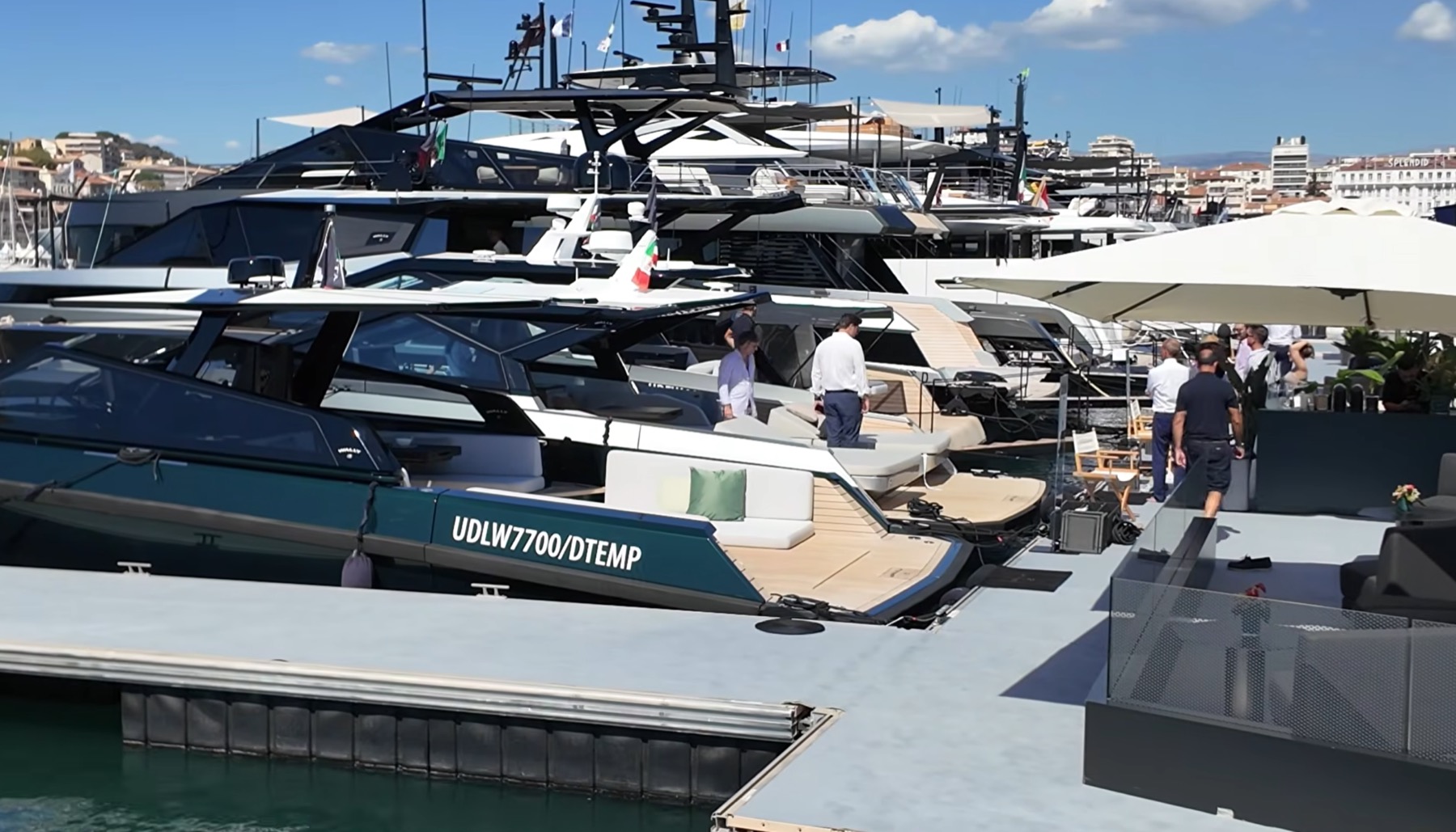
Test marina services
A second test advert so the classified page can be checked with the standard four advert layout.
+44 0000 000000 / info@1uk.com / 24boatbuilders.gold@24group.uk
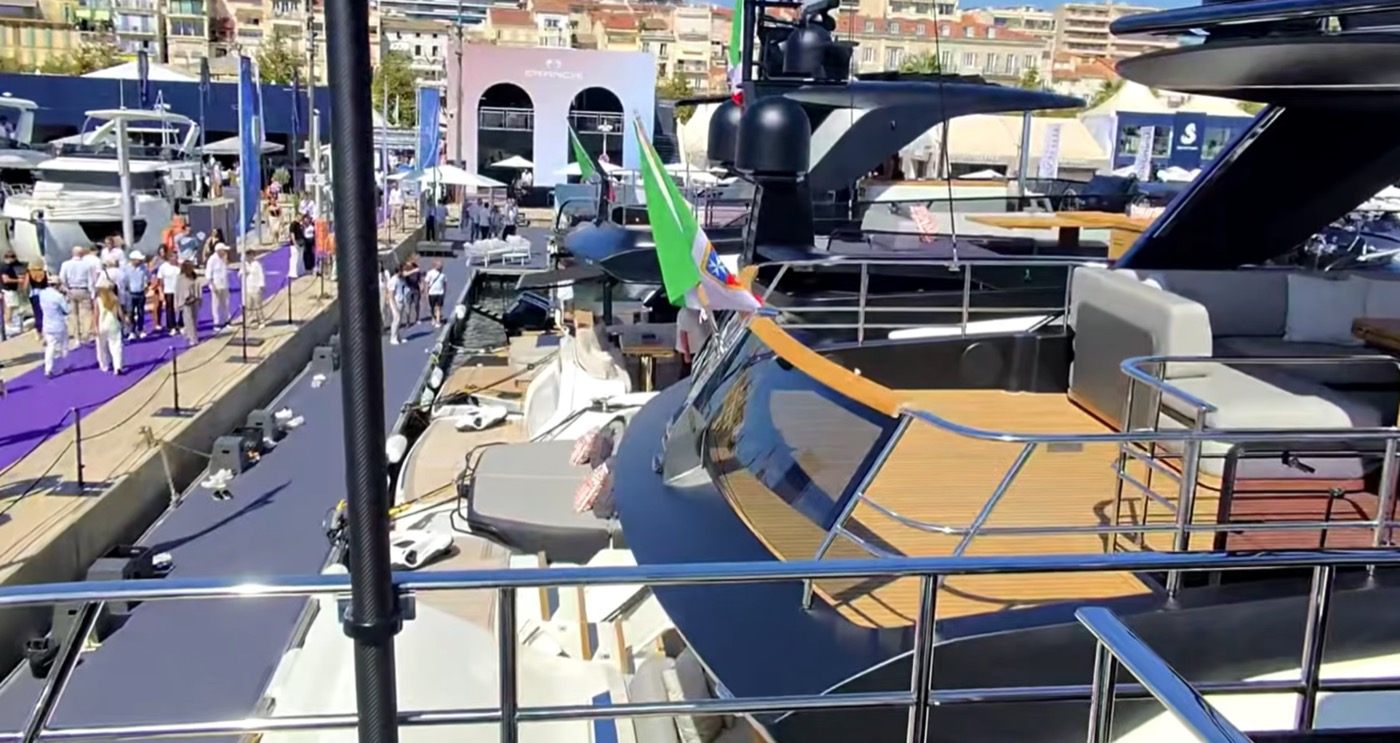
Test tender advert
A compact test advert for yacht tenders, water toys and marina-side services.
+44 0000 000000 / info@1uk.com / 24boatbuilders.gold@24group.uk
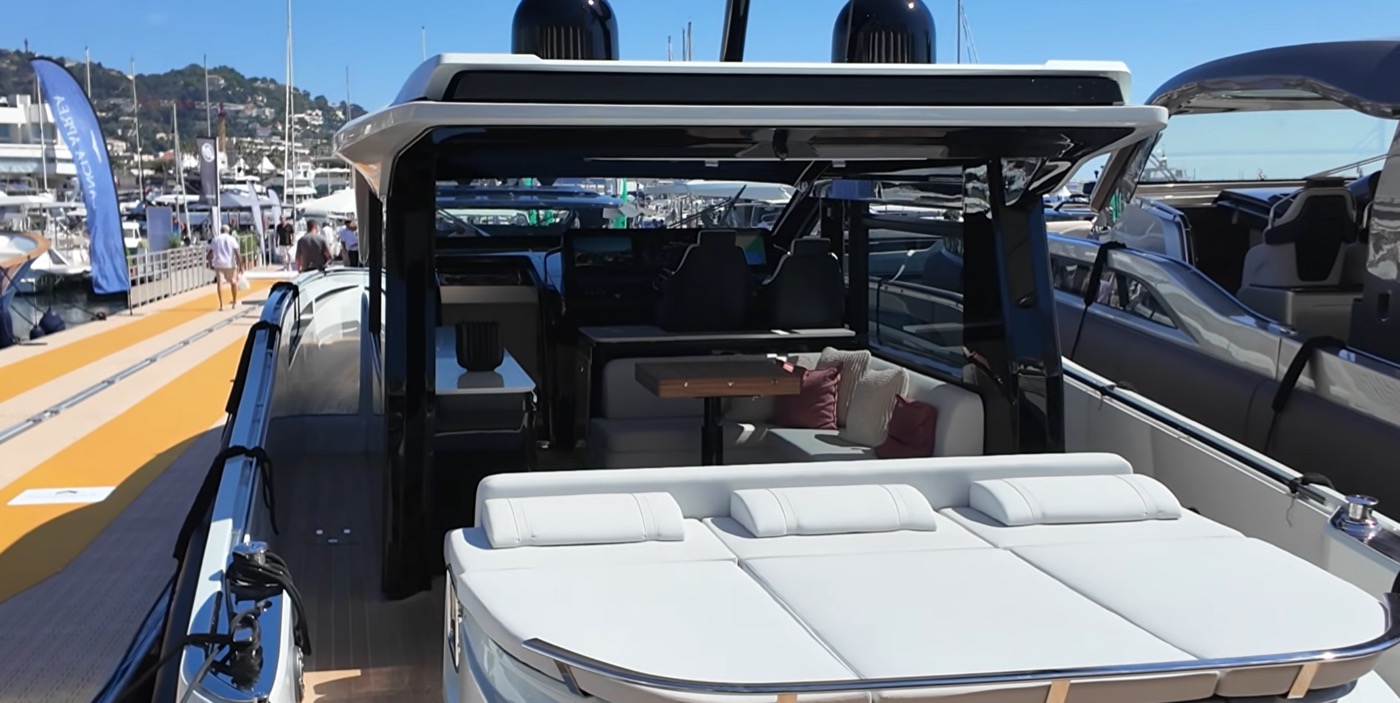
Paul Monday
sadfsafdsadvere ergew wergew rg
+44 0000 000000 / info@1uk.com / https://1uk.com
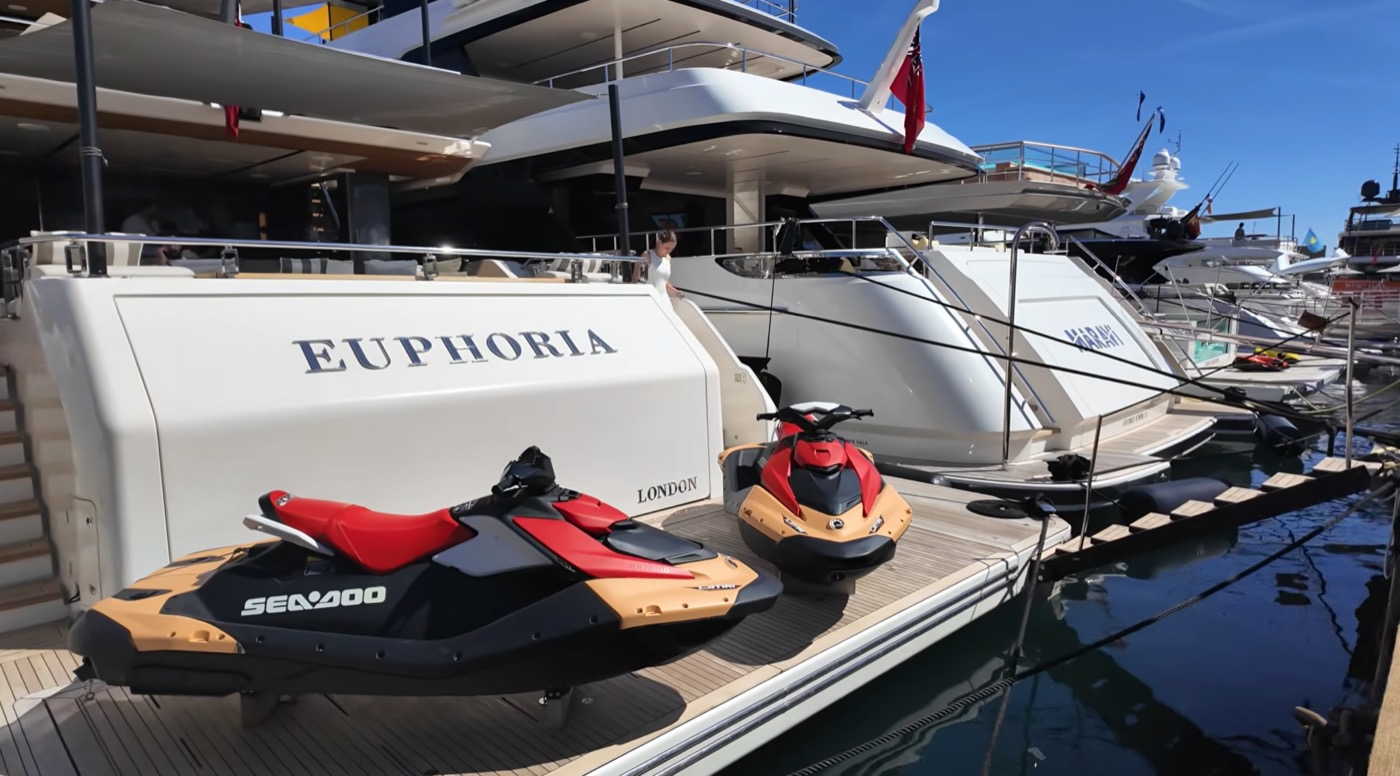
test 1
Test classified advert for the forthcoming issue layout. Includes image, company details and contact information.
+44 0000 000000 / info@1uk.com / https://1uk.com