
Superyacht Magazine
Superyacht News
Articles, insight and practical guidance from the international superyacht industry.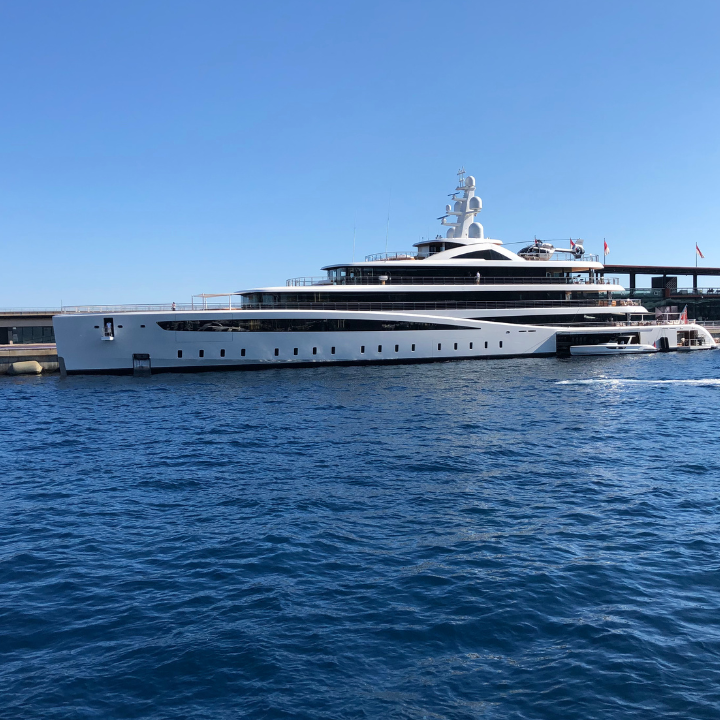
Buying your first superyacht is an extraordinary experience, but choosing the right yacht involves considerably more than deciding on a builder, length and number of cabins.
One thing I have noticed over the years is that people naturally start talking about the yacht itself.
How long is it?
Who built it?
How fast is it?
How many guests can it accommodate?
What does it look like?
Those are understandable questions, but if I were advising somebody buying their first superyacht, they would not be the questions I would start with.
I would start with something much simpler:
What do you actually want to do with the yacht?
Because the yacht that looks spectacular in Monaco may be completely wrong for somebody who wants to spend months exploring remote islands with their family.
Equally, an extraordinary long-range explorer may be unnecessary for an owner whose perfect summer consists of moving between Saint-Tropez, Porto Cervo, Ibiza and Monaco.
There is no universally perfect superyacht.
There is only the yacht that works for you.
Start With Your Life, Not the Yacht
I think this is where many first-time buyers can go wrong.
It is very easy to become seduced by the yacht in front of you.
You walk aboard, see an enormous beach club, beautiful interior, impressive owner's suite and perhaps a swimming pool on the aft deck, and suddenly you are mentally moving in.
But before looking seriously at individual yachts, I would sit down and think about how you intend to use one.
Will it mainly be for you and your partner?
Will children and grandchildren regularly join you?
Will you entertain large groups?
Do you want to spend most of your time at anchor or in marinas?
Are you interested in diving, fishing, watersports or exploration?
Will you work from the yacht?
Will you charter it when you are not aboard?
Do you want to cross oceans?
Would you like a helicopter?
Are you looking for privacy, entertaining space, adventure — or some combination of all three?
These questions start to create the real specification.
Only then would I start worrying about how many metres long the yacht should be.
Don't Become Obsessed With Length
Length is how we tend to describe yachts, but it can be a surprisingly poor way of comparing them.
I have walked aboard yachts of similar length that feel completely different.
Beam, gross tonnage, hull design, deck arrangement and the way the interior has been planned can make one yacht feel considerably larger than another.
A 50-metre yacht is not simply a 50-metre yacht.
One might devote enormous amounts of space to exterior living.
Another may prioritise interior volume.
One may have a huge tender garage.
Another may sacrifice that space for guest accommodation.
One might have six beautiful guest cabins but relatively restricted crew accommodation.
Another might have been designed around a much more substantial professional operation.
This is why I would always look beyond the headline length.
How does the yacht use its volume?
That is the more interesting question.
Think About Who Will Actually Be Aboard
It is easy to say that you need accommodation for twelve guests.
But who are those twelve people?
There is a difference between entertaining six couples and cruising with children and grandchildren.
A family yacht may benefit from:
- adjoining cabins;
- twin cabins;
- convertible arrangements;
- informal dining;
- children's areas;
- protected deck spaces;
- and comfortable family lounges.
A yacht used extensively for entertaining may need a very different layout.
And if you regularly travel with personal staff, security or advisers, that needs to be considered as well.
I would think about the people first and cabin numbers second.
Don't Forget the Crew
This is something guests rarely need to think about, but owners certainly should.
A superyacht is not just a beautiful floating home.
It is a professionally operated vessel.
Depending upon its size and complexity, there may be a substantial crew living and working aboard.
They need:
- cabins;
- bathrooms;
- crew mess;
- laundry;
- storage;
- offices;
- working areas;
- and sensible circulation around the yacht.
Poor crew accommodation eventually becomes an owner's problem.
It can make recruitment and retention more difficult and can affect morale.
The same applies to crew circulation.
The best yachts allow service to happen almost invisibly.
Food arrives.
Cabins are serviced.
Laundry disappears and returns.
Guests are looked after.
Yet there is very little sense of dozens of people working behind the scenes.
That does not happen by accident.
It is designed into the yacht.
The Captain Matters More Than Most First-Time Owners Realise
One of the most important relationships in yacht ownership can be the relationship between owner and captain.
A good captain is not simply the person driving the yacht.
They may be responsible for:
- safety;
- crew;
- operations;
- regulatory compliance;
- itinerary planning;
- budgets;
- contractors;
- shipyard periods;
- maintenance;
- security;
- and representing the owner's interests.
On a substantial yacht, that is an enormous responsibility.
If I were acquiring a large yacht and already had a captain I trusted, I would want them involved in the acquisition process.
They will look at things differently.
While the buyer may be looking at the owner's suite or beach club, the captain may notice that tender operations are awkward, crew circulation is poor or a particular technical arrangement will make the yacht unnecessarily difficult to operate.
Both perspectives matter.
New Build or Brokerage?
This is one of the biggest decisions.
There is something extraordinary about commissioning a yacht specifically for yourself.
You can influence:
- exterior design;
- interior;
- layout;
- materials;
- technology;
- tenders;
- toys;
- engineering;
- and almost every aspect of how the yacht works.
But a full custom build also requires patience.
A significant yacht can take years to design and construct.
There will be thousands of decisions along the way.
And however good the shipyard and project team are, building something extraordinarily complex from scratch will always involve challenges.
Buying an existing yacht is different.
You can see it.
You can walk through it.
You can inspect it.
You can take it to sea.
You know what the spaces actually feel like.
And potentially, you can be using it far sooner.
I can understand the attraction of both approaches.
One gives you a blank sheet of paper.
The other could have you cruising next season.
Don't Dismiss a Yacht Because You Don't Like the Interior
I think buyers sometimes underestimate what can be changed.
You may walk aboard an otherwise excellent yacht and immediately dislike:
- the furniture;
- fabrics;
- lighting;
- artwork;
- colours;
- or general interior style.
Those things can often be changed.
What is much harder to change is:
- hull form;
- beam;
- fundamental volume;
- major structural arrangement;
- machinery configuration;
- draught;
- and basic engineering.
If the yacht is fundamentally right, I would not reject it simply because somebody else's taste is still visible inside it.
Ask what could realistically be transformed through refit.
But Don't Try to Turn the Wrong Yacht Into the Right One
There is a limit.
If you want significantly more volume, radically different accommodation, much longer range, major helicopter capability or a completely different operating profile, eventually you are trying to rebuild the wrong yacht.
At that point, another yacht — or a new build — may make more sense.
A good broker, surveyor, naval architect or owner's representative should be willing to tell you that.
Decide Where You Want to Go
Geography matters enormously.
A yacht intended mainly for Mediterranean cruising has different requirements from one expected to explore the Pacific, Alaska or polar regions.
Think about:
- range;
- fuel capacity;
- draught;
- seakeeping;
- storage;
- water production;
- waste;
- refrigeration;
- spare parts;
- workshop capability;
- communications;
- and redundancy.
Remote cruising changes everything.
If you are days away from established yacht infrastructure, the vessel needs to be much more self-sufficient.
What Is an Explorer Yacht?
Explorer yachts have become enormously fashionable.
But I would distinguish between a yacht that looks like an explorer and one that has genuinely been designed for exploration.
A real explorer yacht may prioritise:
- substantial range;
- robust engineering;
- redundancy;
- storage;
- workshops;
- large tenders;
- diving capability;
- aviation;
- extensive refrigeration;
- medical capability;
- and the ability to remain away from conventional ports for extended periods.
Grey paint and a crane do not automatically make a yacht an explorer.
Capability does.
Think About the Tender Before You Buy the Yacht
This might sound backwards, but tenders can make an enormous difference to yacht ownership.
If you spend most of your time at anchor, the tender becomes your car.
It takes you:
- ashore;
- to restaurants;
- to beaches;
- diving;
- fishing;
- exploring;
- and sometimes considerable distances from the yacht.
Some owners may want a formal limousine tender.
Others need a rugged expedition boat.
Some want both.
Then there may be:
- rescue tender;
- watersports craft;
- sailing dinghies;
- jet skis;
- seabobs;
- e-foils;
- dive equipment;
- and countless other toys.
All of it needs somewhere to live.
I have always thought tender garages are one of those areas that look enormous when a yacht is delivered and remarkably small a few years later.
The toys have a habit of multiplying.
Helicopter Capability Needs Serious Thought
A helicopter can completely change what a yacht can do.
It can provide:
- owner transfers;
- airport connections;
- remote access;
- exploration;
- logistics;
- and emergency capability.
But there is an enormous difference between a yacht with somewhere a helicopter can land and a yacht designed to support serious aviation operations.
If aviation is genuinely important, consider it from the beginning.
Aviation capability may influence:
- structure;
- firefighting;
- fuel;
- storage;
- crew;
- maintenance;
- deck arrangement;
- and potentially a hangar.
Trying to add proper helicopter capability later can be extraordinarily difficult.
Do You Need a Support Yacht?
For some owners, eventually there is simply too much equipment.
Helicopters.
Large tenders.
Submersibles.
Dive equipment.
Vehicles.
Watersports equipment.
Extra fuel.
Workshops.
Additional crew.
At that point, a support yacht can make considerable sense.
The logic is straightforward.
Instead of allowing equipment to consume increasingly large areas of the principal yacht, the main yacht remains focused on the owner, family and guests.
The support vessel carries the industrial capability.
For owners with extensive exploration or aviation requirements, the two-vessel solution can be extremely effective.
Think About Privacy
Privacy means different things to different owners.
Some owners enjoy seeing their yacht photographed and recognised.
Others would prefer almost complete anonymity.
Think about:
- exterior recognisability;
- social media;
- crew confidentiality;
- guest information;
- itinerary;
- communications;
- cybersecurity;
- marina access;
- and how information is handled by contractors and suppliers.
At this level, discretion should be part of the operating culture rather than something considered only when a problem occurs.
Technology Is Important — but It Should Disappear
A modern superyacht can contain extraordinary technology.
There may be sophisticated systems controlling:
- lighting;
- climate;
- entertainment;
- blinds;
- communications;
- security;
- navigation;
- power;
- and countless other functions.
But the owner should not feel as though they are operating a data centre.
Good technology disappears.
You touch something and it works.
If guests need an instruction manual to switch on the television, something has gone wrong.
Connectivity Has Become Essential
For many owners, being aboard no longer means being disconnected from business.
A yacht may need reliable communication with:
- offices;
- family office;
- aircraft;
- residences;
- advisers;
- and security teams.
Modern satellite connectivity has transformed what is possible at sea, but redundancy remains important.
If the principal needs to conduct a major video conference from the middle of the Mediterranean, the answer cannot simply be:
"The internet isn't working today."
Cybersecurity Is Now Part of Yacht Security
This is an area I think will become increasingly important.
A modern yacht may contain:
- operational systems;
- navigation systems;
- entertainment networks;
- guest devices;
- crew devices;
- security systems;
- remote diagnostics;
- and extensive communications.
Those systems should not all exist as one uncontrolled network.
Cybersecurity needs to be considered alongside physical security.
The yacht is both a vessel and a substantial connected environment.
Look Beyond the Beautiful Areas
When viewing a yacht, naturally you will spend time in:
- owner's suite;
- main salon;
- dining areas;
- beach club;
- exterior decks;
- and guest accommodation.
But I would also want to see:
- engine room;
- bridge;
- crew areas;
- laundry;
- galley;
- stores;
- tender garage;
- technical spaces;
- and service routes.
Those areas tell you an enormous amount about the yacht.
A beautifully organised engine room can tell you as much about how a yacht has been cared for as a perfectly presented main salon.
Maintenance History Matters
A yacht can look immaculate during a viewing.
That does not necessarily tell you what has happened during the previous ten years.
You want to understand:
- maintenance;
- servicing;
- class history where applicable;
- refits;
- machinery work;
- paint;
- generators;
- stabilisers;
- tenders;
- electronics;
- and significant repairs.
Good records matter.
A well-maintained older yacht can be a much more attractive proposition than a newer yacht where expensive work has simply been postponed.
Never Buy a Superyacht Without Proper Technical Due Diligence
However impressive the yacht appears, an independent pre-purchase survey is essential.
A proper survey may examine areas including:
- hull;
- machinery;
- generators;
- electrical systems;
- navigation;
- safety equipment;
- plumbing;
- hydraulics;
- stabilisers;
- tenders;
- deck equipment;
- and documentation.
Depending upon the yacht, it may also involve hauling the vessel out of the water.
The surveyor is not there to tell you whether the cushions look nice.
They are there to help establish what you are actually buying.
Expect the Survey to Find Things
A survey finding defects does not automatically mean you have found a bad yacht.
Yachts are enormously complex machines.
Things wear.
Things fail.
Things require maintenance.
The important questions are:
What has been found?
How serious is it?
What will it take to correct?
Does it indicate a wider maintenance problem?
And:
How does it affect the transaction?
Sometimes the solution is straightforward.
Sometimes repairs are agreed.
Sometimes the commercial terms change.
Occasionally the correct decision is to walk away.
That is exactly why the survey exists.
The Sea Trial Is Not a Pleasure Cruise
A sea trial is another part of understanding the yacht properly.
This is an opportunity to assess how the vessel behaves under operating conditions.
Depending upon the yacht and survey programme, attention may be given to:
- engines;
- generators;
- steering;
- stabilisation;
- manoeuvring;
- speed;
- vibration;
- noise;
- navigation equipment;
- and other systems.
I think this is where some of the romance of buying a yacht meets the reality of owning a sophisticated piece of machinery.
And that is a good thing.
Understand What You Are Buying Legally
A yacht transaction involves considerably more than agreeing a price and transferring money.
Appropriate advisers may need to examine matters involving:
- legal ownership;
- title;
- registration;
- mortgages;
- encumbrances;
- ownership entity;
- tax status;
- customs status;
- commercial status;
- and other documentation.
This becomes increasingly important as the value and international complexity of the yacht increase.
A broker should understand these issues.
A specialist maritime lawyer should deal with the legal advice.
There is an important distinction between the two.
Flag State Matters
A yacht needs to be registered.
The choice of flag can influence aspects of:
- administration;
- regulation;
- surveys;
- crew;
- operation;
- and compliance.
There is no single flag that is automatically correct for every owner.
The decision should be made in conjunction with appropriate professional advice and should reflect how and where the yacht will actually be operated.
Private or Commercial?
If you intend to charter the yacht, that should be considered before acquisition.
A yacht operating commercially may have different requirements from one used purely privately.
This can affect areas including:
- certification;
- safety;
- crewing;
- insurance;
- taxation;
- and operation.
Do not buy the yacht first and only afterwards ask whether it can be used in the way you intended.
Should You Charter Your Yacht?
This is a personal decision.
Chartering can allow a yacht to generate revenue during periods when the owner is not using it.
That can make a contribution towards operating expenditure.
But I would never describe charter as making yacht ownership free.
It doesn't.
Charter also introduces:
- additional use;
- wear;
- scheduling;
- commercial requirements;
- guest expectations;
- and potentially less flexibility for the owner.
Some owners enjoy seeing their yacht actively chartered.
Others do not want strangers aboard at all.
Both positions are perfectly reasonable.
Don't Let Tax Drive the Entire Purchase
Tax, VAT, customs and ownership structures are important.
They can also be complicated and highly dependent upon individual circumstances and jurisdictions.
Take specialist advice.
But I would be cautious about choosing the wrong yacht or creating an impractical operating arrangement simply because somebody has presented an apparently clever structure.
The yacht still needs to work for the owner.
And whatever structure is adopted needs to reflect reality.
Think About Where the Yacht Will Live
The home berth is another consideration that can be overlooked.
As yachts become larger, suitable berths become more limited.
Think about:
- airport access;
- privacy;
- security;
- crew;
- maintenance;
- provisioning;
- utilities;
- shipyard access;
- and how frequently you actually intend to use the marina.
Some yachts spend relatively little time in their home berth.
Others use it as the operational centre of the entire programme.
Don't Underestimate the Operating Organisation
Buying the yacht is the beginning.
Once you own it, somebody has to operate it.
Depending upon size and complexity, that may involve:
- captain;
- deck department;
- engineering department;
- interior team;
- chefs;
- yacht manager;
- technical manager;
- accountant;
- crew management;
- insurers;
- agents;
- suppliers;
- and specialist contractors.
At the upper end of the market, yacht ownership is closer to operating a small private organisation than owning a recreational boat.
That is not necessarily a disadvantage.
It is simply the reality.
Choose Your Yacht Manager Carefully
A yacht-management company can take responsibility for substantial parts of the operation.
But I would want to understand exactly what I was paying them to do.
Ask:
- Who is actually managing my yacht?
- How many other yachts do they manage?
- How are accounts reported?
- How are suppliers selected?
- Who approves expenditure?
- How are technical issues escalated?
- How is crew handled?
- What happens during an emergency?
- How often will I receive meaningful information?
A famous name does not automatically mean the individual service will be exceptional.
Don't Manage the Yacht Yourself Unless You Actually Want Another Job
A successful owner is perfectly capable of questioning expenditure and expecting accountability.
That does not mean they should personally approve every filter, pump repair or provision order.
Put appropriate financial controls in place.
Set approval levels.
Receive good reporting.
Employ people you trust.
Then allow them to do their jobs.
One of the purposes of having a professional yacht operation is that the owner should be able to enjoy the yacht rather than becoming its purchasing department.
What Does a Superyacht Cost to Run?
This is one of the first questions everybody asks.
Unfortunately, there is no single meaningful answer.
You will often hear annual operating expenditure expressed as a percentage of the yacht's value.
I think that can be useful as a very rough conversation starter, but it should never replace a proper operating budget.
Actual expenditure depends upon:
- size;
- crew;
- age;
- machinery;
- fuel consumption;
- cruising programme;
- berthing;
- insurance;
- management;
- maintenance;
- tenders;
- aviation;
- charter activity;
- and refit schedule.
Two yachts with the same market value can have completely different operating profiles.
Build the budget from the yacht rather than from a percentage.
Maintenance Is Continuous
Salt water is not particularly sympathetic to:
- metal;
- electronics;
- paint;
- machinery;
- teak;
- or almost anything else aboard.
A yacht is constantly being maintained.
That is why you see crew polishing, washing, painting, servicing and inspecting even when the yacht appears immaculate.
The objective is not merely cosmetic.
Preventative maintenance protects reliability and ultimately protects the asset.
Plan for Refit
Even an exceptionally maintained yacht will eventually require significant work.
Technology becomes dated.
Paint ages.
Machinery reaches major service intervals.
Interiors may need refreshing.
Teak wears.
Owner requirements change.
A refit is not evidence that a yacht has failed.
It is part of the lifecycle of a sophisticated vessel.
The mistake is pretending it will never happen.
Your First Yacht Does Not Need to Be Your Last Yacht
This is another point I think first-time owners sometimes overlook.
You may not fully understand how you want to use a yacht until you have owned one.
Perhaps you discover that:
- you spend far more time at anchor than expected;
- you want greater range;
- your family needs more cabins;
- you rarely use formal dining;
- you want a larger beach club;
- you need more tender storage;
- or you would actually prefer a smaller, less complicated yacht.
That is normal.
Owners often evolve through yachts as their experience develops.
Your first yacht teaches you an enormous amount about what the second one should be.
Don't Buy Simply to Impress Other Yacht Owners
There will always be a larger yacht.
Somebody will always have:
- more metres;
- more gross tonnage;
- a larger helicopter;
- a bigger pool;
- or a newer delivery.
That is an unwinnable competition.
The yacht should impress you.
If a 45-metre yacht perfectly suits your family and takes you everywhere you want to go, it may provide considerably more enjoyment than an 80-metre yacht acquired primarily because 80 metres sounded more impressive.
Size is not the objective.
Experience is.
Use a Good Broker
A good buyer's broker can be enormously valuable, particularly for somebody entering yacht ownership for the first time.
They should help you:
- define the requirement;
- understand the market;
- identify suitable yachts;
- obtain information;
- arrange inspections;
- compare alternatives;
- negotiate;
- and coordinate the transaction with the wider professional team.
They may also know about yachts that are not being widely advertised.
But choose the broker rather than simply choosing the brokerage brand.
You need somebody you trust and somebody prepared to tell you when a yacht is wrong for you.
A Broker Should Occasionally Tell You Not to Buy
For me, this is one of the clearest signs of a good adviser.
If every yacht you view is apparently "perfect", something is wrong.
A broker who understands your requirements should be able to say:
"I don't think this is the one."
Perhaps the range is wrong.
Perhaps it lacks volume.
Perhaps the refit requirement is too extensive.
Perhaps the asking price makes little sense.
Perhaps another yacht simply suits you better.
That advice may postpone a commission.
It can also create a client relationship lasting decades.
Build the Right Advisory Team
Depending upon the transaction, your professional team may include:
- yacht broker;
- maritime lawyer;
- surveyor;
- tax adviser;
- yacht manager;
- captain;
- insurance specialist;
- naval architect;
- owner's representative;
- and family office.
Not every acquisition requires every adviser.
But significant yacht transactions are collaborative.
The broker should not pretend to be the lawyer.
The lawyer should not pretend to be the surveyor.
The surveyor should not decide whether you like the yacht.
Each has a role.
Take Your Time — but Be Ready to Act
There is a balance.
Do not rush into buying the wrong yacht because you have fallen in love with the first one you see.
But equally, exceptional yachts do not necessarily remain available indefinitely.
Do your preparation early.
Have advisers ready.
Understand your requirements.
Know how you intend to own and operate the yacht.
Then, when the right yacht appears, you are in a position to move.
Walk Away If It Isn't Right
This is perhaps the simplest advice in the entire article.
You do not have to buy the yacht.
Not because you have flown across the world to see it.
Not because negotiations have taken three weeks.
Not because you have paid for a survey.
Not because everybody is expecting the transaction to happen.
If due diligence reveals something that fundamentally changes the proposition and it cannot be resolved satisfactorily, walking away remains an option.
There will be other yachts.
Don't Forget Why You Are Buying It
With all the discussion about:
- contracts;
- surveys;
- registration;
- crew;
- insurance;
- management;
- maintenance;
- refits;
- and operating costs,
it is quite easy to make yacht ownership sound like a corporate acquisition.
There is another side.
You can wake at anchor with your family somewhere extraordinary.
Swim before breakfast.
Move to another country while having lunch.
Spend an afternoon diving somewhere inaccessible from land.
Invite friends aboard.
Explore islands.
Stay somewhere simply because you like it.
Change the itinerary because the weather is better somewhere else.
And at the end of the day, return to your own environment.
That freedom is why people buy yachts.
My Advice to a First-Time Superyacht Buyer
If I had to reduce everything to a relatively short list, this is what I would say.
Decide how you want to use the yacht before deciding how large it should be.
Look at volume and layout, not just length.
Think about family, guests and crew.
Decide whether you really need new build or whether an existing yacht could deliver what you want much sooner.
Understand where you want to cruise.
Think seriously about tenders, toys and storage.
Do not underestimate the importance of the captain and crew.
Use an experienced broker.
Use an independent surveyor.
Use specialist maritime lawyers and tax advisers where required.
Understand the yacht's title, registration and operating status.
Build a realistic operating budget.
Accept that maintenance and refit are part of ownership.
Do not buy purely because of prestige or size.
And be prepared to walk away from the wrong yacht.
Most importantly:
Buy the yacht that will make you want to use it.
Because ultimately the success of a superyacht should not be measured by how impressive it looks in the marina.
It should be measured by how often you find yourself wishing you were back aboard.
About the Author
Paul Thompson holds a Diploma in Yacht Brokerage and has a long-standing background in sales, marketing, digital publishing and the international yachting sector. He is a yachting journalist and publisher of Superyacht Magazine.
This article is intended as general editorial information for an international audience. Yacht acquisition, ownership, registration, taxation, customs, charter, commercial operation, insurance and regulatory requirements vary considerably between jurisdictions and individual circumstances. Buyers should obtain appropriate independent legal, tax, technical, regulatory and financial advice before entering into a transaction.