
Contents
The buying process, survey stage, delivery period and the realities of building a career in yacht brokerage.
What Happens During a Superyacht Survey?
The yacht may look immaculate, the maintenance records may be extensive and the sea trial may go perfectly. But before buying a superyacht, somebody needs to look behind the polished surfaces and establish what you are actually buying.
What Happens During a Superyacht Survey?
The yacht may look immaculate, the maintenance records may be extensive and the sea trial may go perfectly. But before buying a superyacht, somebody needs to look behind the polished surfaces and establish what you are actually buying.
Why Surveys Matter
There is something slightly unnatural about a pre-purchase survey.
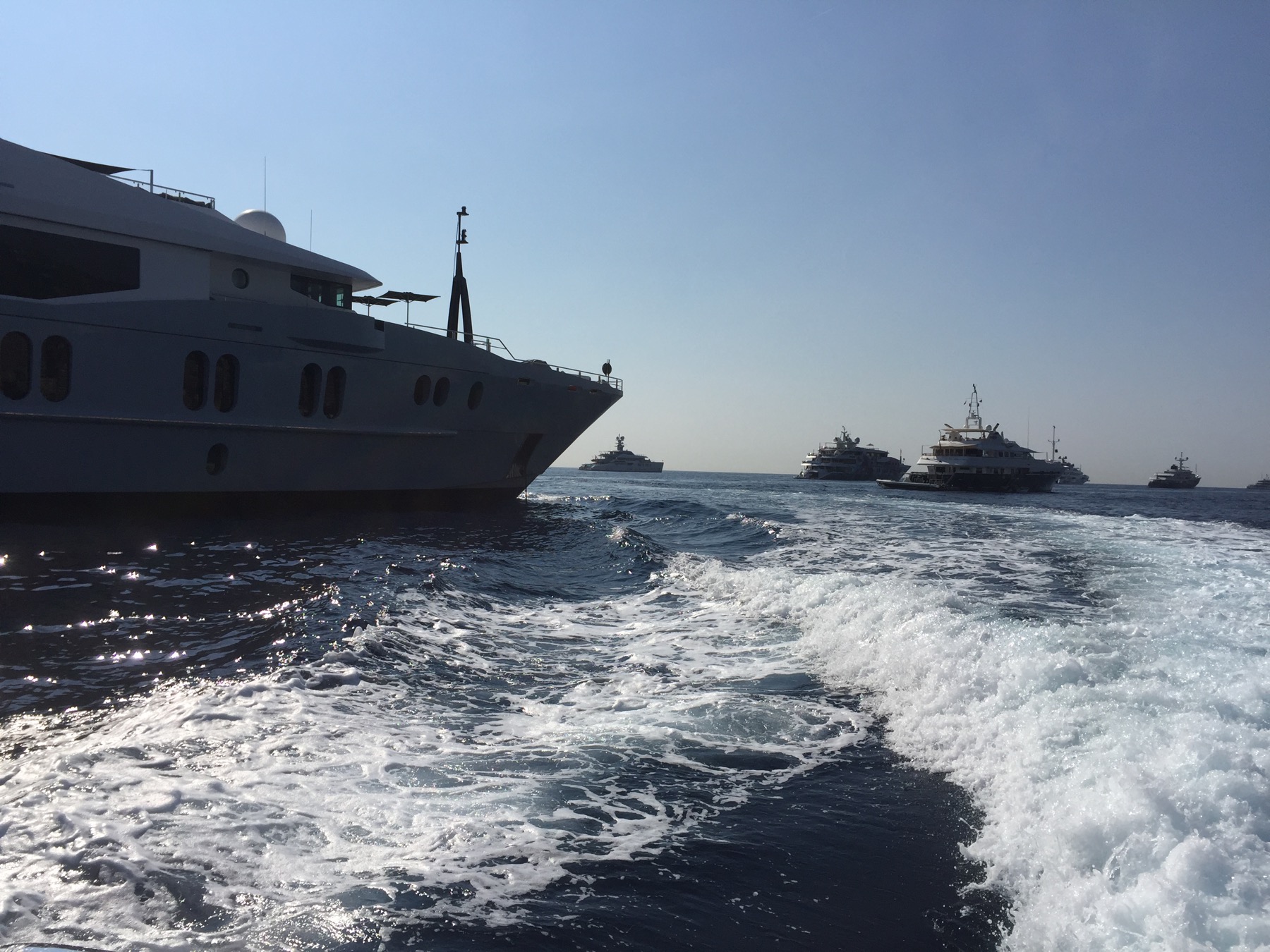
For months, perhaps years, a yacht has been maintained with one overriding objective: everything the owner and guests see should look perfect.
The paint gleams. Stainless steel is polished. The interior is immaculate. The engine room may be cleaner than many people's kitchens.
Then the surveyors arrive.
And their job is essentially to ignore all of that.
They start opening things.
Panels come off. Machinery is examined. Tanks, bilges and void spaces suddenly become interesting. Records are scrutinised. Equipment is operated. Systems that most guests probably never knew existed become the focus of attention.
The yacht stops being a beautiful object for a moment and becomes what it really is: an extremely complicated ship.
When I studied yacht brokerage, surveys were one of the parts of the sale process that particularly interested me because this is where the emotional purchase collides with technical reality.
A buyer may already love the yacht.
The surveyor doesn't.
And that is exactly how it should be.
The surveyor is there to provide an independent professional assessment of the vessel, not to help anybody fall in love with it.
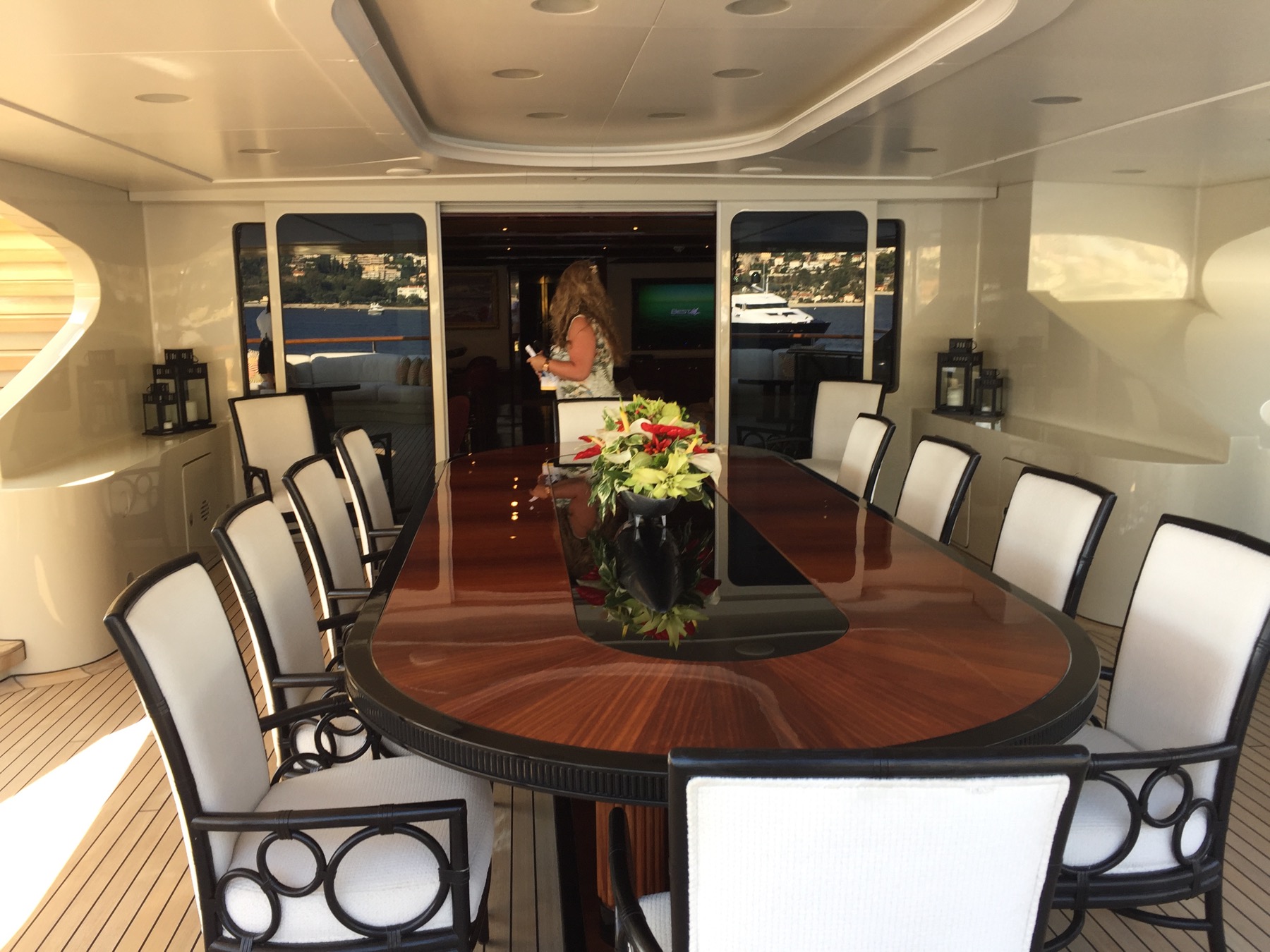
That distinction is important because buying a yacht is naturally emotional. You walk aboard and immediately start imagining yourself using it. You picture the family at dinner, friends on the aft deck, mornings at anchor and where you might take it next summer.
What Happens During a Superyacht Survey?
Why Surveys Matter
By the time an offer has been agreed and a survey commissioned, the buyer may already feel psychologically as though the yacht belongs to them.
It doesn't.
Not yet.
And this is probably the point in the transaction where being prepared to walk away matters most.
A proper survey should begin long before somebody starts tapping the hull.
The documentation itself tells a story.
The survey team may want to examine records concerning ownership and registration alongside the legal advisers handling those aspects of the transaction, while technically they will be interested in class and statutory documentation where applicable, machinery history, maintenance schedules, previous surveys, refit records, equipment certificates and the general documentary trail showing how the yacht has been operated and maintained.
Structure And Machinery
I have always thought maintenance records are rather like a yacht's medical history.
A well-maintained yacht tends to leave evidence behind.
Invoices.
Service reports.
Oil analysis.
Engineering logs.
Parts replaced.
Machinery overhauled.
Class work completed.
Defects recorded and rectified.
A yacht where everything has apparently been perfect for twenty years but nobody can produce much evidence of maintenance would make me considerably more curious.
The objective is not to find a yacht that has never had a problem. With a complicated vessel, that would probably be unrealistic.
I would rather see that problems were identified, understood and properly dealt with.
In fact, one of the biggest misconceptions about yacht surveys is the idea that a good survey should produce a completely clean report.
I would almost be more suspicious if it did.
Sea Trials And Records
Every yacht has findings.
The question is what those findings mean.
A loose fitting and a serious structural concern can both appear on a surveyor's list. Clearly they do not carry the same weight.
This is where an experienced surveyor becomes invaluable. The buyer does not simply need a catalogue of imperfections. They need help understanding their significance.
Is it cosmetic?
Is it routine maintenance?
Is it a safety issue?
Does it affect compliance?
Does it require immediate repair?
Can it wait until the next yard period?
What Happens During a Superyacht Survey?
Structure And Machinery
Is it evidence of a larger underlying problem?
And, inevitably, what is it likely to cost?
That last question can change a yacht transaction very quickly.
Imagine walking aboard a yacht that appears beautifully maintained. The asking price has been negotiated. Everybody is moving towards completion.
Then the survey identifies several significant items approaching at once.
Perhaps machinery requires major work. Perhaps paint is nearing the end of its useful life. Perhaps teak needs substantial attention. Perhaps stabilisers require overhaul. Perhaps technical systems have been repeatedly repaired rather than properly renewed.
Individually, none of those things necessarily makes the yacht a bad purchase.
Sea Trials And Records
Collectively, they can completely change the economics of buying it.
This is why I think a survey should not simply answer, “Is this yacht all right?”
It should help answer another question:
“What am I likely to inherit on the day I become the owner?”
That is much more useful.
The hull is naturally a major area of interest.
Exactly what is examined and how depends on the yacht's construction and the scope of survey, but the surveyor is looking for evidence that tells them something about the condition of the structure.
Steel, aluminium and composite yachts present different considerations. Corrosion, coatings, cracking, previous repairs, moisture, deformation and structural condition may all become relevant depending upon the vessel.
And much of what matters may not be visible while the yacht is sitting beautifully in the water.
That is why haul-out can become such an important moment.
Negotiating Findings
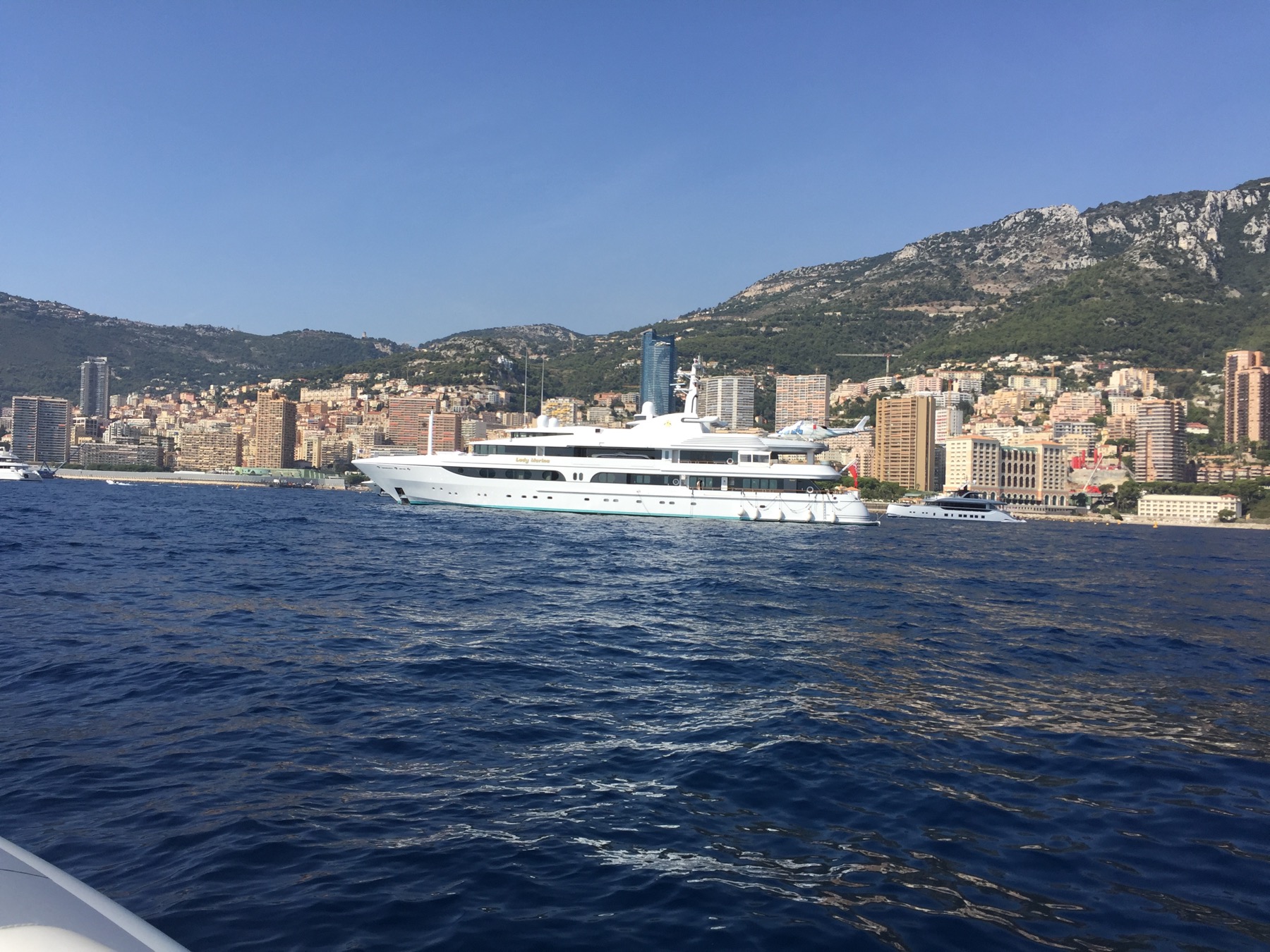
Once the yacht is ashore, an entire part of the vessel that normally lives beneath the surface becomes accessible.
The hull can be inspected more closely. Propellers, shafts, rudders, stabiliser components, thrusters, underwater fittings and other equipment can be examined.
There is something wonderfully revealing about seeing a yacht out of the water.
A vessel that looks enormous in a marina somehow looks even more extraordinary sitting on blocks in a shipyard.
But for the survey team, this is not sightseeing.
What Happens During a Superyacht Survey?
Sea Trials And Records
This is the opportunity to inspect areas that simply cannot be properly assessed while submerged.
The engineering survey can become an investigation of its own.
A superyacht engine room contains far more than the main engines.
There are generators, pumps, electrical systems, cooling systems, fuel systems, hydraulics, compressors, watermakers, sewage treatment, air conditioning and countless supporting components.
The larger and more sophisticated the yacht, the more extensive this technical ecosystem becomes.
A buyer walking through the engine room may see beautifully painted machinery and polished floors.
The engineer sees hours.
When was this serviced?
When is the next overhaul?
Are there leaks?
Negotiating Findings
What do the records show?
Have components been repeatedly failing?
Are spare parts readily available?
Is the installation easy to maintain?
Has machinery been modified?
Are there signs of deferred work?
A beautifully presented engine room is encouraging.
It is not a substitute for technical evidence.
Engine hours themselves can also be misunderstood.
Low hours sound attractive, but they are not automatically proof of excellent condition. Machinery likes correct operation and proper maintenance. An engine with higher hours and an excellent service history may be a much more reassuring proposition than something lightly used but poorly maintained.
Again, context matters.
Oil analysis can provide another piece of that picture. Laboratory examination of lubricants can potentially reveal signs of abnormal wear or contamination that would never be apparent from simply looking at an engine.
This is the fascinating thing about surveying: the deeper you go, the less relevant the polished surface becomes.
Buying With Evidence
Electrical systems deserve similar attention.
Modern yachts depend enormously on electricity. Navigation, lighting, communications, entertainment, air conditioning, refrigeration, pumps, hotel services and increasingly propulsion-related systems may all depend upon complex electrical architecture.
An electrical problem is therefore not simply an inconvenience.
It can affect the entire yacht.
Then there is the hotel side of the vessel.
What Happens During a Superyacht Survey?
Negotiating Findings
This is where I think buyers can sometimes focus so heavily on engines and hull condition that they underestimate just how expensive the apparently softer systems can become.
Air conditioning is a good example.
Nobody photographs the chilled-water plant for the sales brochure, but if a major system needs replacing or extensive repair, the owner will certainly notice the invoice.
The same applies to refrigeration, galley equipment, laundry systems, water production, AV/IT and communications.
Individually, they may not define whether the yacht is structurally sound.
Collectively, they define whether it is pleasant to own.
The interior itself also needs to be viewed with slightly different eyes during a survey.
Buying With Evidence
A stain on a carpet is one thing.
Evidence of water ingress is another.
A cracked decorative panel may be cosmetic.
A recurring problem behind it may not be.
The surveyor is looking beyond the symptom.
Where did the water come from?
Why is that panel distorted?
Why has this area been repaired?
Is this isolated or recurring?
Yachts live in an extraordinarily hostile environment. Salt water, vibration, heat, movement and humidity are constantly working against them.
Maintenance is not evidence that a yacht is poor.
It is evidence that it is a yacht.
What matters is the quality and consistency of that maintenance.
This is also why I would want the captain and engineering team involved in the process where appropriate.
The surveyor remains independent, but the existing crew may know the vessel better than anybody.
They know which pump has been troublesome.
They know which door needs adjusting every few months.
They know which system was modified during the last refit.
Why Surveys Matter
They know whether a particular alarm appears occasionally.
A professional crew can provide enormous context.
Of course, the buyer's representatives should still verify things independently. The crew work for the existing owner until the transaction is completed.
But knowledge is valuable.
Then comes the sea trial.
I think people sometimes imagine this as the enjoyable part of buying a yacht — everyone goes out for a pleasant cruise and confirms that it floats.
A proper sea trial is much more purposeful.
What Happens During a Superyacht Survey?
Buying With Evidence
The yacht is being asked to perform.
Engines may be operated across different loads. Steering is tested. Stabilisation may be assessed. Navigation equipment is used. Vibrations and unusual noises become interesting. Temperatures and pressures are monitored. Equipment is operated under realistic conditions.
How does the yacht accelerate?
How does it manoeuvre?
How does it behave at cruising speed?
Are there vibrations?
Do machinery temperatures remain appropriate?
Does anything happen under load that was not apparent alongside?
A system can behave perfectly while sitting in a marina and reveal a completely different personality once the yacht is underway.
That is why the sea trial and survey complement each other.
Why Surveys Matter
One examines condition.
The other helps demonstrate operation.
And sometimes the sea trial identifies something nobody expected.
That does not necessarily mean the sale collapses.
This is another misconception.
A survey is not simply a pass-or-fail examination.
The yacht does not receive 83 per cent and graduate.
The findings become part of the transaction.
Some items may be accepted.
Some may be repaired by the seller.
Some may lead to further investigation.
Some may become part of a price renegotiation depending upon the contract and circumstances.
And occasionally something may be significant enough that the buyer decides not to proceed.
This is where the broker's role becomes particularly delicate.
When I studied the sale and purchase process, it became clear to me how easily emotion can re-enter the transaction at this point.
The seller hears criticism of a yacht they may have owned and cared for for years.
Structure And Machinery
The buyer sees a list of defects and suddenly begins wondering whether they are buying a disaster.
The surveyor is simply reporting what they have found.
Then the broker is standing somewhere in the middle trying to keep everybody focused on reality.
A survey finding is not an insult to the owner.
Nor is every defect justification for demanding an enormous reduction in price.
The sensible approach is to establish what matters.
If a yacht needs a minor repair that would normally form part of routine maintenance, treat it accordingly.
What Happens During a Superyacht Survey?
Why Surveys Matter
If the survey uncovers a significant defect that materially changes the condition or expected expenditure, that is a different conversation.
This is where good advisers earn their fees.
The buyer needs technical advice, not theatre.
I would also be cautious about relying entirely on an existing survey commissioned for somebody else.
A survey is undertaken for a particular client, at a particular time, for a particular purpose and within a defined scope.
If I were buying a substantial yacht, I would want appropriately qualified professionals acting specifically for me.
The same principle applies throughout the transaction.
The broker is not the surveyor.
The surveyor is not the lawyer.
The lawyer is not the engineer.
Structure And Machinery
The captain is not the tax adviser.
One of the signs of a professionally handled yacht purchase is that everybody understands the boundaries of their expertise.
There is also an important difference between a pre-purchase survey and the surveys associated with classification, flag-state or statutory requirements.
They may overlap in some areas, but they are not simply interchangeable.
A yacht can have valid certification and still present issues that matter greatly to a purchaser.
The buyer wants to understand the actual vessel they are acquiring, not merely whether a certificate remains in date.
After the inspections, testing, haul-out and sea trial, eventually the survey reports arrive.
And this is perhaps where the process can become most intimidating.
A substantial yacht can produce a substantial report.
Pages of observations.
Photographs.
Recommendations.
Technical terminology.
Items graded by urgency or significance depending upon the surveyor's reporting method.
Sea Trials And Records
The temptation is to scroll through looking for the conclusion:
Should I buy it or not?
I don't think that is really the surveyor's decision.
The surveyor provides evidence and professional opinion.
The buyer, supported by their advisers, makes the commercial decision.
A yacht can have defects and still be an excellent purchase.
Another can appear comparatively clean but be completely wrong for the buyer.
The survey is one part of the decision, albeit an extremely important one.
What Happens During a Superyacht Survey?
Structure And Machinery
What I would want at the end is a clear understanding of three things.
First, is there anything that makes me fundamentally reconsider buying the yacht?
Second, what needs dealing with immediately?
And third, what expenditure should I realistically expect over the next few years?
That third question is particularly important because survey findings should feed directly into the ownership budget.
If major machinery servicing is approaching, budget for it.
If paint is nearing renewal, budget for it.
If the teak has limited life remaining, understand that.
If AV systems are obsolete, decide whether that matters to you.
If the interior needs changing anyway, perhaps some findings become less important because the area will be rebuilt.
Sea Trials And Records
This is where the survey becomes more than a negotiating weapon.
It becomes a roadmap.
In fact, I think a good survey report may remain useful long after the purchase has completed.
The captain, manager and technical team can use it when developing maintenance and refit priorities.
Items that were not urgent at purchase can be monitored.
Recommended work can be incorporated into future yard periods.
The document becomes part of the yacht's continuing technical history.
And that brings us back to where we started.
The immaculate yacht sitting in the marina.
By the end of the survey, the buyer knows considerably more about it.
They have seen the beautiful saloon.
But somebody has also been beneath the floor.
They have admired the exterior.
But somebody has inspected the hull below the waterline.
They have heard the engines running quietly at the dock.
But somebody has watched what happens when they are working at sea.
Negotiating Findings
They have been shown the refit brochure.
But somebody has looked for the invoices and records behind it.
That is what due diligence should do.
It replaces assumption with evidence.
There is one final point I think is worth making.
Finding problems during a survey is not necessarily bad news.
Finding them after you own the yacht is considerably worse.
If a survey identifies an issue, the buyer still has choices.
Investigate it.
Repair it.
Negotiate around it where the contract permits.
Accept it.
Or walk away.
What Happens During a Superyacht Survey?
Sea Trials And Records
Once the transaction is completed, those choices become much narrower.
So if I were standing on the dock looking at a yacht I had completely fallen in love with and the surveyor began opening panels, crawling into spaces and finding things I would rather they didn't find, I would remind myself why they were there.
They are not trying to spoil the purchase.
They are trying to make sure I understand it.
Because when you buy a superyacht, you are not just buying what you can see.
Negotiating Findings
You are buying every pipe behind the wall, every cable beneath the floor, every pump in the machinery space, every previous repair, every approaching service interval and every decision made by the people who looked after the yacht before you.
The polished stainless steel is part of the yacht.
So is everything hidden behind it.
And I would rather discover both before I signed the final paperwork.
About the Author
Paul Thompson holds a Diploma in Yacht Brokerage and has a long-standing background in sales, marketing, digital publishing and the international yachting sector. He is a yachting journalist and publisher of Superyacht Magazine.
Buying With Evidence
This article is intended as general editorial information and does not replace an independent professional survey or specialist technical, legal or financial advice. The scope and methodology of yacht surveys vary according to the vessel, construction, condition, surveyor, purpose of inspection and contractual arrangements.
What Happens Between Making an Offer and Taking Delivery of a Superyacht?
Finding the yacht can take months. Agreeing the price may take days. But it is what happens after the handshake that actually turns somebody else's superyacht into yours.
What Happens Between Making an Offer and Taking Delivery of a Superyacht?
Finding the yacht can take months. Agreeing the price may take days. But it is what happens after the handshake that actually turns somebody else's superyacht into yours.
After The Offer
There must be a peculiar moment when you have finally found the yacht you want.
You may have looked at dozens of listings, visited several yachts, spoken repeatedly with your broker and perhaps travelled across Europe or considerably further to inspect the serious contenders. Then one yacht begins to separate itself from everything else.
You go back for another look.
This time you are not really viewing it as somebody else's yacht.
You are already imagining what you would change.
Perhaps that sofa would go. The artwork would obviously be different. One of the guest cabins might become an office. You have mentally put your tender in the garage and started thinking about where you could take the yacht next summer.
Eventually you ask the question that changes everything.
“What do you think they would take for it?”
And the sale begins.
When I studied yacht brokerage, I found this part of the process particularly interesting because from the outside it can look remarkably simple.
Buyer makes offer.
Seller accepts offer.
Buyer sends money.
Buyer gets yacht.
In reality, agreeing the price is closer to the beginning of the transaction than the end.
There is a considerable difference between agreeing to buy a yacht and actually owning it.
And in between those two moments sits a carefully managed process involving brokers, lawyers, surveyors, captains, engineers, banks, registries, insurers and potentially tax, customs, flag-state and corporate advisers.
What Happens Between Making an Offer and Taking Delivery of a Superyacht?
After The Offer
On a substantial superyacht transaction, there can be a surprising number of people involved.
Yet if everything is handled properly, the buyer should never feel as though the transaction is out of control.
The first stage is usually the offer itself.
There is an art to this.
Everybody wants to know how much below the asking price they should offer, but there is no magic percentage.
A yacht that has just entered the market at a realistic price is a completely different proposition from one that has been sitting unsold for several years.
The seller's motivation matters.
Market conditions matter.
Condition matters.
Upcoming expenditure matters.
Previous reductions matter.
Whether there are other interested buyers certainly matters.
Contracts And Deposit
And sometimes the asking price is simply unrealistic.
This is where a good broker should understand more than the number displayed on the listing.
What has actually been happening around this yacht?
How long has she been available?
Has she previously been under offer?
Has the owner already purchased another yacht?
Is there genuine pressure to sell?
Is there serious competing interest?
The buyer may never know every detail, but good market intelligence can make the difference between a sensible offer and one that immediately ends the conversation.
I have always thought there is a danger in becoming obsessed with winning the negotiation.
If you want the yacht and believe it represents fair value, losing it because you were determined to save the final fraction of the purchase price may not feel particularly clever six months later when you still have not found another one.
Survey And Sea Trial
Equally, enthusiasm is not a reason to overpay.
The objective is not to defeat the seller.
It is to reach a position where both sides are prepared to proceed.
Once broad commercial terms have been agreed, the transaction becomes more formal.
The exact contractual framework varies according to the yacht, parties and jurisdiction, and this is where specialist yacht lawyers become important. Standard industry forms are commonly used in many international yacht sales, although they may be amended to reflect the particular transaction.
What Happens Between Making an Offer and Taking Delivery of a Superyacht?
Contracts And Deposit
At this point, details that sounded straightforward during the negotiation suddenly need defining precisely.
What exactly is being sold?
What is included aboard?
What is excluded?
Where will delivery take place?
When?
What happens if the yacht suffers damage before completion?
What are the survey arrangements?
What are the sea-trial arrangements?
What happens if the buyer rejects the yacht?
What happens to the deposit?
Who is responsible for particular costs?
These are not administrative details.
They are the transaction.
Even defining what comes with the yacht can become more interesting than people expect.
A buyer walks through a beautifully furnished yacht and naturally assumes they are buying what they see.
Survey And Sea Trial
Not necessarily.
Personal artwork may belong to the owner.
Wine may be excluded.
Certain tenders or water toys may not form part of the sale.
Personal effects certainly do not automatically transfer.
Even apparently permanent decorative items can sometimes have particular significance to the seller.
This is why inventories and exclusions matter.
I would want this dealt with before completion rather than standing in the saloon afterwards asking where the painting has gone.
Then comes the deposit.
In many yacht transactions, an agreed deposit is paid after the sale agreement has been signed and is held according to the contractual arrangements.
This is one of those areas where terminology such as “standard practice” needs some care because transactions can be structured differently and rules concerning the handling of client funds vary.
The important point for the buyer is very simple.
Completion And Delivery
Know exactly where the money is going.
Know who is holding it.
Know under what authority it can be released.
And make absolutely certain the payment instructions are genuine.
That last point deserves more attention than it sometimes receives.
A superyacht purchase can involve very substantial transfers of money, and criminals know this.
Email interception and payment-diversion fraud are real risks in high-value transactions. An email that appears to come from somebody involved in the sale may contain changed bank details.
What Happens Between Making an Offer and Taking Delivery of a Superyacht?
Survey And Sea Trial
For a transaction of this scale, I would never rely casually on an unexpected email telling me that the account details have changed.
Verification should be rigorous.
The glamour of buying a yacht disappears extremely quickly if millions have just been transferred to a criminal's bank account.
Once the contract and deposit are in place, the yacht enters what is probably the most important phase for the buyer: due diligence.
This is when everybody stops admiring the yacht and starts investigating it.
The technical survey is part of that, but it is not the whole story.
There are really two yachts being examined.
There is the physical yacht.
And there is the legal yacht.
The physical yacht has engines, generators, hull plating or composite structure, stabilisers, navigation equipment, air conditioning, tenders, pumps, electronics and several kilometres of wiring and pipework.
Completion And Delivery
The legal yacht exists in documents.
Who owns it?
Does the seller have the right to sell it?
How is title evidenced?
Where is it registered?
Are there mortgages or other encumbrances that need to be discharged?
What is its regulatory status?
What documentation should transfer at completion?
What is its tax and customs position?
Those questions can be just as important as the condition of the engines.
When I studied brokerage, title was one of those subjects that initially sounded rather dry compared with actually looking at yachts.
The more I understood the transaction, the more obvious its importance became.
You are not simply buying possession of a vessel.
You need to acquire good title to it.
A yacht sitting in front of you is easy to see.
Ownership rights are not.
That is why lawyers and other professional advisers examine the documentary chain rather than simply accepting that the person selling the yacht must own it because they have the keys.
Taking Control
The yacht's registration also needs dealing with.
The buyer may keep the yacht under the existing flag where possible and appropriate, or choose another registry based upon their intended ownership and operation.
That decision should not be made because somebody once said a particular flag was “the best”.
The correct structure depends upon the owner, yacht and programme.
What Happens Between Making an Offer and Taking Delivery of a Superyacht?
Completion And Delivery
Where will it cruise?
Will it remain entirely private?
Will it charter?
What is the owner's residence and tax position?
Where will the yacht be based?
How large is it?
How will it be financed?
What regulatory regime will apply?
The flag hanging from the stern is the visible end of a much larger legal and regulatory decision.
The same applies to ownership structures.
Large yachts are frequently held through corporate entities rather than registered directly in an individual's personal name, but the appropriate structure requires professional advice.
This is not an area where I would copy what another owner has done simply because their yacht is roughly the same size.
Two owners can buy identical yachts and require completely different arrangements.
Taking Control
Tax and customs status can be particularly complex because yachts move.
A house generally remains in one country.
A yacht can leave France in the morning, arrive in Italy later and spend the following season somewhere completely different.
Add different owner residences, private or commercial use, importation status, charter activity and changing cruising areas and it becomes obvious why specialist advice is necessary.
The broker should understand enough to recognise when these issues matter.
They should not pretend to be the tax lawyer.
While all of this is happening on paper, the physical yacht is being examined.
The surveyor and technical specialists begin looking at what the buyer is actually acquiring.
As I wrote in the previous features, this can involve inspection of the hull, machinery, systems, equipment and records, potentially accompanied by haul-out and a sea trial depending upon the transaction and agreed scope.
After The Offer
This is the stage where the yacht can stop behaving like a sales brochure.
Findings appear.
They nearly always do.
A pump needs replacing.
A piece of machinery is approaching overhaul.
There is corrosion somewhere.
A navigation component is obsolete.
Teak is thinner than expected.
Paintwork will need attention sooner than hoped.
Then occasionally something much more significant emerges.
Now everybody needs to remain calm.
The buyer has to understand what has actually been found.
The seller needs the opportunity to understand it.
What Happens Between Making an Offer and Taking Delivery of a Superyacht?
Taking Control
Surveyors and engineers need to explain technical significance.
The brokers need to keep communication functioning.
The lawyers need to ensure whatever happens follows the contractual process.
This is where transactions can become emotional.
The seller may have owned the yacht for ten years and feel the survey is criticising the way they maintained it.
The buyer may have mentally spent every penny of the purchase price already and suddenly see a list of potential expenditure.
Neither reaction is particularly helpful.
A yacht is machinery.
Machinery develops defects.
The question is whether those defects materially change the transaction.
Some findings are simply accepted.
Some may be repaired.
After The Offer
Some may require further investigation.
Others may become the subject of commercial discussion between buyer and seller, depending upon the contract.
And occasionally the findings are serious enough that the buyer decides the yacht is no longer the yacht they thought they were purchasing.
Walking away at that stage can be extremely difficult.
You have invested time.
You have spent money on advisers and surveyors.
You have probably told your family.
You may have started planning the summer.
But money already spent investigating a yacht is not a reason to buy the wrong yacht.
If anything, discovering a fundamental problem before completion means the due-diligence process has earned its money.
Assuming the buyer remains satisfied and the transaction moves forward, attention begins shifting towards completion.
And this is where something interesting happens.
The sale stops being primarily about whether to buy the yacht and starts becoming about how to take control of it.
Contracts And Deposit
Insurance needs to be ready.
Registration arrangements need to be ready.
Crew need to be considered.
Management arrangements may need to be established.
Berthing needs to be planned.
The new owner may want to retain some or all of the existing crew.
Or they may already have a captain and team.
This can be one of the most sensitive aspects of the transition because there are people aboard whose livelihoods may depend upon what happens next.
What Happens Between Making an Offer and Taking Delivery of a Superyacht?
After The Offer
I think continuity can be extremely valuable where the existing crew are good and the relationship works.
Nobody knows the yacht better than the people who have been operating it.
They know the systems.
They know which piece of machinery needs watching.
They know the suppliers.
They know where everything is stored.
They know the yacht's little peculiarities.
Replacing every crew member on day one may throw away an enormous amount of knowledge.
On the other hand, the new owner may want a completely different style of operation.
Perhaps the yacht is changing from charter to private use.
Perhaps the cruising programme will be completely different.
Perhaps the owner already has trusted senior crew.
There is no universal answer.
Contracts And Deposit
But I would want the crew question resolved thoughtfully rather than as an afterthought.
The captain becomes particularly important during handover.
Imagine taking responsibility for a large, technically complex yacht and receiving nothing more than the keys.
It would be absurd.
A proper technical and operational handover may involve existing and incoming crew working together so that knowledge transfers with the vessel.
Where are the critical spares?
Which contractors know the yacht?
What work is outstanding?
What warranties remain?
Which systems have unusual operating procedures?
What maintenance is approaching?
What has recently been repaired?
Where are the passwords and software licences?
Who supports the AV system?
Where are the drawings and manuals?
Who has access to remote monitoring systems?
That final group of questions has become increasingly important.
Modern yachts contain enormous amounts of digital infrastructure.
Changing ownership should therefore involve digital housekeeping as well as physical handover.
Survey And Sea Trial
Access credentials may need changing.
Guest networks need reviewing.
Remote access needs controlling.
Satellite and communications accounts may change.
Owner-specific information needs removing.
Security systems need transferring appropriately.
A yacht should not retain the previous owner's digital life after they have left.
The same applies in reverse.
The seller should not retain access to systems aboard a yacht they no longer own.
Then there is the inventory.
What Happens Between Making an Offer and Taking Delivery of a Superyacht?
Contracts And Deposit
This can be surprisingly extensive.
A large yacht may contain thousands of individual items.
Tableware.
Linen.
Galley equipment.
Tools.
Spares.
Water toys.
Safety equipment.
Uniform stock.
Furniture.
AV equipment.
Tender equipment.
Diving gear.
Wine.
Artwork.
The inventory helps establish what should actually be aboard at delivery.
Nobody wants the final hours before completion turning into an argument over whether a particular set of crystal glasses was included.
Meanwhile the financial side is moving towards its own conclusion.
Final documents are prepared.
Any agreed conditions need satisfying.
Mortgages or other registered interests that must be discharged are dealt with through the appropriate legal process.
Survey And Sea Trial
The purchase funds are prepared for transfer.
Delivery documents are coordinated.
Representatives on both sides work towards an agreed completion point.
And then, after weeks or months of work, something remarkable happens.
Ownership changes.
For all the complexity that has preceded it, the actual moment can seem strangely administrative.
Documents are executed.
Funds move according to the agreed closing arrangements.
Delivery and acceptance are formally recorded.
The seller ceases to own the yacht.
The buyer becomes the owner.
The yacht itself may not move an inch.
It can be sitting at exactly the same berth it occupied the previous evening.
From the dock, nothing has changed.
Legally and financially, almost everything has.
I think that must be quite a moment.
You walk aboard a yacht you may have visited several times during the purchase process.
The same crew may greet you.
The same furniture is there.
Completion And Delivery
The same engines are below.
The same view exists from the aft deck.
But this time it is yours.
And almost immediately, the responsibilities arrive with it.
The crew need paying.
Insurance is active.
Berthing continues.
Maintenance continues.
Fuel needs purchasing.
Management begins.
The yacht does not know there has been a transaction.
It simply carries on being a yacht.
There may also be a temptation to change everything immediately.
New owner, new interior, new toys, new technology, new name, new crew, new everything.
What Happens Between Making an Offer and Taking Delivery of a Superyacht?
Survey And Sea Trial
Personally, unless something genuinely needs immediate attention, I think there is a lot to be said for using the yacht first.
Live aboard it.
Cruise.
See which spaces you actually use.
Find out what works.
Listen to the crew.
Discover what irritates you after three weeks rather than what looked dated during a thirty-minute viewing.
You may discover that the expensive alteration you were convinced was essential is unnecessary.
And something you never noticed during the purchase becomes the first thing you want to change.
A yacht is difficult to understand completely while it is sitting in a marina.
You understand it by living aboard.
There is also the matter of the first voyage.
I suspect this is the point where the transaction finally stops feeling like a transaction.
Completion And Delivery
The lawyers have gone.
The surveyors have gone.
The brokers have completed their work.
The previous owner's personal belongings have disappeared.
Your own things are aboard.
The captain is ready.
The crew know where you are going.
Then the lines come off.
Perhaps it is only a short trip along the coast.
Perhaps the yacht is heading straight to a shipyard for changes.
Perhaps the first proper season is beginning.
Whatever the destination, I imagine the moment the marina disappears behind you is when the yacht finally begins to feel genuinely yours.
That is also when you discover whether all the decisions made during the purchase process were the right ones.
Did you buy enough yacht?
Did you buy too much yacht?
Is the layout right?
Does the family like it?
Is the crew working?
Does the yacht perform as expected?
Are you actually using the spaces you thought were important?
Taking Control
Most importantly, are you enjoying it?
Because it is easy for the purchase process to become dominated by contracts, surveys, title, registration, tax, insurance and negotiation.
All of those things matter enormously.
But none of them is the reason somebody wanted a yacht in the first place.
The paperwork exists so that the owner can eventually stop thinking about the paperwork.
That is why I see the journey from offer to delivery as a gradual transfer of confidence.
At the beginning, the buyer believes they have found the right yacht.
What Happens Between Making an Offer and Taking Delivery of a Superyacht?
Completion And Delivery
The negotiation establishes whether they can agree commercial terms.
The contract establishes the framework.
The survey establishes what they are physically buying.
The lawyers establish what they are legally acquiring.
The technical team establishes what they may inherit.
The closing process establishes ownership.
And the handover establishes control.
Only when all of those pieces come together do you really have a completed yacht purchase.
It is far more involved than handing over money and receiving a set of keys.
And it should be.
A superyacht is a major asset, a complicated vessel, a workplace, a private residence and, in many cases, the platform from which an owner and their family will travel internationally.
Taking Control
Buying one deserves considerably more care than buying something simply because it looked beautiful at the boat show.
Yet after all the negotiation, inspection, paperwork and professional advice, the objective remains wonderfully simple.
There comes a day when the captain asks where you would like to go.
And for the first time, you don't have to ask the owner.
You are the owner.
About the Author
Paul Thompson holds a Diploma in Yacht Brokerage and has a long-standing background in sales, marketing, digital publishing and the international yachting sector. He is a yachting journalist and publisher of Superyacht Magazine.
After The Offer
This article is intended as general editorial information for an international audience. Yacht sale and purchase procedures, contractual arrangements, deposits, title, registration, taxation, customs, finance, insurance and regulatory requirements vary according to the transaction and jurisdictions involved. Buyers and sellers should obtain appropriate independent legal, tax, technical and financial advice.
How to Become a Yacht Broker: What the Job Really Takes
Yacht brokerage can appear to be one of the most glamorous careers in the marine industry. The reality is more demanding and considerably more interesting.
How to Become a Yacht Broker: What the Job Really Takes
Yacht brokerage can appear to be one of the most glamorous careers in the marine industry. The reality is more demanding — and considerably more interesting.
The Broker's Role
Spend enough time around Monaco, Cannes, Palma, Fort Lauderdale or any of the world's major yachting centres and yacht brokerage can look deceptively simple.
Beautiful yachts. International travel. Yacht shows. Wealthy clients. Significant transactions.
It is easy to imagine that the broker's job is essentially to find someone who wants a yacht, show them a selection and collect a commission when one is sold.
That is not yacht brokerage.
At its best, brokerage combines sales, negotiation, market intelligence, technical knowledge, relationship management, marketing, documentation, problem solving and discretion.
And particularly at superyacht level, the broker often sits in the middle of a transaction involving owners, family offices, captains, lawyers, surveyors, yacht managers, shipyards, banks, insurers, flag administrations and other brokers.
A successful broker does not need to perform all of those people's jobs.
They do need to understand how those jobs fit together.
That distinction is fundamental.
At its simplest, a yacht broker brings together someone who wants to sell a yacht and someone who wants to buy one.
But the simplicity ends there.
A selling broker may need to:
The yacht brokerage course itself stresses that producing a listing requires examination of both the yacht and its documentation, together with establishing that the seller has the right to offer the vessel for sale.
That illustrates something important about this profession:
selling ability gets you into the transaction; professional competence gets the transaction completed.
How to Become a Yacht Broker: What the Job Really Takes
The Broker's Role
One misconception among people entering the industry is that a broker has to find a yacht, find a buyer and complete the entire transaction alone.
That is frequently not how yacht brokerage works.
A yacht may be represented by one broker while the eventual purchaser is introduced or represented by another.
The listing broker's relationship is primarily with the seller.
A buyer's broker is working from the other direction: understanding what their client wants, identifying suitable yachts, filtering the market and representing their client's interests through the acquisition process.
When a transaction involves both, the brokers cooperate.
This means another broker is not necessarily your competitor.
Knowledge And Trust
Tomorrow they may bring the buyer for your listing.
Next month you may bring a client to theirs.
One of the first lessons for anyone entering yacht brokerage is therefore:
learn how to work with other brokers.
Trying to guard every enquiry, every contact and every piece of market intelligence can actually make a new broker less effective.
Brokerage is a network business.
A person enquiring about a yacht today may buy next week.
Or next year.
Or five years from now.
Someone who charters today may eventually own.
A client selling a yacht may simultaneously be searching for the next one.
A captain you meet at a marina may eventually introduce an owner.
A shipyard contact may know an owner considering selling before the yacht ever reaches the public market.
A surveyor may recommend you.
A lawyer may remember how professionally you handled a difficult transaction.
An owner who enjoyed dealing with you may return several times during their ownership life.
Clients And Listings
This is why treating every interaction purely as an immediate sales opportunity is shortsighted.
The training material makes the same point from another direction: a successful sale can effectively create two continuing relationships because the seller may subsequently buy again and the buyer may eventually become a seller.
That is the compounding effect of brokerage.
Your real asset is not your current list of yachts.
It is the network of people who trust you.
How to Become a Yacht Broker: What the Job Really Takes
Knowledge And Trust
In many jurisdictions there is no single universal licence or qualification that automatically turns somebody into a yacht broker.
That does not mean professional knowledge is optional.
Quite the opposite.
The lower the formal barrier to entry, the more important individual credibility becomes.
Successful brokers come from remarkably different backgrounds.
Some start in yacht sales.
Some come from yacht crew.
Some have worked for builders or shipyards.
Others arrive from property, automotive sales, finance, hospitality, law, marketing or other industries where relationship-led selling is important.
There is no single approved career path.
What matters is whether you can acquire the necessary combination of:
Clients And Listings
marine knowledge + commercial judgement + communication + relationships + integrity.
No.
Crew experience can be extremely useful, particularly because it provides first-hand understanding of how yachts operate.
A former captain, chief engineer or senior crew member may already understand:
But operational experience does not automatically create a successful broker.
Brokerage requires another skill set.
You need to be able to:
Someone can know yachts extraordinarily well and still be an ineffective broker.
Equally, an excellent salesperson who knows very little about yachts will quickly encounter credibility problems.
The strongest brokers develop both sides.
A formal brokerage qualification is not the only route into the profession, but structured education can shorten the learning curve dramatically.
A serious brokerage course should expose a new broker to subjects far beyond sales.
The Yacht Brokerage Diploma material, for example, covers yacht design and vessel types, registration and title, legal principles, business management, surveys and sea trials as separate areas of study.
Negotiation And Process
That breadth matters.
A qualification will not make somebody a great broker overnight.
It can, however, prevent a newcomer from entering the profession unaware of how much they do not yet know.
And that may be even more valuable.
You do not need to become a naval architect.
You do need to understand the product you are selling.
A broker should gradually become comfortable discussing subjects such as:
How to Become a Yacht Broker: What the Job Really Takes
Clients And Listings
The training material makes the point well: nobody can know every type of yacht, but brokers need enough technical vocabulary and understanding to rationally explain why a particular vessel may or may not suit a client.
That is the standard to aim for.
Not:
“I know everything.”
But:
“I understand enough to ask the correct questions, recognise when specialist advice is required and explain the relevant issues intelligently.”
Reading specification sheets is useful.
Walking yachts is better.
Whenever legitimately possible:
Study why two 40-metre yachts can feel completely different despite appearing similar in a database.
Study layout.
Study build quality.
Study machinery spaces.
Negotiation And Process
Study deck flow.
Study crew circulation.
Study storage.
Study what makes one yacht attractive to the market and another difficult to sell.
Your eye develops through exposure.
Knowing the yacht is only half the job.
You need to understand the market around it.
That includes:
If an owner asks you to represent a yacht, your job is not merely to repeat the price they would like to achieve.
You need to understand where their yacht sits against the alternatives.
That is where brokerage judgement begins.
One of the simplest ways for an aspiring broker to educate themselves costs nothing.
Study yacht listings every day.
Choose a sector.
Perhaps 30–50 metre motor yachts.
Or classic sailing yachts.
Or explorer yachts.
Then start learning them.
Builder.
Year.
Designer.
Length.
Gross tonnage.
Engines.
Range.
Cabins.
Crew.
Refits.
Asking history where available.
Location.
Central agent.
Then compare them.
Ask:
Why is this yacht positioned above that one?
Building A Reputation
Why has one been sold while another has remained available?
What would make an owner choose one over another?
What characteristics make this yacht easy or difficult to market?
Do that consistently for a year and your understanding of the market will be very different.
There is another side of yacht knowledge that receives less attention because it is less glamorous.
Paperwork.
For brokers, documents matter.
Depending upon the yacht and jurisdiction, a transaction may involve issues concerning:
How to Become a Yacht Broker: What the Job Really Takes
Negotiation And Process
The training material emphasises the importance of establishing a chain of title and verifying the seller's right to transfer the yacht.
The professional broker should understand the relevance of these matters without pretending to replace a maritime lawyer.
That boundary is important.
This may be one of the most important attributes of a good broker.
You are not automatically:
You should understand their functions.
You should know when they are required.
And you should be capable of working effectively with them.
But giving confident technical or legal advice outside your competence can create serious problems.
A broker saying:
“I don't know, but I know who should answer that question”
can inspire considerably more confidence than somebody inventing an answer.
Building A Reputation
New brokers frequently assume a registration certificate tells the entire ownership story.
It does not necessarily do so in every jurisdiction or circumstance.
Registration, title, beneficial ownership, mortgages and the entity legally selling the yacht can all require examination.
This becomes increasingly important as yacht values increase and ownership structures become more sophisticated.
It is one of the reasons superyacht transactions routinely involve specialist lawyers.
A yacht sale should not be viewed as one event.
It is a chain.
A simplified transaction might involve:
listing → marketing → enquiry → qualification → inspection → offer → negotiation → contract → deposit → survey → sea trial → technical negotiations → documentation → completion → handover.
A broker needs to understand what can derail the transaction at every point.
The training material specifically treats survey findings as a stage at which renegotiation may become necessary before title ultimately transfers.
The Broker's Role
Closing is therefore not an administrative formality.
It is a skill.
New brokers often focus entirely on finding buyers.
Listings matter just as much.
A central listing gives the broker:
But owners do not normally entrust valuable yachts to strangers because the stranger has created an attractive Instagram account.
You need to demonstrate why you should represent their asset.
That can involve:
Getting the listing is itself a sale.
How to Become a Yacht Broker: What the Job Really Takes
Building A Reputation
Do not become a broker who knows the yacht only through photographs.
Where possible, go aboard.
Walk the decks.
See the guest spaces.
Understand the crew accommodation.
Look at the machinery.
Speak to the captain.
Learn what has been refitted.
Understand what hasn't.
Identify the yacht's strongest selling characteristics.
And understand its weaknesses.
The Yacht Brokerage Diploma business module explicitly advises brokers to go and inspect the vessel themselves and stresses the importance of knowing the boats being sold.
That advice remains fundamental.
Marketing language can cause trouble.
If you describe something as:
you should understand the basis for that description.
Marketing does not give a broker permission to invent facts.
The Broker's Role
Accuracy protects:
It also protects reputation.
Yacht brokerage is visual.
Buyers often encounter a yacht digitally before ever stepping aboard.
Poor imagery can make a good yacht invisible.
Professional presentation should consider:
But good presentation does not mean excessive superlatives.
The objective is to make the prospective buyer want to know more.
Uploading a listing is distribution.
It is not a complete marketing strategy.
A broker should consider:
The Yacht Brokerage Diploma distinguishes marketing from simple selling and emphasises understanding what clients and the market actually want.
That distinction is even more important in a digital market.
Not every person asking for the brochure is a buyer.
And not every genuine buyer wants to disclose themselves immediately.
Qualification therefore requires tact.
The objective is to establish enough information to understand:
Knowledge And Trust
It should not feel like an interrogation.
At superyacht level, discretion matters.
Poor salesperson:
“What size yacht are you looking for?”
Better broker:
“How do you envisage using the yacht?”
The second question can reveal:
A broker's value comes partly from helping the client define what they actually need.
This is particularly true with first-time owners.
The yacht they initially request may not be the yacht they ultimately need.
Someone asking for an extremely large yacht may discover they actually value:
How to Become a Yacht Broker: What the Job Really Takes
The Broker's Role
Someone initially searching at 35 metres may discover that their intended programme needs considerably more volume.
Do not simply obey the first brief.
Understand it.
Many brokerage opportunities are lost because nobody followed up properly.
Follow-up does not mean sending:
“Just checking whether you are still interested?”
every fortnight.
Useful follow-up adds value.
Perhaps:
Become useful enough that the client is pleased to hear from you.
Memory is not a business system.
Record:
Do so within applicable data-protection requirements.
A serious broker can eventually accumulate hundreds or thousands of relationships.
Without organisation, much of that network value disappears.
Do not wait until you have a buyer before introducing yourself to the industry.
Knowledge And Trust
Start building genuine relationships with:
Not every introduction needs an immediate commercial objective.
People need to know who you are before they can remember you when an opportunity appears.
Walking around a yacht show collecting business cards is not networking.
Before attending, research:
Arrange meetings where possible.
Attend industry events.
Walk the docks.
Learn.
Follow up afterwards.
A yacht show can accelerate a network considerably, but only if relationships continue when the show closes.
Modern brokers can build significant visibility online.
Used well, social platforms allow a newcomer to demonstrate:
But avoid pretending to possess experience you do not have.
A thoughtful analysis of a yacht design is more credible than repeatedly posting photographs of yourself beside yachts you neither represent nor know.
Build authority.
Do not manufacture it.
Clients And Listings
The international yacht industry is geographically enormous and socially small.
People move between:
Stories travel.
So do reputations.
If you:
people remember.
Conversely, brokers who are:
gradually become trusted.
That trust is commercially valuable.
At superyacht level, clients may be:
Do not turn every meeting into social-media content.
Do not casually discuss:
A broker who cannot be trusted with information will eventually stop receiving important information.
A poor negotiator believes every problem is solved by moving the number.
How to Become a Yacht Broker: What the Job Really Takes
Knowledge And Trust
A sophisticated yacht transaction can involve negotiation around:
The broker needs to understand what matters most to each side.
Sometimes the gap is financial.
Sometimes it isn't.
Salespeople often feel pressure to fill silence.
Don't.
Once a buyer is considering a decision, excessive selling can become counterproductive.
The training material makes precisely this point during closing: when the transaction is moving positively, silence can be more effective than continuing to speak.
Good brokers listen.
Very good brokers know when they have said enough.
A survey is an essential part of many pre-owned yacht transactions.
The buyer's surveyor is there to inspect the yacht and report to their client.
Clients And Listings
Problems will be discovered.
That does not automatically mean the transaction has failed.
The survey may result in:
depending upon the contract and findings.
The training material emphasises that the broker and surveyor have different roles but that a balanced, factual survey can help willing buyers and sellers reach a workable outcome.
A professional broker therefore respects independent due diligence.
A sea trial is not simply taking the buyer for a pleasant trip.
Depending upon the transaction, it may be used to assess aspects such as:
The training material describes sea trial as part of the prospective buyer's due diligence and stresses that its scope should be established according to the vessel and buyer's expectations.
A broker should understand what is happening even when specialist surveyors and engineers conduct the technical assessment.
One of the moments when brokerage stops feeling like ordinary sales is when client funds become involved.
Negotiation And Process
Depending upon jurisdiction and transaction structure, deposits may be held through appropriately administered client or escrow arrangements.
This is not an area for improvisation.
The training material itself emphasises separated client accounts and clear arrangements for purchase monies.
A new broker working within an established brokerage should understand the firm's procedures before touching any part of the transaction involving money.
High-value international transactions require professional compliance.
How to Become a Yacht Broker: What the Job Really Takes
Clients And Listings
A broker may need to operate within requirements concerning matters such as:
Exact obligations vary by country and transaction.
Do not learn this from social media.
Follow the current requirements applicable to the brokerage and jurisdictions involved and obtain specialist advice where necessary.
Clients will ask about:
A broker should understand why these questions matter.
That does not mean giving tax advice.
Tax and customs treatment can depend on:
Know enough to identify the issue and bring in the right specialist.
Selling a modest private yacht and transacting a 70-metre superyacht share some core principles.
The scale is very different.
At superyacht level there may be:
This means a new broker who ultimately wants to operate in the superyacht market should resist the temptation to jump straight from enthusiasm to pretending to advise on major transactions.
Negotiation And Process
Learn the foundations first.
Yacht brokerage is often commission-driven.
That can produce substantial rewards.
It can also produce highly irregular income.
A transaction may require months of work and then fail.
A client may disappear.
A survey may expose a major issue.
The seller may withdraw.
The buyer may change direction.
Another broker may eventually complete the deal.
Anyone considering an independent brokerage business should understand the importance of cashflow and variable revenue; the course material specifically highlights cashflow as a critical business issue.
Do not mistake the headline commission on a large yacht for easy money.
You are seeing the reward.
Not necessarily the years of relationships that produced it.
For many aspiring brokers, joining an established brokerage is the strongest route.
Building A Reputation
It can provide:
You also get to observe how experienced brokers deal with situations no course can fully reproduce.
The difficulty is getting the opportunity.
Do not send twenty identical emails saying:
“I love yachts and would like to become a broker.”
Most applicants love yachts.
Demonstrate commercial value.
A strong approach might show:
Then demonstrate that you have researched the brokerage.
Know:
Be cautious.
There is a distinction between:
Newcomers need experience.
How to Become a Yacht Broker: What the Job Really Takes
Negotiation And Process
They should not assume exploitation is a necessary rite of passage.
The first step does not necessarily need the title Yacht Broker.
Relevant entry roles can expose you to the business from inside.
These might include:
A year sitting beside experienced brokers and seeing real transactions can be worth far more than prematurely printing “Superyacht Broker” on a business card.
Trying to become the global expert on every yacht from eight metres to 180 metres is unrealistic.
Specialisation can accelerate credibility.
You might focus on:
You can broaden later.
First become genuinely useful somewhere.
Yacht brokerage is digital, but physical location remains relevant.
Building A Reputation
Industry clusters exist because yachts and people congregate there.
Major centres can provide exposure to:
You do not necessarily need to move immediately.
But if you intend to operate in the Mediterranean superyacht market while rarely visiting Mediterranean yachting centres, you are making your task harder.
English dominates much of international yachting, but additional languages can be a major advantage.
French, Italian, Spanish, German, Dutch, Arabic and other languages may open relationships and markets depending upon your area.
Even where business is ultimately conducted in English, making the effort to communicate in a client's language can change the relationship.
This is especially important in superyacht brokerage.
A broker may work with exceptionally wealthy people.
Your job is not to be dazzled by them.
Treat them as clients.
Listen.
Be prepared.
The Broker's Role
Protect their time.
Understand their requirements.
Keep confidences.
Solve problems.
The quickest way to look inexperienced around wealthy clients is to behave as though their wealth is the most interesting thing about them.
You do not need the client's lifestyle to advise them professionally.
Trying to imitate UHNW clients through:
is unnecessary.
Clients are paying for:
Professional credibility is more valuable than theatre.
The best brokers never stop learning because the market never stops changing.
Follow:
How to Become a Yacht Broker: What the Job Really Takes
Building A Reputation
The Yacht Brokerage Diploma makes the broader point that brokers are effectively paid for both knowledge and skill, while also acknowledging that no individual can know everything.
That mindset matters.
A professional broker remains a student of the industry.
After all the contracts, specifications, marketing and market data are stripped away, the characteristics are surprisingly human.
A good yacht broker is:
Curious
They continually learn.
Organised
They remember what needs to happen next.
Commercial
They understand how transactions work.
Persistent
They continue after rejection.
Responsive
They communicate.
Diplomatic
They manage competing interests without creating unnecessary conflict.
Knowledgeable
The Broker's Role
They understand their yachts and market.
Self-aware
They know when specialist advice is required.
Discreet
They protect information.
Trustworthy
They do what they say.
And finally:
patient.
Because yacht brokerage is rarely an instant-gratification profession.
There are several recurring traps.
The relationship pipeline takes time.
Yacht shows and travel are not the job. They are environments in which the job sometimes happens.
Opportunities quietly disappear.
You solve the problem you imagined rather than the client's actual problem.
Clients notice quickly.
Industry professionals notice even faster.
You isolate yourself from inventory and buyers.
Details fall through the cracks.
Not every enquiry deserves unlimited time.
That can permanently damage a reputation.
If you are serious about entering the industry, a sensible progression might look like this.
Study yacht brokerage formally if possible.
Learn yacht terminology, construction, systems and the sale process.
Knowledge And Trust
Follow listings and transactions every day.
Decide where you can realistically begin building specialist knowledge.
Attend shows, visit yards and meet professionals.
Connect with brokers, captains, surveyors, builders and other specialists before you need anything from them.
Approach established brokerages, including support and junior roles.
Learn what actually happens between offer and completion.
Maintain useful contact rather than collecting names.
As credibility grows, begin building direct owner relationships.
How to Become a Yacht Broker: What the Job Really Takes
The Broker's Role
Every interaction contributes to it.
There is no shortcut that replaces these stages.
If I were entering yacht brokerage today, I would spend the first year deliberately building four things:
knowledge, network, visibility and credibility.
Every week I would study yachts.
Every week I would contact people.
Every month I would attend something relevant where possible.
I would read industry news every day.
I would follow asking-price changes.
I would study sales.
I would learn the main builders.
I would learn how yachts are documented.
I would understand surveys and sea trials.
I would speak to captains.
I would speak to surveyors.
I would speak to experienced brokers.
I would keep accurate records of everyone I met.
Knowledge And Trust
And I would follow up.
Not because each conversation produces a deal.
Most won't.
But yacht brokerage is cumulative.
Eventually somebody calls because they remember you.
That is where the career begins to change.
For the right person, it can be an extraordinary career.
You may become involved with some of the most sophisticated privately owned vessels in the world.
You can work internationally.
You meet fascinating people from both inside and outside the marine industry.
You continually learn.
No two transactions are exactly alike.
And the rewards from building a successful client base can be substantial.
But it requires resilience.
There will be:
If you simply want to be around yachts, there are easier ways.
If you enjoy:
sales, people, negotiation, problem solving, marine knowledge and building long-term relationships, brokerage can be remarkably rewarding.
The yacht is the product.
The transaction is the process.
But trust is the business.
Owners need to trust you with significant assets and private information.
Clients And Listings
Buyers need to trust your judgement.
Other brokers need to trust you enough to cooperate.
Surveyors and lawyers need to trust you to behave professionally.
And clients need to believe that when something becomes difficult — as it eventually will — you will still answer the telephone.
That reputation takes years to build.
It can be damaged in minutes.
So if you want to become a yacht broker, start learning yachts.
Learn sales.
Learn contracts.
Learn the market.
Go to the shows.
Meet people.
How to Become a Yacht Broker: What the Job Really Takes
Knowledge And Trust
Build your network.
Follow up.
Keep learning.
But above all, become somebody that people in the industry are comfortable doing business with.
Because the broker who ultimately succeeds is rarely simply the person who knows the most yachts.
It is the person people trust to handle the deal.
Clients And Listings
Paul Thompson holds a Diploma in Yacht Brokerage and has a long-standing background in sales, marketing, digital publishing and the international yachting sector. He is a yachting journalist and publisher of Superyacht Magazine.
This article is intended as a general introduction to yacht brokerage. Legal, regulatory, tax, anti-money-laundering, client-money and licensing requirements vary by jurisdiction and can change. Anyone entering yacht brokerage should obtain current professional guidance relevant to the country and market in which they intend to operate.
Negotiation And Process